Is the Robot Phone a Viable Innovation?
 08/24 2026
 419
419
In August 2026, Honor introduced the Robot Phone, a device that integrates a four-degree-of-freedom mechanical gimbal into its design.
At a time when smartphone innovation seems to be plateauing, this development sparks a discussion worth delving into.
Can enhancing a smartphone's perceptual and interactive capabilities by incorporating movable mechanical structures truly be a game-changer?
01 Precision Engineering and Its Inherent Trade-offs
To incorporate a complete mechanical gimbal into a smartphone, Honor has undertaken significant engineering feats.
This titanium alloy gimbal comprises over 100 precision components and employs more than 60 manufacturing processes.
The machining precision reaches an impressive ±0.005 millimeters, with the overall size being 65% smaller than traditional solutions.
The gimbal motor weighs a mere 2.6 grams, with a volume 34% less than that of a dexterous hand joint motor. Its three-axis maximum rotation speed can reach 360°/s, and the torque density of the self-developed shield tunneling steel flipping motor is 120N·m/L.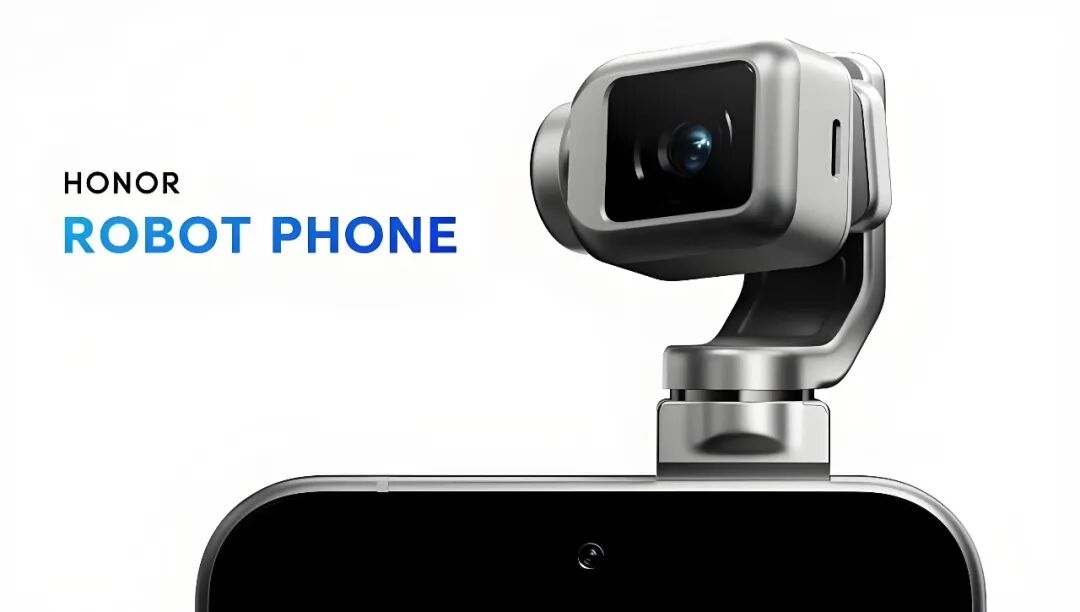 Image Source: Internet
However, every physical structure comes with its own set of trade-offs.
The Robot Phone measures 9.59 millimeters in thickness and weighs 248 grams, making it bulkier than most flagship phones currently available.
To accommodate these components, adjustments had to be made to the battery capacity, cooling space, and antenna layout.
The manufacturing complexity also implies that costs will inevitably be reflected in the final price.
More crucially, it's worth pondering how many practical usage scenarios these mechanical movements truly offer.
While nodding, tracking shots, and head-shaking (to music) can indeed provide a novel experience, once the novelty wears off, will users be willing to tolerate a bulkier phone for these features?
If the primary goals are stabilization and photography, traditional optical image stabilization and algorithms can already address most issues.
Using mechanical structures to achieve what software can accomplish—is this a true hardware breakthrough or merely a substitution of software solutions with hardware thinking?
02 AI Emerges from the Screen, But How Far Has It Really Come?
The Agentic OS and YOYO Pro mode are other standout features of this phone.
Honor asserts that the system-level Agent can perceive, plan, reason, execute, and provide feedback, forming a complete closed-loop system.
The YOYO Pro mode, powered by Alibaba's QianWen large model, supports long instruction following and cross-application execution.
The multimodal embodied perception system enables gesture recognition and human-like facial expression feedback.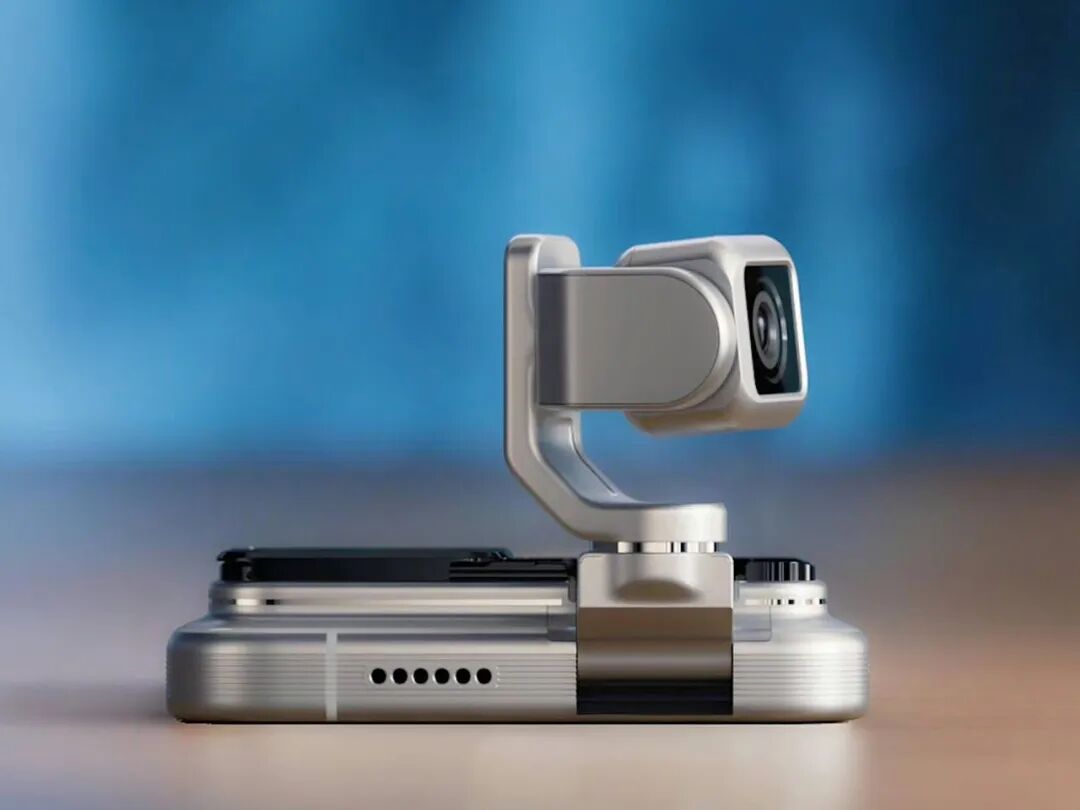 Image Source: Internet
From a technical standpoint, these concepts are indeed appealing.
However, in practical use, the accuracy and response speed of system-level Agents still present challenges.
Cross-application task execution involves numerous constraints, such as permissions, interfaces, and third-party adaptations, and no manufacturer has yet achieved true stability and reliability.
Gesture recognition depends on the accuracy of front-facing sensors and ambient lighting, while human-like expressions are more akin to visual gimmicks.
These functions may perform flawlessly in a lab setting, but their effectiveness in real-world usage remains to be seen.
Bringing AI out of the screen and endowing it with mechanical movements and expressions is essentially an attempt to make machines more human-like.
Yet, human-machine interaction doesn't necessarily require physical humanization.
Siri lacks a physical form, yet people use voice commands; ChatGPT has no facial expressions, yet people still engage in conversation.
Whether adding body language to AI enhances efficiency or simply adds another layer of expression may require more user feedback to determine.
03 Feasibility: More Than Just a Technical Challenge
The Robot Phone has garnered over 200,000 pre-orders, which is commendable for a high-end model. However, against the backdrop of Honor's declining market share, this product appears more like a high-end market experiment.
With a starting price of 9999 yuan, it's unlikely to become a mass-market model in the short term.
The market is always intrigued by new innovations, but whether this intrigue can translate into sustained interest and repeat purchases hinges on whether it genuinely addresses users' daily needs.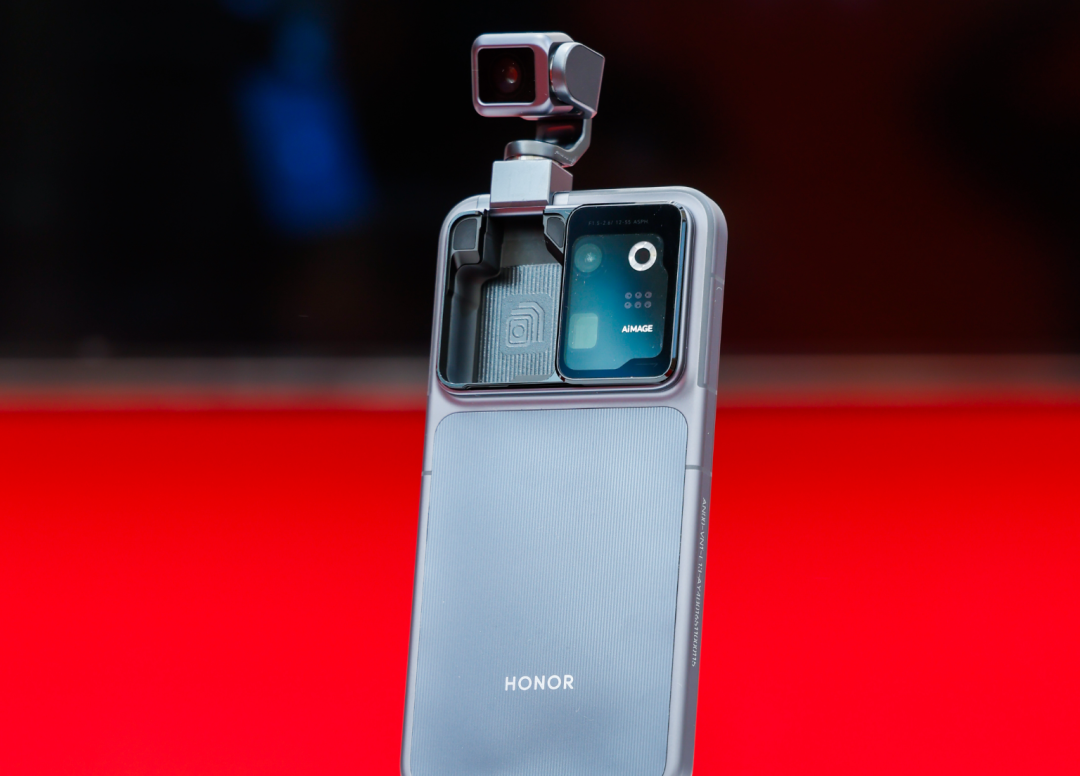 Image Source: Internet
Currently, it seems more focused on redefining what smartphones can look like rather than what they can do for users.
The viability of the robot phone path doesn't hinge on whether it can be built, but on whether users are willing to pay for these mechanical movements and AI experiences in the long run.
If the next generation fails to strike a better balance in terms of weight reduction, pricing, and core application scenarios, the Robot Phone may remain an interesting experiment rather than truly ushering in a new era.
#Smartphone #HonorSmartphone #RobotPhone
-
![]()
Registered Capital Slashed to 372 Million Yuan! Yutong Optical Finalizes Industrial and Commercial Change Registration
-
![]()
Zhuque-3 Successfully Lands, and 'Time Traveler' Secures Another ¥100 Million in Funding: China's Commercial Space Industry Experiences a 'Dynamic August'
-
![]()
Autohome Faces a Shrinking Window of Opportunity
-
![]()
Even a Titan Like Musk Has Faced Setbacks in Fulfilling Promises
-
![]()
AI Office: The End of the Racing Era, Context Becomes the Key to Success
-
![]()
Domestic Vehicle Chassis Revolution ②: The Steering Wheel Remains, But Mechanical Connections in the Steering System Are Decreasing
-
![]()
Exploring MiniMax Design: Can Video Editing Be as Simple as Speaking?
-
![]()
Why Can SenseTime Achieve Profitability While CloudWalk Still Faces Challenges, Despite Both Adopting Large Models?