Over 20 Billion Yuan in Losses Over Four Years! Why Did Konka, the Former 'Color TV Leader,' Take the Initiative to Delist?
 08/28 2026
 382
382
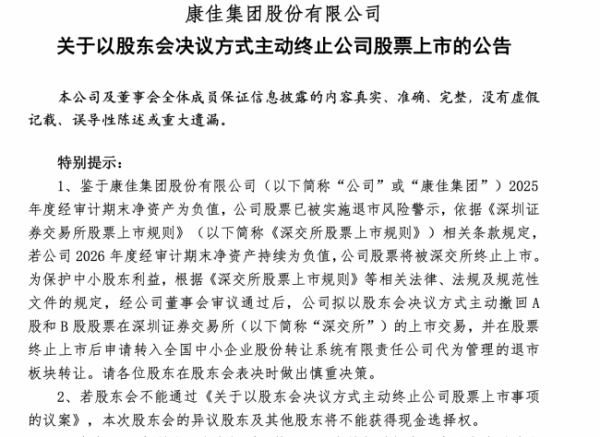
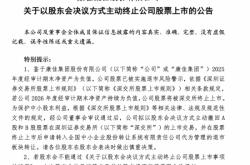
Last night, Konka, the former 'color TV leader,' announced that it plans to voluntarily withdraw its A-share and B-share listings from the Shenzhen Stock Exchange through a shareholder resolution and apply for transfer to the delisting sector managed by the National Equities Exchange and Quotations after termination of listing.
It is reported that Konka has set up cash options, with an exercise price of 2.48 yuan per share for A-shares and 0.73 Hong Kong dollars per share for B-shares, provided by Panshi Runchuang and Hemao Company, respectively. This matter is still subject to shareholder approval.
Considering that Konka's net assets were already negative by the end of 2025, if they remain negative by the end of 2026, it will trigger forced delisting. Now, its choice of voluntary delisting is a preemptive move to avoid forced delisting, but it does not mean the company will directly collapse. Konka emphasized that it will maintain stable operations after delisting.
You might wonder why Konka, once a dominant player, has reached the point of voluntary delisting. Financially, it is deeply insolvent, making it nearly impossible to maintain its listing.
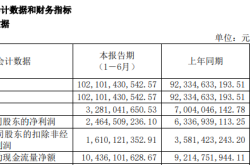
Financial reports show that from 2022 to 2025, Konka's net losses were 1.723 billion yuan, 2.258 billion yuan, 3.726 billion yuan, and 12.582 billion yuan, respectively, with cumulative losses over four years exceeding 20 billion yuan. By the end of 2025, its net assets were -6.083 billion yuan, with a debt-to-asset ratio of 126%, indicating severe insolvency. After China Resources took over last year, it provided Konka with nearly 4 billion yuan in low-interest loans to address liquidity issues, but this was borrowing rather than capital injection, unable to directly fill the massive net asset gap.
For Konka to turn its net assets positive in 2026, it would require capital injection on the scale of billions, which is highly impractical. Rather than waiting to be forcibly delisted by the exchange, it chose voluntary delisting, accompanied by cash options to provide an exit route for minority shareholders, a compliant disposal plan under its central enterprise background.
Root causes reveal that Konka's core business erosion and reckless diversification are its biggest flaws, manifested in three key areas:
1. Declining Competitiveness in the Core Color TV Business
Once, Konka, TCL, and Changhong were known as the 'Big Three of Color TVs,' leading domestic sales in the CRT (bulky TV) era. As the industry shifted to LCD and Mini LED technologies, its consistently low R&D investment caused it to miss the technological upgrade window. This not only led to its domestic color TV market share being squeezed by Hisense, TCL, and Xiaomi, forcing it to retreat to the low-end market, but also resulted in negative gross margins in its color TV business later on, meaning it lost money on every unit sold. Brand aging and channel shrinkage further exacerbated its decline. Today, Konka is rarely a top choice for consumers buying color TVs.
2. Overextension in Diversification Without a Second Growth Engine
In recent years, Konka has aggressively expanded into real estate, industrial parks, semiconductors, PCBs, and internet big-screen operations, with extensive external investments and mergers. However, most new businesses had weak synergy with its core home appliance business, failing to generate profits while accumulating massive debts, investment losses, and risks from earnout agreements.
The most notable example is the hidden IPO earnout attached to the transfer of Yipingfang's equity. After the IPO failed, multiple institutions filed lawsuits, resulting in billions of yuan in repurchase debts, further straining Konka's finances and directly causing its 2025 financial results to 'collapse' with huge losses. Meanwhile, its semiconductor investments, despite significant spending, have yet to achieve scalable profitability, continuously draining cash flow.
3. Constraints from Changes in Controlling Shareholders
Konka's original majority shareholder, OCT Group, focused on cultural tourism real estate and lacked operational capabilities in the home appliance industry, making it difficult to provide industrial support. After its equity was transferred to central enterprise China Resources, while financial support was provided, the decades-old historical burdens could not be quickly reversed. China Resources prioritized preserving operational entities over maintaining the A-share listing at all costs.
In fact, Konka's decline serves as a warning to all traditional manufacturing companies, offering three key insights:
① In a downturn, historical reputation does not equate to a moat. While the overall color TV market shrinks, the high-end and large-screen segments continue to grow. Hisense and TCL maintained their positions through sustained technological investment. In contrast, Konka failed to protect its core business and blindly diversified, ultimately being left behind by the times.
② Diversification must have clear boundaries. Cross-industry investments and equity transfers with earnout agreements can bury massive hidden debts if performance falls short, potentially collapsing the entire group.
③ Central enterprise intervention can alleviate liquidity crises but cannot erase historical operational missteps. Capital infusions only buy time for adjustment; corporate recovery ultimately depends on product and profit model fundamentals.
Overall, Konka's voluntary delisting is a dignified exit. While China Resources' involvement and cash options provide some buffer for minority shareholders, this 46-year-old company has paid a heavy price for its strategic overreach and management failures. After delisting, Konka will transfer to the delisting sector. Whether it can complete debt restructuring and revitalize its core business under China Resources' umbrella will be its biggest future challenge.
-
![]()
Don’t Use Efficiency as an Excuse to Conceal the Problems of Hastily Launched Cars
-
![]()
Core Indicators Rebound Across the Board in the First Half of the Year! Li Auto Steps Out of the 'Encirclement' During the Industry's Coldest Period | Mingjing Pro
-
Is This the 'Prometheus Moment' for Vertical AI Applications?
-
![]()
NASA Halts Swift Rescue Efforts: 20-Year Gamma-Ray Burst Telescope Slated for Year-End Demise, China’s Tianguan Satellite Steps In for Deep-Space Surveillance
-
![]()
Polestar Strikes Out in US: Volvo Gets the Nod Amid Rising Sino-US EV Regulatory Clash
-
![]()
Parent Company’s Net Profit Drops by Over 3.8 Billion Yuan: Why Does Great Wall Motors Report Higher Revenue but Lower Profit?
-
![]()
Over 20 Billion Yuan in Losses Over Four Years! Why Did Konka, the Former 'Color TV Leader,' Take the Initiative to Delist?
-
![]()
【Electric Equipment】200 electric dump trucks depart from Shaoyang, with half heading to South American mining areas