Core Indicators Rebound Across the Board in the First Half of the Year! Li Auto Steps Out of the 'Encirclement' During the Industry's Coldest Period | Mingjing Pro
 08/28 2026
 464
464
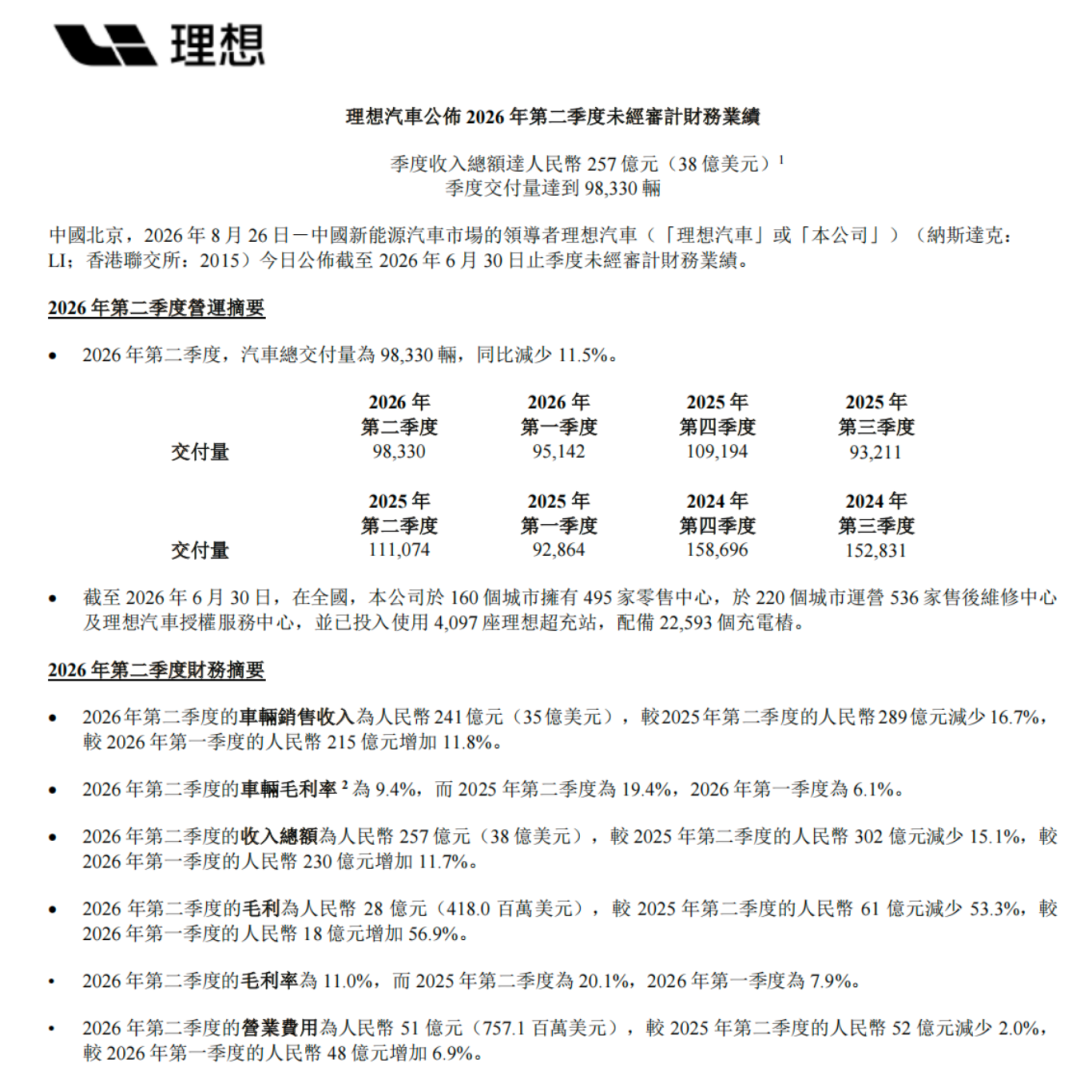
With the release of the Q2 financial report, Li Auto's trend of emerging from the bottom has been confirmed.
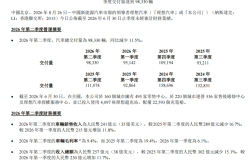
From a performance perspective, multiple core indicators for Li Auto in Q2 have shown comprehensive improvement. Specifically, 98,330 new vehicles were delivered in Q2, a 3.4% increase quarter-over-quarter; revenue reached 25.7 billion yuan, an 11.7% increase quarter-over-quarter; the overall gross margin, a core indicator of profitability, was 11.0%, a 3.1 percentage point increase quarter-over-quarter; operating cash flow and free cash flow both saw significant increases, all signaling positive developments.
From an industry perspective, Li Auto faces two direct challenges: First, the rising costs of batteries, memory chips, and core components this year. Li Auto's products are more intelligent, requiring greater usage of storage and semiconductors. Second, the comprehensive update of Li Auto's L product line in the first half of the year had a phased impact on the market. Achieving a performance turnaround under these circumstances was no easy feat.
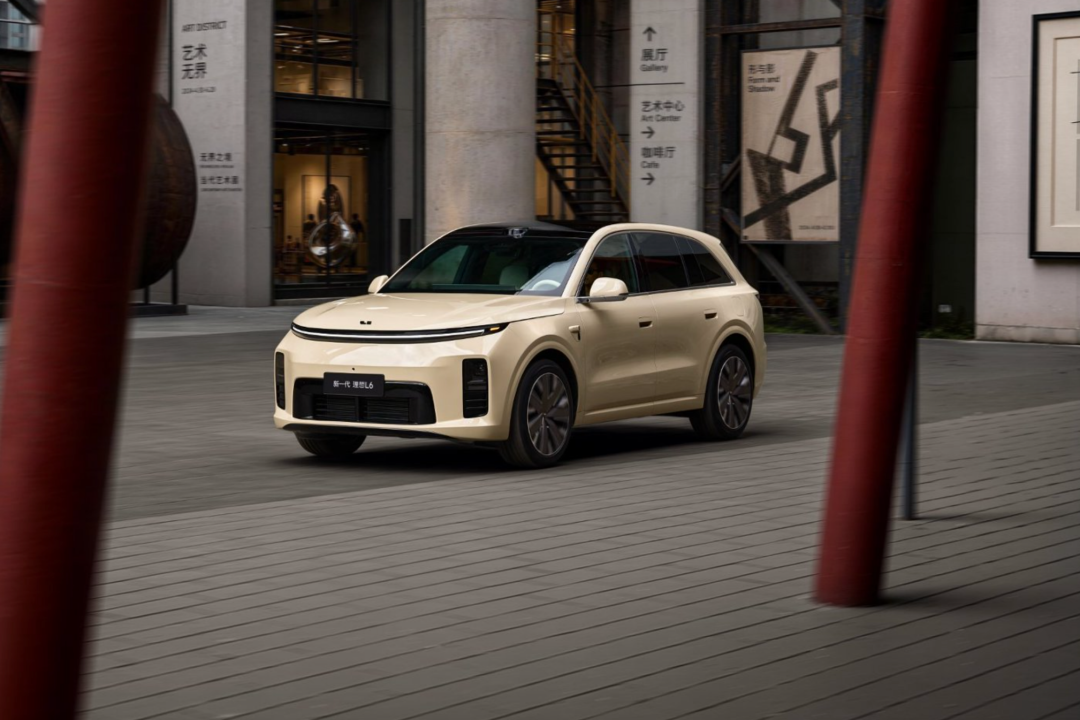
Additionally, Li Xiang stated during the financial report conference call that the current order structure for extended-range and pure electric vehicles has nearly balanced at 50:50, indicating the initial success of Li Auto's 'dual-energy strategy' and breaking out of the 'extended-range encirclement.'
The Li Auto i6 has exceeded 180,000 units off the production line, ranking in the top three for sales among models priced above 200,000 yuan for six consecutive months. The market performance of the updated L series new product (new products) has exceeded expectations. The L9 Livis version accounts for over 85% of orders, with a large number of users willing to pay for hardcore technologies such as full-line control chassis and advanced driver-assistance systems. Since its launch, the Ultra version of the L8 has been the main sales driver, with good conversion rates for test drives in stores. The new generation L6 addresses user feedback on short pure electric range, slow charging speeds, and inadequate driver-assistance capabilities. It has seen good order activity since its launch and is expected to achieve stable monthly sales of 10,000 units.
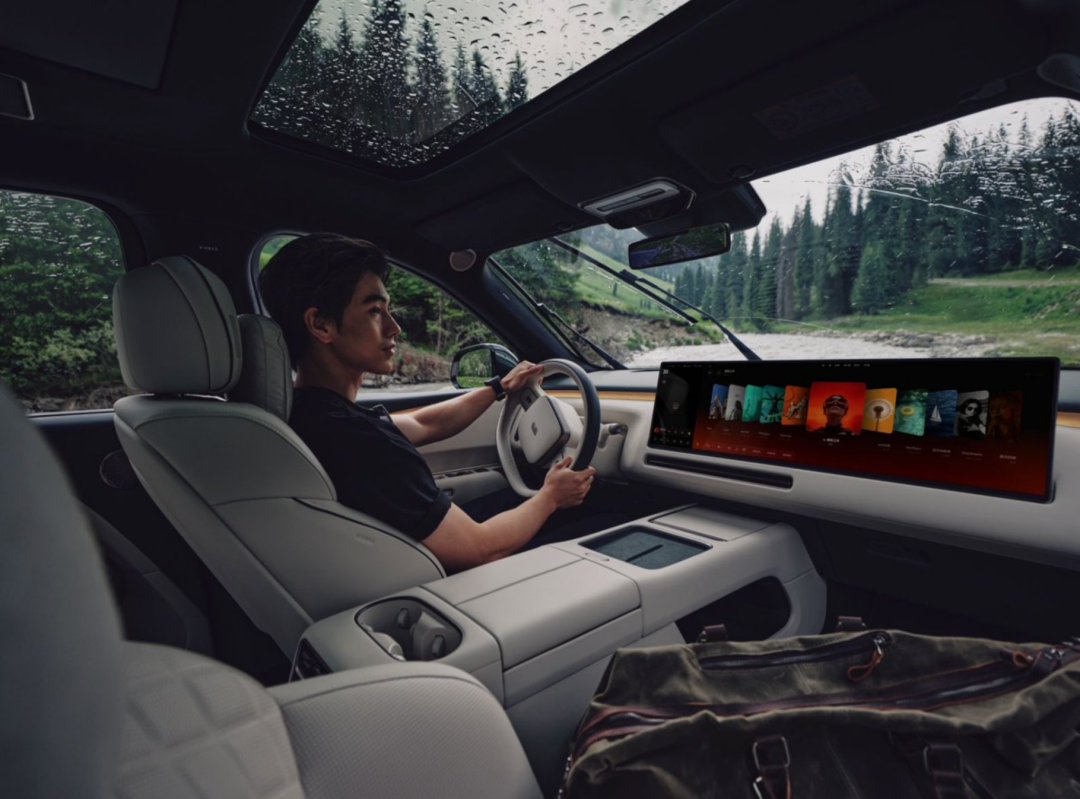
This transformation showcases the effectiveness of Li Auto's reforms, particularly the impact of the breakthrough in self-developed technologies, which has given the company greater confidence. Li Xiang also provided new predictions for future operations. 'With the launch of new models this year, gross margins are gradually improving. In the long term, I believe the company's healthy gross margin will range between 15% and 20%. The main factor affecting the difference from 20% will be potential future fluctuations in various raw materials,' said Li Xiang, Chairman of Li Auto, during the Q2 financial report conference call on the evening of August 26.
Li Tie, CFO of Li Auto, also made optimistic predictions for subsequent operating performance. 'Starting from the third quarter, with the delivery of new models, we expect to maintain stable operating cash flow on a quarterly basis,' Li Tie said. However, he noted that whether Li Auto can achieve positive operating cash flow and free cash flow for the entire year will largely depend on fourth-quarter deliveries. One thing is certain: overall cash flow performance will be stronger this year than last.
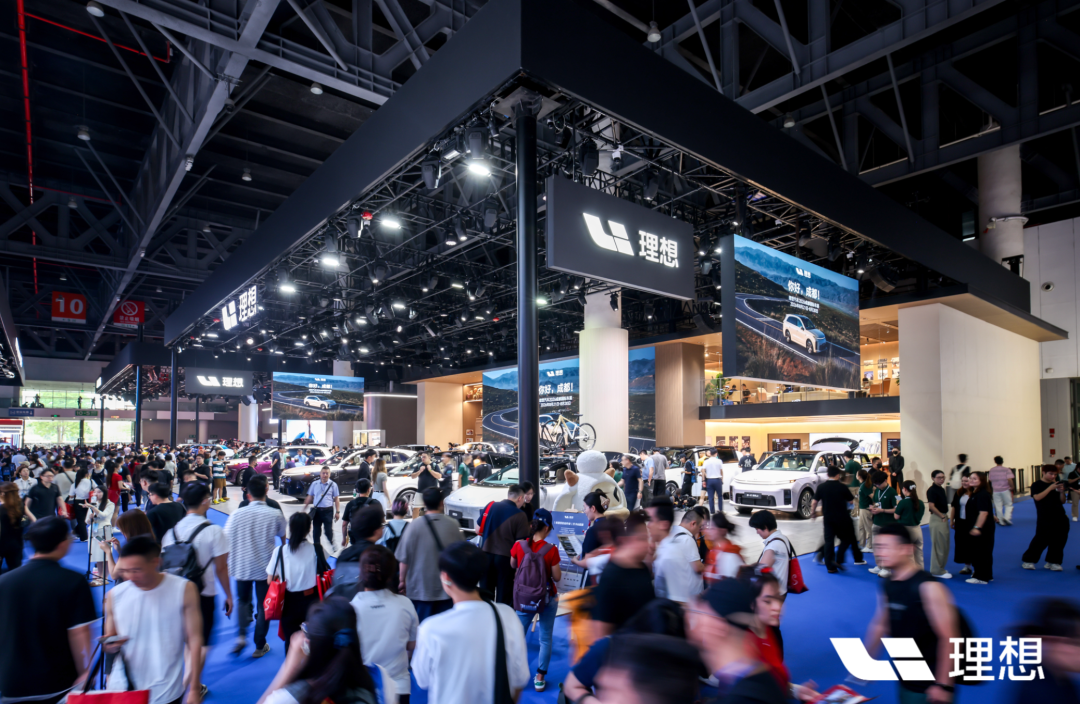
Furthermore, Li Auto's current financial position remains very healthy. The company currently holds 87.5 billion yuan in cash reserves, providing strong support for product innovation, technological breakthroughs, and global expansion. According to the financial report guidance, Li Auto expects to deliver 95,000 to 100,000 units in Q3, representing a year-over-year increase of 1.9% to 7.3%; total revenue guidance is between 26.6 and 28 billion yuan, a pragmatic goal given the current automotive market's negative growth exceeding -20%.
01 The Breakthrough Cycle of Self-Developed Technologies Begins
The core reason for this financial improvement lies in the evolution of Li Auto's technological capabilities. In this year's product cycle, we can see the large-scale release of Li Auto's self-developed strengths. For example, starting in the second half of this year, Li Auto-branded batteries will be gradually integrated into all models. Currently, Li Auto's self-developed battery systems cover the complete range, including cells, Pack, BMS, and thermal management. 'We will continue to build a highly self-developed and self-controlled electric powertrain system, strengthening the competitive foundations in both technology and cost,' said Ma Donghui, President of Li Auto.
However, Li Auto emphasizes that self-development does not mean that suppliers' products are inadequate. The upcoming Li Auto i9, set to launch in mid-September, exemplifies this. This model will feature batteries from both CATL and Sunwoda.
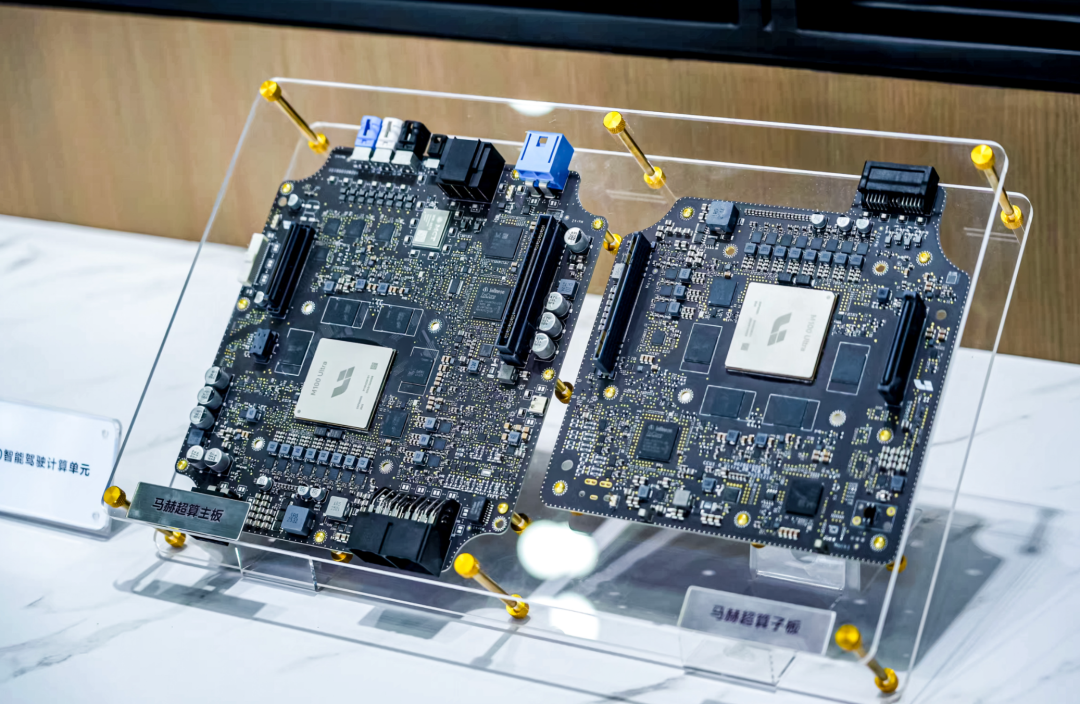
Beyond the electric powertrain, chips represent another significant cost factor for new energy vehicles. Li Auto established a long-term self-development strategy for chips early on. Li Xiang said, 'Chips are the barrier, and models are the competitiveness,' indicating a long-term strategic investment. Li Auto's self-developed Mach M100 chip began mass production and delivery in May with the new Li Auto L9 and is now used in the new Li Auto L9, new Li Auto L8, and the new generation Li Auto L6. As of the end of Q2, over 50,000 chips have been delivered, maintaining good quality performance.
In terms of models, Ma Donghui stated that the ideal VLA model, based on self-developed chips, continues to evolve. After the OTA 9.1 update in late July, end-to-end latency was further reduced, and the overall performance of the VLA model improved by 20% compared to the previous version, with user mileage penetration nearly doubling. The upcoming OTA 9.2 will represent a significant technological architecture upgrade—evolving towards a complete 3D ViT technology architecture, with parameter scale increasing threefold and computational load increasing 4.6-fold.
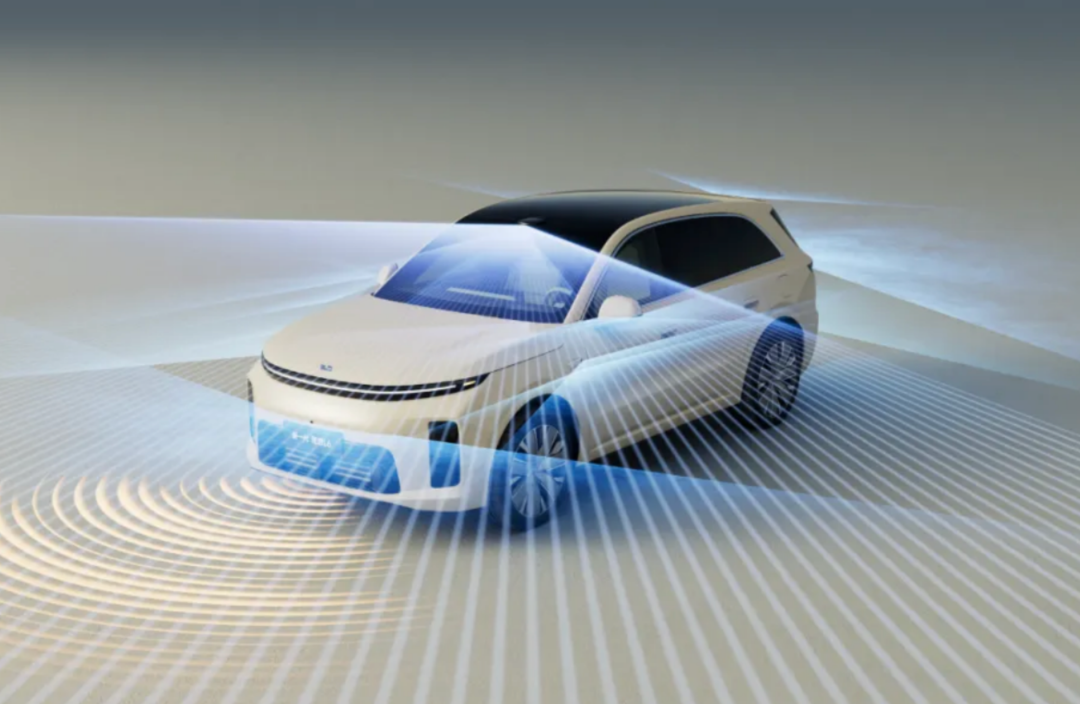
In Q4, the perception and decision-making capabilities of the Mach VLA will further improve, with an effective perception range exceeding 250 meters and the three-dimensional spatial perception accuracy of key objects improving to within 5 centimeters, enhancing scene understanding. Additionally, the Mach VLA 2.0 for NVIDIA Orin and Thor platforms will go live in early September. Ma Donghui stated that on the Mach platform, the penetration rate of assisted driving mileage in urban scenarios has nearly doubled compared to the previous version. With the continuous increase in vehicles equipped with Mach chips, the full-scene MPI index has improved by 25% in recent months.
Ma Donghui noted that Li Auto's rapid progress in intelligent driving performance and delivery speed primarily comes from the close integration of self-developed chips and full-stack system capabilities. Supported by these technologies, Li Auto's subsequent products are also highly anticipated. For example, the new Li Auto MEGA Home and Li Auto i9, set to launch in September. Ma Donghui revealed during the conference call that the refresh of the new Li Auto MEGA Home focuses on chassis technology, such as the explicit addition of steer-by-wire, active anti-roll bars, and rear-wheel steering to enhance handling flexibility and driving experience. Of course, the self-developed Mach M100 chip will be included.
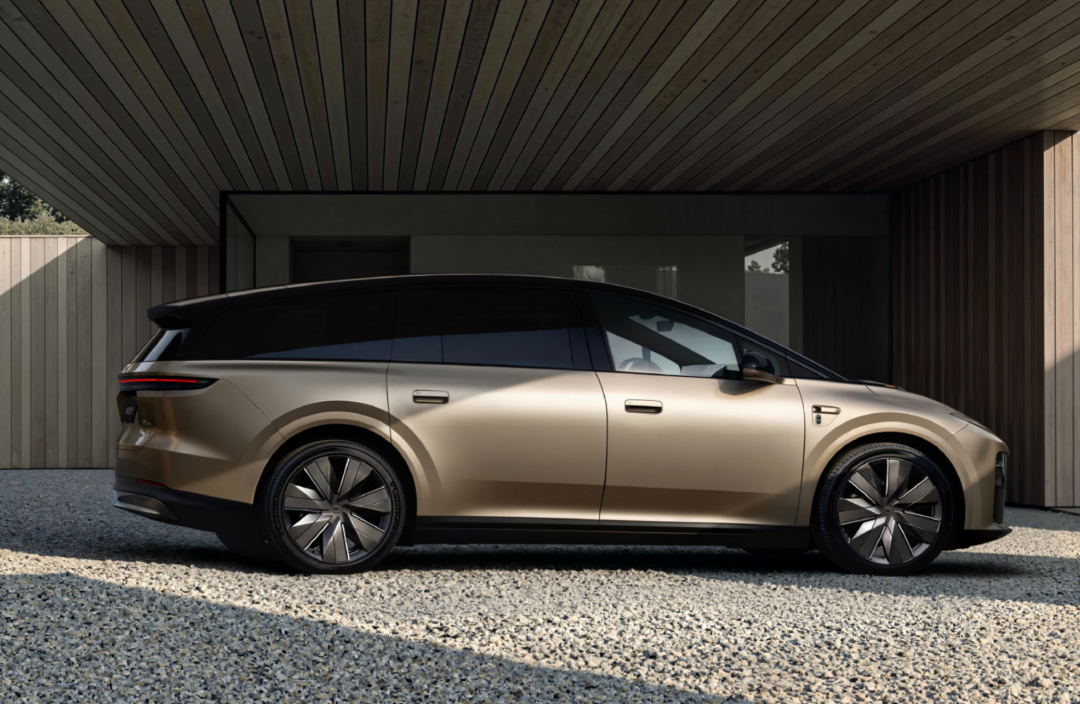
As for the Li Auto i9, currently disclosable information includes that the Li Auto i9 will feature an 800V 5C high-voltage platform, along with the Mach M100 chip, Qualcomm's new-generation high-performance cockpit chip, and more. The vehicle will also be released in September. 'Batteries and chips are the most critical barriers. Electric powertrain technology and excellent product strength will be the company's core competitiveness. We hope to keep the core technological barriers for the future in our own hands, like Apple and Huawei,' Li Xiang summarized during the conference call.
02
Stockpiling Resources and Building Defenses Will Continue
For subsequent development, Li Auto clarified several key points at this financial report communication meeting. The first is cost control. Li Xiang explicitly stated that cost increases would not be passed on to consumers. This means that Li Auto's products will not increase in price or reduce configurations to offset costs. Ma Donghui further explained that in the short term, cost pressures will be smoothed through long-term supply agreements (with suppliers) and refined operations, allowing for dynamic control; in the medium to long term, reliance on the large-scale implementation of self-developed technologies will stabilize operating and vehicle gross margin levels, supporting the company's long-term high-quality development.
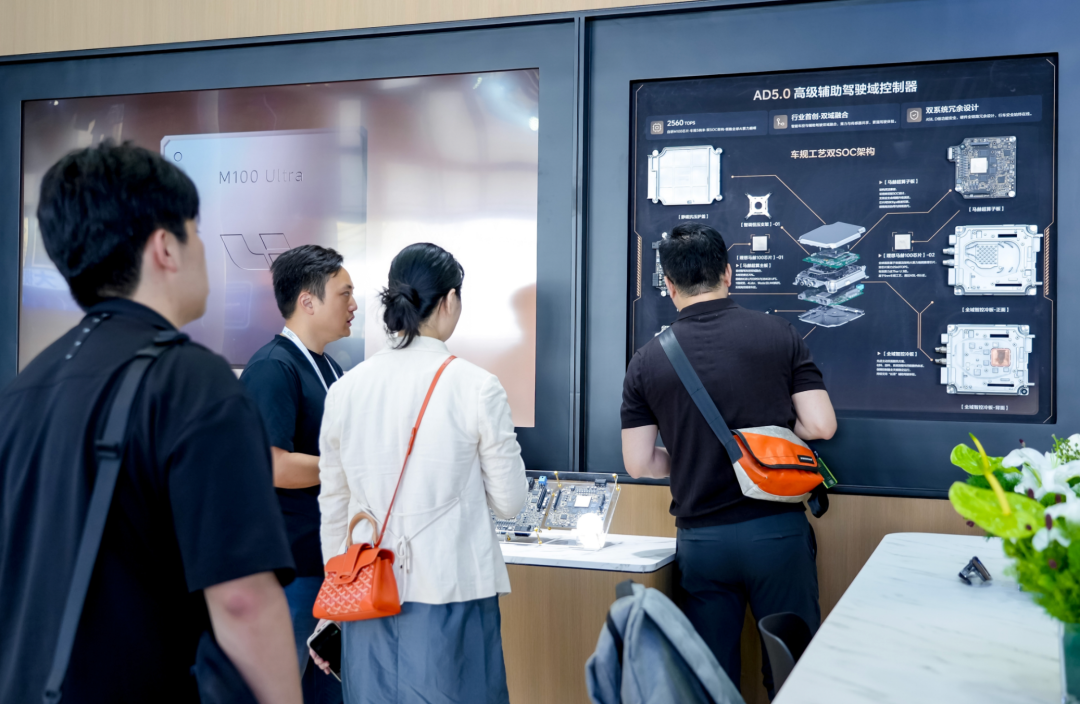
Second, continue to strengthen the self-development of core technologies. For example, through integrated design and supply chain capabilities, including further self-development and integration of batteries, to enhance self-development and supply capabilities in the electric powertrain sector. Li Xiang stated that sustained R&D investment and building technological barriers are 'very important' for Li Auto and will not weaken. Over the past five years, Li Auto has continuously increased R&D investment, maintaining high-intensity R&D expenditure of nearly 3 billion yuan over the past six quarters.
In Q2 of this year, Li Auto's R&D investment was 2.776 billion yuan, an increase of 50 million yuan quarter-over-quarter. In the first half of the year, overall R&D investment was approximately 5.4 billion yuan. From the perspective of R&D revenue ratio, quarterly R&D investment exceeded 10%, far surpassing the industry average. Li Xiang stated that this level of R&D investment will continue: 'The initial stages of Li Auto were entrepreneurial. The next stage requires sustained R&D investment to build barriers.'
Based on this, Ma Donghui said that Li Auto will subsequently strengthen two areas to enhance market competitiveness. The first is to continuously enhance product value through software iterations. The new generation L series has a solid hardware foundation and performance, and subsequent OTA iterations will continue to release intelligent capabilities, gradually implementing features related to embodied intelligence.
Second, continuously expand and densify the coverage of the self-built 5C ultra-fast charging network. By the end of July, 4,141 Li Auto ultra-fast charging stations had been put into operation, with over 22,800 charging piles, completing the connection of 18 national highways in the 'nine verticals and nine horizontals' network, covering over 300 cities across the country. The self-built 5C ultra-fast charging network can serve both pure electric models and the new generation 5C extended-range models and has become an important consideration for users when purchasing vehicles.
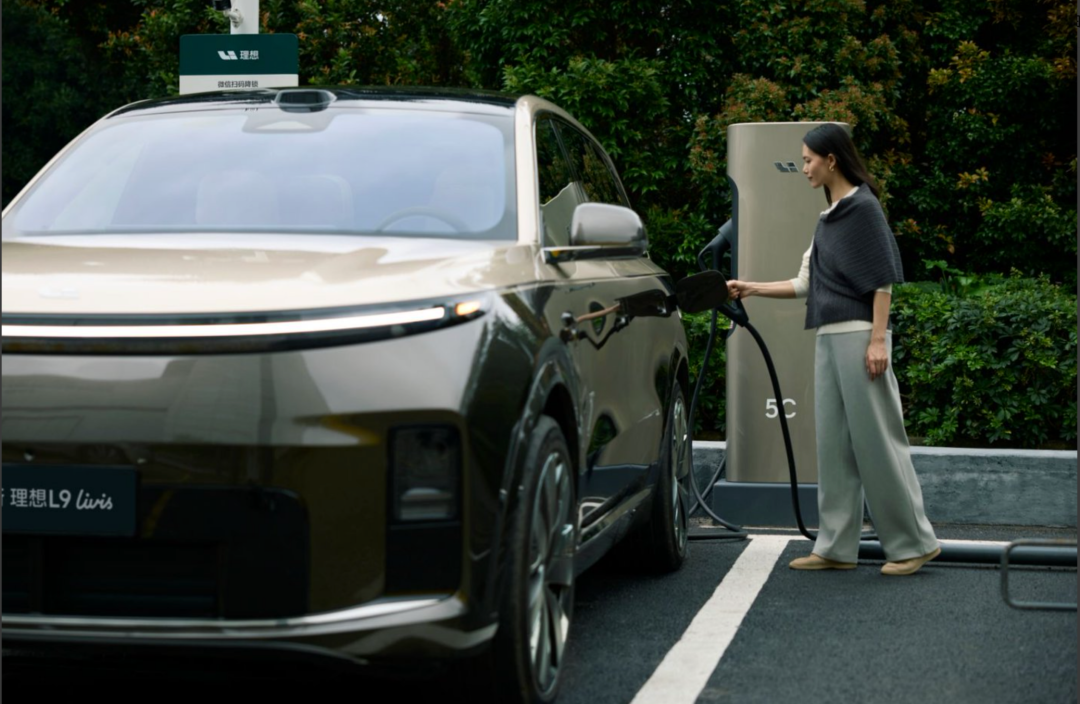
'I believe that after the L series completes its generation change, it will complement the i series pure electric products, jointly supporting overall business growth,' Ma Donghui said. From this perspective, Li Auto relies on its strong financial reserves to further build competitive barriers and strengthen its core competitiveness.
To increase sales scale, Li Auto will continue to expand into international markets. The strategy is to use extended-range vehicles as the main products in the Middle East and Central Asian markets, while introducing pure electric vehicles for differentiated competition in Europe. In the Middle East and Central Asia, Li Auto's extended-range vehicles already have a strong foundation. In July, the new Li Auto L9 officially launched in Kazakhstan and Uzbekistan. In September, sales in the Middle East market will begin in Dubai. The Li Auto i6 plans to make its first overseas public debut at the Paris Motor Show in October and aims to start layout (layout) in the European market in Q4 of this year. The Li Auto MEGA Home will be launched in right-hand drive regions such as Hong Kong, China, and Singapore within the year, and right-hand drive versions of the Li Auto i6 are also planned.

At the same time, local production has also been confirmed. Li Auto has reached a strategic cooperation agreement with Allur, a leading automotive group in Kazakhstan, to advance local assembly cooperation. Relying on the overseas local adaptation of existing models and local assembly projects, Li Auto is gradually building a global business capability framework for R&D, product, production, sales, and services.
Li Auto will adhere to a high-end brand positioning overseas, combining its own capabilities with the differentiated characteristics of regional markets to control the pace of development while ensuring product compliance, building after-sales service networks, and establishing the brand.
From the H1 financial report this year, Li Auto's rebound from the bottom signifies the initiation of its second growth cycle. Supported by core self-developed technologies such as the electric powertrain, Li Auto has enhanced its competitive strength. From an overall layout perspective, its charging network, exports, new products, intelligent driving, and AI capabilities have entered a phase of comprehensive development. From automotive to embodied intelligence, Li Auto has revolutionized its own past and now aims not just to return to its former peak but to reach even higher summits in the distance.
The rebirth of Li Auto has begun.
-
![]()
Don’t Use Efficiency as an Excuse to Conceal the Problems of Hastily Launched Cars
-
![]()
Core Indicators Rebound Across the Board in the First Half of the Year! Li Auto Steps Out of the 'Encirclement' During the Industry's Coldest Period | Mingjing Pro
-
Is This the 'Prometheus Moment' for Vertical AI Applications?
-
![]()
NASA Halts Swift Rescue Efforts: 20-Year Gamma-Ray Burst Telescope Slated for Year-End Demise, China’s Tianguan Satellite Steps In for Deep-Space Surveillance
-
![]()
Polestar Strikes Out in US: Volvo Gets the Nod Amid Rising Sino-US EV Regulatory Clash
-
![]()
Parent Company’s Net Profit Drops by Over 3.8 Billion Yuan: Why Does Great Wall Motors Report Higher Revenue but Lower Profit?
-
![]()
Over 20 Billion Yuan in Losses Over Four Years! Why Did Konka, the Former 'Color TV Leader,' Take the Initiative to Delist?
-
![]()
【Electric Equipment】200 electric dump trucks depart from Shaoyang, with half heading to South American mining areas