Don’t Use Efficiency as an Excuse to Conceal the Problems of Hastily Launched Cars
 08/28 2026
 370
370
Introduction | Lead
Automakers find themselves trapped in a vicious cycle of "accelerated competition, faster launches," with "hastily launched cars" emerging as a product of this extreme competition. On one hand, rapid technological advancements force automakers to "rush products to market and chase trends," while on the other hand, some validation processes are shortened, effectively treating consumers as test drivers in the real world. This situation arises from intersecting contradictions: market competition, rapid technological change, and delayed regulatory standards, creating a dilemma between efficiency and safety.
Produced by | Heyan Yueche Studio
Written by | Cai Yan
Edited by | He Zi
Full text: 2,524 characters
Reading time: 4 minutes
Recently, the topic of "hastily launched cars" has continued to generate discussion, revealing the harsh realities and dilemmas within the automotive industry. When market competition, rapid technological change, and delayed regulatory standards intertwine, they give rise to the phenomenon of "hastily launched cars," trapping the industry in a relentless "race" focused on launch speed. How can the industry break free from this vicious cycle of "accelerated competition, faster launches"?
To prevent inadequately tested automotive products from entering the market, relevant authorities have taken action. On August 26, Xin Guobin, Vice Minister of the Ministry of Industry and Information Technology, emphasized the need to improve the automotive industry's governance system, advance reforms for centralized management of production qualifications among automotive enterprises, optimize industrial layout, strengthen access reviews for product innovation design and testing validation management, prohibit products from entering the market without sufficient testing, intensify supervision of production consistency, safeguard consumers' legitimate rights, and further standardize industrial competition.
Significantly Compressed Development Cycles
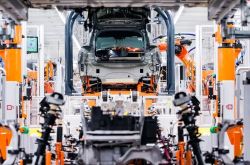
In the era of fuel-powered vehicles, the development cycle for a new model typically ranged from 40 to 60 months. Entering the accelerated phase of new energy vehicles (2023–2025), the industry average development cycle compressed to 28–39 months. By 2026, it further shortened to 24 months, with some companies reducing it to 18–20 months.
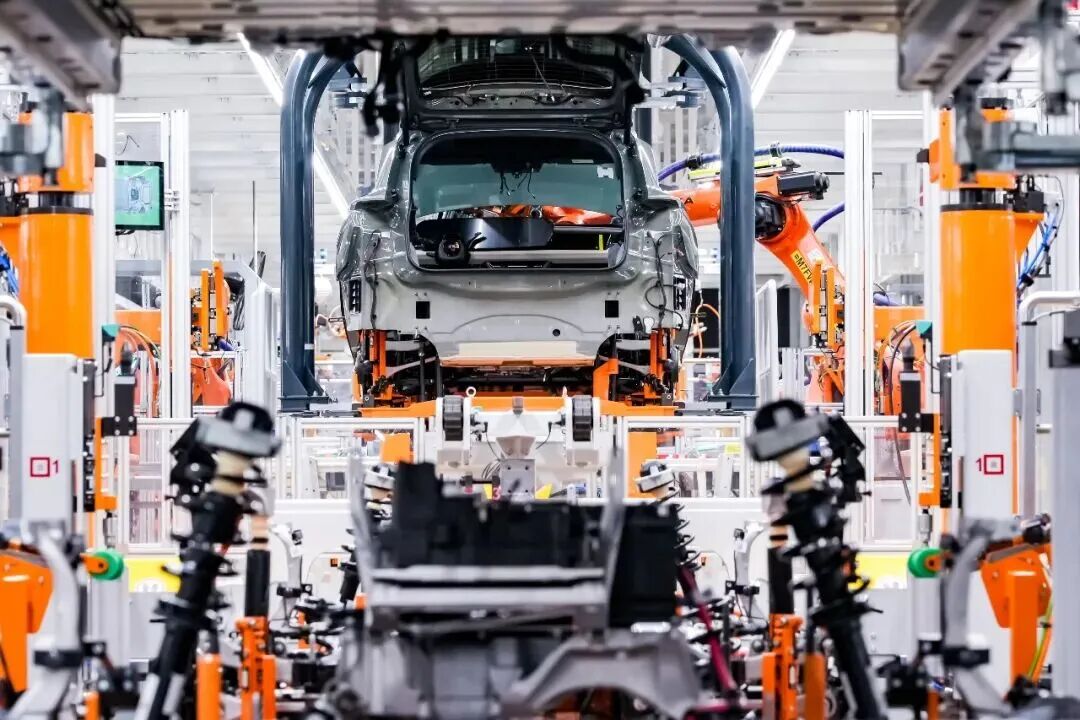
It must be emphasized that the acceleration of automotive development cycles from 60 to 18 months cannot be solely attributed to "competitive pressure." Multiple factors, including rapid technological advancements in the new automotive era and regulatory delays, contribute to this trend.
To a certain extent, technological progress and efficiency improvements have facilitated the acceleration of the automotive industry. Development cycles are not static, especially as the industry enters the new energy era, where structural changes—such as a significant reduction in mechanical parts and a substantial increase in electrified and intelligent components compared to fuel-powered vehicles—occur in new energy vehicle parts.
Advancements in software development, reusable modular platforms, and three-electric systems (battery, motor, and controller) in new energy vehicles have notably accelerated overall development efficiency. With the integration of AI and simulation testing technologies, automakers can condense months of real-world track testing into hours of virtual validation. Thus, evaluating new energy vehicles using the pacing of fuel-powered vehicle development is akin to comparing apples to oranges.
For example, the efficiency revolution from "handcrafted" vehicles to Ford's "assembly line production" generally offers more benefits than drawbacks for an industry that prioritizes "scale and efficiency."
Therefore, when discussing "hastily launched cars," we must distinguish between facts and phenomena. Efficiency improvements are an industry fact; the real chaos lies in labeling vehicles as "efficient" while producing "hastily launched cars" in reality.
Under industry competition, automakers are forced to accelerate. Data shows that from January to May this year, 542 new models were launched in the domestic market, averaging 3.6 new models per day. In the first half of the year, the industry introduced over 576 new models, with more than 180 premiering at the Beijing Auto Show alone.
In a competitive environment where the industry collectively "races on speed," no automaker is willing to fall behind. The mindset has shifted from "slow and meticulous work" to "chasing trends and meeting deadlines." With such a short window of popularity, the priority is to get vehicles on shelves first. For instance, some automakers adopt a product strategy of immediate follow-up: launching a competitive model within six months of a rival's hit to avoid losing market opportunities.
Critically, this "speed race" has not brought significant benefits to automakers. Instead, it has led to a situation where frequent new launches coexist with persistently pressured industry profits. According to the National Bureau of Statistics, in the first half of 2026, automotive manufacturing profits reached 195.35 billion yuan, down 19.5% year-on-year, with an industry profit margin of just 3.8%.
As industry competition intensifies and profits decline, some automakers cut costs by rushing timelines, directly impacting vehicle development processes. Testing procedures are noticeably shortened. Media reports reveal that reducing validation items, curtailing extreme condition tests, using simulation data to replace real-world testing, and skipping mass production validation have become normalized practices for some automakers to shorten time-to-market.
At the 2026 China Automotive Forum, Li Fenggang, General Manager of Beijing Hyundai, publicly criticized some automakers for drastically compressing R&D testing cycles to expedite launches, even omitting critical steps like DV (Design Verification) and PV (Production Validation), effectively turning consumers into 'test drivers.' Recently, Mercedes-Benz and BMW released AI-generated creative videos, subtly mocking the practice of using AI simulations as a substitute for real-world testing.
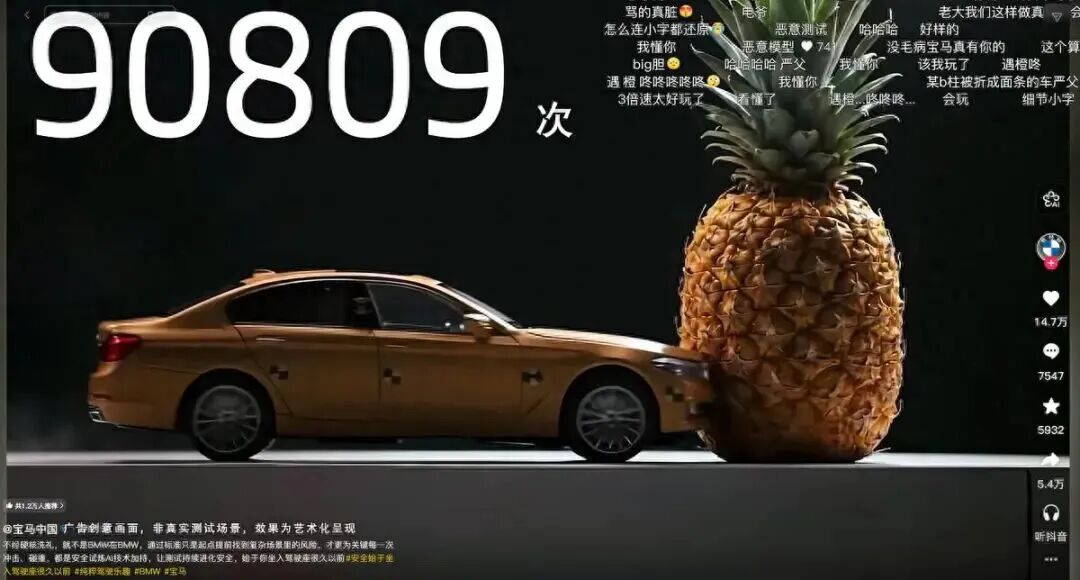
In terms of real-world data, approximately 1.65 million vehicles were recalled nationwide in the first half of 2026, with recalls of domestic brands surging by 681.2% year-on-year. Among them, OTA recalls in 2025 involved 1.756 million vehicles, accounting for over a quarter of annual recalls.
As vehicles launch faster, automakers earn less, and consumers grow disillusioned, the "hastily launched car" phenomenon reflects deeper issues of "market competition, safety, product homogenization, and standards" that did not arise overnight. Discussions on new energy three-electric system safety and OTA cost-shifting have persisted in recent years.
Especially when consumers become the final link in the automotive industrial chain, the fundamental concern with "hastily launched cars" is not speed but quality and craftsmanship. More broadly, the chaos of "hastily launched cars" is eroding the hard-earned brand trust accumulated by Chinese automakers.
When Will the Era of Hastily Launched Cars End?
From a regulatory perspective, relevant authorities have gradually introduced or are set to introduce a series of policies targeting "hastily launched cars."
Notably, mandatory new national standards for batteries have been implemented. Starting July 1, 2025, two prerequisite national standards for electric vehicles—Safety Requirements for Electric Vehicles (GB 1834-2025) and Safety Requirements for Power Batteries Used in Electric Vehicles (GB 38031-2025)—took effect. The new standards mandate that battery packs must not catch fire or explode within five minutes during thermal runaway tests.

Additionally, the National Technical Committee for Automotive Standardization has sought public opinions on amendments proposing to unify the total reliability driving test mileage for battery electric, hybrid, and fuel cell vehicles to no less than 30,000 kilometers, aligning with traditional fuel vehicle standards. Currently in the public comment phase, feedback closed on August 12, 2026. This means future new energy vehicles will adhere to the same reliability testing standards as fuel vehicles, with 30,000 kilometers of road testing becoming an industry benchmark, regardless of simulation tests.
Furthermore, the Safety Requirements for Autonomous Driving Systems in Intelligent Connected Vehicles (GB 44721-2026), effective July 1, 2027, mandates that L3 and L4 autonomous vehicles must undergo simulation, closed-course, and on-road testing, prohibiting the use of mass-produced vehicles as free test samples and setting mandatory access thresholds for intelligent driving products.
Of course, beyond regulatory measures, consumers must also develop the ability to identify "hastily launched cars." The simplest approach is to "slow down" and allow newly launched models to remain on the market for a while. Opt for products after they have undergone sufficient market validation.
Commentary
Currently, while some automakers have begun to voluntarily "slow down" and emphasize "complete development cycles" and "rigorous road testing" during product launches, the issue of hastily launched cars did not emerge overnight, nor will its negative impacts disappear quickly. With the implementation of the 30,000-kilometer regulation, stricter safety requirements for intelligent connected vehicles, and efforts to curb overcapacity, the automotive industry is poised to return to a positive cycle of "stable volume and rising prices," gradually alleviating the ills of competition.
(This article is original to Heyan Yueche. Unauthorized reproduction is prohibited.)
-
![]()
Don’t Use Efficiency as an Excuse to Conceal the Problems of Hastily Launched Cars
-
![]()
Core Indicators Rebound Across the Board in the First Half of the Year! Li Auto Steps Out of the 'Encirclement' During the Industry's Coldest Period | Mingjing Pro
-
Is This the 'Prometheus Moment' for Vertical AI Applications?
-
![]()
NASA Halts Swift Rescue Efforts: 20-Year Gamma-Ray Burst Telescope Slated for Year-End Demise, China’s Tianguan Satellite Steps In for Deep-Space Surveillance
-
![]()
Polestar Strikes Out in US: Volvo Gets the Nod Amid Rising Sino-US EV Regulatory Clash
-
![]()
Parent Company’s Net Profit Drops by Over 3.8 Billion Yuan: Why Does Great Wall Motors Report Higher Revenue but Lower Profit?
-
![]()
Over 20 Billion Yuan in Losses Over Four Years! Why Did Konka, the Former 'Color TV Leader,' Take the Initiative to Delist?
-
![]()
【Electric Equipment】200 electric dump trucks depart from Shaoyang, with half heading to South American mining areas