AI DingTalk: The Fusion of Software and Hardware
 12/25 2025
 659
659
Written by | Wu Kunyan
Edited by | Wu Xianzhi
In the tech realm, naming conventions often mirror a company's ambitions and strategic aspirations.
From the August release named 'Fern,' which embodies rootedness and stability, to December's 'Magnolia,' symbolizing the ancestor of angiosperms and the dawn of diversified reproduction, DingTalk CEO Wu Zhao cleverly used the metaphor of plant evolution to set the stage for DingTalk AI version 1.1. While the earlier prediction of a 'integrated software and hardware' focus remains intact, DingTalk's hardware innovation diverges from personal gadgets like smartphones or tablets. Instead, it zeroes in on enterprise organizations, offering exclusive hardware solutions: DingTalk Real.
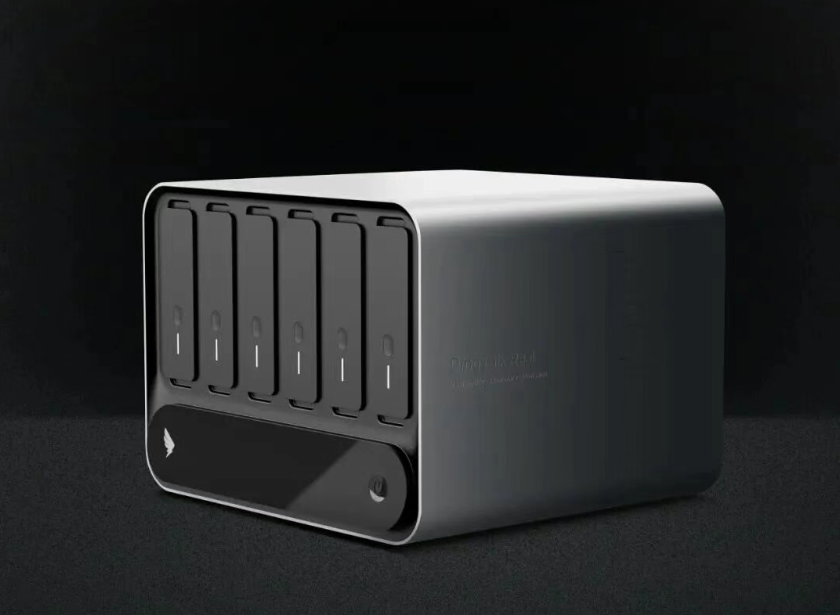
As a teaser product unveiled at the previous launch event's 'next big thing' segment, DingTalk Real is positioned as the physical embodiment and execution hub for enterprise clients to deploy and leverage Agent capabilities.
Against the backdrop of Microsoft's 2023 release of Copilot, which swiftly cemented 'assistant'-style products as a mainstream AI-to-B paradigm, AI is seamlessly integrated within Office, email, spreadsheets, and CRM systems as intelligent plugins, maximizing efficiency for individual knowledge workers.
Moreover, vertical SaaS applications like Salesforce Einstein and Token-centric MaaS platforms emphasize seamless cloud-based AI access. These implementations lower the barriers for enterprise adoption while leveraging existing software infrastructures, enabling rapid evolution of model capabilities through usage.
The launch of DingTalk Real and its underlying Agent OS signals DingTalk's unique direction. This reflects both a differentiated market positioning and strategic decisions rooted in serving mainstream clients.
Hardware = Data Sovereignty + Security Compliance?
The dilemma of whether to migrate to the cloud or build private IDCs has persisted since the advent of cloud computing.
Beyond cost negotiations—where clients find cloud services expensive and vendors view price cuts as unprofitable—data security and compliance emerge as critical considerations for domestic businesses.
While OpenAI and Microsoft aggressively promote cloud-centric solutions, DingTalk takes a counterintuitive approach with hardware. This creates parallel choices for enterprises in AI adoption.
For numerous enterprises—financial institutions, large manufacturers, and pharmaceutical companies—data sovereignty is not a luxury but a survival imperative. They inherently distrust 'cloud AI' due to concerns over data ownership, Agent execution transparency, and corrective mechanisms when AI deviates. This mindset permeates their model service selections.
From this vantage point, DingTalk's 'integrated software and hardware' approach—creating physically controlled execution terminals for Agent services—resonates with 'mainstream client needs' for resource allocation. DingTalk's core market comprises large manufacturers and government enterprises. Under this client structure, simply emulating the 'cloud Copilot + SaaS plugin' model is impractical.
Analyzing DingTalk Real's product form, it essentially issues a 'legal pass' for AI Agents within enterprise private boundaries. Its three 'Real' principles—authentic identity, authentic data, real-time processing—ensure Agent operation within controlled hardware environments.
Compared to intangible cloud AI, physical entities offer superior demonstrability of controllability and security. A case in point is DingTalk Real's 'emergency power-off' switch, highlighted by Wu Zhao. Though seemingly 'brutal' and primitive, this design addresses security anxieties among large organizations and government clients on a psychological level.
It sends a resounding message to business owners: AI is not a runaway horse; humans retain ultimate physical control. This 'integrated software and hardware' strategy mirrors DingTalk's pragmatic choices within China's regulatory landscape.
Beyond hardware, another pivotal system-level change at this launch is Agent OS and the versatile task-processing Agent 'Wukong.'
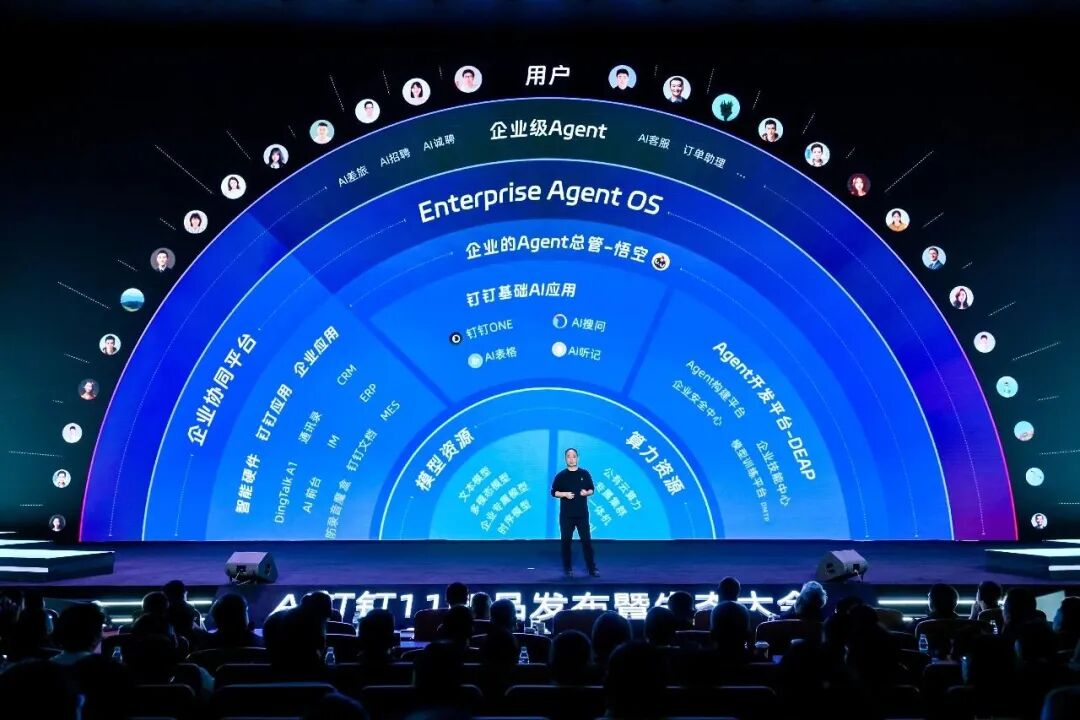
Officially dubbed 'the world's first intelligent work operating system for AI,' it delegates human operational permissions to Agents via MCP (Model Context Protocol). For instance, conversational AI can draft a business trip request, while DingTalk's Agent directly accesses travel interfaces for price comparisons, bookings, and OA system approvals.
MCP is not a novel concept, nor is Agent-model capability integration exclusive to DingTalk. The challenge lies in traditional monitoring's inadequacy for such Agent workflows. Many inter-step invocation processes and intermediate input-output states elude capture by conventional logs and tracing tools, creating 'black-box execution.' Until reasoning processes and intermediate decision chains are fully auditable, the 'hallucination black box' remains a significant hurdle for enterprise AI adoption—MCP included.
In traditional coding, input A invariably yields output B. Vibe Coding disrupts this deterministic logic. Martin Fowler, author of 'Refactoring' and seasoned software engineer, cautions that AI is ushering us into a 'probabilistic fog' of uncertainty. Organizations running multi-Agent systems may face systemic failures when one Agent processes erroneous data from a prior step.
Grasping this context elucidates DingTalk's confidence in proposing Agent OS: hardware deployment ensures physical-level control over AI and related data, prompting enterprises to grant Agents broader permissions for organizational process integration—beyond superficial content or code generation.
Judging by DingTalk's open integration of Wukong for fundamental atomic capabilities like scheduling, approvals, and note-taking, even with physical carriers, its AI-driven organizational process penetration remains measured. However, it is evident that under Wu Zhao's leadership, DingTalk's strategic path has crystallized.
The 'Certainty' Gambit
In 2023, Alibaba articulated a vision of infiltrating AI across all industries. Unlike consumer (to C) markets, where AI subtly integrates into user dialogues, the business (to B) market is more demanding.
Enterprises do not invest in 'intelligence' per se but in 'low-cost, certain outcomes.' Consider an extreme case: industrial manufacturing relies on parts per million (PPM) as a key yield metric. High-precision demands keep exact modeling paramount in industrial intelligence, with large models confined to process optimization like inspections.
Following this rationale, DingTalk's vertical-scenario Agents integrated into Agent OS, such as 'AI Printing' and 'AI Travel,' prioritize 'error-free' performance over raw capability or intelligence.
Take AI Printing: in design and printing, minor typographic errors can lead to significant waste losses. While AI is prone to inaccuracies, DingTalk supplements base models with 'relevant human processing support.'
AI Travel and AI Recruitment adhere to simpler logics. The former identifies and compares flight/hotel prices, obtains booking authorization, and automates reservations and reimbursements. The latter structures 'input-output' for resume searches based on enterprise requirements, with Agents completing confirmation steps per permissions.
Overall, DingTalk embeds Agent capabilities into highly specific scenarios as atomic units within business workflows, replacing time-consuming manual processes. This organizational optimization echoes DingTalk's early OA-based collaboration approach—simplicity takes a backseat to reliability and boss convenience.
DingTalk, a pioneer in top-down management tools, now treads a similar path in AI-to-B adoption.
At the launch, Wu Zhao stated, 'The August 1.0 version marked AI DingTalk's inaugural step. Today, we can proudly declare DingTalk has fundamentally transformed into an AI operating system.' While the endpoint remains ambiguous, as DingTalk Real penetrates deeper and more enterprise processes run on its Agent protocols, migration costs will become prohibitive.

However, this logic confronts practical challenges.
Operating system success hinges on developers. Agent OS's evolution requires DingTalk to retrace its PaaS journey. Under a Token-based (vs. subscription) business model, fostering an active third-party developer ecosystem is paramount. Another challenge lies in cost: integrated software and hardware entail heavier supply chain management and capital investment for DingTalk, while posing upfront cost barriers for enterprise users.
Globally, DingTalk's path bears distinct 'local characteristics.' Rather than targeting knowledge workers, it integrates AI into highly complex, risky, and granular business scenarios. Agents ensuring business deliverability may become the efficient, trustworthy digital employees DingTalk's clients crave.
Thus, we must look beyond technology to assess AI DingTalk 1.1's changes—it offers a pragmatic, localized implementation template for China. In AI-to-B, the ultimate victor may not be the model with the highest benchmark score but the one enabling stable AI operations in factories, government offices, and travel workflows.
-
The RTX 3060 Makes a Comeback Amid a Mix of Old and New Hardware, Making 2026 the Worst Year for the PC Industry
-
![]()
Zhang Yiming Achieves Jack Ma's 'Dream': Douyin Surpasses 1 Billion Monthly Active Users First!
-
The Complete Decline of Fuel-Powered Vehicles! Only One Model in July's Top 10 Sales
-
![]()
What Are the Three World Models in BYD's HyWorldVLA: Pixel-Level, Latent Space, and Hybrid?
-
Raking in 23.7 Billion Yuan in Just Half a Year! Has Foxconn Industrial Internet Turned a New Leaf?
-
Offline Competition Among Big Companies for Customers: The Battle for Desktop Access with Office Agents
-
![]()
Starting at 3199 yuan, the REDMI K100 series has been launched, making me start to worry for the Xiaomi 18
-
![]()
Xiaomi's MiMo Stages a Two-Year Comeback to Top Global Inference Volume Rankings