AI Goes Global: Tapping into a New Era
 02/06 2026
 641
641

Author | Liu Jingfeng
As 2026 begins, AI continues to dominate headlines:
First, Claude Code ignites a productivity revolution, enabling developers to complete full-stack development without writing a single line of code. The "Claude-pilled" phenomenon spreads across social media, as developers spontaneously form a creative wave, propelling it from a professional tool to a mainstream application.
Next, Clawdbot (now renamed OpenClaw) lowers the barrier to AI tool usage with its "everything-in-the-chatbox" experience, amassing over 100,000 GitHub stars in its first week. Overseas communities even see a surge in Mac Mini purchases due to this tool.
For the general public, the upcoming Spring Festival Gala red envelope battles among Alibaba, Tencent, and Baidu may finally bring AI into everyday households.
The singularity of the AI revolution has truly arrived. What fuels this excitement is not just the stunning technical experiences but also the wealth redistribution AI enables. Keen observers have already spent the past year or two exploring global opportunities, sparking a wave of AI entrepreneurship worldwide. Thus, 2025 marks a true "boom year" for AI global expansion.
Meanwhile, AI drives unprecedented wealth growth. On January 9, MiniMax went public on the Hong Kong Stock Exchange, becoming the world's fastest AI company from inception to IPO, with its stock price soaring 109% on opening day. OpenAI had virtually no commercial revenue before 2022, but its ARR (Annual Recurring Revenue) surged from $2 billion to nearly $20 billion between 2023 and 2025. Claude Code crossed the $1 billion revenue threshold in just 180 days in 2025. Additionally, Zhipu AI's IPO and Meta's multi-billion-dollar acquisition of Manus further illustrate AI's wealth-creation stories...
PwC's report, Sizing the Prize, predicts that by 2030, AI will contribute $15.7 trillion to the global economy, equivalent to a 14% increase in global GDP.
At this critical juncture of global AI value explosion, this article reviews China's AI progress in 2025, highlights the changes and commercial expansion of Chinese AI products overseas, and explores the future trajectory of AI globalization.

Behind every major wealth redistribution lies a fundamental driver—technological revolution.
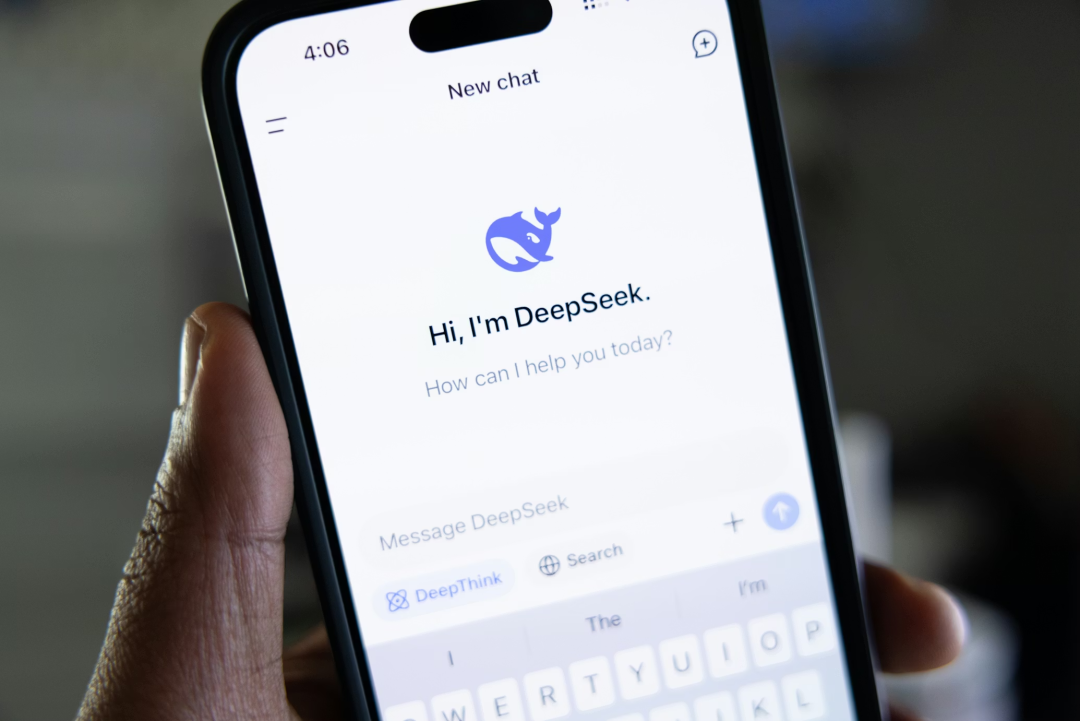
In January 2025, DeepSeek launched a new era of Chinese AI globalization with its ultra-low cost (input price about 1/15 of GPT-4 o1) and performance comparable to GPT-4 o1.
Data shows that one month after DeepSeek-R1's open-source release (January 20, 2025), it captured 35% of the Southeast Asian developer market. Subsequently, it gained popularity in the Middle East and Latin American markets like Brazil and Chile.
DeepSeek's emergence initially caused anxiety among AI teams at Chinese tech giants, but Alibaba remained relatively unaffected. As early as June 2024, Alibaba's Qwen2 surpassed Meta's Llama3 in benchmark tests for same-scale models, joining the global top tier of open-source models. By April 2025, Qwen3 outperformed leading global models like DeepSeek-R1 and OpenAI-o1 in multiple authoritative benchmarks.
In July 2025, Hugging Face, the world's largest AI open-source community, reported that Chinese open-source models officially surpassed U.S. models in downloads, with Alibaba's Qwen topping the charts.
Looking back just a year earlier, few believed Chinese companies would rapidly catch up to U.S. firms in the AI large model race, becoming a new global AI powerhouse.
In tech's frontline Silicon Valley, companies voted with their feet: Airbnb CEO Brian Chesky stated in interviews that their customer service AI heavily relies on Alibaba's Qwen. Thinking Machines Lab, founded by former OpenAI CTO Mira Murati, acknowledged in technical documents that its inspiration came from the Qwen3 series. Even Amazon's newly formed embodied AI division announced it would build its foundational model on Qwen3, combined with DeepSeek's distillation technology...
This represents not just individual model breakthroughs but a leap in China's overall AI capabilities. A November 28, 2025, Goldman Sachs report noted that while U.S. foundational text and multimodal models consistently lead in updates, Chinese models typically close the gap within 3-6 months and release subsequent upgrades—a gap that previously took two to three years.
Li Kaifu, CEO of 01.AI and chairman of Sinovation Ventures, told China Newsweek, "If Chinese companies insist on closed-source models, they'll struggle to defeat U.S. firms." Two years ago, the "technology gap" between top closed-source and open-source models was significant, but by 2025 it had narrowed to about six months, corroborating Qualcomm's findings.
The open-source approach rapidly achieves efficiency innovation, talent activation, ecosystem building, and global collaboration through "crowdsourcing," enabling Chinese AI large models to catch up quickly despite resource constraints. Thus, open-source has become a key breakthrough for Chinese AI companies going global.
"In the past two years, Chinese AI startups expanding overseas mostly built products on top of overseas large models like ChatGPT and Gemini, limiting innovation and raising compliance issues. The emergence of open-source models like DeepSeek makes it easier for startups to develop applications based on these models while resolving compliance concerns. Now, many AI entrepreneurs target global markets from day one," said Zhou Dezhen, COO of Wave Speed AI, discussing the 2025 AI globalization trend.
Meanwhile, China holds unique advantages in data and training costs. Mickey, CEO of overseas social media marketing service provider Growmax, who studied in the U.S., told Xiaguang Society that her professor believed China's AI strengths lie not just in training costs but also in data. U.S. data privacy agreements restrict corporate data granularity, while Chinese tech companies have accumulated vast, diverse datasets. "Under any data label, they can develop specialized vertical agents," she said.
Developing models in China with low-cost computing power and data, then commercializing them overseas, appears to form a perfect closed loop (closed loop).

For AI companies going global, profitability is paramount.
In January 2025, Xiaguang Society spoke with multiple AI global entrepreneurs, who nearly all emphasized that a core goal of AI globalization is better commercialization. The global AI market offers far greater space than China's, and overseas users demonstrate stronger payment willingness.
According to Manus founder Xiao Hong, "Overseas users' willingness to pay for software may be five times that of Chinese users, and with dollar pricing—at an exchange rate of 7, that's 5x7=35—creating at least a 35x larger market."
Moreover, while domestic large models often offer free tokens to attract users and rely mainly on token consumption for revenue later, overseas model vendors generate substantial income from subscriptions and token fees.
In reality, many Chinese large models ultimately depend on overseas markets for commercialization. For example, MiniMax, which went public early in the year, derived 70% of its revenue from overseas markets in the first nine months of 2025. Kimi's overseas API revenue grew fourfold by late 2025, surpassing domestic revenue.
"Successful AI projects today are those that targeted European and U.S. markets from day one. Overseas users are willing to pay for tools, ensuring good returns on your efforts, rather than just acquiring many users who consume tokens but don't generate revenue," said Zhou Dezhen.
Specifically, AI products with strong payment willingness share certain traits. "We see strong payment willingness overseas in two markets: efficiency improvement (e.g., agent tools) and emotional fulfillment (e.g., AI companionship or social products)," said Liu Chuanlin, Chief Solutions Architect at Wuxian Xinqiong.
In AI's early stages, productivity gains drove initial market acceptance. After surpassing early productivity improvements, AI's consumer-side innovation will exceed efficiency gains in value. This means AI's long-term driver will shift from "cost reduction" to "demand creation."

This indicates that AI product value is now recognized. MiniMax, which went public after New Year's Day 2025, saw its stock price surge 109% on debut, widely favored by investors. In 2023, it launched AI companion product Talkie overseas. By the first nine months of 2025, Talkie had 1.7716 million paying users, with ARPPU (Average Revenue Per Paying User) rising from $6 to $15.
The key to product success lies in targeting the right scenarios. From Talkie to SeaArt, Lovart, Vidu, and Mootion—all high-growth overseas AI products—none compete directly with overseas giants on model performance. Instead, they enter through specific scenarios like tools, social, imaging, and education, leveraging stronger localization, more flexible commercial strategies, and faster iteration to gain footholds on overseas users' phones, creating a product ecosystem distinct from Western players.
Take AI video generation as an example. Mootion CEO Tong Chao told Xiaguang Society that for AI video to achieve a closed loop from download to payment, it must enhance basic model capabilities with multimodal models. Unlike raw video footage, complete videos require control over shooting, editing, and post-production, necessitating a multi-agent system to deliver a finished product. "Users pay for the final result," he said.
This means AI products must "deliver results" to commercialize overseas—the first test for all AI entrepreneurs going global.
Building on this foundation, businesses must refine their commercial models.
While AI global companies adopt diverse models, the main approaches are C-end subscriptions and B-end project delivery. Among AI applications with global ARR exceeding $100 million (OpenAI, Anthropic, Cursor, Lovable, Otter.ai, Glean, Sierra, AI21 Labs, Cohere, Suno, Manus), most operate overseas. Even Manus, developed by a Chinese team, ultimately commercialized overseas.
This trend arises from two factors: market payment capacity and organizational talent fit. According to CGL's 2025 Job Market Report, talent competition among AI global companies has entered a phase of "precision" and "value reassessment." The report shows that in 2025, 33.3% of mid-to-high-end talent flowed into AI and hard tech fields, with 16.3% moving to global expansion-related roles. Talent motivations shifted from pure "salary-driven" to seeking "long-term career growth" (50%) and "frontier project impact." Fiona Fang Ling, CGL's co-founder, noted that to convert technological advantages into "new money" overseas, companies must not only refine products but also build organizational ecosystems that attract and retain top "cross-border talent"—those who understand both technology and overseas market rules, serving as core engines for "productivity enhancement" and "consumer innovation."
After the business model, it is essential to excel in the marketing of AI products.
"In 2025, we provided overseas marketing services to over 40 AI companies going global," Mickey told Xiaguang Society. While serving these AI companies, Mickey observed that current AI companies going overseas tend to prioritize "shortcuts" in marketing—focusing more on driving growth through paid traffic and achieving commercial conversions, while neglecting the accumulation of product branding and the establishment of user mindshare.
"In the past, when people made manufactured goods or hardware products, they had brand awareness. In fact, AI applications also need to establish brand trust. Otherwise, after investing significant costs, if overseas users cannot find more information about you when they search, they may think it's a 'fly-by-night product,'" Mickey said.
For overseas AI products, such as OpenAI, their founders frequently post updates and insights on their personal social media pages, building their personal brand while also endorsing their products. In Mickey's view, this is something AI companies going global must consider if they want to engage in long-term brand building.
Besides that, Mickey also noticed a hidden concern regarding AI companies going global. In the past two years, some Chinese AI companies have developed products domestically and then expanded overseas, gaining recognition from major overseas firms, leading to an increasing number of acquisition cases. A significant reason is that overseas giants lack sufficient data, and by acquiring Chinese AI products, they can quickly obtain and train data. "When I attended CES this year and communicated with everyone, I felt that many companies in Silicon Valley were waiting for us to refine our data and products before acquiring them, hoping to reap the benefits without effort. This may also be the consideration behind the national regulatory measures since the end of last year regarding overseas acquisitions of Chinese AI companies going global," Mickey said.

The fierce competition among global AI companies over the past year has not only filtered out the strong but also reshaped the global competitive landscape.
The giants who once sat firmly on their thrones are now seeing their positions shake. Data from Feifan Industry Research shows that in December 2025, although ChatGPT still had 5.52 billion monthly visits, it continued to decline by 5.59% month-over-month; monthly active users also fell by 2.06% month-over-month, marking two consecutive months of "double negative growth" in visits and active users. Its market share among daily active users in the United States also dropped from 69.1% to 45.3%.
In contrast, its competitors' products performed aggressively: Google's suite of products showed a joint upward trend in December, with Gemini reaching approximately 1.74 billion visits, up 28.38% month-over-month, and monthly active users growing by 9.08%; Grok had about 270 million visits in December, up 15.67% month-over-month; Doubao had around 110 million visits in December, increasing by 14.97% month-over-month, with monthly active users growing by 10.65%; while Quark and Baidu AI Search saw their December visits grow by 13.58% and 32.19% month-over-month, respectively; DeepSeek had about 310 million visits in December, down 5% month-over-month, but it still ranked among the top three globally.
Alibaba's Qwen is also becoming increasingly formidable. On December 27, 2025, WIRED, a renowned U.S. tech media outlet, published a headline article stating that 2026 will be the year of Alibaba's Qwen. On January 15, 2026, the Qwen App announced that its monthly active users (MAU) across the network had surpassed 102 million, with a high activity rate of 42.18%, far exceeding the industry average.
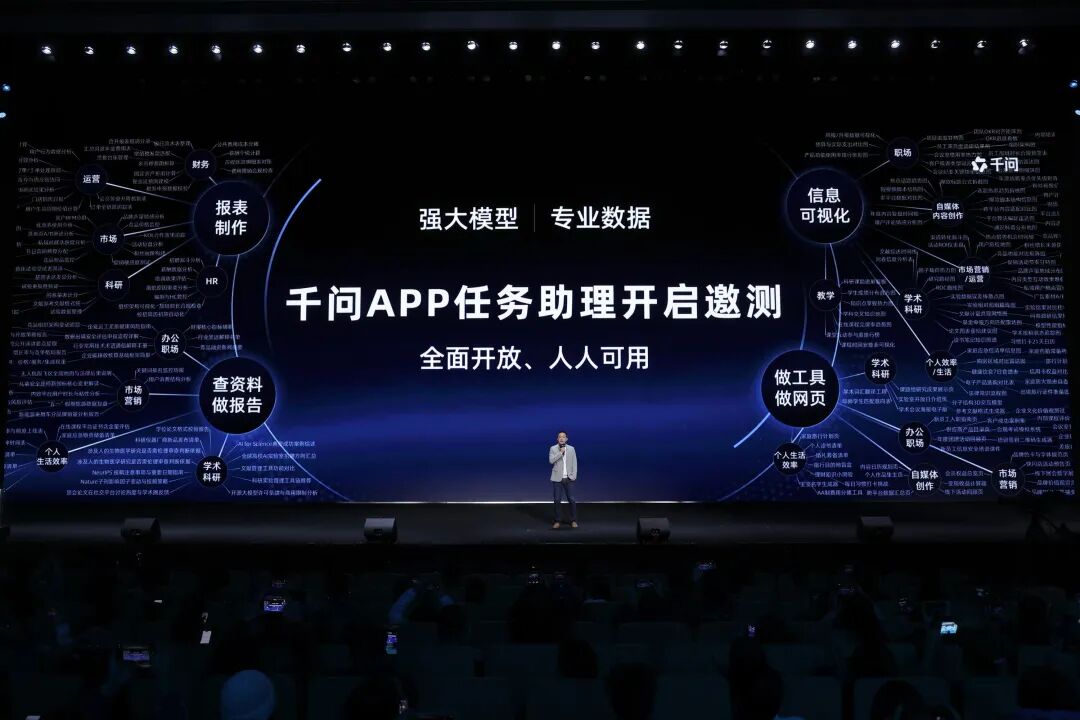
With the approach of the Chinese Spring Festival, Alibaba, Tencent, and Baidu have each announced investments of 3 billion, 1 billion, and 500 million yuan, respectively, to drive traffic to AI through Spring Festival red envelopes. Currently, the entry points for AI traffic in China are almost "sealed off" by giants like Alibaba, ByteDance, Tencent, and Baidu, leaving little room for new startups to break through.
For startups, the greatest opportunities may lie in the application layer: on the one hand, the integration of AI Agents with various fields, such as video, music, education, short dramas, social media, etc., has already produced some star projects; on the other hand, the combination of AI and hardware has given rise to emerging sectors like AI glasses and AI toys.
Data from Market Research Future shows that the global AI toy market size exceeded $11 billion in 2024 and is expected to soar to $58 billion by 2030, with a compound annual growth rate of nearly 30%. At this year's CES, Xiaguang Society also noticed the emergence of numerous AI toy companies, which were highly sought after by investors. Perhaps in 2026, this will be a highly promising sector.
Over the past three decades, the internet wave has created a large number of self-made trillion-dollar enterprises; today, AI offers the next generation of entrepreneurs the opportunity to replicate the previous wealth myth—opening a path to wealth creation on an even larger scale and broader market. How will the era reward those brave trendsetters? We shall wait and see.
-
![]()
DPCA Technology Launched, Pioneering a New Era for Joint Ventures: Taking 'Chinese Heritage' Global
-
![]()
Spring in the Rack: UCloud Rides High, Yet Fundamentals Impose Limits
-
![]()
Why Has the 'Urban Bulk Commodity Boom' Intensified Over the Past Two Years?
-
Is Another Joint Venture Brand on Its Way Out?
-
![]()
Doing the Math for Kuaishou and Kling
-
![]()
From Elusive to Aggressively Priced: Lexus Sheds Its 'Standoffish' Image
-
![]()
China Initiates Satellite IoT Operations, with Geely Satellite Networks Poised for 6G
-
![]()
Is China's Auto Industry Heading into the 'Fiercest Final Showdown'? Li Bin Says It's Not a Simple Elimination, But the Grand Finale