What Should We Focus on in Alibaba's Earnings Preview?
 03/16 2026
 512
512
After Two Years of 'All in AI,' It's Time for Alibaba's Transformation Story to Deliver Results.
A few days ago, I had dinner with some friends—one runs e-commerce operations, another works in cloud technology, and a third is an AI entrepreneur. Somehow, the conversation turned to Alibaba.
The e-commerce friend said that AI tools in the backends of Douyin and Taobao are now ubiquitous, handling tasks like writing product titles, creating main images, and managing traffic. It saves a lot of effort, but competition has intensified—if you can list 10 products a day using AI, so can others. In the end, it still comes down to supply chain strength.
The cloud friend mentioned that when clients inquire about cloud services now, their first question is about your large model capabilities—can it be deployed privately? Can you provide industry-specific solutions? Eight out of ten deals now involve AI in some way.
The AI entrepreneur said they're using Tongyi Qianwen's open-source model, which makes secondary development easy and has an active community. They don't need to train models from scratch, saving immense effort.
You see, different people perceive Alibaba's AI efforts differently based on their perspectives. Some see it as truly transforming the business, others view it as just a tool swap, and some think it's building an ecosystem through open-source.
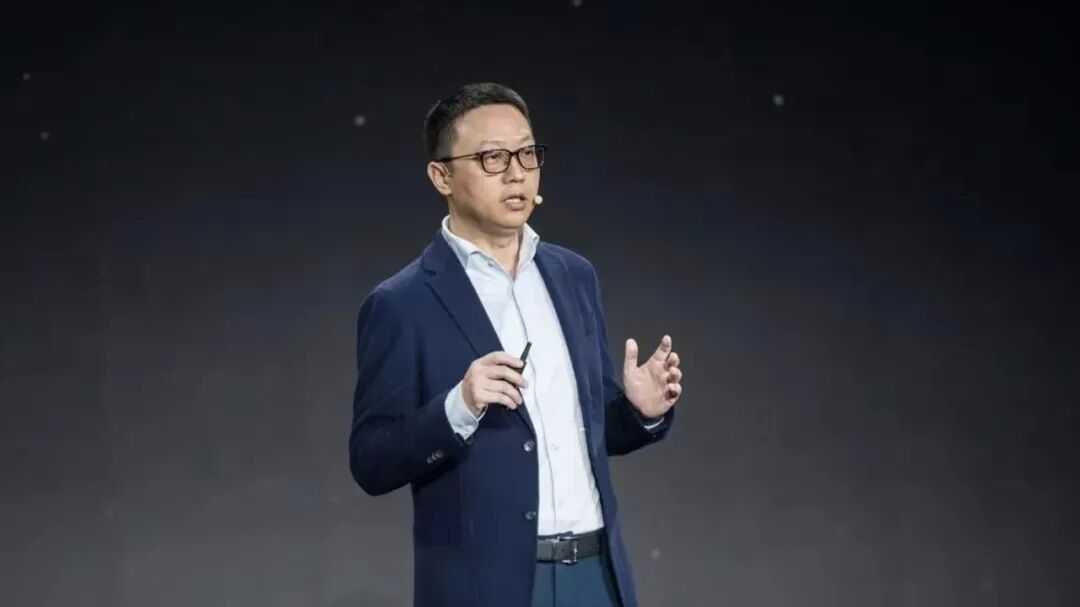
In about two months, Alibaba will release its full-year financial results for FY2026. This will be the third annual report since Wu Yongming took over as CEO and the first opportunity for the market to fully assess how the company's two-year-old "User First, AI-Driven" strategy has performed and how far its transformation has progressed.
01
From Strategy to Execution: Alibaba Has Woven AI into Its Corporate DNA
Many still associate Alibaba's AI efforts with the launch of Tongyi Qianwen or the Qianwen App's subsidy campaigns during Chinese New Year. However, Alibaba's core achievement over the past two years has been transforming AI from a technical department's project into the company's foundational logic.
When Wu Yongming first took office, Alibaba was in an adjustment phase. The previous restructuring plan was paused, and silos remained between business units. Facing the AI wave, each unit operated independently without synergy. Wu's first move was to make AI the company's core future strategy and implement it through organizational structure and performance metrics.
I discussed this with several Alibaba employees, who said the most noticeable change was in performance evaluation criteria. "Not just core businesses—nearly every business unit's KPIs now revolve around AI-driven growth," one explained.
Resource allocation followed suit. In 2025, Alibaba announced plans to invest over 380 billion yuan in cloud and AI infrastructure over three years, exceeding its total investment in similar areas over the past decade. Latest earnings show cumulative capital expenditures in "AI + cloud" infrastructure reached 120 billion yuan over the past four quarters—just the beginning. Alibaba management has stated that previous strategic investment plans were conservative and that they're prepared to increase investment further when market demand outstrips supply.
At the 2025 Cloud Town Conference, Wu Yongming outlined Alibaba's three-stage roadmap to superintelligence: emergence of intelligence, autonomous action, and self-iteration. Clearly, Alibaba's AI transformation isn't about chasing a viral model but involves long-term planning to fully integrate AI capabilities across all business scenarios and reconstruct the company's commercial logic.
02
Alibaba Cloud + Tongyi Qianwen: Core Barriers in the B2B Battlefield Have Taken Shape
Let's start with Alibaba Cloud and Tongyi Qianwen—the core of Alibaba's AI transformation and the most commercially advanced segment.
Cloud services naturally serve as the best commercialization vehicle for large models. Enterprise clients need more than just API access—they require computing power, data security, industry solutions, and operational support, all areas where cloud providers excel. Having dominated China's public cloud market for years, Alibaba Cloud provides a strong foundation for AI commercialization.
Financial results clearly show growth. According to Alibaba's quarterly earnings, driven by AI demand and public cloud revenue, Alibaba Cloud's quarterly revenue surged 34% YoY to 39.824 billion yuan, setting a new growth record. AI-related product revenue has achieved triple-digit YoY growth for nine consecutive quarters.
Tongyi Qianwen serves as the linchpin for Alibaba Cloud's AI commercialization. Many recognize it for its strong open-source presence—a core advantage. By December 2025, Tongyi Qianwen had open-sourced over 300 models, surpassing 600 million global downloads, and spawned over 170,000 derivative models, ranking first worldwide and overtaking America's Llama series.
Technologists understand that open-sourcing large models isn't charity. It rapidly builds ecosystems, attracting global developers to use and optimize your models, creating a virtuous technical cycle. More importantly, when developers and startups adopt your open-source models, they naturally prefer your cloud services for deployment, generating a steady stream of cloud customers.
This holds true. According to Frost & Sullivan's "China GenAI Market Insight: Enterprise Large Model Adoption Landscape Research, H2 2025," daily enterprise large model calls in China skyrocketed to 37.0 trillion tokens in H2 2025, up 263% from 10.2 trillion in H1. Headline models increased their shares, with Alibaba Cloud Qianwen seeing the largest gain—jumping to 32.1% from 17.7% in H1, nearly doubling its market presence.
Critically, these clients span finance, manufacturing, retail, government, and more—not just internet sectors, indicating a healthy industry distribution. This contrasts with Volcano Engine, which saw rapid growth but remains concentrated in internet and content industries with standardized model demands. Alibaba Cloud's clients are more dispersed, with higher traditional industry representation requiring end-to-end solutions—Alibaba Cloud's strength.
03
AI Transformation in E-commerce: More Than Just Tool Replacement
Now, let's discuss e-commerce—Alibaba's core business and the most practical AI application scenario. For Alibaba, the success of its AI transformation hinges on whether it can reconstruct matching efficiency between people, products, and platforms in e-commerce to deliver tangible value to merchants and users.
Over the past year, Taobao & Tmall Group's AI tools have covered nearly every aspect of merchant operations—from product creation and marketing to customer service, supply chain optimization, and user engagement.
In marketing, Alimama's Wanxiangtai AI, a super operating agent for merchants, achieved double-digit ROI growth across all scenarios during 2025's Double 11, helping brands in over ten sectors double their transactions YoY. The concurrently launched "Full-Site Product Push" feature used AI to intelligently screen potential hit products, simplifying operations.
However, merchants of different sizes experience AI tools differently. Top brands have dedicated operations and tech teams that fully leverage AI capabilities across product creation to marketing, achieving clear efficiency and growth gains. For the vast majority of SMBs on the platform, AI tools still present barriers. Free features offer limited effectiveness, while truly efficient paid features remain costly for small merchants—many haven't yet reaped AI's benefits.
This is Taobao & Tmall's next challenge. AI tools must serve not just top merchants but also make them accessible and effective for millions of SMBs—the key to long-term stability in e-commerce.
04
C-Side Qianwen App: Beyond Traffic Boom—Finding Real User Needs
After discussing B2B and merchant-side efforts, let's examine the C-side Qianwen App—Alibaba's major attempt at a consumer AI gateway.
In November 2025, Alibaba rebranded the original Tongyi App as Qianwen App, upgrading it to version 5.0 while integrating core Alibaba ecosystem apps like Taobao, Alipay, Gaode, and Fliggy. Over 400 AI-powered administrative functions were launched, enabling users to complete high-frequency tasks like booking flights, hotels, ride-hailing, and food delivery with a single voice command.
Qianwen App gained mainstream attention through its 2026 Chinese New Year "Treat Campaign," where Alibaba allocated 3 billion yuan in subsidies. Users could enjoy free orders via "one-sentence ordering." During the campaign, AI orders neared 200 million. According to the AI Product Rankings' February 2026 global chart, Qianwen ranked third in MAU (20.269 billion) among AI apps worldwide, behind only ChatGPT and Doubao, with a 552.83% growth rate.
However, post-subsidy, the market focuses on user retention and long-term value. Many downloaded Qianwen for freebies, not AI features—without subsidies, they lack incentive to open the app.
The core issue is why users should open Qianwen. Alibaba positions it as the AI gateway to its ecosystem, aiming to unify all services through one app where natural language completes all actions. But for average users, ordering food via Ele.me, hotels via Fliggy, or rides via Gaode involves minimal steps already—no need for an extra layer like Qianwen to voice commands.
05
Real Challenges Ahead on the Transformation Path
Transformation is never smooth, and Alibaba's AI journey faces tangible challenges that the upcoming earnings report must address.
Many will scrutinize the report for revenue growth, profits, and market share, but more importantly, we should assess whether Alibaba has built long-term AI competitiveness.
Comparing Alibaba's approach to ByteDance's strategic and product successes in AI, it's clear that AI isn't a fad—it can't be won with one or two hit products. It's a marathon requiring technical accumulation, ecosystem building, scenario implementation, and sustained investment and patience.
After two decades in commerce, Alibaba's core strength lies in building commercial infrastructure that creates value for merchants and users—from early Taobao to later Alipay and Alibaba Cloud. Its current AI transformation follows the same logic: using AI to reconstruct commercial infrastructure and generate new value for merchants, enterprise clients, and users.
From this perspective, Alibaba's AI transformation is on the right track. It hasn't chased C-side traffic hype but embedded AI capabilities across all business scenarios—from B2B to B2C, cloud to e-commerce—forming a complete closed loop (closed loop).
However, the road remains long with many obstacles. When will massive investments yield stable returns? How can C-side products find genuine user value? How will it break through industry competition? How will it achieve technological autonomy? These are questions Alibaba must address step by step.
Most critically, can this veteran Chinese internet giant regain its rhythm in the AI era?
-
![]()
Proposed to Raise 955 Million Yuan through Private Placement! Huicheng Vacuum Boosts Localization of Ultra-Precision Optical Coating Equipment
-
![]()
Cash Flow Soars 13-Fold! What Major Strategic Move is Wuhan Five Square Optoelectronics Planning?
-
![]()
Leaked Design of vivo X500: Reverts to Circular Camera Module in Top-Left Corner, Pays Homage to Classic X90 Aesthetic
-
![]()
DeepSeek Shows Signs of Foraying into Code Agents, Launches WeChat Official Account Focused on Harness
-
![]()
Auto Companies Deny Claims That ‘Cooperation with Huawei Is Non-Essential’, as Huawei Transforms into a ‘Public Platform’
-
![]()
Starship to Independently 'Return to the Launch Tower': SpaceX's Ambitions Extend Beyond Rocket Building to Dominating Space Transportation
-
![]()
Starship Set to Independently 'Return to the Launch Tower': SpaceX is Revolutionizing Space Transportation, Not Just Building Rockets
-
![]()
Anthropic and OpenAI Face Off Against Deepseek