China Telecom’s Growth Stalls This Time
 03/27 2026
 563
563
Author: Fang Qiao Editor: Wang Gefa
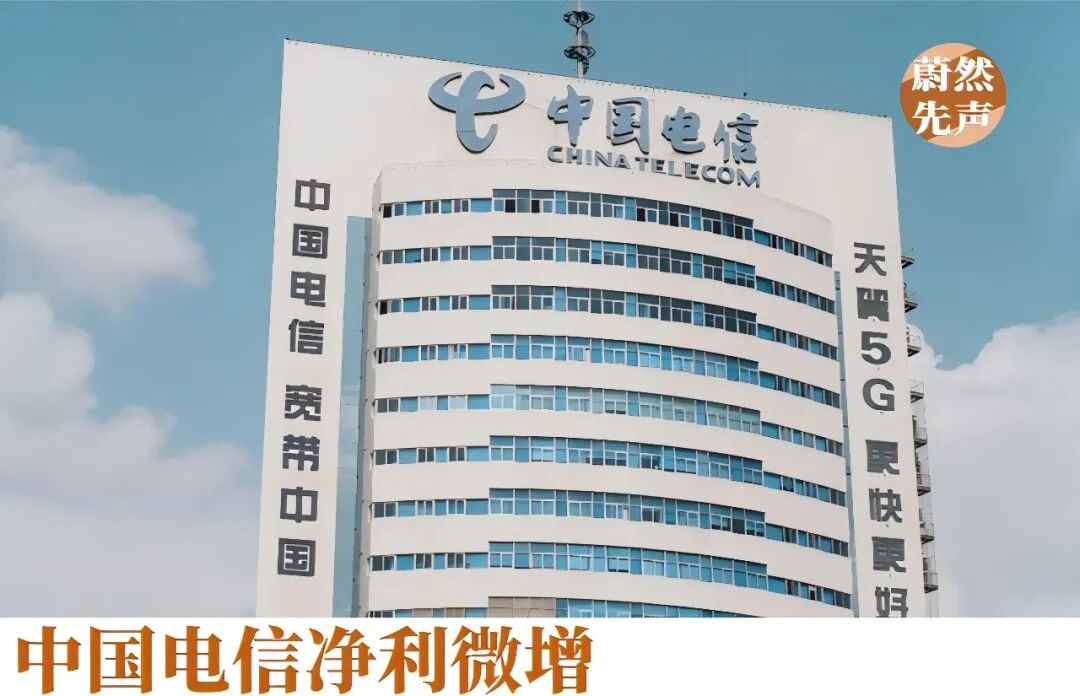
Amid the annual reporting season for China’s three major telecom operators, China Telecom has taken the lead, but its performance has been less than stellar.
On March 24, China Telecom released its full-year financial results for 2025, reporting revenue of RMB 523.9 billion, up 0.1% year-on-year, and net profit attributable to shareholders of listed companies of RMB 33.2 billion, up 0.5% year-on-year. According to Choice data, these growth rates are the lowest since 2019.
Meanwhile, the company’s annual operating cash flow fell by 14.3% year-on-year, while accounts receivable surged, exerting pressure on profit quality. Despite the rapid growth of emerging businesses such as cloud computing, AI data centers, and quantum communications, which partially offset the sluggishness of traditional businesses, the overall situation remains largely unchanged.
Among the three major operators, China Unicom released its annual report first on March 19, and China Mobile is expected to follow on March 26.

From a full-year perspective, China Telecom’s revenue growth in 2025 nearly stalled. The 0.1% increase in revenue and 0.5% rise in net profit are the lowest in six years. Quarterly analysis shows a 0.91% year-on-year decline in revenue in the third quarter, with full-year positive growth primarily driven by accumulations in the first half of the year.
In terms of traditional core businesses, basic services generated RMB 330.5 billion in revenue, up 0.7% year-on-year, while industrial digitalization services contributed RMB 147.3 billion, up 0.5% year-on-year. In terms of user base, mobile subscribers reached 439 million, with 5G penetration rising to 68.8%, and broadband subscribers hit 201 million, with gigabit penetration at 31.6%.
Although the user base remained stable, the continuous expansion of traffic and subscriber numbers failed to translate into significant revenue growth. With 5G penetration nearing 70% and gigabit broadband making steady progress, the growth potential for connectivity services in terms of scale is narrowing—a structural challenge faced by the entire industry, including China Telecom.
In terms of cash flow, the net cash flow from operating activities for the year was RMB 124.52 billion, down 14.3% year-on-year. The company attributed this to prolonged payment collection cycles for industrial digitalization services, leading to a sustained rise in accounts receivable. By the end of 2025, accounts receivable reached RMB 50.17 billion, up 26.53% year-on-year.
Additionally, the company made various impairment provisions totaling RMB 6.234 billion during the year, including RMB 5.699 billion in credit impairment losses related to receivable assets, which weighed on actual profit quality.
Regarding financial expenses, the company recorded RMB 388 million in 2025, up 70.5% year-on-year. The company explained that this was due to adjustments in its capital structure, as bank deposits were converted into relatively higher-yielding structured deposits, causing interest income previously classified under financial expenses to be reclassified under investment income, thereby inflating the reported financial expenses.
In terms of shareholder returns, the company proposed a dividend payout ratio of 75%, distributing a total cash dividend of RMB 0.2720 per share (including tax), amounting to approximately RMB 24.89 billion. In comparison, China Unicom proposed distributing a total dividend of approximately RMB 5.112 billion for the full year of 2025. Given the difference in scale between the two companies, the gap in dividend payouts is as expected.

Despite overall sluggish growth, China Telecom’s emerging business segments delivered notable performances in 2025.
The growth trajectory of the quantum business is particularly telling, with quantum revenue surging by 171.1% year-on-year in the first half, moderating to 134.6% in the first three quarters, and settling at 65.4% for the full year. Although growth decelerated quarterly, the business scale has expanded significantly. The company secured over 5,000 quantum communication clients in government, financial, and energy sectors, with a user base exceeding 6.8 million.
Satellite and visual networking businesses also maintained expansion, with full-year revenues up 30.7% and 31.2%, respectively. While these businesses remain relatively small in scale, their growth momentum remains stable.
Cloud computing represents the largest segment among emerging businesses, with Tianyi Cloud generating RMB 120.7 billion in revenue for the year, securing the second-largest market share in China’s public cloud IaaS sector and ranking among the top three in the combined IaaS+PaaS market. AI data centers contributed RMB 34.5 billion in revenue, security services RMB 16.6 billion, and intelligent services RMB 12.3 billion. Together, these businesses have begun to form a substantial second growth curve.
The technological foundation supporting these businesses lies in the company’s continuous investment in its proprietary "Xirang" system. On the computing front, the company’s proprietary intelligent computing capacity reached 46 EFLOPS, with external access contributing to a total exceeding 91 EFLOPS. On the data front, it accumulated over 10 trillion tokens of large-scale model training corpora, with industry-specific datasets covering 14 sub-sectors and totaling over 500 TB. On the application front, it launched over 110 industry-specific large models and over 350 industry intelligent agents for external clients, serving more than 37,000 customers.
In 2025, the company invested RMB 15.6 billion in R&D, up 7.3% year-on-year—a commendable effort given the near-stagnant revenue growth.
However, a horizontal comparison reveals a clear gap: Tianyi Cloud’s RMB 120.7 billion revenue accounts for less than a quarter of the company’s total revenue of over RMB 500 billion, indicating that emerging strategic businesses are not yet fully compensating for the slowdown in traditional core businesses.
For 2026, the company has explicitly positioned "token services" as its main operational focus, aiming to transition into an AI service provider. The success of this strategy hinges on both sustained technological advancements and the actual pace of market demand release—a verdict that only time will tell.
Disclaimer: The content of this article is for reference only. The information or opinions expressed herein do not constitute any investment advice. Readers are advised to make investment decisions with caution.
-
![]()
Proposed to Raise 955 Million Yuan through Private Placement! Huicheng Vacuum Boosts Localization of Ultra-Precision Optical Coating Equipment
-
![]()
Cash Flow Soars 13-Fold! What Major Strategic Move is Wuhan Five Square Optoelectronics Planning?
-
![]()
Leaked Design of vivo X500: Reverts to Circular Camera Module in Top-Left Corner, Pays Homage to Classic X90 Aesthetic
-
![]()
DeepSeek Shows Signs of Foraying into Code Agents, Launches WeChat Official Account Focused on Harness
-
![]()
Auto Companies Deny Claims That ‘Cooperation with Huawei Is Non-Essential’, as Huawei Transforms into a ‘Public Platform’
-
![]()
Starship to Independently 'Return to the Launch Tower': SpaceX's Ambitions Extend Beyond Rocket Building to Dominating Space Transportation
-
![]()
Starship Set to Independently 'Return to the Launch Tower': SpaceX is Revolutionizing Space Transportation, Not Just Building Rockets
-
![]()
Anthropic and OpenAI Face Off Against Deepseek