AI-Powered Comic Dramas: A New Partner for Game Giants?
 05/09 2026
 604
604
Written by / Chen Dengxin
Edited by / Li Jinlin
Typeset by / Annalee
The gaming landscape is undergoing subtle changes.
Previously, only a handful of game developers experimented with AI-powered comic dramas. After entering 2026, more and more game developers have chosen to ramp up their efforts in this area, setting the stage for a battle for user attention.
This signifies that AI-powered comic dramas have become a new battleground for game developers.
Why are game developers collectively embracing AI-powered comic dramas? Are they aiming for a share of the pie, or do they have other motives? What challenges lie ahead for the "games + AI-powered comic dramas" approach?
From Caution to Embrace
The gaming community was initially cautious about AI-powered comic dramas.
Due to various reasons, gaming has entered an era of stagnant growth, intensifying competition for user attention that now extends beyond the industry.
The 2024 Global Mobile Gaming Market and Marketing Trends Insight White Paper has long pointed out that new forms of content are continuously diverting players' leisure time, fragmenting their attention and further dispersing the time they spend on games.
AI-powered comic dramas are no exception.
Data from DataEye Research Institute show that the number of views for AI-powered comic dramas was 559 million in January 2025, soaring to 20.186 billion by December, marking explosive growth.
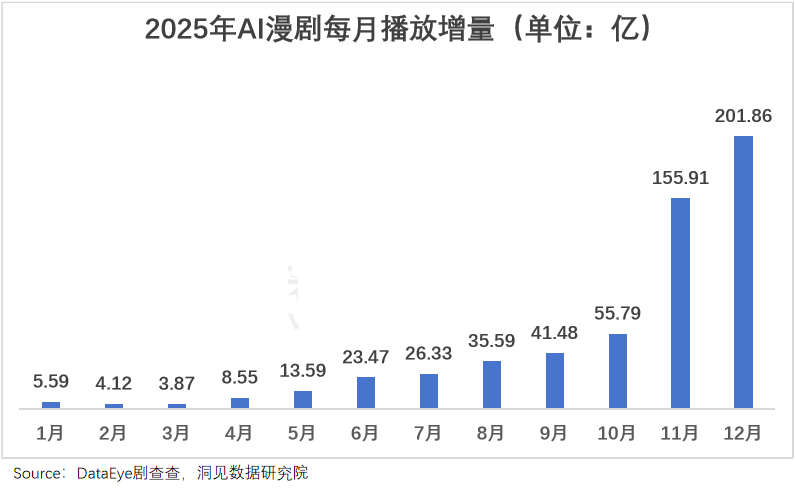
Source: Biaowai Biali
Data from Qichacha reveal that there are 104 existing enterprises related to comic dramas in China, with 70 established in the past six months, accounting for about half of the total.
Thus, games and AI-powered comic dramas are, to some extent, in competition.
After all, users have a limited amount of time each day. The more time "AI-powered comic dramas" occupy, the less time is available for gaming, potentially further impacting monetization and retention.
Unexpectedly, game developers' attitudes have shifted dramatically.
Game developers of all sizes have begun competing for talent in AI-powered comic dramas, covering positions such as scriptwriting, editing, art, directing, chief editing, operations, advertising, animation, content planning, and information flow optimization, with salaries ranging from 7K to 50K.
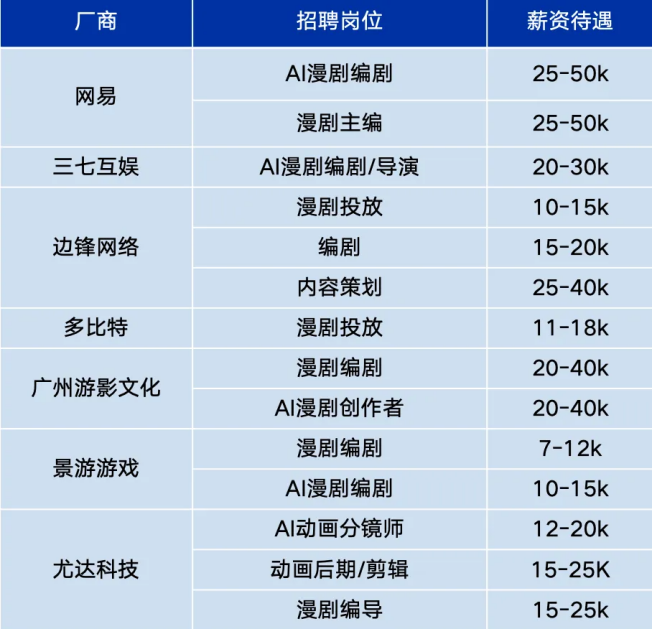
Source: DataEye
Beyond recruitment, equity investments have also emerged.
Take Aishi Technology as an example. On March 12, 2026, it completed a $300 million Series C funding round, setting a record for the highest single funding amount in China's AI video generation sector. Game companies such as 37 Interactive Entertainment and China Confucianism means were among the investors.
Notably, Tencent and NetEase have also made strategic moves.
NetEase Antelope is NetEase's AI-powered comic drama platform, which uses game engines to create comic dramas and licenses game IPs like
Yang Jingzhang, Business Head of NetEase Antelope, said, "The comic drama model, built on game engine technology, can produce high-definition visuals far exceeding traditional 2D comic dramas and enable the reuse of game art assets, offering a considerable return on investment. These dramas focus on female-oriented themes such as ancient romance and sweet pet stories, catering to fragmented viewing habits with a production cycle of just 3-4 weeks. Even ordinary users can easily create content using a low-threshold editor."
Huolong Comic Drama is Tencent's AI-powered comic drama platform, which has entered into a content partnership with NetEase Antelope, with both sides leveraging their strengths to grow the market.
It is clear that entering the AI-powered comic drama space has become a consensus among major game developers.
Low-Cost Traffic Reigns Supreme
There are four reasons why game developers favor AI-powered comic dramas.
First, lower promotional costs.
To promote game products and reach more players, the "buy traffic → accumulate paying users → buy more traffic" approach has been the mainstream strategy, leading to year by year increasing traffic acquisition costs.
The 2025 China Listed/Unlisted Game Enterprise Competitiveness Report shows that the traffic acquisition cost for the top 100 mobile games by revenue in the first half of 2025 increased by 86.6% year-on-year.
This is evident in the case of Century Huatong, the "A-share gaming leader."
In 2025, Century Huatong's revenue was RMB 37.898 billion, up 67.55% year-on-year; net profit was RMB 5.605 billion, up 362.02% year-on-year; and marketing expenses were RMB 14.081 billion, up 88.66% year-on-year, accounting for 97.03% of sales expenses.
In other words, there is significant room to reduce traffic acquisition costs and improve efficiency.
An industry insider told Xinkedu, "Games rely on advertising materials, and AI-powered comic dramas offer a low-cost, high-conversion content production method that is well-suited for advertising materials, driving efficient operation of the game business."
Take as an example. With a total cost of just RMB 150,000, it generated 2 billion views, achieving an ROI of 600:1.
Thus, game developers are naturally eager to leverage AI-powered comic dramas to tap into traffic dividends.
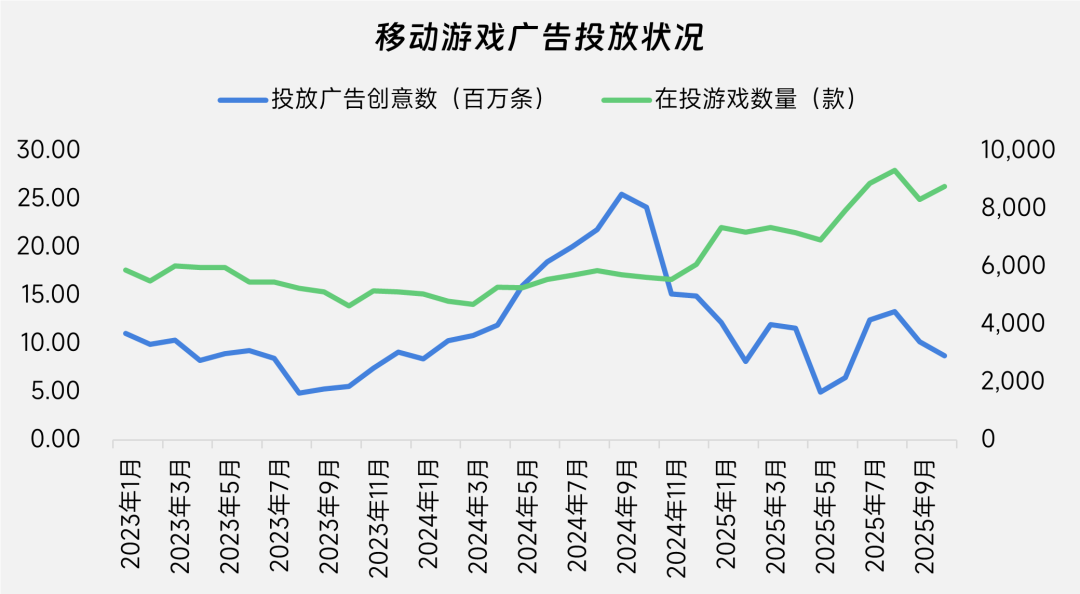
Source: Gamma Data
Second, easier user engagement.
As game traffic acquisition advances, players naturally become more resistant to advertising, making traditional hard advertising increasingly ineffective. Content marketing has moved to the forefront.
The 2025 China Mobile Gaming Advertising Marketing Report shows that the number of ads placed by App games decreased significantly in 2025 compared to 2024, but advertising spending on App games continued to grow, indicating that companies are concentrating their traffic acquisition budgets on fewer but higher-quality ad materials.
In simpler terms, AI-powered comic dramas resonate with users by creating various " Have fun " (moments of satisfaction), reducing resistance to game ads integrated into the storyline and prompting downloads.
For example, the AI-powered comic drama ad for
Similarly, the AI-powered comic drama ad for
DataEye Research Institute stated, "Several games across different genres have already adopted comic drama-style ad materials, primarily simulation management and casual SLG games, which naturally lend themselves to connecting gameplay with storytelling, creating a closed loop of 'attention-grabbing → conversion.'"
Third, the versatility of AI technology.
It is well-known that gaming is highly intertwined with cutting-edge computer technology, and game developers have been quick to embrace AI, accumulating rich experience in procedural modeling, 2D art, level design, and more.
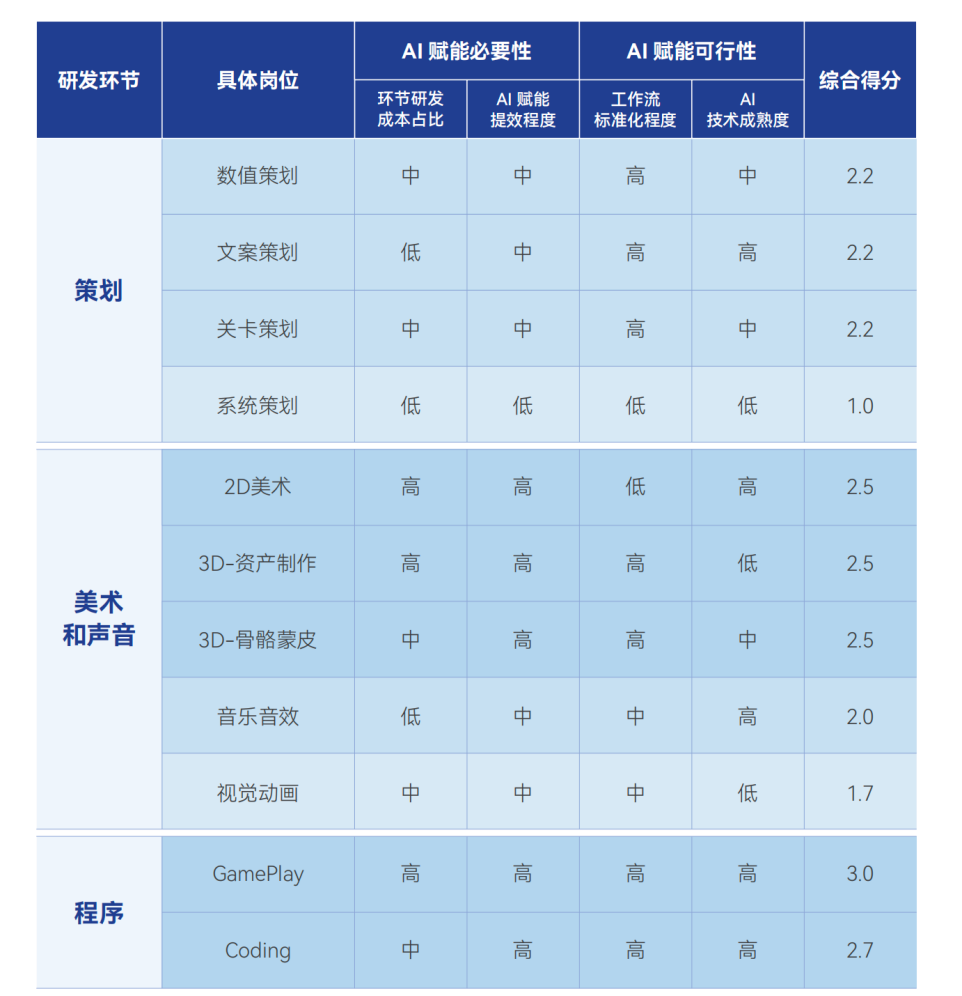
Source: Greater Bay Area Artificial Intelligence Application Research Institute
Take NPCs (non-player characters) in games as an example. Traditional NPCs interact with players using preset content, resulting in mechanical dialogue. After integrating large language models, they evolve into "intelligent NPCs" that converse naturally with players, providing greater emotional value.
In short, game companies have an AI advantage, lowering the technical barriers to crossover (cross-industry) endeavors.
Game top (Youxituoluo) noted, "Many common issues in AI-powered comic dramas, such as clipping, character distortion, and disjointed animations, are easier to optimize and avoid within game companies' production systems."
Finally, the absence of copyright compliance issues.
While AI-powered comic dramas are gaining momentum, some chaos (disorders) have emerged, particularly in IP adaptation or secondary creation, where infringement is not uncommon.
Game developers entering the space do not face such concerns.
Game developers often possess mature, comprehensive IP portfolios, giving them a natural advantage in copyright compliance. They can leverage AI-powered comic dramas to amplify the influence and vitality of their game IPs, further enhancing player engagement.
For example,
Nevertheless, the "games + AI-powered comic dramas" approach still faces challenges.
On one hand, the homogenization of AI-powered comic drama content is severe, resulting in a very low hit rate, and the true efficiency of driving traffic amidst aesthetic fatigue remains to be seen. On the other hand, AI-powered comic dramas aim for short-term thrills, while games seek long-term engagement, raising doubts about whether the attracted users can be retained at scale.
In conclusion, game developers' foray into AI-powered comic dramas is not merely to grab a share of the pie but to drive traffic to their games, strengthen the gaming ecosystem, and secure a larger foothold in an era of stagnant growth.
Whether AI-powered comic dramas are the best partner for games remains to be seen over time.
-
![]()
Proposed to Raise 955 Million Yuan through Private Placement! Huicheng Vacuum Boosts Localization of Ultra-Precision Optical Coating Equipment
-
![]()
Cash Flow Soars 13-Fold! What Major Strategic Move is Wuhan Five Square Optoelectronics Planning?
-
![]()
Leaked Design of vivo X500: Reverts to Circular Camera Module in Top-Left Corner, Pays Homage to Classic X90 Aesthetic
-
![]()
DeepSeek Shows Signs of Foraying into Code Agents, Launches WeChat Official Account Focused on Harness
-
![]()
Auto Companies Deny Claims That ‘Cooperation with Huawei Is Non-Essential’, as Huawei Transforms into a ‘Public Platform’
-
![]()
Starship to Independently 'Return to the Launch Tower': SpaceX's Ambitions Extend Beyond Rocket Building to Dominating Space Transportation
-
![]()
Starship Set to Independently 'Return to the Launch Tower': SpaceX is Revolutionizing Space Transportation, Not Just Building Rockets
-
![]()
Anthropic and OpenAI Face Off Against Deepseek