Auto Companies Deny Claims That ‘Cooperation with Huawei Is Non-Essential’, as Huawei Transforms into a ‘Public Platform’
 08/11 2026
 371
371
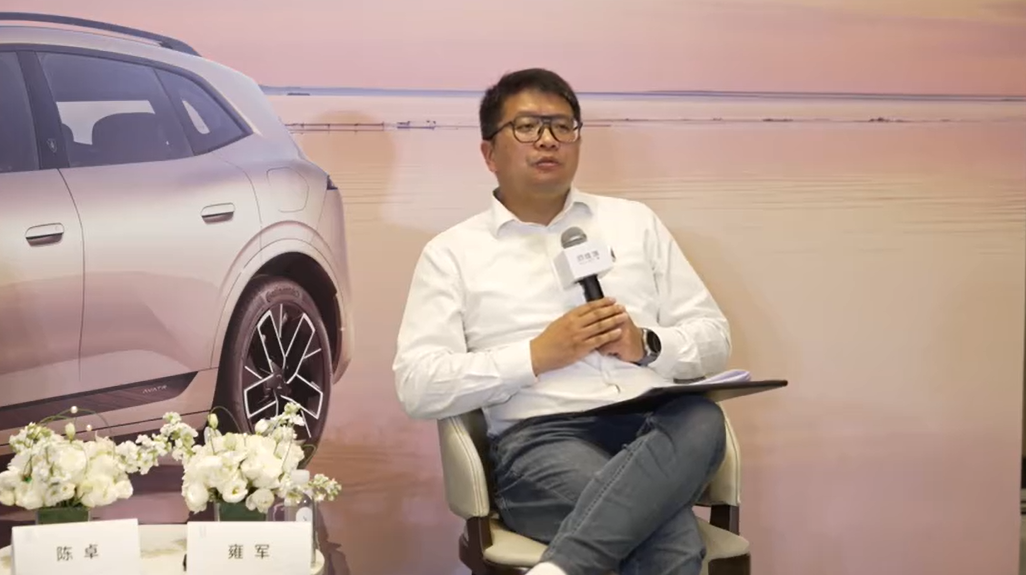
Is Avita distancing itself from Huawei? On August 10, media outlets reported that Yong Jun, Vice President of Avita, stated that he does not view the cooperation model with Huawei as a 'necessary component' due to Avita's unique capabilities. This remark caused a stir since Avita is the inaugural brand under Huawei's HI model, with its name embodying the essence of the 'H'. Historically, Avita has repeatedly emphasized its status as the automaker with the most extensive, comprehensive, and profound cooperation with Huawei. Moreover, Avita has made significant investments to secure a 10% stake in Huawei's Yinwang company, establishing itself as a major shareholder.
This statement is perceived as Avita's strategy to distinguish its brand narrative amidst increasing deep cooperation between numerous brands and models with Huawei. In response, on August 10, Avita refuted these rumors, clarifying that Yong Jun's original statement solely pertained to the non-essential nature of the model where 'Huawei creates exclusive intelligent driving versions' and did not negate the value of collaboration with Huawei. Presently, both entities engage in a joint innovation cooperation model, collaboratively defining and developing products throughout the entire process, with Avita also serving as the second-largest shareholder of Yinwang.
Feiling Auto secured official shorthand notes from the communication meeting held on the same day, revealing that a reporter inquired: 'The Avita 07L is among the first batch of mass-produced models featuring Qiankun Intelligent Driving ADS 5. Given Huawei's deepening cooperation with multiple automakers, there are concerns in the market that multi-brand collaboration may dilute resource allocation. As the earliest CHN co-creator and a shareholder of Yinwang, how does Avita specifically ensure priority in algorithm iteration and new hardware implementation?'
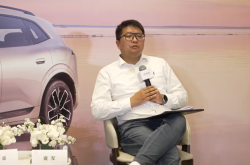
In response, Yong Jun, Vice President of Avita Technology, remarked: 'It's unrealistic for us to expect Huawei to allocate 50% of its resources solely to us. We envision Huawei as a public platform, offering public services and technologies, on which we can create differentiated elements to underscore our brand's uniqueness. The more public Huawei becomes, the more it can highlight the brand's distinctiveness for relatively independent brands like ours. Customizing everything through them would be impractical. Hence, I don't believe we need to monopolize 50% of their resources to achieve differentiation; it's a shared resource.'
Yong Jun further elaborated, 'Currently, Huawei's primary cooperation models encompass a deep cooperation model under the 'Jie' series and a joint innovation cooperation model. We are currently embracing the joint innovation model, collaboratively defining and developing products with Huawei, not just in terms of intelligent assisted driving but across the entire product spectrum. For the Avita 07L, from exterior design to interior details and even color choices, Huawei has been involved, with a sizable team working in tandem with us. As the second-largest shareholder, we have some differentiated cooperation models, but I still don't consider this cooperation model a 'necessary component' because we possess our unique capabilities.'
Thus, it appears that the 'necessary component' in Yong Jun's response indeed refers to the non-essential nature of Yinwang investing resources to create separate customizations for Avita. However, Yong Jun also affirmed that Avita consistently employs Huawei's premier Qiankun intelligent driving technology, ensuring Avita remains at the forefront in terms of perception capabilities. This is attributed to Avita's status as the second-largest shareholder of Yinwang. Nevertheless, he stressed that deep cooperation with Huawei is predicated on the leading nature of Huawei's technology, and the current optimal solution does not imply a permanent commitment to such cooperation. All choices of cooperation partners are based on the Avita brand's own needs, as Avita aspires to independently select the most advanced technology partners.
Furthermore, regarding how to foster differentiation in intelligent driving, Yong Jun stated that the crux lies in possessing corresponding capabilities. He noted that Avita users often express dissatisfaction: 'Why is Avita always a step behind others in every OTA update? The speed is a week to half a month slower.' Yong Jun explained that this lag is because Avita collaborates with the Yinwang team to conduct thorough testing of the entire system and solution, ensuring no bugs reach the users.
'We enjoy support from both sides: firstly, Huawei, whose intelligent assisted driving capabilities are undeniable; secondly, Changan Automobile, as the largest shareholder, also excels in intelligent driving research. Thus, our technology draws from two complementary sources,' Yong Jun stated.
Additionally, concerning L3 autonomous driving, Yong Jun stated that Avita has been preparing for it for a long time. He mentioned that Avita has already equipped its 11 and 12 models with three LiDAR sensors, fully preparing for L3 with perception redundancy, control redundancy, and execution redundancy, such as redundant steering, braking, and power supplies. 'At that time, we believed technological advancements would prompt swift regulatory introductions. Three to four years have elapsed, and regulations have been slow to materialize, but the technological standards amassed by pioneers will not be erased. The extensive preparations we made for L3 have culminated in the CHN electronic and electrical architecture, which is designed for L3,' Yong Jun stated.
He boldly claimed that Avita aims to be among the earliest companies to achieve L3, showcasing the confidence and backing of its dual shareholder support.
However, it should be noted that despite Avita's refutation, with the expansion of partners for both Huawei's Harmony Intelligent Mobility and Qiankun ecosystems, the intelligent vehicle sector has long moved beyond the initial phase where 'having Huawei technology guaranteed hot sales'. Currently, multiple models equipped with Huawei Qiankun Intelligent Driving are vying on the same stage, with highly similar product hardware and core intelligent driving capabilities. If automakers persist in promoting the unified label of 'Huawei-empowered', they risk陷入 (falling into) a price war and internal competition, completely forfeiting the premium capability of high-end brands.
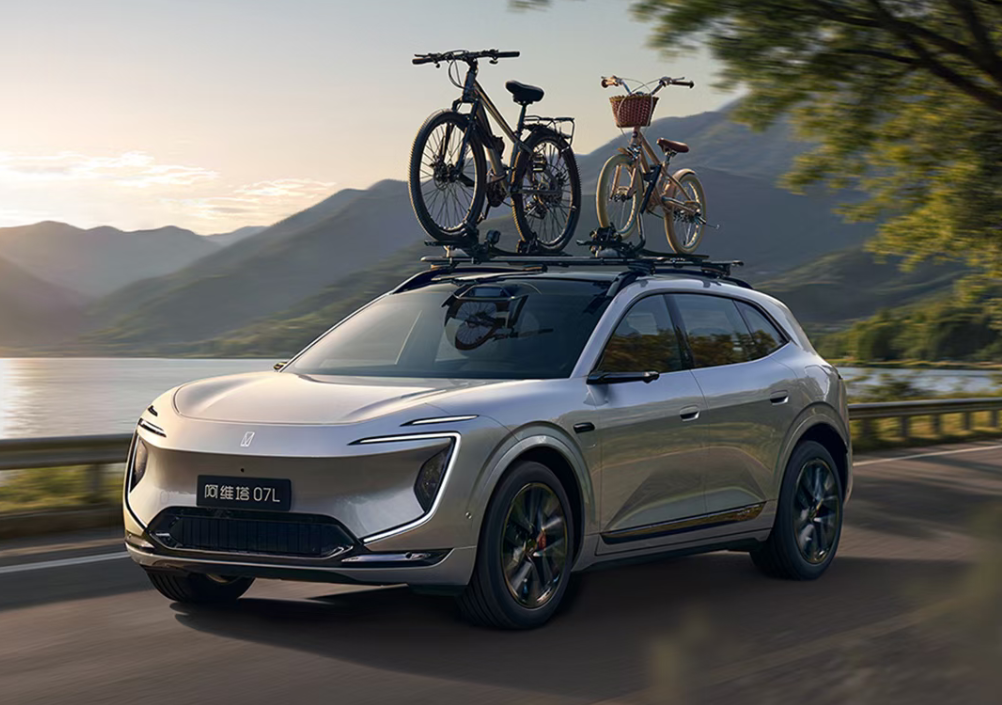
Against this backdrop, differentiation has emerged as the sole avenue for automakers to break through. Only by crafting high-end product attributes that set them apart from other Huawei-affiliated models and shifting brand competitiveness from 'relying on Huawei technology' to 'comprehensive strength' can they establish a unique perception amidst the homogeneous competition of Huawei ecosystem models. The concept of a public platform proposed by Yong Jun also mirrors this trend.
Historically, the primary criterion for assessing a model's intelligence level was its 'Huawei content', with automaker competition essentially being a scramble for Huawei's technological resources. However, as Huawei's partners now encompass most automakers, with a public platform and automakers emphasizing differentiation, the industry's competitive logic has undergone a formal reconstruction: Huawei provides a common technological foundation, while automakers compete based on their comprehensive capabilities in product definition, user operation, vehicle tuning, safety redundancy, and scenario adaptation.
This transformation has empowered traditional automakers with vehicle R&D, manufacturing, and systematic capabilities, as well as high-end new brands, to regain the competitive initiative, completely reversing the distorted pattern of 'technology suppliers dominating vehicle competition' and restoring the automotive industry to a normal industrial order centered around vehicle enterprises. This may represent a positive development for both Huawei and automakers. After all, Huawei has truly accomplished its objective of assisting automakers in building superior vehicles.
-
![]()
Proposed to Raise 955 Million Yuan through Private Placement! Huicheng Vacuum Boosts Localization of Ultra-Precision Optical Coating Equipment
-
![]()
Cash Flow Soars 13-Fold! What Major Strategic Move is Wuhan Five Square Optoelectronics Planning?
-
![]()
Leaked Design of vivo X500: Reverts to Circular Camera Module in Top-Left Corner, Pays Homage to Classic X90 Aesthetic
-
![]()
DeepSeek Shows Signs of Foraying into Code Agents, Launches WeChat Official Account Focused on Harness
-
![]()
Auto Companies Deny Claims That ‘Cooperation with Huawei Is Non-Essential’, as Huawei Transforms into a ‘Public Platform’
-
![]()
Starship to Independently 'Return to the Launch Tower': SpaceX's Ambitions Extend Beyond Rocket Building to Dominating Space Transportation
-
![]()
Starship Set to Independently 'Return to the Launch Tower': SpaceX is Revolutionizing Space Transportation, Not Just Building Rockets
-
![]()
Anthropic and OpenAI Face Off Against Deepseek