Starship Set to Independently 'Return to the Launch Tower': SpaceX is Revolutionizing Space Transportation, Not Just Building Rockets
 08/11 2026
 340
340
SpaceX's upcoming 14th test flight of the Starship will mark a historic milestone, as it will, for the first time, employ the launch tower to 'capture' the spacecraft's upper stage and deploy Starlink V3 satellites into operational orbit. This signifies a transition in spaceflight from mere spectacle to a thriving business.
On August 4, SpaceX unveiled its inaugural financial report following its public listing. The most striking revelation was not the financial figures but rather the next 'big reveal' casually mentioned by Musk: the 14th test flight (Flight 14) of the Starship, slated for as early as the end of August, will endeavor to utilize the launch tower's robotic arms to 'mid-air capture' the returning upper stage of the spacecraft and launch the upgraded Starlink V3 satellites into their true operational orbit. If successful, this will mark the official transformation of humanity's largest reusable spacecraft from a 'test prototype' to a 'commercial backbone'. For a newly public company valued at $1.77 trillion, this is not merely a test flight; it is a showcase to the capital markets of how its commercial ecosystem operates.
Why is this considered a 'business endeavor' rather than a 'spectacle'? Traditionally, rockets were expendable—launched and then discarded. SpaceX has already successfully recovered the Super Heavy first stage three times using its innovative 'chopstick' mechanism, but the upper stage (Ship) has never been captured; previously, it could only perform a 'controlled splashdown' in the Indian Ocean. Flight 14 aims to enable the 52-meter-tall upper stage to return obediently to the launch tower. Musk's vision is clear: capture it, refuel it, and relaunch it within hours. When both stages can be reused on-site, rockets transition from 'expensive pyrotechnics' to 'reusable transport vehicles'—significantly reducing unit transportation costs, a fundamental requirement for the entire commercial spaceflight business model.
Starlink V3: Beyond Satellites, a Global Internet Backbone
Another 'first' in Flight 14 is the deployment of the first batch of Starlink V3 satellites into operational orbit. V3's bandwidth and data density are approximately tenfold that of the current version, with SpaceX's ultimate goal being to launch 60 satellites per Starship mission. What does this signify? Starlink is evolving from a 'tool for internet access in remote areas' to the 'underlying infrastructure for global internet connectivity'. The prospectus clearly states: utilizing its own heavy rockets to launch its own satellites is a key strategy for expanding global broadband networks. As Starlink's revenue contribution to SpaceX's overall revenue grows, rockets are no longer cost centers but rather the logistics arm of the Starlink empire.
Post-IPO SpaceX: A More Calculated Approach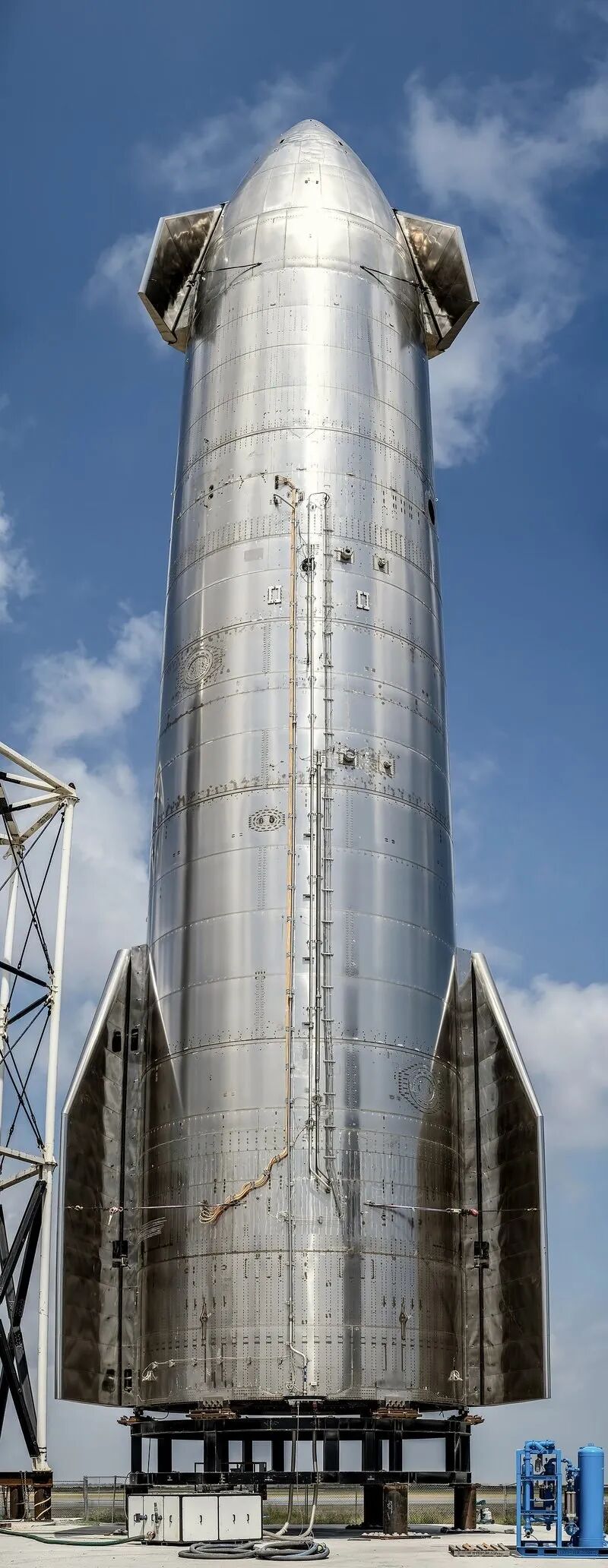
Image source: The Verge
The financial report itself warrants careful consideration: Q2 revenue reached $7.8 billion, up 92% year-over-year; Starlink generated $4.29 billion in quarterly revenue and $1.66 billion in operating profit, already a significant cash generator; while AI business revenue surged to $2.56 billion, up 247% year-over-year, it is still incurring losses (operating loss of $1.26 billion), with $15.8 billion in quarterly capital expenditures directed towards AI computing power. In essence, Starlink's profits are subsidizing the two more capital-intensive dreams of Starship and AI. The market responded accordingly: the stock price dipped from around $128 to $114.81 following the report, a roughly 8.4% decline in after-hours trading—investors applaud growth but are wary of such aggressive spending.
Why This Matters for 'National Power Competition'
This should not be viewed solely as tech news. If the Starship can truly launch daily and fully recover both stages, SpaceX will slash launch costs and times to levels unmatched by competitors. NASA relies on it for its return to the Moon, and Europe's own 'Starlink rival' lags far behind. When a single U.S. company simultaneously holds 'the lowest-cost orbital access + global satellite internet + increasingly powerful AI computing power', it is essentially securing the high ground in low-Earth space and digital infrastructure for the U.S. This serves as a clear warning to any country seeking to control its own space and satellite industries: rocket reusability is not just engineering prowess—it is an industrial and geopolitical necessity.
Of course, Musk's timelines are always subject to change; transitioning from 'occasional test' to 'daily launch' is uncharted territory for human spaceflight. However, the direction is clear: the competition in the space industry is shifting from 'who can reach space' to 'who can deliver the most payloads stably into space at the lowest cost and highest frequency'. SpaceX is laying this logic bare through its financial reports and test flights. When the spacecraft autonomously returns to the launch tower, commercial spaceflight ceases to be a dream and becomes a tangible reality.
For China, the signal is equally evident. We have our own heavy rocket roadmap and a low-orbit satellite internet in development. SpaceX's integration of 'rocket reusability + satellite networking + AI computing power' demonstrates that future space and digital competitiveness will stem from systemic operations, not isolated breakthroughs. Observing Flight 14 is not about witnessing a fireworks display—it is about deciphering the industrial landscape for the next decade.
Today's Golden Quote
'When spacecraft autonomously return to the launch tower, spaceflight is no longer a spectacle but a thriving business—whoever first achieves 'reusability + networking' will hold the key to space and digital infrastructure.'
Follow 【Degaoxing Zhiqinglang】 for more cutting-edge insights into space and technology.
-
![]()
Proposed to Raise 955 Million Yuan through Private Placement! Huicheng Vacuum Boosts Localization of Ultra-Precision Optical Coating Equipment
-
![]()
Cash Flow Soars 13-Fold! What Major Strategic Move is Wuhan Five Square Optoelectronics Planning?
-
![]()
Leaked Design of vivo X500: Reverts to Circular Camera Module in Top-Left Corner, Pays Homage to Classic X90 Aesthetic
-
![]()
DeepSeek Shows Signs of Foraying into Code Agents, Launches WeChat Official Account Focused on Harness
-
![]()
Auto Companies Deny Claims That ‘Cooperation with Huawei Is Non-Essential’, as Huawei Transforms into a ‘Public Platform’
-
![]()
Starship to Independently 'Return to the Launch Tower': SpaceX's Ambitions Extend Beyond Rocket Building to Dominating Space Transportation
-
![]()
Starship Set to Independently 'Return to the Launch Tower': SpaceX is Revolutionizing Space Transportation, Not Just Building Rockets
-
![]()
Anthropic and OpenAI Face Off Against Deepseek