Struggling to Keep Pace with 618 in 2026? The Reality is More Intricate
 05/27 2026
 679
679

The era of easy gains from e-commerce traffic has faded, and the superficial intensity of the industry has also waned. Now, a new era of technological rivalry has dawned, accompanied by a subtle yet significant shift towards deep-rooted industry competition, focusing on enhancing operational efficiency and fostering user loyalty.
The 2026 618 event lacks the vibrant atmosphere of previous years, devoid of sensational battle reports or convoluted rules. The collective shift towards a 'low-key' approach mirrors a profound transformation within the industry, where platform competition has transitioned from rule-based contests to technological prowess, with each platform streamlining its strategies and pursuing unique differentiation.
On the surface, it may seem like just another routine promotional event, but the industry's metamorphosis is well underway. With AI emerging as the primary decision-making tool, the focus of competition in the e-commerce sector has shifted from superficial traffic acquisition to deeper aspects such as algorithms, supply chains, and user engagement strategies.
Taobao: Upholding the Core of Shelf Display with 'Official Discounts'
This year, Taobao has bid farewell to the controversial 'cross-store full reduction' strategy, replacing it entirely with a '15% official discount.' This move directly addresses consumer pain points by offering straightforward price reductions on individual items, eliminating the need for complex combinations. Pre-sale items are also included, providing a transparent pricing model where 'what you see is what you get,' thereby simplifying the decision-making process and alleviating consumer anxiety.
The platform has seamlessly integrated its self-developed AI models into the e-commerce ecosystem, enabling users to select products, compare prices, and place orders through voice commands. This intelligent interaction is quietly revolutionizing shopping habits that once relied on traditional search boxes, making online shopping more effortless and efficient.
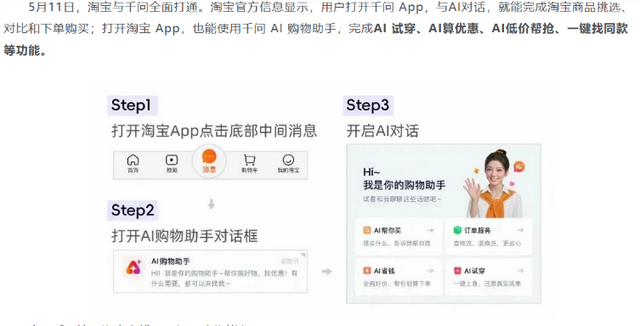
The driving force behind this transformation lies in significant shifts in external traffic sources, prompting platforms to innovate. Currently, AI applications like Doubao are witnessing rapid growth in monthly active users, with convenient chat interfaces gradually diverting or even replacing traditional search boxes. Major e-commerce platforms are concerned about the indirect weakening of their entry points.
Therefore, platforms must actively break free from outdated marketing frameworks and retain users through ultra-convenient experiences. Only by actively participating in reshaping the rules can they maintain their competitive edge amidst the AI wave.
Alibaba has a clear strategy: to eliminate decision-making barriers through simple price reductions, occupy the forefront of interaction with Tongyi Qianwen, and adopt a proactive stance by offering direct benefits and leveraging the most intuitive AI to construct Taobao's 'ultimate shelf.'
JD.com: Rebuilding Trust with a 'Measured Approach'
While Taobao opts for a 'simple and direct' approach, JD.com seeks differentiation through another path. During this year's 618, JD.com did not blindly follow the trend but divided the promotion into three phases starting from May 31, granting consumers more time to deliberate.
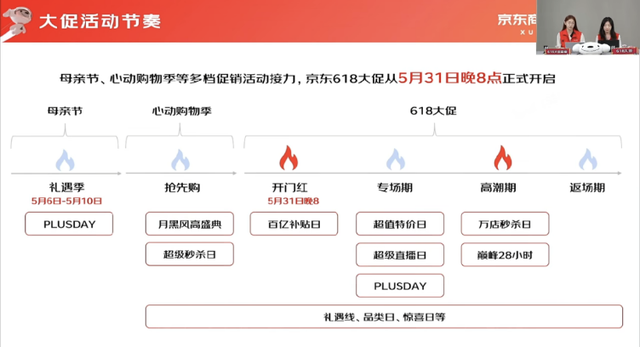
This 'retreat-to-advance' strategy may appear passive but is strategically insightful. JD.com recognizes that during a period of e-commerce price fatigue, users require ample time to experience services to establish a solid foundation of trust.
In terms of customer acquisition, JD.com collaborates with the WeChat ecosystem for the first time to tap into incremental markets, precisely intercepting social e-commerce traffic. Regarding fulfillment, JD.com empowers its supply chain with AI across the entire chain, with the 'Super Brain Large Model' enabling real-time intelligent scheduling in hundreds of scenarios to reduce fulfillment costs and empty travel rates.
Currently, JD.com is breaking through the marketing impasse in the e-commerce industry through multi-dimensional layouts, seeking a new equilibrium that stabilizes prices while enhancing reputation.
Therefore, while Pinduoduo engages in low-price competition and Douyin capitalizes on content hype, JD.com's strengths in logistics and services shine through the wisdom of phased promotions.
Pinduoduo: Penetrating Psychological Barriers with 'Direct Price Cuts'
While JD.com tests the waters with a measured pace, Pinduoduo embraces minimalism wholeheartedly.
This year, Pinduoduo continues to employ robust measures like 'direct subsidies for individual items + direct reductions with consumer coupons,' eliminating the need for combination purchases. This subtractive approach resonates with current consumer aversion to complex discounts, as the public has long been bewildered by cross-store rules. Pinduoduo defies convention, attracting consumers with transparent base prices and the most convenient ordering experience.
The core of its strategy involves investing heavily in subsidies and upgrading price protection services, demonstrating a genuine commitment to delivering tangible benefits.
However, relying solely on low prices is not a sustainable path to victory. In April 2026, Xinhua News Agency reported that Pinduoduo received a record fine of 1.522 billion yuan for negligence in reviewing nearly 10,000 'ghost stores' and for resisting law enforcement during investigations. This exposed the internal governance failures behind its extreme low-price strategy.
After the dividends of rapid expansion disappear, poor quality control and compliance loopholes will accelerate erosion. To maintain its cost-effectiveness, Pinduoduo must resolutely address compliance shortcomings, presenting a crucial test for its survival in the long run.
Douyin E-commerce: Experimenting with Transaction Closures through 'Immersive Content'
On the surface, Douyin also employs direct price reductions and eliminates combination purchases, but its underlying logic differs from Pinduoduo's.
While Pinduoduo pierces through barriers with low prices and targets the pain points of extreme cost-effectiveness, Douyin acts as a shield, using content and atmosphere to stabilize purchasing emotions.
This year, Douyin will invest heavily in consumer subsidies through its platform traffic matrix, including Doubao and Hongguo Short Dramas, in a bold experiment to see if users will immediately place orders across different scenarios based solely on trust.
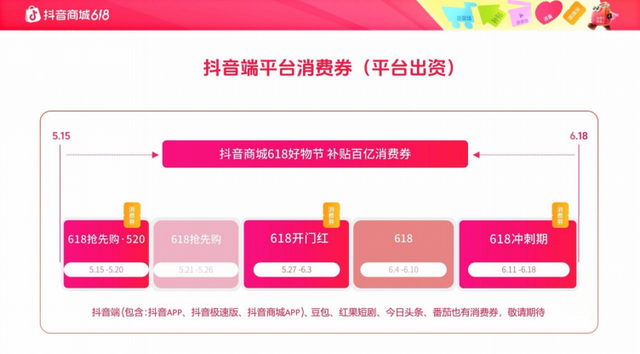
This is not merely traffic guidance but also an attempt to test whether Douyin e-commerce can convert curious onlookers into satisfied buyers through a seamless conversion chain.
Behind this experiment lies Douyin's current predicament: the benefits of traffic growth have diminished, and trust accumulated solely through live streaming rooms cannot sustain the entire supply chain, quality control, and repurchase ecosystem. Industry competition has entered a new phase, focusing on core competencies.
To retain users, Douyin must urgently address deficiencies in its shelf display and establish a stable repurchase system. Otherwise, even the most vibrant traffic will be fleeting without a loyal audience.
Kuaishou: Deepening and Refining Existing Strengths
Kuaishou adopts a faster, more precise, and more ruthless approach. It does not engage in the overall e-commerce battle but concentrates its efforts during live streaming peaks, employing a single-point explosion strategy. Although somewhat one-sided, this approach is reasonable, avoiding its weaknesses while maximizing the trust barrier of the 'Laotie Economy' and top anchors.
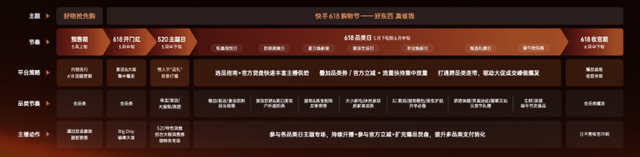
To widely implement this strategy, Kuaishou subsequently launched AI practical tools like the 'Pineapple Video Factory,' significantly lowering the barrier for small and medium-sized merchants to create and experiment, and then attempting to use technology to revitalize the entire ecosystem.
However, the platform's strategic shift is cautious, and its overall approach is more about leveraging existing resources to maintain the status quo rather than breaking new ground. It relies heavily on top anchors for single-event explosions, ultimately using emotions to drive impulse purchases.
This 'pulsed' conversion is difficult to sustain, and traffic will plummet when the hype subsides. Kuaishou's ability to balance and transition smoothly to normalized operations will be put to the test.
An abnormal reliance is ultimately unstable. Therefore, if Kuaishou aims for longevity, it must now shed its blind worship of single nodes and construct a new ecosystem that is enduring, stable, healthy, balanced, and capable of facilitating daily repurchases.
Xiaohongshu: Finding Commercial Equilibrium in 'Community Atmosphere'
While major platforms simplify their strategies, Xiaohongshu appears to be an outlier. As a community rather than a traditional e-commerce shelf, it does not need to simplify its approach.
This year, for the first time, it directly confronts the 618 event with a straightforward logic: users bring genuine needs, view notes, and complete purchases. While the industry debates 'streamlining,' Xiaohongshu offers the optimal solution: simply share, as only authentic sharing leads to natural conversion.
However, there are inherent risks in this calm approach. The grassroots community relies on authentic and trustworthy content as its cornerstone. If the pace of major promotions leads to overly rapid commercialization or a strong promotional taste, the value of content will diminish, affecting user engagement.
Summary
During the 2026 618 event, the underlying strategies of each platform have become clearer. Taobao relies on official discounts to maintain its core, JD.com grasps the rhythm of rational promotions, Pinduoduo focuses on extreme cost-effectiveness, Douyin delves into immersive content fields, Kuaishou relies on anchor trust chains, and Xiaohongshu leverages authentic grassroots sharing to tap consumer potential. Each company plays a unique card, collectively outlining a new landscape where e-commerce returns to value-based competition.
When rules are simplified to the extreme, the differences in surface-level strategies are exhausted, and competition among platforms can only shift to the system's foundation—competing on whether AI can accurately capture genuine user needs, whether supply chains can flexibly allocate resources, and whether the organization itself can rapidly iterate.
This year's 618 serves as a comprehensive assessment, testing each company's true strength in the face of industry changes. Only those that revitalize their ecosystems through technological innovation and undertake traffic management with solid services have the opportunity to progress further and more steadily in the mid-game reshuffle.
-
![]()
Proposed to Raise 955 Million Yuan through Private Placement! Huicheng Vacuum Boosts Localization of Ultra-Precision Optical Coating Equipment
-
![]()
Cash Flow Soars 13-Fold! What Major Strategic Move is Wuhan Five Square Optoelectronics Planning?
-
![]()
Leaked Design of vivo X500: Reverts to Circular Camera Module in Top-Left Corner, Pays Homage to Classic X90 Aesthetic
-
![]()
DeepSeek Shows Signs of Foraying into Code Agents, Launches WeChat Official Account Focused on Harness
-
![]()
Auto Companies Deny Claims That ‘Cooperation with Huawei Is Non-Essential’, as Huawei Transforms into a ‘Public Platform’
-
![]()
Starship to Independently 'Return to the Launch Tower': SpaceX's Ambitions Extend Beyond Rocket Building to Dominating Space Transportation
-
![]()
Starship Set to Independently 'Return to the Launch Tower': SpaceX is Revolutionizing Space Transportation, Not Just Building Rockets
-
![]()
Anthropic and OpenAI Face Off Against Deepseek