Apple’s Biggest Price Drop Ever! iPhone 17 Pro Slashed to 6,999 Yuan: Is This Tim Cook’s Grand Finale Before Stepping Down?
 05/29 2026
 684
684
Source | Jiadpai (jiadpai)
Author | Xiaoxiao

“6,999 yuan.” That’s the price tag for the iPhone 17 Pro 256GB model after midnight on May 15th. What does this signify? It marks the first time in history that Apple’s Pro series has dipped into the 6,000 yuan price bracket. Meanwhile, the base model iPhone 17 is also priced competitively—after subsidies and trade-ins, the 128GB version is available for just 4,499 yuan.
This round of price cuts came as a surprise, but what’s even more unexpected is that it occurred just three weeks after Apple’s major executive shakeup in the tech industry.
In late April 2026, Apple officially announced that Tim Cook, who had helmed the company for 15 years, would step down as CEO on September 1st and transition to the role of Executive Chairman of the Board. His successor is John Ternus, Senior Vice President of Hardware Engineering and Apple’s 8th CEO.
While it may sound cliché to say “an era has ended,” a more precise description would be that Apple’s strategic approach is undergoing a fundamental transformation.

Over the past 15 years, Cook has transformed Apple from a “trendy company” into a “profit powerhouse.”
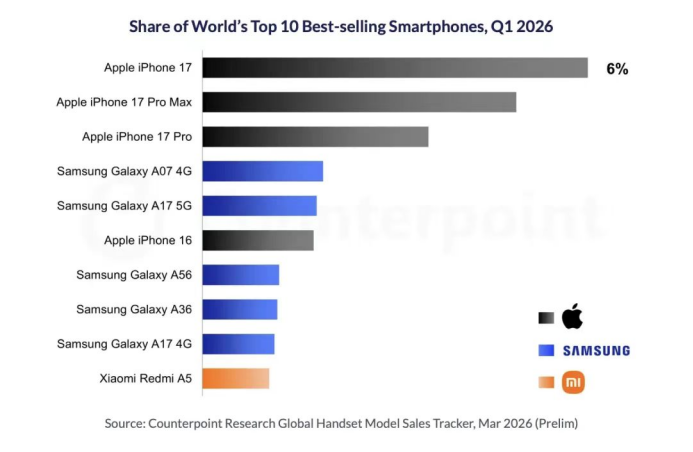
It reached a peak market capitalization of over $4 trillion, secured the top spot in global smartphone shipments in Q1 (according to Counterpoint), with the iPhone 17 alone accounting for 6% of global shipments. In China, despite Huawei’s resurgence and fierce competition from domestic manufacturers, Apple maintains a firm grip on the high-end market.
However, there’s a catch.
In an era where AI is reshaping everything, Apple’s approach of “incremental innovation” is increasingly seen as inadequate. While domestic manufacturers have rolled out on-device large language models, AI-powered imaging, and intelligent interactions one after another, Apple’s AI features only debuted overseas with the iPhone 17 series in 2025, with the China version still awaiting regulatory approval.
Even more awkwardly, amid Silicon Valley’s AI boom, Apple has lost several key AI and software engineering personnel, forcing it to seek external partnerships. Some criticize Cook for being overly conservative. But honestly, anyone leading a company worth over $3 trillion in an uncertain, costly AI race would think twice before going all-in.
Under Cook’s leadership, Apple has essentially operated as a mature commercial empire, prioritizing stable profits and shareholder returns over risky technological bets.
The issue is that AI doesn’t wait for anyone.

Apple’s board chose Ternus with a clear intention: to shift away from commercial conservatism and return to product- and technology-driven innovation.
Ternus joined Apple in 2001 and has worked there for 25 years, spanning both the Jobs and Cook eras. As a hardware engineer, he led hardware development for Mac, iPhone, and iPad. More importantly, he spearheaded core R&D for the A-series and M-series chips.
Yes, you read that correctly—he was deeply involved in Apple’s “chip strategy” to break free from Intel, unify ecosystems, reduce costs, and boost AI computing power. After being promoted to Senior Vice President of Hardware Engineering in 2021, he not only oversaw hardware R&D but also played a significant role in product strategy and supply chain management.
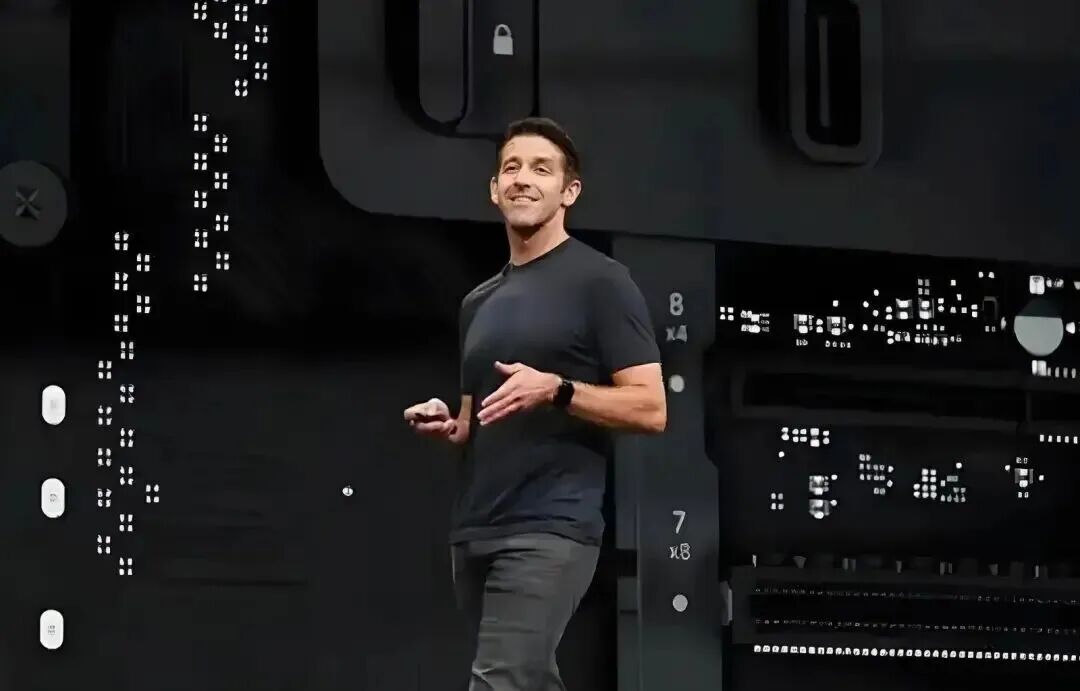
Cook himself stated that his role was to “groom multiple candidates capable of succeeding me and genuinely hope my successor comes from within Apple.” Ternus understands both foundational technology and supply chain/commercial operations—a rare combination anywhere.
His AI philosophy is also very “Apple”: “We never think about ‘launching a technology.’ We always consider how to use technology to create outstanding products.”
In simpler terms: instead of chasing Google and OpenAI in general-purpose large language models, Apple focuses on deeply integrating AI into its hardware and software ecosystem. Isn’t this Apple’s signature approach?

While it sounds promising, Ternus inherits an Apple that faces no shortage of challenges.
First challenge: Can he redefine smart terminals in the AI era?
This is what Jobs did, what Cook didn’t accomplish, and what Ternus must deliver.
Second challenge: Global supply chain and regulatory risks.
India launched an antitrust investigation into Apple for “abusing market dominance,” with a final hearing scheduled for May 21st. The maximum fine could reach $38 billion—no small sum.
Third challenge: The iPhone 18 series in four months.
The new CEO’s first report card will face sky-high market expectations. Both sales and technology must deliver.
Is Apple really falling behind? Honestly, Apple hasn’t fully fallen behind in AI—it’s more like “holding back a big move.”
On-device AI large models require stronger chip computing power, larger memory, and better cooling solutions. These all drive up hardware costs, but Apple, with its self-developed chips, supply chain advantages, and over 80% of industry profits in the high-end market, is best positioned for this fight.
Canalys data shows AI smartphone penetration reached 34% globally in 2025. IDC predicts China’s AI phone penetration will exceed 50% in 2026. AI has shifted from a flagship selling point to a standard feature.
Apple’s strategy is clear: skip general-purpose large language models and focus on “on-device AI + hardware.” The Vision Pro project has been internally assessed and scaled back, with its team merged into Siri and next-gen smart glasses projects. This reflects Ternus’s thinking.

Many compare Apple to Nokia today, using tired rhetoric: “Nokia dominated feature phones but collapsed with smartphones; Apple is the next Nokia in the AI era.”
Sounds plausible, right? But this analogy doesn’t hold up.
First, Nokia collapsed because it ran out of cash. Apple? It’s swimming in money.
Nokia’s decline wasn’t just about losing to the iPhone—it was about its financial collapse. From 2011–2013, Nokia lost over €6 billion cumulatively, with cash flow nearly depleted. It tried to transition to smartphones but needed money for R&D, supply chains, and surviving the painful transition.
Apple? As of Q1 2026, it held over $160 billion in cash and marketable securities. Even if Apple sold zero phones for three years, it could maintain current R&D spending and thrive.
Money means room for error. Apple can take AI slowly and steadily, afford a few stumbles along the way.
Second, Nokia lacked an ecosystem moat; Apple has one.
People forget that “brand loyalty” in Nokia’s era meant “no real alternatives.” Switching phones meant starting from scratch—no data, apps, or habits carried over, with zero migration costs.
But today’s Apple users are trapped by what? iCloud photos, Apple Pay cards, App Store purchases, AirDrop habits, and that Apple Watch on their wrist.
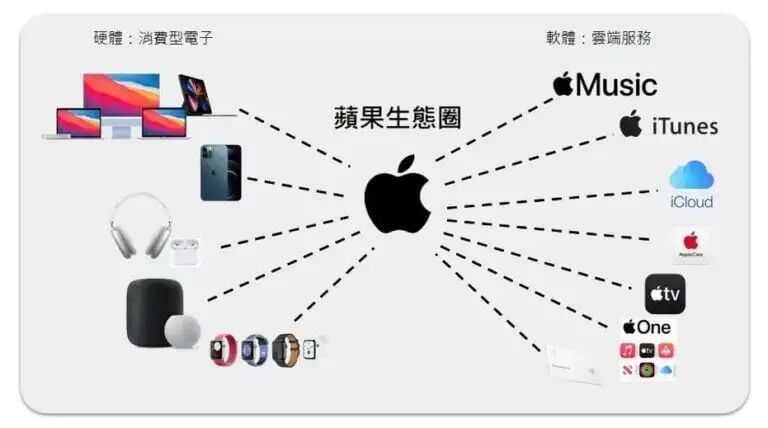
This is the ecosystem moat. It’s not a wall—it’s a net. The more you use it, the tighter it wraps.
Data shows iPhone user retention exceeds 75%, while Android’s highest (Samsung) barely tops 50%. What does this mean? Even if Apple lags in AI, most users won’t leave—they’ll wait.
They’ll stay until Apple gets AI right.
Third, Nokia failed to go premium; Apple is premium by definition.
Nokia’s late-stage strategy? Flood the market with dozens of models annually, covering all price points. Result? Failed to establish premium positioning while earning thin profits at the low end—losing on both fronts.
Apple never touches mid-range or low-end markets. Even the “budget” iPhone SE remains mid-to-high priced industry-wide. Counterpoint’s Q1 2026 data shows Apple captures over 80% of global smartphone profits with less than 20% market share.
That’s the power of brand premium. High-end users care less about price and more about experience and innovation. And the AI race demands premium markets—on-device large models need stronger chips, bigger memory, and advanced manufacturing, all pointing to higher hardware costs.
Low-end markets can’t bear this, but Apple’s users can.
So the conclusion is straightforward:
In the AI era, whoever redefines smart terminals first gains the upper hand. But before that “era-defining new device” emerges and educates the market, the high-end segment remains closest to power.
And in the high-end market, Apple still reigns supreme.
Ternus inherits an Apple that’s commercially unbeatable—healthy cash flow, a rock-solid ecosystem, and an impenetrable brand moat. But precisely because of this, he has more to prove in the AI era: not whether Apple can survive, but whether it can change the world again.
In September, the iPhone 18 series arrives—his first major test. The world is watching.

-
![]()
Proposed to Raise 955 Million Yuan through Private Placement! Huicheng Vacuum Boosts Localization of Ultra-Precision Optical Coating Equipment
-
![]()
Cash Flow Soars 13-Fold! What Major Strategic Move is Wuhan Five Square Optoelectronics Planning?
-
![]()
Leaked Design of vivo X500: Reverts to Circular Camera Module in Top-Left Corner, Pays Homage to Classic X90 Aesthetic
-
![]()
DeepSeek Shows Signs of Foraying into Code Agents, Launches WeChat Official Account Focused on Harness
-
![]()
Auto Companies Deny Claims That ‘Cooperation with Huawei Is Non-Essential’, as Huawei Transforms into a ‘Public Platform’
-
![]()
Starship to Independently 'Return to the Launch Tower': SpaceX's Ambitions Extend Beyond Rocket Building to Dominating Space Transportation
-
![]()
Starship Set to Independently 'Return to the Launch Tower': SpaceX is Revolutionizing Space Transportation, Not Just Building Rockets
-
![]()
Anthropic and OpenAI Face Off Against Deepseek