618 'Silent Mode': Algorithms Speak Louder Than Words
 06/01 2026
 556
556
When a major shopping event no longer relies on hype to assert its presence, it marks the e-commerce industry's transition from adolescence to maturity.
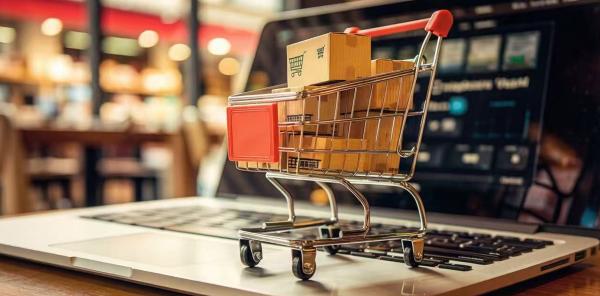
At 2 a.m., Lin Wei instinctively reaches for her phone, a habit formed over years of 618 shopping festivals. In previous years, her WeChat would be inundated with promotional messages: "Last three hours!", "Miss it and wait a year!", "Li Jiaqi is calling you to pay the balance!" But this year, her screen remains eerily quiet. No red notification badges, no pop-up ads, not even the Taobao homepage looks as cluttered as usual. After scrolling aimlessly for three minutes, she bursts out laughing—it's not her phone malfunctioning; 618 has truly evolved.
Having worked in e-commerce operations in Hangzhou for eight years, Lin has witnessed the industry's wild growth. In 2019, she saw colleagues pitch tents at their desks to snag midnight coupons; in 2022, the brand she managed spent two million yuan in a single day on advertising to climb the rankings. But this year, her KPI sheet prominently features one line: "100% AI tool penetration." She scratches her head: "We used to rely on adrenaline; now it's computing power. It's definitely less chaotic."
01 The Silence Signals That Tricks No Longer Work
The quietude of this year's 618 reflects a collective exhaustion—platforms, merchants, and consumers alike are worn out.
Let's start with the platforms. In previous years, 618 was dubbed the "National Math Olympiad," with cross-store discounts, category coupons, deposit inflation, and red packet rain requiring Excel spreadsheets to decipher. This year, JD.com, Alibaba, and Douyin collectively "simplified the tricks": Taobao offers "15% official discounts," Douyin provides "direct price drops," and JD.com advertises "discounts as low as 10% off." No more complex tower-building games, no more price-haggling, no more "raise-then-drop" math traps. Platforms finally admit: When young people start using "anti-trick" apps for automatic price comparisons, complex rules become self-defeating.
Now, regulation. After the 2025 "Interim Provisions on Network Anti-Unfair Competition" took effect, "lowest price online" became a forbidden phrase, "exclusive deals" led to criminal penalties, and "raise-then-drop" tactics are monitored in real-time. One telling detail: Pinduoduo actually relaxed price restrictions for some brands this year—something unimaginable in the past. Regulatory crackdowns have forced everyone back to honest business practices.
Most critically, consumers are truly exhausted. JD.com started sales on May 30, Alibaba on May 21, and Douyin on May 15, stretching the battle to 35-40 days. When 618 transforms from a "single-day carnival" into a "monthly marathon," who has the energy to scream every day? The silence indicates the industry has finally shifted from "hype mode" to "daily life mode."
02 JD.com: Infusing AI into Every Supply Chain Gap
JD.com's slogan this year is "Better and Cheaper," but insiders know their real investment lies in AI. Cao Peng, chairman of JD.com's Technology Committee, declared: "AI R&D investment has surged over 200% year-on-year."
For consumers, the most visible change is the "Jingyan" AI assistant, which now serves nearly 80 million users—double the previous year. Instead of scrolling through 20 pages to compare prices, you can simply say, "Sensitive skin, under 500 RMB, no Japanese brands," and AI will filter, compare, and bundle items before presenting the payment link. Lin tried it once and bought an air purifier in 12 minutes—"I used to shop for half an hour; now I don't even hesitate."
Even more transformative are the changes you can't see. JD Logistics' Superbrain AI model officially went live this year, intelligently planning routes and scheduling warehouses across over a thousand supply chain scenarios. Your package might know the best path better than you do. JD.com even integrated AI into lamps, mattresses, and cooking robots, creating a "JoyInside" smart hardware ecosystem. In short, JD.com doesn't just want to sell goods—it wants to manage your AI-powered lifestyle.
03 Alibaba: Qianwen "Moves Into" Taobao, AI Becomes the New OS
Alibaba struck back earlier. On May 11, Qianwen and Taobao fully integrated—you can now shop directly within the Qianwen app without redirecting. The "Qianwen AI Shopping Assistant" on Taobao is even more over-the-top: It offers AI virtual try-ons, AI discount calculations, and AI price-tracking to auto-checkout when deals hit.
The real game-changer is on the merchant side. Alibaba's Alimama launched "AI Wanxiang," a team of four agents: one understands user intent, one refines product selling points, one generates creative content, and one optimizes ad placements. Previously, ad placements relied on operators' "gut feelings"—now it's all about AI's "computing power."
One particularly practical detail: Alibaba upgraded its AI store assistant, "Xiaomi," with an "AI fake image detection model" to combat "professional coupon fraudsters" who use fabricated defect photos to claim refunds. Test data shows an average refund reversal success rate exceeding 20%. Merchants have long suffered from these scammers—this feature is more practical than any promotional subsidy.
04 Pinduoduo: The Silent Cost-Performance Butcher
Pinduoduo remains its usual "quietly making money" self. Sales started on May 20 with no AI announcements or metaverse concepts—just one core message: "Subsidies across all categories."
But this year, Pinduoduo secretly teamed up with "national subsidies." With the 2026 second batch of national trade-in subsidies fully rolled out, Pinduoduo tightly bundled national subsidies with platform discounts, offering dual benefits for home appliances and electronics.
Pinduoduo's logic is brutally simple: You burn computing power; I burn cash. For price-sensitive users, cold hard cash always beats AI concepts. You might call Pinduoduo "unsophisticated," but you can't deny that in a consumer-segmented market, "unsophisticated" can be the most effective strategy.
05 Douyin E-Commerce: Using AI to "Hype Up" Small Merchants
Douyin's 618 kicked off on May 15 with 10 billion yuan in consumer coupons and massive traffic support. But its real innovation lies on the B-side: It temporarily offered merchants free access to Feige AI customer service, operating 24/7 and reportedly saving 70% in labor costs; opened AIGC tools for bulk generation of live commerce videos; and upgraded its after-sales retention assistant to reduce return rates.
Douyin's AI strategy is very "Douyin": not replacing humans, but enabling small merchants to industrially produce content. Previously, creating one live commerce video required a dedicated team—now AI can generate dozens daily. Barriers have crumbled, but new issues arise: When everyone uses AI to mass-produce content, homogenization is inevitable.
06 AIGC + E-Commerce: Hype or Real Revolution?
After all this, the core question remains: Is AI e-commerce for real?
Let's look at the hard numbers: JD.com's "Jingyan" has 80 million users, Alibaba's AI store assistant covers 30+ high-frequency scenarios, Douyin's Feige AI saves 70% in customer service labor, AI virtual anchors cost 1/20th of human anchors, and AI is expected to capture 35% of the market by 2026. These aren't PowerPoint slides—they're operational metrics already in place.
But don't get too excited. Current AI e-commerce is still an "efficiency tool," not a "growth engine."
On the C-side, AI assistants save time, but whether consumers trust "AI recommendations" depends on reliability. If the AI-recommended air purifier fails, who's responsible? On the B-side, AI ad placements, AI customer service, and AI content generation merely shift e-commerce from "labor-intensive" to "compute-intensive." Cost structures change, but the business logic remains—you still need good products, good prices, and good service.
The real paradigm shift lies in decision-making power. When AI can not only answer "Which phone is best?" but also proactively suggest options three months in advance based on your usage habits, budget curves, and upgrade cycles—and then connect with supply chains for "demand-forecasting production"—that's revolutionary. Alibaba's Wanxiang "intent-driven transactions" and JD Logistics' Superbrain supply chain optimizations have already touched the doorknob, but the door isn't fully open yet.
Another underestimated variable is instant retail. Meituan joined 618 at scale for the first time this year, promoting "30-minute delivery." When AI compresses "next-day delivery" into "hourly delivery," it shatters e-commerce's spatial-temporal boundaries. This isn't just faster delivery—it's AI scheduling capabilities reconstructing local life infrastructure.
07 What Comes After Live Commerce Burns Out?
Li Jiaqi's live stream room introduced an "AI teaching assistant" this year to analyze 300 skincare products and condense them into hundred-page course materials. This detail is telling: Even live commerce's top streamer uses AI to "reduce his workload."
Live commerce isn't dead, but it has entered a "post-carnival era." Data shows corporate self-broadcasts rose from 32% to 58% of the market in 2025, with brand self-broadcasts becoming mainstream; AI anchors are expected to capture 35% of the market; and private-domain live commerce repurchase rates (45%) far exceed public-domain rates (12%).
But the essence of live commerce—impulse buying and trust monetization—is being deconstructed by AI. When AI can stream 24/7 and replicate content infinitely, the unique value of "humans" becomes pronounced. The future belongs to live rooms that combine "AI for standardized services" and "humans for emotional value."
08 Conclusion
At 3 a.m., Lin Wei finally puts down her phone. She recalls the 618 eight years ago when she hovered beside her router to snag coupons, heart racing like during an exam. Now, AI has answered all her choices—she just needs to click "confirm."
The 2026 618 is quiet, unlike a war. But silence doesn't mean stagnation—platforms no longer scream because algorithms have persuaded customers for them; consumers no longer rage because their needs are predicted and fulfilled in advance; merchants no longer fret because AI handles most of the grunt work.
When a major shopping event no longer relies on "noise" to assert its presence, it signals the e-commerce industry's transition from adolescence to maturity. Those still debating "Is AIGC just hype?" may not realize: The hype has already landed—quietly.
-
![]()
Proposed to Raise 955 Million Yuan through Private Placement! Huicheng Vacuum Boosts Localization of Ultra-Precision Optical Coating Equipment
-
![]()
Cash Flow Soars 13-Fold! What Major Strategic Move is Wuhan Five Square Optoelectronics Planning?
-
![]()
Leaked Design of vivo X500: Reverts to Circular Camera Module in Top-Left Corner, Pays Homage to Classic X90 Aesthetic
-
![]()
DeepSeek Shows Signs of Foraying into Code Agents, Launches WeChat Official Account Focused on Harness
-
![]()
Auto Companies Deny Claims That ‘Cooperation with Huawei Is Non-Essential’, as Huawei Transforms into a ‘Public Platform’
-
![]()
Starship to Independently 'Return to the Launch Tower': SpaceX's Ambitions Extend Beyond Rocket Building to Dominating Space Transportation
-
![]()
Starship Set to Independently 'Return to the Launch Tower': SpaceX is Revolutionizing Space Transportation, Not Just Building Rockets
-
![]()
Anthropic and OpenAI Face Off Against Deepseek