Tianya’s Comeback, Xiaohongshu and Zhihu’s Charge: Chinese Online Communities Reject Sentimentality
 06/02 2026
 647
647

Article by Tian Feng
Source: Bowang Finance
Is Tianya still relevant after its comeback? Community content platforms are entering a fiercely competitive era reminiscent of the ‘Three Kingdoms’ period.
On June 1, 2026, the Tianya Community, which had been offline for nearly three years, officially resumed operations. This ‘living fossil’ of the Chinese internet, once home to influential intellectual properties (IPs) and boasting over 250 million monthly users at its peak, is now struggling to stay afloat by selling ‘New Tianya Founding Member Product Service Packages’ for 1999 yuan each.

The Tianya Community was once a revered platform for an entire generation, but that era has long passed.
Meanwhile, Xiaohongshu and Zhihu, the two most prominent content communities today, are actively seeking new avenues for growth. For instance, on May 26, Xiaohongshu announced a comprehensive upgrade plan for medium and long-form video content at the New Generation Creator Gala, officially ramping up its investment in this field through multi-dimensional efforts such as mechanism iteration, financial support, and traffic prioritization.
Xiaohongshu has secured the exclusive broadcasting rights for the 2026 FIFA World Cup in the United States, Canada, and Mexico, becoming the sole rights holder—alongside China Media Group and Migu—with live broadcasting, rebroadcasting, and short video rights.
Each platform bears the distinct imprint of its era. However, the coexistence of communities from different eras reveals a harsh commercial truth: a community’s vitality always belongs to its current users. Sentimentality cannot drive growth, nor can it sustain long-term commercialization. Platforms that cling to past glories with a ‘fossilized’ mindset will ultimately be abandoned by the times.
01
Tianya’s Comeback: Who Feels the Pressure?
Many people hold fond memories of the Tianya Community, largely because it was home to many so-called ‘deities’—influential figures who once dominated the content platform landscape, sharing extraordinary predictions, knowledge, and viewpoints that captivated ordinary users. Even in the subsequent mobile internet era, although Tianya was no longer in the spotlight, its legend persisted.
Recently, Tianya’s return has sparked a wave of nostalgia on the internet, but the only ones truly feeling the pressure are likely Tianya itself.
Comparing the Tianya Community, Xiaohongshu Community, and Zhihu Community, we can see that these three platforms represent three distinct stages in the development of Chinese internet communities.
Tianya epitomizes the BBS era, with its core being an open public discussion space where anyone could express any viewpoint in any section, fostering a vibrant yet chaotic community ecosystem.
Xiaohongshu represents vertical interest communities in the mobile internet era, with its core being ‘lifestyle sharing.’ Through algorithms, it connects users with similar interests, forming highly segmented interest circles. Zhihu, on the other hand, is the benchmark for Q&A communities. It initially positioned itself as an ‘elite knowledge community’ before gradually transforming into a comprehensive content platform.

Their respective platform characteristics and product positioning are vastly different, leading to stark differences in user demographics. For example, Tianya’s core users are mostly from the post-70s and post-80s generations, the earliest adopters of the Chinese internet who witnessed its entire evolution. Most of these users are now middle-aged, with their focus shifting to family and career, leaving little time and energy for online forums.
Xiaohongshu’s core users, on the other hand, are young people, especially women aged 18-35, who possess strong purchasing power and a curiosity for new things, making them the main force in the current consumer market. Zhihu’s user base is relatively diverse, covering various age groups from students to professionals, but is predominantly male with a high demand for knowledge and information.
Frankly speaking, Tianya’s return is essentially a nostalgia-driven commercial rescue effort rather than a true product revival. It has not introduced any substantial product innovations tailored to current user needs, nor has it addressed the core issues that led to its decline—declining content quality, management chaos, and commercialization failures.
According to Red Star Capital Bureau, Tianya also offers a 1999 yuan ‘Founding Member’ service package. It remains unclear how many users will pay for such nostalgia-driven products. This model may allow Tianya to barely sustain itself for a while, but it is unlikely to recreate its former glory.

In reality, Xiaohongshu and Zhihu have no need to worry about Tianya diverting their users. Young people today may not even know that Tianya once existed. For them, the internet began with smartphones, and Xiaohongshu and Zhihu are their primary destinations for information and viewpoints. Therefore, it can be accurately concluded that Tianya’s return is more like a collective nostalgia party for middle-aged people. Once the music stops, everything will return to normal.
The internet has a short memory—short enough that three years can be sufficient to erase a once-national platform from people’s minds. Community competition has never been about outdoing past rivals but about meeting current user needs. Whoever captures the attention of current users will survive in the fierce market competition. Xiaohongshu and Zhihu understand this better than anyone. Their real pressure does not come from a resurrected old platform but from finding new growth opportunities in the existing market.
02
Who Has Reaped the Rewards of the Community Business?
Focusing on the rewards of the community business, it is likely that those who best understand how to convert traffic into revenue will come out on top.
It is now certain that Tianya has not reaped substantial rewards. During its heyday, the mobile internet had not yet become ubiquitous, the payment system was imperfect, and commercialization methods were very limited. Some vertical platforms attempted various monetization methods such as advertising, memberships, and games, but none achieved significant success. Ultimately, they were marginalized in the mobile internet wave and shut down.
The true beneficiaries of the community business are Xiaohongshu and Zhihu.
For example, in 2025, Zhihu achieved a full-year revenue of 2.75 billion yuan and an adjusted net profit of 37.9 million yuan under non-GAAP standards. This marked Zhihu’s first full-year profitability.
In the fourth quarter of 2025, Zhihu’s paid reading business contributed 334 million yuan in revenue, accounting for 51.8% of the total; marketing service revenue reached 235 million yuan, accounting for 36.5%; and other businesses, including education, consumer goods, and copyright, contributed 75.2 million yuan in revenue, accounting for 11.7%.
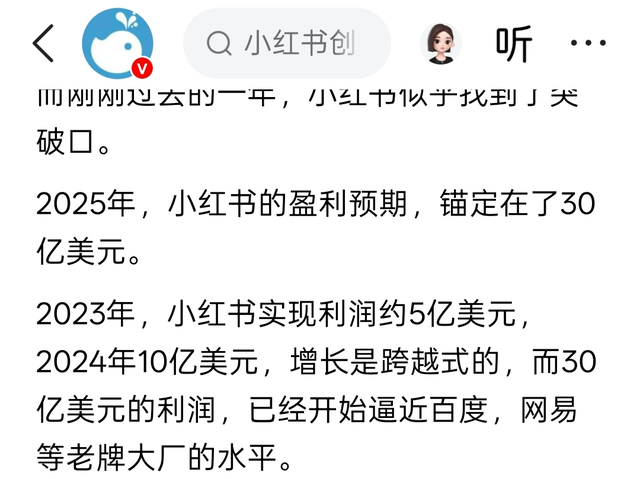
Although Xiaohongshu has not gone public, media reports suggest that its profit expectations for 2025 are set at 3 billion USD. As of now, Xiaohongshu’s monthly active users have exceeded 400 million, with daily searches reaching 800 million.
Furthermore, according to Tianyancha APP data, Xiaohongshu previously acquired Shuneng Shengqiao, a live-streaming e-commerce company. In April of this year, user consumption time for medium and long-form videos (over 2 minutes) on Xiaohongshu increased by 43% year-on-year, with nearly 100 million users watching medium and long-form content daily.
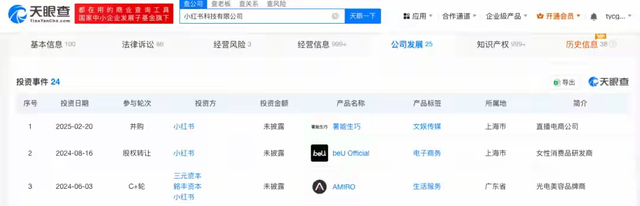
Comparing the two sets of data, it is clear that Xiaohongshu’s commercialization efficiency is somewhat higher than Zhihu’s. Xiaohongshu has successfully created a commercial closed loop of ‘inspiration-purchase,’ where users can directly place orders within the platform after seeing products shared by others. This seamless consumption experience has fueled explosive growth in Xiaohongshu’s e-commerce business.
In contrast, Zhihu has more room for improvement in commercialization. It has experimented with various businesses such as knowledge payment, live-streaming e-commerce, and vocational training, but it would be better if it could generate revenue similar to Xiaohongshu’s e-commerce and advertising.
Moreover, the issue with traditional knowledge-sharing platforms is that, with the advent of large models, the ceiling for knowledge payment in many industries is too low to support the valuation of large internet platforms. Although advertising revenue is stable, its growth potential is limited.
Community commercialization requires a deep understanding of user needs, naturally integrating commercial behavior into the community ecosystem. Xiaohongshu has achieved this by making ‘inspiration’ a lifestyle and turning consumption into a part of community content.
Delving deeper, community platforms can only gain user recognition and payment by providing truly valuable content and services. Xiaohongshu has proven this with its actions, while Zhihu is still on the path to exploration. Next, both platforms are setting their sights on the same direction—AI—hoping that this new technology can bring them new growth momentum.
03
AI Has Not Yet Brought Sweet Returns to Platforms
AI is considered the next growth driver for the internet industry, with almost all internet companies aggressively investing in it. However, so far, AI has not brought them true benefits.
For example, Zhihu stated that in 2025, it completed an upgrade of its comprehensive search system, enhancing AI capabilities; the platform’s cumulative content reached 953.9 million pieces, a 9.1% year-on-year increase; and the number of cumulative content creators reached 80.3 million, a 3.3% year-on-year increase. In terms of commercialization, Zhihu said it would continue to expand content IP monetization through cross-media adaptations and IP licensing. Selected works from the Yan Yan Stories content library have been adapted into short dramas, comic dramas, and other AI-driven new content forms, while exploring AI-related services.
Despite many community content platforms heavily promoting their AI achievements, financial data shows that AI’s contribution to revenue remains very limited. This indicates that AI is currently more of a cost center than a profit center.
In fact, AI may bring more problems than it solves. The influx of large amounts of AI-generated content has severely degraded the quality of content on platforms. Many AI-generated notes and answers are uniform, lack depth, and even contain much misinformation. This not only harms the user experience but also discourages original creators. Many users report that it is now difficult to find truly valuable content on Xiaohongshu and Zhihu, with most of what they encounter being AI-generated junk information.
AI may also undermine the core value of communities—the genuine connections between people. Communities are attractive because they are places where real people interact. If most of the content on a platform is AI-generated, users will lose interest in interacting, and the community will lose its soul.
Because technology is merely a tool; it cannot replace human creativity in generating value. AI can improve content production efficiency, but it cannot create truly warm and profound content. If community platforms rely too heavily on AI, they will ultimately become cold information distribution machines, losing their most precious community atmosphere.
AI can be both a boon and a bane for community content. Used wisely, it can accelerate platform growth; used poorly, it can destroy the community ecosystem accumulated over the years. How to leverage AI to improve efficiency while maintaining community authenticity and uniqueness is a question both platforms need to seriously consider.
Looking back, Tianya’s return serves as a wake-up call for all community platforms. There are no permanent kings, only constantly evolving survivors. The vitality of a community lies not in its long history but in its ability to resonate with current users. Sentimentality cannot feed a platform, nor can support from old users sustain its future.
There are essentially no shortcuts on the path to community commercialization. It requires platforms to patiently cultivate the community ecosystem, treat users sincerely, and continuously innovate products and services. Xiaohongshu and Zhihu are on the right track, but they still have a long way to go. As for Tianya, it may survive on nostalgia, but it will never return to its golden era.
-
![]()
Proposed to Raise 955 Million Yuan through Private Placement! Huicheng Vacuum Boosts Localization of Ultra-Precision Optical Coating Equipment
-
![]()
Cash Flow Soars 13-Fold! What Major Strategic Move is Wuhan Five Square Optoelectronics Planning?
-
![]()
Leaked Design of vivo X500: Reverts to Circular Camera Module in Top-Left Corner, Pays Homage to Classic X90 Aesthetic
-
![]()
DeepSeek Shows Signs of Foraying into Code Agents, Launches WeChat Official Account Focused on Harness
-
![]()
Auto Companies Deny Claims That ‘Cooperation with Huawei Is Non-Essential’, as Huawei Transforms into a ‘Public Platform’
-
![]()
Starship to Independently 'Return to the Launch Tower': SpaceX's Ambitions Extend Beyond Rocket Building to Dominating Space Transportation
-
![]()
Starship Set to Independently 'Return to the Launch Tower': SpaceX is Revolutionizing Space Transportation, Not Just Building Rockets
-
![]()
Anthropic and OpenAI Face Off Against Deepseek