In the Age of Agents, Has the Network Become the Most Underestimated AI Variable?
 06/02 2026
 479
479
Article by Xiangling Shuo
Since the second half of last year, AI Agents have transitioned from technical demonstrations to real enterprise production processes. Microsoft and Google are driving large-scale Agent deployment, while domestic players like Baidu and ByteDance are also accelerating their rollouts.
In this process, massive, high-frequency, autonomous communications occur between Agents, between Agents and computing power, and between Agents and end-user applications.
However, traditional network designs never anticipated these load models. In contrast, communication in the Agent era is entirely different—it is machine-to-machine and continuous, where millisecond-level jitter can cause issues. Yet, in reality, the industry has focused solely on computing power, with few discussing the 'road' that connects computing power and Agents.
As global network equipment vendors redefine networking for the AI era, Huawei has provided the most systematic response yet for the Chinese market. At its recent Data Communication Innovation Summit, Huawei officially positioned 'building a Token-centric secure intelligent networking foundation' as the upgrade direction for its Galaxy AI Network, reconstructing the network infrastructure for the Agent era with a dual-wheel drive of 'intelligent connectivity + security.'
In China's market, where Token consumption is accelerating, the significance of this network redefinition warrants careful analysis.
What is expected of networks when AI starts 'working'?
To understand why Huawei chose this moment to upgrade its Galaxy AI Network, we must first answer a more fundamental question: What exactly is expected of networks when AI truly starts 'working'?
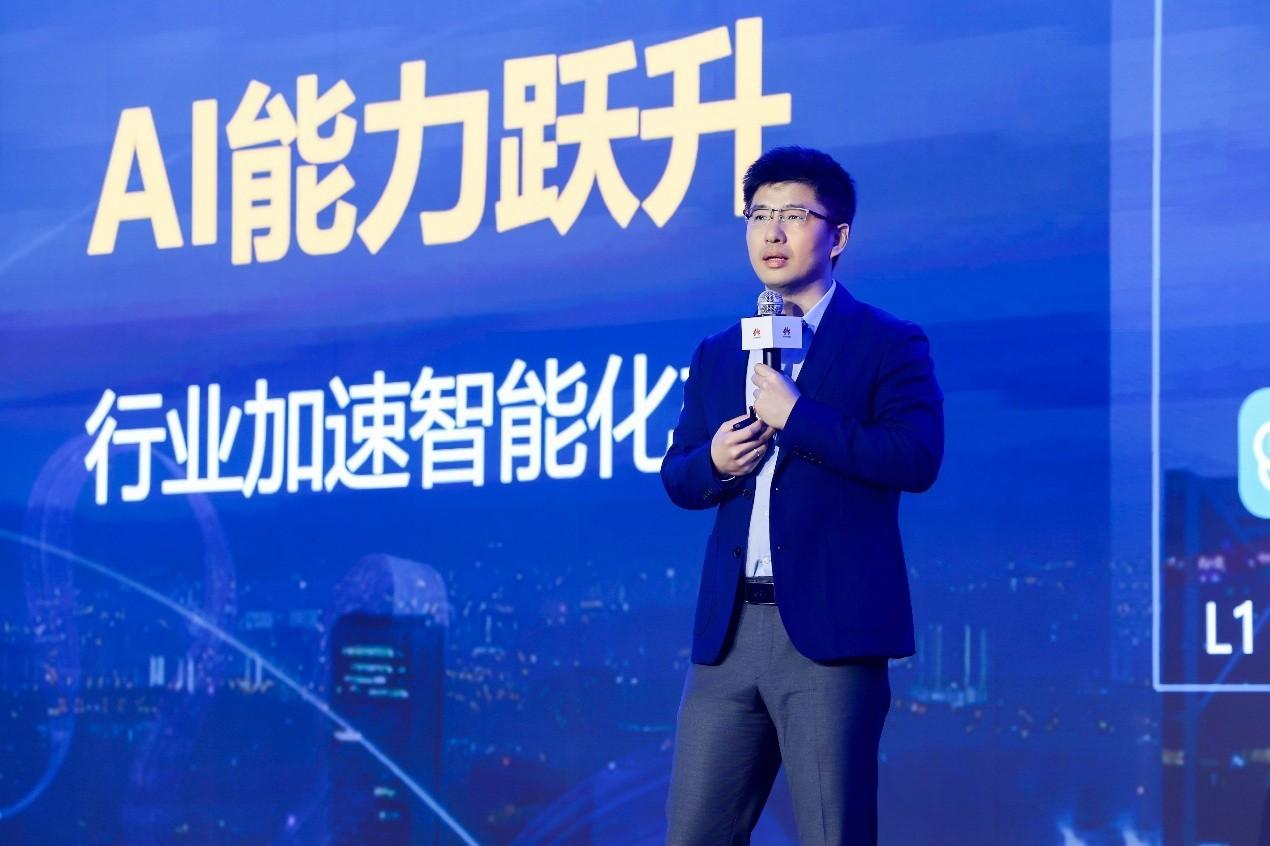
Specifically, there are three dimensions of paradigm mismatch.
The first dimension is efficiency. Traditional network KPIs focus on bandwidth, latency, and packet loss rate—metrics that measure 'pathway quality.' However, in the Agent era, network KPIs are redefined: How many Tokens can be produced at the same computing cost? Can the unit cost of Tokens be reduced? The demand here points to efficiency and cost issues.
According to IDC, Token consumption will grow more than 34-fold annually. In other words, networks in the Agent era must not only ensure basic communication but also guarantee efficiency between computing power and storage. Otherwise, no matter how much computing power is stacked, Token output will remain low, and the value provided to the industry will be severely limited.
What Huawei's Galaxy AI Data Center Network does is essentially shift the network's role from 'ensuring communication' to 'boosting efficiency.' By enabling direct NPU-to-storage connectivity, bypassing traditional CPU intermediaries, transmission bandwidth is increased 8-fold, and Token production efficiency rises by 2 to 5 times. This results in increased Token output under the same computing investment and reduced unit costs through efficiency gains.
The second dimension is reliability. Traditional network reliability design follows a 'best-effort' logic. Simply put, users expect to refresh a webpage if it disconnects for a few seconds or buffer a video if it stutters—these 'failures' are anticipated.
However, in Agent scenarios, a 7-second network anomaly can disrupt operations and significantly degrade performance. For example, during large-scale model training, a single network interruption can cause gradient synchronization failure, leading to either rework or complete training task collapse.
Such consequences are untenable. Therefore, Huawei has reduced switch fault restart times from the industry-standard 120 seconds to 5 seconds, combined with minute-level optical link contamination detection, doubling the overall availability of AI services.
The third dimension is security. Traditional security relies on perimeter defense—firewalls guard the exits, intercepting known threats via signature databases. This model is ineffective today for three reasons.
First, attackers are arming themselves with AI. A Gartner 2025 report shows a 327% year-over-year surge in AI-driven attacks. AI can automate vulnerability detection and generate polymorphic malware, outpacing traditional signature databases.
Second, the attack targets have changed. Tokens carry critical information and core knowledge during model inference. Once widely penetration into core enterprise operations, their leakage risk and harm multiply. When these become hacker targets, the security challenges and consequences networks face are far more severe than in the past.
Third, the attack surface has expanded. Over 70% of intelligent agents have security vulnerabilities, and autonomous Agent collaboration may become a new channel for attack propagation. Security is no longer just about 'guarding the door' but requires end-to-end protection from devices to links to endpoints.
Network Self-Revolution: Starting with Built-In Security and Token Costs
Having identified these three dimensions of mismatch, revisiting Huawei's upgrade logic reveals that it is not a simple feature addition but a logically structured architectural reconstruction.
Consider the framework. Most network equipment vendors' AI upgrades remain focused on point optimizations—some only address data center networks, others only push security products. Few globally can align technology stacks and strategies across these scenarios.
Here, Huawei structures this upgrade into four capability directions, precisely corresponding to the complete lifecycle of Tokens from 'creation' to 'usage.'
Efficient Token production occurs in data centers, where computing clusters generate Tokens. The network's role is to accelerate this process and reduce costs. Secure Token transportation happens over wide-area networks, where Tokens flow to various locations, requiring encryption against interception or theft during transit. Rapid Token application occurs in campus networks, such as enterprise offices, factories, hospitals, and schools, where Tokens are actively used by endpoints or Agents, demanding lag-free wireless experiences. Intelligent Token protection spans all these stages.
Clearly, this is not a traditional product-line segmentation but an end-to-end capability reorganization aligned with the Token lifecycle from 'computing clusters' to 'end-users.' An enterprise's AI deployment, from backend computing to frontend applications, is entirely covered by this network.
Notably, 'security' in Huawei's framework is not an isolated fourth pillar but a foundational capability woven throughout the first three.
Each layer incorporates inherent security designs, including the data center's NetMaster self-healing capability, wide-area network's built-in security intelligent line cards and QKD quantum encryption, and campus network's four security systems for asset protection, privacy, control, and connectivity. This systematic approach is far more robust than launching standalone security products.
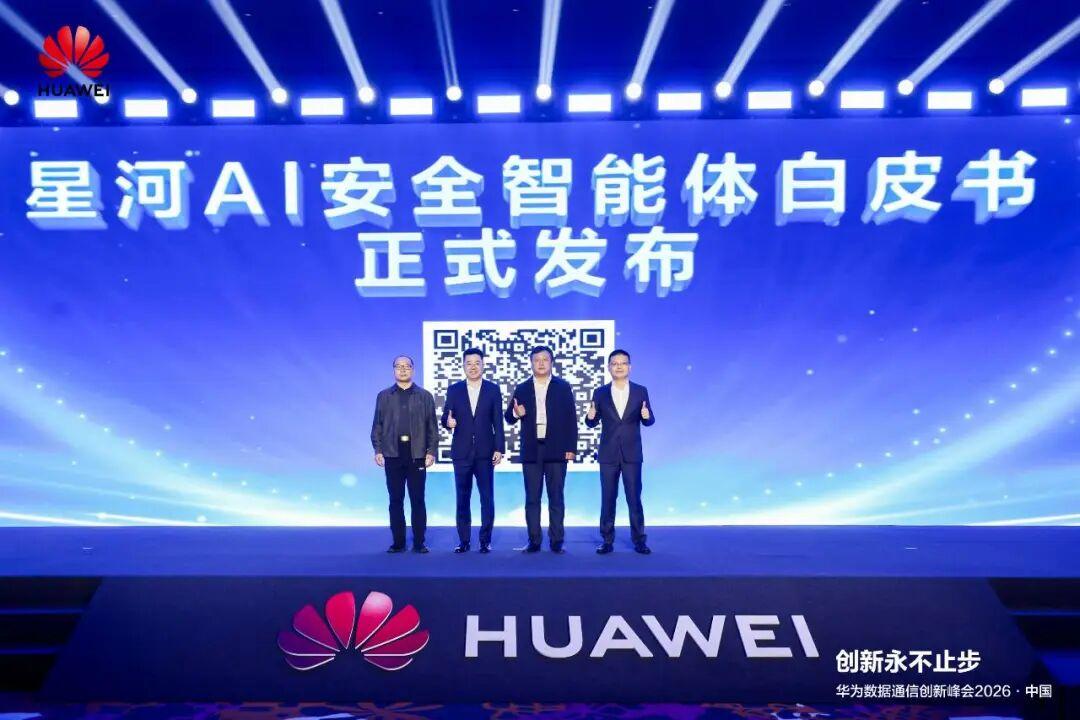
Of course, the core data center network represents the most technologically dense part of this upgrade. Specifically, three innovations each serve a distinct purpose.
First, NPU-to-storage direct connectivity breaks the traditional path where computing power retrieves data via CPU intermediaries, enabling direct storage access. This is a fundamental reconstruction of internal data pathways within data centers.
Second, FlashStart 2.0 reduces switch fault restart times to 5 seconds. This capability enhancement stems from a systematic engineering effort spanning hardware redundancy to software recovery.
Third, NetRoPE encoding technology and the NetMaster network agent shorten Agent deployment cycles from 3–4 weeks to days, raising configuration change accuracy from below 50% to over 95%. The latter achieves over 80% automated alert resolution via AI, with an average handling time of 3 minutes.
Here, network equipment vendors are now valuing themselves based on Token costs rather than bandwidth—a qualitative shift in the network's role within the AI value chain.
Where Does Networking Head in the Agent Era?
As networking's role transforms, how will its future be defined? Stepping back from this product upgrade to examine the broader industry, three key shifts emerge.
1. Network equipment vendors' roles have qualitatively changed.
In short, they are transitioning from 'selling bandwidth and devices' to 'selling Token carrying efficiency and security guarantees.' This is not just Huawei's directional adjustment but an industry-wide pivot. Globally, AI-native network architectures and AI data center networks are accelerating deployment. The difference lies in who first clarifies and implements 'networking's new role in the AI value chain.' Huawei has now led with a systematic response through its 'Token-centric' framework.
2. The 'intelligent connectivity + security' dual-wheel model may become a new industry competition benchmark.
Over the past decade, network equipment competition centered on 'faster and wider' connectivity. In the Agent era, this shifts to 'smarter and more resilient'—whether devices have built-in AI computing power, whether operations can achieve AI autonomy, and whether security is native rather than bolted on are now core customer evaluation criteria. This resembles how cloud computing disrupted traditional IT—whoever first achieves architectural-level transformation gains the initiative in defining next-stage competition rules.
3. Infrastructure bottlenecks for AI adoption in Chinese enterprises are shifting from computing power to networking.
Over the past two years, industry discussions have focused on 'whether computing power is sufficient.' However, after computing clusters are built, what truly constrains AI application efficiency is networking—data cannot move, Agents cannot connect, and security cannot hold. Practices from leading customers like Bank of Communications, China Pacific Insurance, and Guotai Haitong Securities demonstrate that the 'last mile' of AI adoption is not an algorithmic issue but an infrastructure one.
Final Thoughts
At the turning point where AI Agents transition from 'technical demonstrations' to 'enterprise workforce,' networking—long considered a 'solved infrastructure' over the past decade—is being rediscovered as a critical bottleneck variable.
Thus, this upgrade to Huawei's Galaxy AI Network and its proposal of a 'Token-centric secure intelligent networking foundation' is not a routine product launch. It is a systematic answer to 'what networking should look like in the AI era,' and the industry urgently needs such an answer.
Of course, whether this answer defines the industry's evolution over the next three to five years depends not on Huawei alone. It hinges on whether enterprises across sectors choose 'merely faster' networks or 'fundamentally reconstructed' ones during AI adoption.
At a time when many have yet to recognize this choice, Huawei has already taken the lead on the latter path.
*All images in this article are sourced from the internet.
-
![]()
Proposed to Raise 955 Million Yuan through Private Placement! Huicheng Vacuum Boosts Localization of Ultra-Precision Optical Coating Equipment
-
![]()
Cash Flow Soars 13-Fold! What Major Strategic Move is Wuhan Five Square Optoelectronics Planning?
-
![]()
Leaked Design of vivo X500: Reverts to Circular Camera Module in Top-Left Corner, Pays Homage to Classic X90 Aesthetic
-
![]()
DeepSeek Shows Signs of Foraying into Code Agents, Launches WeChat Official Account Focused on Harness
-
![]()
Auto Companies Deny Claims That ‘Cooperation with Huawei Is Non-Essential’, as Huawei Transforms into a ‘Public Platform’
-
![]()
Starship to Independently 'Return to the Launch Tower': SpaceX's Ambitions Extend Beyond Rocket Building to Dominating Space Transportation
-
![]()
Starship Set to Independently 'Return to the Launch Tower': SpaceX is Revolutionizing Space Transportation, Not Just Building Rockets
-
![]()
Anthropic and OpenAI Face Off Against Deepseek