The Largest IPO in History is Coming! How Does SpaceX Justify a $1.75 Trillion Valuation?", "SpaceX,IPO,Starlink,Computing Power Business,Starship
 06/10 2026
 410
410
Its move to impact (I think you want to say "make an impact on") the capital markets may not only surpass Saudi Aramco's 2019 IPO record of $25.6 billion but also marks the first time the space economy has taken center stage on the global capital stage.
What does $1.75 trillion really mean? It is the combined market capitalization of five of the world's top defense and aerospace companies—Boeing, Lockheed Martin, Northrop Grumman, Raytheon Technologies, and General Dynamics. It also exceeds Tesla's current market capitalization of $1.6 trillion. Upon listing, SpaceX will directly rank among the top seven global publicly traded companies by market capitalization.
Just 18 years ago, the company was on the brink of bankruptcy after its third rocket launch failure, with Musk even mortgaging all his personal assets.
This article aims to look beyond the surface data provided in the prospectus, dissect the underlying logic of SpaceX's $1.75 trillion valuation, reveal the essence of its business model, and explore the opportunities and risks associated with the largest IPO in history.
1. Valuation Restructuring: From a 'Rocket Company' to a 'Space Infrastructure Operator'
For a long time, the capital market's valuation logic for SpaceX has typically positioned it as an 'aerospace launch service provider,' believing its primary value lies in the cost advantage brought by the reusable technology of the Falcon 9 rocket.
However, the information disclosed in this prospectus is vastly different. SpaceX's valuation system has undergone a fundamental restructuring.
1. Computing Power Business: The Explosion of the Second Growth Curve
SpaceX's three-year, $45 billion computing power contract with Anthropic may help SpaceX's business portfolio achieve a strategic evolution. SpaceX's revenue in 2025 is $18.7 billion, with the Starlink business contributing approximately $12 billion. The collaboration with Anthropic will bring SpaceX $15 billion in annual revenue, surpassing Starlink to become the company's largest single revenue source.
According to the agreement, Anthropic will pay SpaceX $1.25 billion monthly for computing power, covering two data center clusters, Colossus 1 and Colossus 2.
And this is just the beginning.
Musk stated that multiple companies are negotiating similar computing power contracts, and Google, an important shareholder of SpaceX also facing computing power bottlenecks, is likely among them.
Some may ask, where does SpaceX get its computing power, and why are others buying it from them? Isn't SpaceX a rocket company? Humans have been building rockets for years and haven't heard of a need for computing power. 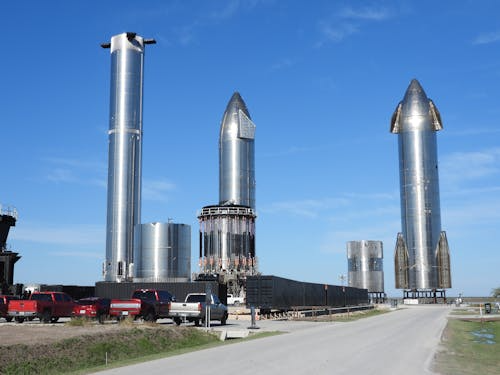
In fact, SpaceX's possession and need for computing power are a natural necessity resulting from its subversion (I think you want to say "disruption of") of the traditional aerospace model of 'low-frequency, preset missions.'
In the past, humans launched rockets only a few dozen times a year, with a few hundred satellites in orbit. Thus, computing tasks could be completed on the ground in advance, and rockets only needed to be equipped with low-performance radiation-resistant chips. Therefore, the public did not perceive a connection between rockets and computing power.
However, SpaceX is different. It operates 9,600 high-speed moving Starlink satellites (real-time orbital scheduling, collision warnings, global user allocation) and iterates the autonomous recovery algorithms for the Starship (over 1 billion simulation trainings). Therefore, it has pre-locked NVIDIA's million-scale GPU production capacity and quickly built the Colossus series AI computing power clusters using its modular engineering capabilities for rocket manufacturing.
This cluster was originally intended for training the Grok large model by SpaceX's own xAI. AI giants are willing to pay a premium to buy computing power from SpaceX because the global computing power shortage has reached a ridiculous point where money cannot buy chips, and chips cannot build data centers. Building a 1-gigawatt data center takes about two years, but SpaceX can deliver it in just three months.
Meanwhile, SpaceX is becoming a 'vertically integrated cloud service provider.' Unlike traditional cloud service providers like Amazon AWS and Microsoft Azure, SpaceX possesses full-industry-chain capabilities, from power generation (solar energy) and data center construction to global transmission networks (Starlink).
The Colossus data center clusters adopt self-developed liquid cooling technology and modular design, providing the high-density computing power required for AI training at a cost significantly lower than the industry average. 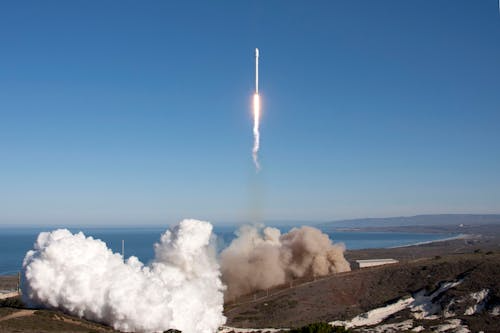
The Starlink network solves the issue of high-speed interconnection between data centers, enabling distributed computing power scheduling.
What drives the capital markets even crazier is the 'gigawatt-scale space AI computing power cooperation' clause in the above contract. Compared to ground-based data centers, space data centers offer significant advantages:
They are not constrained by land resources, utilize solar energy for 24/7 uninterrupted power supply, have high natural cooling efficiency in a vacuum environment, and can be accessed with low latency from anywhere globally.
The carrier for realizing this vision is SpaceX's Starship rocket. Once space data centers are successfully deployed, SpaceX will control the upstream of global AI computing power, becoming a colossal powerhouse in the AI era.
2. Starlink: The Long-Term Value as the Cash Flow Ballast
Despite the promising prospects of the computing power business, Starlink remains SpaceX's most reliable cash cow and the core support (I think you want to say "support") of its valuation.
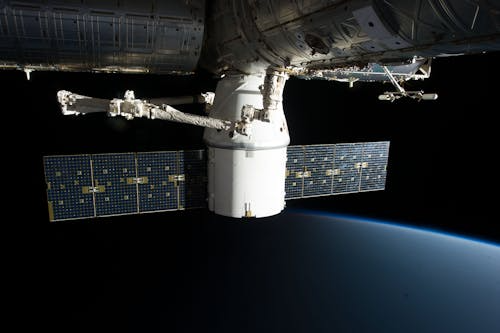
As of the first quarter of 2026, Starlink has deployed over 9,000 satellites globally, with over 10.3 million users, covering more than 100 countries and regions worldwide.
The commercial value of Starlink lies not only in consumer-grade internet services but also in its value in government and enterprise markets. In some military conflicts, Starlink has proven its reliability in military communications, leading the U.S. Department of Defense to sign billion-dollar contracts with SpaceX.
In maritime, aviation, energy, and many other industries, Starlink is rapidly replacing traditional satellite communication services. According to industry analyst Andy Li, by 2030, Starlink's annual revenue is expected to exceed $50 billion, making it the world's largest satellite communication operator.
More notably, Starlink provides synergistic effects for SpaceX's other businesses. It serves not only as the global transmission network for space data centers but also as the largest customer for the Starship. The next-generation V3 Starlink satellites will weigh three times as much as the current version and offer ten times the performance. Only the Starship rocket can economically deliver them into orbit in bulk.
This 'rocket-satellite-service' integration model provides SpaceX with a solid competitive moat.
3. Traditional Aerospace Business: An Unignorable Foundation
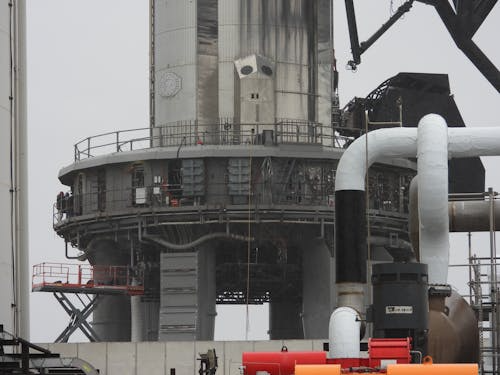
Besides Starlink and the computing power business, aerospace launch and crewed spaceflight businesses are also important revenue sources for SpaceX.
Relying on the cost advantage of the Falcon 9 rocket, SpaceX has captured over 70% of the global commercial launch market. Whether it's NASA's Artemis moon landing program, International Space Station resupply missions, or commercial crewed spaceflight businesses, they will all bring stable cash flow to SpaceX.
Among them, the prestigious Artemis program carries the most weight. NASA has awarded SpaceX a total of $3.87 billion in contracts for the development of the Human Landing System (HLS), with an initial contract value of $2.9 billion, and plans to execute the Artemis IV crewed moon landing mission in 2028.
If everything goes smoothly, SpaceX has the opportunity to become the first commercial company in history to send astronauts to the moon. This will not only help secure more government contracts but also facilitate Musk's cherished Mars colonization plan.

II. Technological Barriers: Starship is the Ultimate Fulcrum of All Stories
No matter how much SpaceX's business portfolio expands, its core competitiveness always rests on aerospace technology, and the Starship rocket is the ultimate fulcrum supporting all its narratives.
Without the achievements of the Starship, SpaceX's computing power business would be insignificant, and the $1.75 trillion valuation would be merely a castle in the air.
Shortly after submitting the prospectus, the new-generation V3 Starship completed its first test flight. This test flight may have been SpaceX's intention to 'show off its muscles' to the capital markets. The V3 Starship is SpaceX's most advanced launch vehicle, standing 124 meters tall and equipped with 33 upgraded Raptor 3 engines, with a near-Earth orbit payload capacity exceeding 100 tons. 
Although the test flight experienced technical anomalies, such as premature shutdown of one engine at each stage and a failed return ignition of the first-stage booster, the overall performance exceeded market expectations. The Starship successfully completed critical steps like takeoff, stage separation, satellite deployment, and achieved a controlled splashdown in the Indian Ocean. This indicates that the Starship's technology is maturing, and normalized commercial launches are not far off.
As Musk said, 'The Starship is the reason for SpaceX's existence.'
III. Asset Strategy: The Logic Behind Holding 18,712 Bitcoins
Another notable detail in the prospectus is that SpaceX currently holds 18,712 bitcoins, with an average purchase cost of $35,000. At the current market price, these bitcoins are worth approximately $1.45 billion. This holding exceeds Tesla's 11,509 bitcoins and Coinbase's 14,458 bitcoins, making SpaceX the company with the largest bitcoin holdings outside the cryptocurrency circle.
1. Asset Diversification and Risk Resistance
Amid ongoing global geopolitical uncertainties and volatile sovereign currencies, bitcoin, as a decentralized global reserve asset, provides SpaceX with liquidity protection that traditional fiat currencies cannot offer.
Unlike government bonds or stocks, bitcoin is not controlled by any country or institution and generally cannot be frozen or confiscated. It can be transferred globally. For a company with global operations and frequent interactions with various governments, this asset characteristic holds high strategic value.
2. Payment Infrastructure for the Interstellar Economic System
Musk's long-term vision is to establish a multi-planetary civilization, and decentralized bitcoin could potentially become the universal payment method for the future interstellar economic system. SpaceX's significant bitcoin holdings can be seen as a proactive layout (I think you want to say "layout") for the interstellar economy.
3. Brand Effect and Community Influence
Musk's advocacy for bitcoin has brought significant brand effects and online influence to SpaceX. There are tens of millions of bitcoin holders globally, many of whom are also fans of Musk.
IV. Governance Controversy: Betting on SpaceX Means Betting on Musk
Despite its impressive business data, SpaceX's governance structure is quite controversial. The prospectus shows that SpaceX's board consists of eight members. Besides Musk and company president Gwynne Shotwell, most others are individuals who have had decades-long relationships with Musk.
This 'founder + loyal followers' board structure has created the most aggressive governance model in the history of U.S. publicly traded companies:
Musk alone controls approximately 84% of the voting rights, making it virtually impossible for him to be removed by the board. The company's bylaws stipulate that all shareholder claims must be resolved through mandatory binding arbitration, prohibiting lawsuits in federal courts, including class actions. This means investors have almost no possibility of safeguarding their rights through legal channels.
At the same time, only shareholders holding more than 3% of the shares are eligible to file derivative lawsuits. Based on a $1.75 trillion valuation, this means investors need to hold at least $45 billion worth of shares to sue the company's directors and executives.
This clause has angered large institutional investors like the New York State Common Retirement Fund and the California Public Employees' Retirement System, who believe this governance structure severely damages shareholder rights and places investors at a significant disadvantage.

However, for Musk, this decision draws lessons from the previous rejections—Tesla's compensation plan being blocked by a Delaware court and his removal from OpenAI's board—to firmly secure his absolute control over the company.
The prospectus also candidly acknowledges the company's "high dependence" on Musk. "Mr. Musk's leadership, vision, and technical expertise are the core pillars of the company's future success. Any decline or cessation of Mr. Musk's involvement would have a significant adverse impact on the company's business, financial condition, and future prospects."
What does this indicate? It shows that when investors invest substantial amounts to purchase SpaceX's stocks, they are essentially paying for Musk's personal capabilities and future vision. This is undoubtedly an unprecedented high-stakes gamble, betting that Musk can swiftly achieve regular Starship launches, establish the world's largest AI computing network, and even send humans to Mars.
V. Risks and Prospects
SpaceX's valuation of $1.75 trillion represents an expensive bet in business history on the possibilities of humanity's future. It integrates multiple booming sectors, including aerospace, communications, AI, and crypto assets, constructing a complete ecosystem that spans from the ground to space and from hardware to software. However, behind the celebration, risks cannot be ignored.
Firstly, there remain numerous uncertainties in the technological iteration of the Starship. Although the initial test flight of the V3 Starship showed promising results, achieving full reusability and regular launches requires overcoming a series of technical challenges. Any delays in the Starship's progress could impact SpaceX's entire business plan.
Meanwhile, competition in the AI computing power business is intensifying. Tech giants like Amazon, Microsoft, and Google are heavily investing in AI computing infrastructure. Although SpaceX has advantages with Starlink and Starship, its ability to secure a dominant position in the computing power market remains to be seen.
Thirdly, the highly centralized corporate governance structure is clearly fraught with risks. While Musk's concentrated power ensures decision-making efficiency, it also increases the risks associated with autocratic leadership.
Lastly, regulatory risks cannot be overlooked. SpaceX's operations span sensitive sectors such as aerospace, communications, and AI, industries closely monitored by governments worldwide. Therefore, any changes in regulatory policies could significantly impact SpaceX.
Nevertheless, it cannot be denied that SpaceX has already transformed the landscape of the human aerospace industry and is ushering in a new era of the space economy. The ultimate outcome of this, the largest IPO in history, will not only determine SpaceX's future but also influence the future of the global technology industry.
Will Musk's space dreams mark a new starting point for human civilization, or will they prove to be just another bubble in the capital markets? Time will tell.
-
![]()
Proposed to Raise 955 Million Yuan through Private Placement! Huicheng Vacuum Boosts Localization of Ultra-Precision Optical Coating Equipment
-
![]()
Cash Flow Soars 13-Fold! What Major Strategic Move is Wuhan Five Square Optoelectronics Planning?
-
![]()
Leaked Design of vivo X500: Reverts to Circular Camera Module in Top-Left Corner, Pays Homage to Classic X90 Aesthetic
-
![]()
DeepSeek Shows Signs of Foraying into Code Agents, Launches WeChat Official Account Focused on Harness
-
![]()
Auto Companies Deny Claims That ‘Cooperation with Huawei Is Non-Essential’, as Huawei Transforms into a ‘Public Platform’
-
![]()
Starship to Independently 'Return to the Launch Tower': SpaceX's Ambitions Extend Beyond Rocket Building to Dominating Space Transportation
-
![]()
Starship Set to Independently 'Return to the Launch Tower': SpaceX is Revolutionizing Space Transportation, Not Just Building Rockets
-
![]()
Anthropic and OpenAI Face Off Against Deepseek