Non-Traditional Leadership Transition: Chen Yusen Assumes Leadership at DingTalk as Alibaba Adopts 'Loyalty and Compassion'
 06/11 2026
 675
675
Tech Four Youths © Original Content by Insightful Business Editorial Team
Author | Si Shao
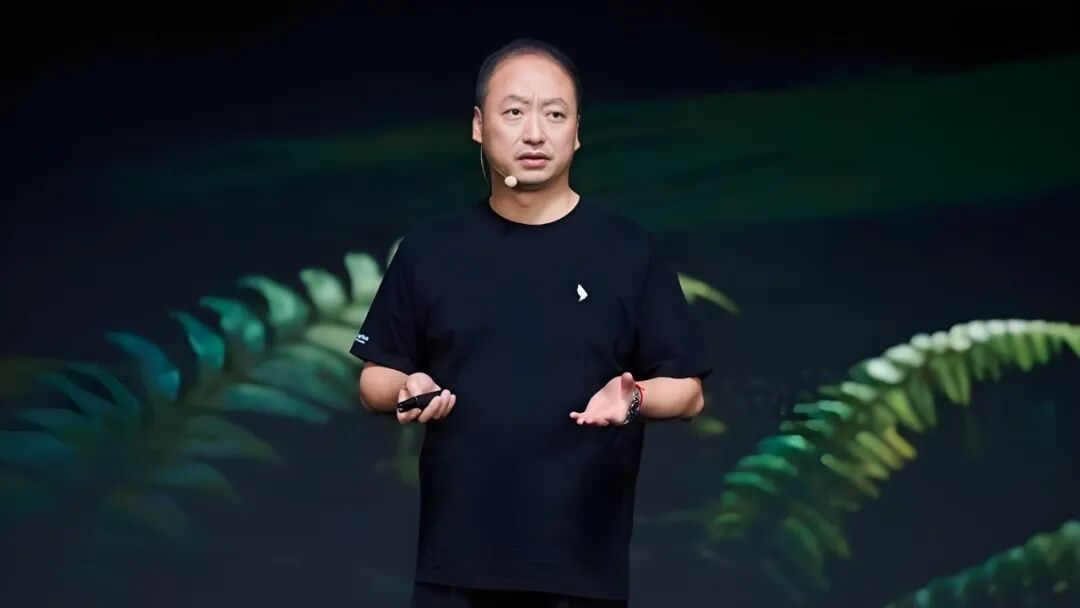
On June 11, 2026, Alibaba made a surprising announcement regarding personnel changes: Chen Hang (also known as Wu Zhao) stepped down as CEO of DingTalk, with Chen Yusen, a tech enthusiast born in 1992, taking over the reins.
The day before the announcement, Alibaba's Partnership Committee posted a strongly-worded article on the internal network titled "Loyalty, Compassion, and Growth Define Alibaba Culture," directly criticizing the management style of the DingTalk team as "not in line with Alibaba's cultural values."
This article served as a formal response to a widely circulated lengthy post by a former employee titled "Inside DingTalk" and accurately foreshadowed the leadership transition at DingTalk.
From the external buzz of "Wu Zhao's unconventional methods succeed" to the official declaration of "not in line with Alibaba's cultural values," the seven-year tenure of Wu Zhao at DingTalk came to an end. His successor is a 34-year-old tech entrepreneur with no prior experience managing a large corporation.
However, signs of this change had been apparent for some time.
As early as his return in 2025, there were reports of Wu Zhao conducting late-night inspections of DingTalk's offices, criticizing employees for lacking drive and being too lax. Subsequently, DingTalk implemented a series of intense, militarized management regulations. Overtime became the norm, with daily working hours pushed to the limit and weekend availability expected as standard. Some employees privately calculated that the average weekly working hours in core departments once exceeded 80 hours. Meetings were required to "clear and settle daily," with issues needing resolution on the same day, regardless of the time. KPIs were rigorously cascaded down to individuals, with morning meetings, evening meetings, and review sessions filling calendars. Leave requests required multiple levels of approval, and remote collaboration was viewed as inefficient.

These regulations were internally dubbed "the growing pains of a second startup," but those experiencing them felt a suffocating sense of control. One employee who was still working there at the time later recalled, "During that period, the lights in the DingTalk building stayed on the latest in the park. It wasn't that people didn't want to leave; no one dared to be the first to go."
This management style bore the distinct "Wu Zhao imprint"—an extreme focus on results, iron-fisted execution, and an implicit logic: to win tough battles, one must be ruthless with oneself.
However, the very approach that had carved out the market began to harm its own people in this new battlefield. The intense regulations did not lead to linear growth in efficiency but instead gradually depleted creativity. When employees devoted all their energy to navigating internal processes and reporting requirements, they had no mental capacity left for product innovation. Yet, as a future-oriented collaboration platform, DingTalk desperately needed a steady stream of creativity.
The eruption of "Inside DingTalk" merely highlighted this chronic depletion in a concentrated manner.
Wu Zhao's 'Unconventional Approach'
To understand the deeper logic behind this leadership transition, one must first understand who Wu Zhao is and why he could lead DingTalk from zero to one.
Chen Hang, known by his alias Wu Zhao, is widely recognized within Alibaba as a "tough player." In 2014, after repeated failures with the "Laiwang" project, he led a small team to develop DingTalk in a residential building near Alibaba's campus in Lakeside Garden.

At that time, China's B2B market was dominated by traditional software vendors like Yonyou and Kingdee, whose products were cumbersome and outdated. Wu Zhao's insight was razor-sharp: the greatest pain point for Chinese enterprises was not the lack of software but bosses' inability to manage employees effectively.
Thus, he made a bold positioning—to please the bosses.
Features like read receipts, DING notifications, check-in attendance, and approval workflows—every core function of DingTalk precisely addressed managers' concerns. Bosses could see who had read their messages and who hadn't, with unread messages triggering forced pop-up reminders via "DING." Employee leave requests, reimbursements, and approvals were all digitized and transparent.
This strategy quickly established DingTalk's core user base among small and medium-sized enterprise owners, who praised it for making personnel management effortless.
DingTalk's promotional methods were equally aggressive in Wu Zhao's style. He built a ground force known as the "DingTalk Iron Army," using Alibaba's China Supply Iron Army approach for grassroots promotion. Salespeople went door-to-door to enterprises, teaching bosses how to use DingTalk hands-on. In the early days, Wu Zhao himself was on the front lines, personally visiting clients and refining the product.
This "wolf-like" approach was highly effective. Launched in 2015, DingTalk surpassed 10 million users in 2016, 100 million in 2017, and 200 million in 2019. It surged ahead, leaving WeChat Work far behind.
That was the golden era for Wu Zhao. His "unconventional approach" was essentially an extreme management-driven logic: strong control, strong execution, and results-oriented. Relying on this culture, DingTalk carved out a path in the B2B market, becoming a significant acquisition for Alibaba after its setbacks in social networking.
However, sharpness and roughness often go hand in hand. The very approach that conquered the market began to leave scars internally.
The Hidden Pain Exposed by a Letter
In May 2026, a lengthy article titled "Inside DingTalk" circulated widely on Alibaba's internal network and the internet.
The author, a former DingTalk employee, detailed various management issues within DingTalk: a high-pressure overtime culture, top-down command-style management, disregard for individual creativity, and layered pressure from middle management. The author wrote, "At DingTalk, it's hard to feel respected as an individual."
A more damning accusation was that DingTalk's culture contradicted its advocacy as a collaboration tool to "stimulate creativity." The article sharply pointed out that while DingTalk claimed to help enterprises achieve digital transformation and invigorate organizational vitality, its internal management adhered to the most traditional industrial-era control model.
This disconnect exposed a long-concealed truth beneath rapid growth: DingTalk's product philosophy and management philosophy were fragmented.
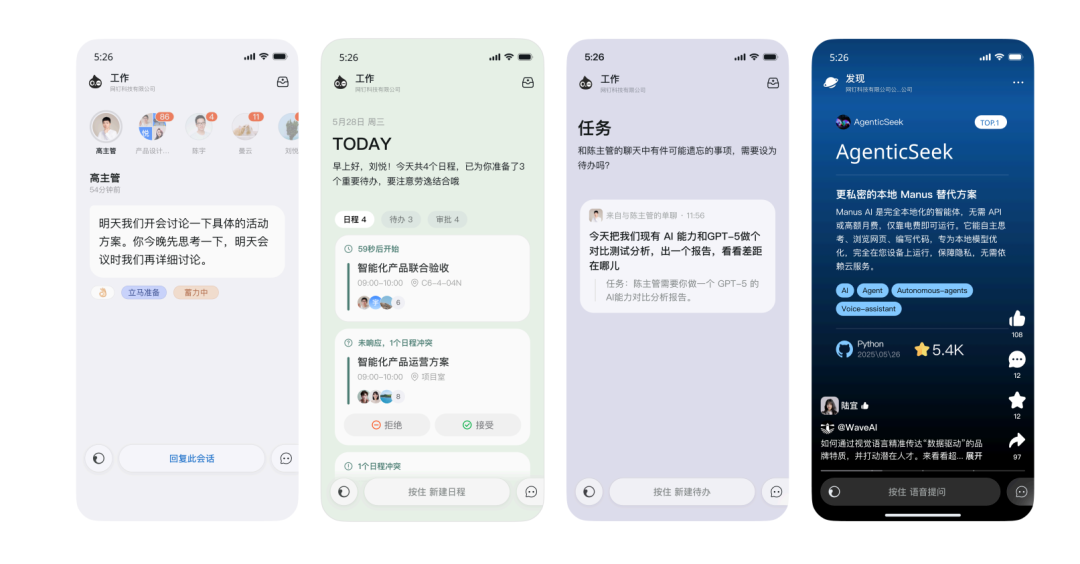
On Alibaba's internal network, numerous employees engaged in discussions, with some expressing resonance, others raising doubts, and some calling on management to address the issues. The intensity of the debate surpassed many expectations.
This was not an isolated incident in Alibaba's history. The company prides itself on "frankness," and heated debates on the internal network are not uncommon. However, this time was different because "Inside DingTalk" directly targeted the top leader of an independent subsidiary and the cultural system he had established. This subsidiary carried Alibaba's crucial mission in its B2B strategy.
In 2026, Alibaba was undergoing a profound top-down organizational transformation. With the AI wave surging, the group explicitly proposed to "face the AI era with a brand-new formation," establishing new organizations like Alibaba Token Hub and Token Foundry to incubate AI innovations using small, flat teams. Happy Horse, Happy Oyster, MuleRun, Qoder—a wave of new products emerged rapidly, and a cohort of young tech talents rose to prominence.
In this transformation, a "new Alibaba culture" emphasizing individual creativity and openness was taking shape. However, the DingTalk described in "Inside DingTalk" ran counter to this trend.
The Alibaba Partnership Committee reacted more swiftly and directly than many expected.
Not Representative of Alibaba's Culture
On June 10, the Alibaba Partnership Committee posted "Loyalty, Compassion, and Growth Define Alibaba Culture" on the internal network.
The wording of this post was extremely stern. The committee did not dodge the issues, as conventional PR might, but directly acknowledged their existence and provided a clear value judgment: "not in line with Alibaba's cultural values."
This post marked a symbolic moment in Alibaba's history. The Alibaba Partnership Committee is the group's highest decision-making body, and its public statement was equivalent to an official final verdict.
Several key phrases in the post warrant close interpretation:
"People are the most precious asset."—This directly responded to the feeling of "not being respected" expressed in "Inside DingTalk." It meant that, from the group's perspective, certain management practices at DingTalk had crossed the bottom line of Alibaba's values.
"Alibaba's future lies in innovation, and AI-era innovation relies on passion and creativity."—This provided the strategic context for the entire incident. Alibaba was fully committing to AI, and AI innovation required bottom-up enthusiasm and inspiration, not top-down commands and execution.
"Only by fully respecting individual value can we truly create customer value and move toward the future."—This was a complete rejection of the "management-driven" logic. In the committee's view, an organization that did not respect individuals could not create products that truly served users. Or, it was a profound irony to expect a team that did not respect its employees to develop a tool claiming to "invigorate organizational vitality."
This post effectively declared the end of the Wu Zhao era. The signal it sent could not be clearer: the group had lost patience with DingTalk's cultural direction.
The leadership transition announcement arrived as expected the next day.
Chen Yusen: Alibaba's Answer
The successor, Chen Yusen, born in 1992, is the youngest CEO of a business unit within Alibaba.
His background contrasts sharply with Wu Zhao's. Wu Zhao is an Alibaba veteran who experienced the failure of "Laiwang" and carried a strong "avenger" mentality and sales iron army ethos. Chen Yusen is a young, renowned tech enthusiast and a typical product-tech entrepreneur.
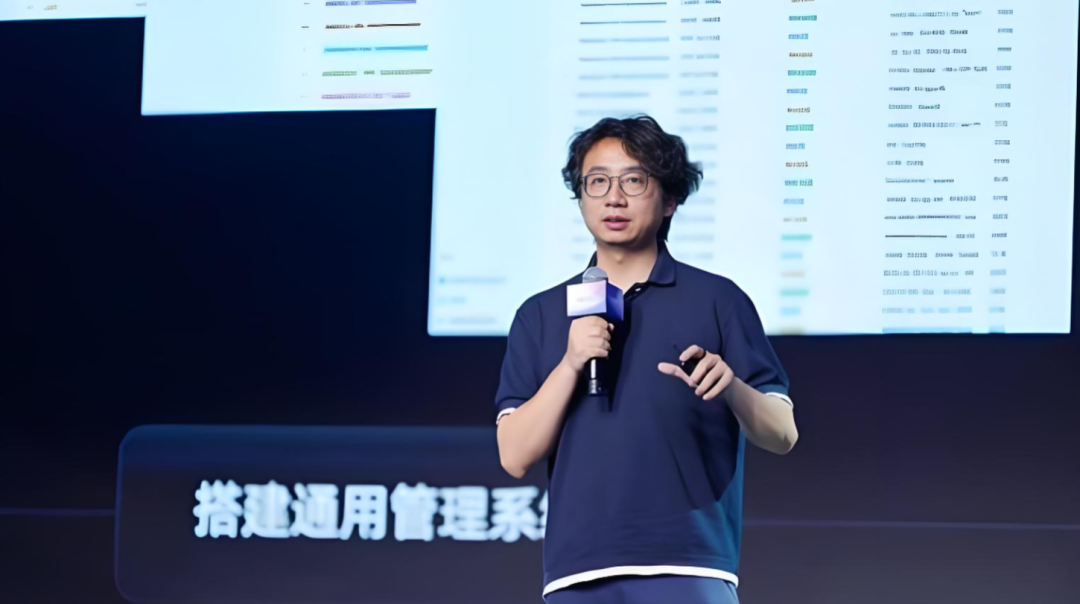
He was listed on Forbes Asia's "30 Under 30" and won multiple championships in top computer science competitions worldwide. At 22, he founded the cybersecurity company Changting Tech, later acquired by Alibaba Cloud. In 2025, he led an internal startup at Alibaba Cloud, developing the AI Agent product MuleRun—one of the representative outcomes of Alibaba's new incubation model.
The choice of Chen Yusen conveyed at least three signals.
First, technology prioritization. In the AI era, DingTalk's competitiveness no longer depends on how many enterprises its ground force can cover but on how many practical problems its product can solve with AI. Chen Yusen's tech enthusiast background suggests that DingTalk will shift toward a technology-driven innovation path.
Second, cultural reset. Chen Yusen did not rise through Alibaba's internal ranks but brings an entrepreneur's independence and external perspective. For DingTalk, recovering from the "Inside DingTalk" controversy, a "newcomer"-style leader is more conducive to breaking old cultural inertia and rebuilding a more open, individual-respecting organizational atmosphere.
Third, youthfulness. The 34-year-old Chen Yusen's appointment represents not just a generational shift within DingTalk but also a microcosm of Alibaba's broader management youthification strategy. In the AI wave, Alibaba is consciously allocating resources to younger leaders who better understand new technologies and are closer to the new generation of developers and users.
Chen Yusen's appointment is Alibaba's clear answer to the "DingTalk dilemma": no longer using sales management methods for product development, no longer using industrial-era culture for AI-era tools.
Wu Zhao's Legacy and Dilemma
Looking back, Wu Zhao's departure does not mean he did anything wrong. On the contrary, his methods were likely the most appropriate choice at that stage.
DingTalk was born in 2014, during the wild west era of mobile internet. The enterprise service market was virtually untamed, and survival depended on acquiring the most users in the shortest time with the boldest approach. Wu Zhao's "management-driven" model was not a flaw in that context but an advantage.
However, the market changed, Alibaba changed, and DingTalk itself changed.
When DingTalk's user base surpassed hundreds of millions and its positioning upgraded from a "boss's tool" to an "enterprise collaboration platform," the old culture became a straitjacket. How could a product with "control" as its DNA make employees genuinely willing, proactive, and creative in using it? How could an organization centered on "commands" develop features aimed at "inspiration"?
This was Wu Zhao's dilemma and DingTalk's dilemma: using a "disrespectful" approach to create a product claiming to "respect people."
The emergence of "Inside DingTalk" punctured this illusion, and the Alibaba Partnership Committee's post delivered the final verdict: this path would not work.
Chen Yusen's ascension is not a denial of Wu Zhao but a response to the times. Wu Zhao's approach carved out DingTalk's kingdom. However, the coming AI era requires not an axe but more precise tools—and new hands to wield them.
Wu Zhao accomplished his historical mission. He does not belong to the next stage.
What Alibaba Is Leaving Behind
From a broader perspective, the leadership transition at DingTalk serves as a microcosm of Alibaba's expansive transformation.
In the past two years, Alibaba has markedly expedited its organizational restructuring. From the "1+6+N" reorganization to frequent leadership changes in divisions such as Taotian, Alibaba Cloud, and Cainiao, to the formation of new entities like ATH and Token Foundry, Alibaba is methodically ushering in a new chapter, bidding adieu to the past.
What defined that bygone era? It was characterized by centralized decision-making, stringent control and execution, a growth strategy centered on scale, and a staunch culture where "results speak loudest." This system proved remarkably efficient during the rapid expansion of e-commerce and cloud computing.
Now, innovation emanates not from the strategic planning at the apex of the corporate pyramid but from the trial-and-error efforts of small teams on the front lines. Blockbuster products no longer emerge from overwhelming resource allocation but from individual strokes of genius. The role of an organization has shifted from controlling people to inspiring them.
The Alibaba Partnership Committee's declaration in the post that "people are the most precious asset" is not just a platitude in this context; it represents Alibaba's fundamental assessment of the future organizational landscape.
Wu Zhao's departure signifies the end of an era—one constructed on the foundations of iron-clad troops, sheer willpower, and strict control—being superseded by an era that is more agile, open, and places greater trust in individual creativity.
Chen Yusen embodies the spirit of this new era. Whether he can steer DingTalk out of its current predicament remains to be seen over time. However, at the very least, Alibaba has made its decision.
As the title of that post aptly puts it—'With compassion, integrity, and growth, that is Alibaba's culture.' Compassion and integrity underscore respect for individuals. Growth symbolizes hope for the future. Wu Zhao's approach ultimately failed to address these two fundamental principles.
And the next chapter of DingTalk will commence with these two guiding principles.
Disclaimer: This article is crafted based on publicly accessible information or details provided by interviewees. However, Keji Sishao and the author make no guarantees regarding the completeness or accuracy of the information mentioned or displayed in the article, nor do they represent the views of any institution or individual. In case of any infringement, please contact us for removal. Under no circumstances should the information or opinions expressed in this article be construed as investment advice to any individual.
-
![]()
Proposed to Raise 955 Million Yuan through Private Placement! Huicheng Vacuum Boosts Localization of Ultra-Precision Optical Coating Equipment
-
![]()
Cash Flow Soars 13-Fold! What Major Strategic Move is Wuhan Five Square Optoelectronics Planning?
-
![]()
Leaked Design of vivo X500: Reverts to Circular Camera Module in Top-Left Corner, Pays Homage to Classic X90 Aesthetic
-
![]()
DeepSeek Shows Signs of Foraying into Code Agents, Launches WeChat Official Account Focused on Harness
-
![]()
Auto Companies Deny Claims That ‘Cooperation with Huawei Is Non-Essential’, as Huawei Transforms into a ‘Public Platform’
-
![]()
Starship to Independently 'Return to the Launch Tower': SpaceX's Ambitions Extend Beyond Rocket Building to Dominating Space Transportation
-
![]()
Starship Set to Independently 'Return to the Launch Tower': SpaceX is Revolutionizing Space Transportation, Not Just Building Rockets
-
![]()
Anthropic and OpenAI Face Off Against Deepseek