The Flip Side of 618: New Arrivals Steal the Spotlight as Major Sales Event Hits Midpoint
 06/11 2026
 607
607
Before delving into the discussion, let's examine the 'two extremes' that brands encounter during the 618 shopping festival:
This year's 618 event has witnessed substantial price cuts in the mobile and digital products sector, with brands demonstrating remarkable sincerity. For instance, the iPhone 17 Pro series saw an immediate price drop of 1,000 yuan, the Huawei Mate 80 Pro Max was reduced to 7,499 yuan, and the Xiaomi 15 Ultra enjoyed an even steeper discount of 1,500 yuan. Despite the escalating costs of storage chips, brands are heavily discounting their products, adhering to the longstanding tradition of major sales promotions.
Beyond price reductions, brands have another strategy at their disposal: launching new products:
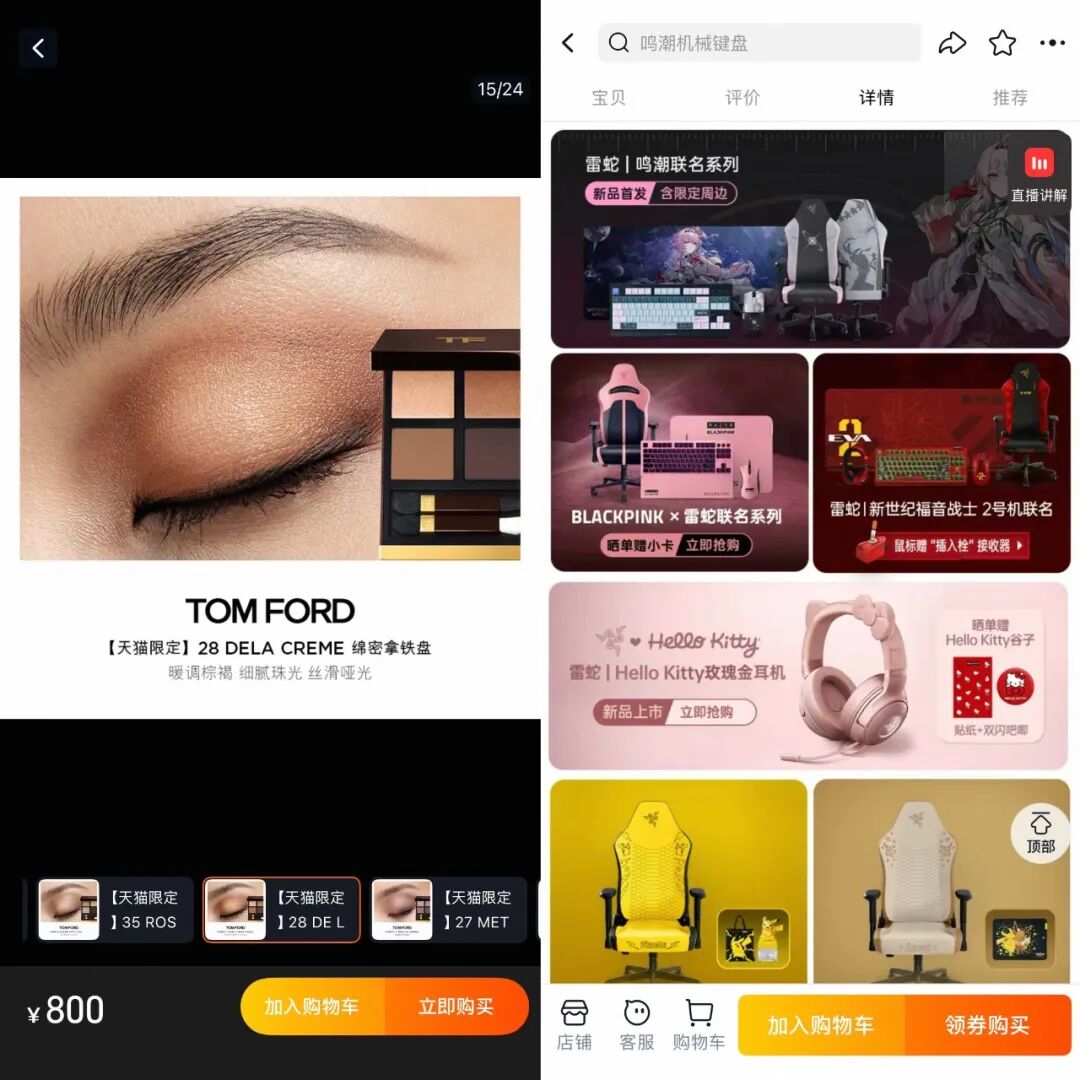
The Italian coffee machine brand De'Longhi exclusively introduced its new 4,000-yuan S9 LattePro on Tmall; the high-end beauty brand TOM FORD unveiled its classic four-color eyeshadow limited edition exclusively on Tmall. Surprisingly, these new product launches also triggered explosive sales growth—TOM FORD's limited edition eyeshadow witnessed first-day sales soar to four times that of last year's regular offerings; De'Longhi's new product sales in the initial phase directly matched last year's total sales throughout the entire promotion period.
According to Tmall's official introduction, during the first phase of the promotion, over 40,000 brands doubled their sales, and the number of new products surpassing 10 million in sales increased by 60% year-on-year. Among the top 100 premium products, new products accounted for one-third of the market share.
Discount promotions and new product launches represent the two facets of the 618 sales event.
This is quite intriguing.
While the entire internet is clamoring for 'low prices' and eager to slash prices to the bone, why are some brands profiting not by competing on low prices but by launching new products instead?
1. The 'Attention Exchange Equation' During Major Promotions
Regarding 618, let's first acknowledge a stark reality: the marginal effect of discount promotions is diminishing. The old tactic of relying on major promotions to 'clear inventory through discounts' is becoming increasingly ineffective.
Why is that?
Because consumers are becoming more discerning.
According to a survey by the China Consumers Association, over 75% of people are adopting a more rational approach to consumption, shifting from 'buying more and cheaper' to 'buying better and trustworthy.' Today's consumers not only hold onto their wallets tightly but also extend their decision-making cycles significantly, averaging 48 days. What does this imply?
It means consumers take the time to read reviews, compare prices, and weigh their options, leaving brands in a state of anxious anticipation.
At this juncture, if brands continue to engage in indiscriminate discounting and fierce price wars, it will not shorten consumers' hesitation periods but will instead completely undermine their own pricing systems. If you offer a 20% discount today and a 40% discount tomorrow, consumers will only perceive that you were overcharging them before, leading to a 'discount spiral' of 'more discounts, more losses; more losses, more discounts.'
Since the marginal benefits of discounts are declining, what is the true value of major promotions for brands?
The answer lies in exposure density, or attention.
A friend remarked that 618, as a major annual promotion, remains the rarest and most valuable opportunity in the business world, even if traffic is diluted—it's a narrow window when everyone is paying attention and preparing to spend money, and societal attention is highly concentrated.
Top brands choose to debut their heavyweight new products on Tmall during major promotions because they understand the calculation: they're not here just to sell at a discount; they're here to leverage the 'high exposure density' of the promotion to achieve the most challenging cold start for their new products.
Simply put, by focusing on the place with the highest concentration of attention and using the most efficient methods to build awareness, the cost is far lower than scattered advertising and searching for customers in a vast market on ordinary days.
Of course, exposure alone is not sufficient—if a platform can only provide traffic, new products will quickly fade away after their initial burst. To turn a spark into a raging fire, you need a comprehensive set of robust infrastructure, combining exposure and sales into one.
This is exemplified by Razer's collaboration with the game IP Wuthering Waves this year, launching a peripheral set exclusively on Tmall. It transformed cold digital standard products into collectible trendy non-standard items, selling out the first batch on the day of launch and requiring emergency restocking daily.
Because Tmall doesn't just provide a simple 'traffic pipeline' but a complete 'commercial operating system': The Tmall New Product Innovation Center (TMIC) is responsible for pre-emptive insights, telling you what consumers like; Super Brand Day and Super New Products are responsible for maximizing visibility, turning up the volume to the fullest; the 88VIP membership system is responsible for high conversion rates during launches; and a well-established store membership system is responsible for long-term customer retention, turning buyers into private assets.
During the same major promotion, some are engaged in discount promotions, while others are launching new products and chasing restocks.
Starting this year, discounts have become the 'old tradition' of major promotions, while new product launches have become the 'new norm.'
2. Why Tmall?
At this point, you might wonder: Since traffic is available everywhere and algorithms are similar across platforms, why do these brands choose Tmall as their irreplaceable foundation?
This brings us to a more fundamental point: new product launches require not just traffic but also a 'launch mindset.'
The basis for consumers to order new products is the belief that they are purchasing first-hand, genuine products worth waiting for. This trust is not built through algorithms and subsidies but through long-term flagship store systems, genuine product guarantees, and the accumulation of brand mindset. Over nearly two decades, Tmall has established a clear perception in consumers' minds: to buy new products at launch, go to the Tmall official flagship store.
This launch mindset is the most crucial soil for the cold start of new products.
At the same time, Tmall boasts a group of over 62 million 88VIP members. These consumers have become desensitized to pure price wars; they crave emotional value, professional performance, and lifestyle projections. For brands like De'Longhi and TOM FORD, this is precisely the audience they need—users who can identify with their product values and are willing to make long-term repeat purchases, rather than customers who drift away after the promotion ends.
This is also why Tmall's new product launches can deliver certainty: not just GMV during the launch period but also brand assets that can be sustained across cycles.
This is Tmall's deepest and broadest competitive advantage.
3. Conclusion: The Rational Return of the Consumer Market
Economies go through cycles, and consumption follows trends, rising and falling like a great river.
The traffic dividends of major promotions are gradually waning, and the rise of 'beyond-the-fifth-ring' e-commerce has plunged e-commerce practitioners into unprecedented internal competition and exhaustion. Many brands, under pressure, have tried to achieve short-lived, false prosperity through endless discounts and price cuts, only to discover, as the tide recedes, that they face the dual blow of profit hemorrhage and brand perception collapse.
Extremes meet their opposite; the end of low-price internal competition is inevitably a rational return to value.
At this grand turning point in the era, forward-looking brand strategists have delivered a profound public lesson: in a cycle filled with uncertainty, innovation is the only ladder upward that can regain product pricing power and achieve brand self-rescue.
Behind the heavy investment in Tmall by major brands and their strategy of replacing volume with new products lies not just a reshuffling of the e-commerce landscape but also a microcosm of the structural reforms on the supply side of the entire consumer market. Low-value-added processing factories are being accelerated out of the market, while brands daring to invest in R&D, daring to find growth in niche segments, and daring to accumulate long-term assets on trusted platforms are becoming the new players driving high-quality growth.
Simply put, the world has never been a simple 'race to the bottom.'
In this commercial society filled with makeshift operations and surreal occurrences, whether for a company or each of us as individuals, the core survival lesson is only one: Don't engage in fierce internal competition in a low-level red ocean; instead, take the time to build your own 'moat' and 'irreplaceability.'
In an uncertain cycle, choosing to stand side by side with platforms that truly represent professionalism, credibility, and long-term value is the most certain trump card for merchants and brands to weather the storms.
-
![]()
Proposed to Raise 955 Million Yuan through Private Placement! Huicheng Vacuum Boosts Localization of Ultra-Precision Optical Coating Equipment
-
![]()
Cash Flow Soars 13-Fold! What Major Strategic Move is Wuhan Five Square Optoelectronics Planning?
-
![]()
Leaked Design of vivo X500: Reverts to Circular Camera Module in Top-Left Corner, Pays Homage to Classic X90 Aesthetic
-
![]()
DeepSeek Shows Signs of Foraying into Code Agents, Launches WeChat Official Account Focused on Harness
-
![]()
Auto Companies Deny Claims That ‘Cooperation with Huawei Is Non-Essential’, as Huawei Transforms into a ‘Public Platform’
-
![]()
Starship to Independently 'Return to the Launch Tower': SpaceX's Ambitions Extend Beyond Rocket Building to Dominating Space Transportation
-
![]()
Starship Set to Independently 'Return to the Launch Tower': SpaceX is Revolutionizing Space Transportation, Not Just Building Rockets
-
![]()
Anthropic and OpenAI Face Off Against Deepseek