52,500 Square Meters: Weina Xingkong’s New Headquarters to Rise Here→
 06/12 2026
 487
487

Author: Jiang Shan | Site Selection 960
Full text: 2070 words | Approximate reading time: 5 minutes
To accelerate their foray into space, commercial space enterprises are vying to bolster their ‘ground capabilities’.
On June 9th, it was reported that Weina Xingkong, a commercial satellite enterprise, has officially signed a land transfer agreement for Plot I-23 (spanning 77.3 acres) at the Yongfeng Base. This 52,500-square-meter industrial site is set for transformation, becoming Weina Xingkong’s integrated headquarters for ‘R&D, testing, and office operations’. The ‘Public Testing Service Platform’ of Beijing Satellite Town will also be established here.
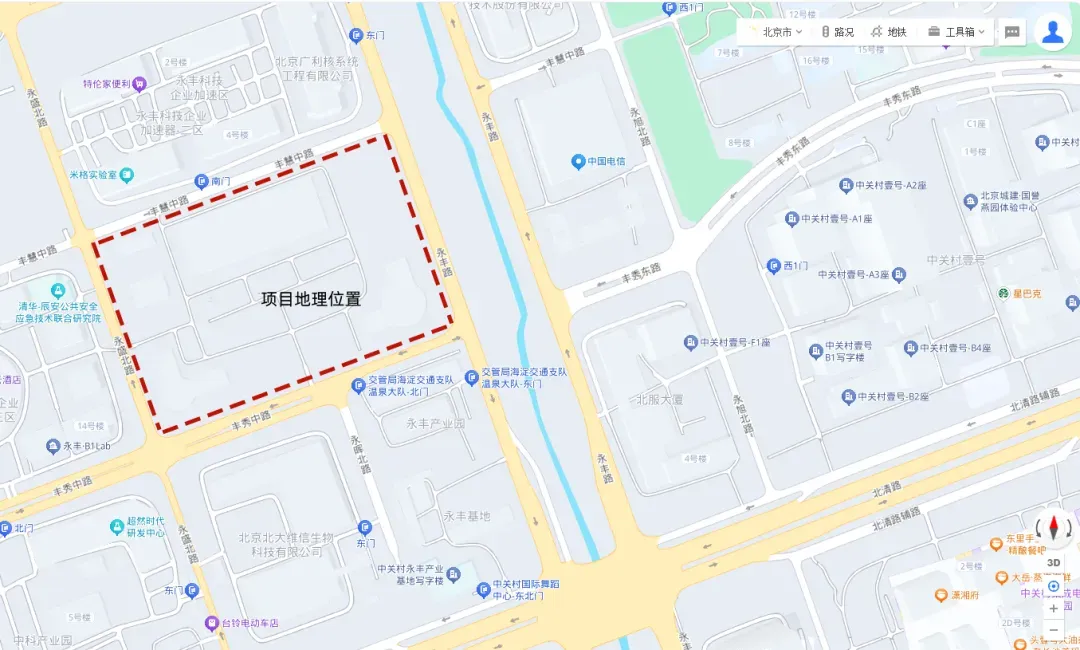
Project Location
Beijing Satellite Town serves as the core area of the ‘Northern Satellite’ segment within Beijing’s ‘Southern Rockets, Northern Satellites’ industrial blueprint. Located in the Yongfeng area of Haidian District, adjacent to China Aerospace City, it is developed and constructed by Shichuang Co., Ltd. as an industrial cluster centered on commercial space. Its layout adheres to the ‘Two Zones, One Platform’ model, comprising a pilot zone (Zhongguancun No.1), a core zone, and a public testing service platform.
According to public records, Weina Xingkong’s current registered address and primary production and operation site are situated on the 4th, 5th, and 6th floors (Room 101) of Building 2, Area 2, No. 81 Beiqing Road, which is the pilot zone of Beijing Satellite Town, Zhongguancun No.1, in close proximity to the signed plot. Data indicates that Zhongguancun No.1 is among Beijing’s first batch of commercial space satellite characteristic industrial clusters, having amassed over 40 commercial space enterprises.
In terms of large-scale satellite production, Weina Xingkong boasts the Wuxi Satellite Intelligent Manufacturing Base, Beijing Advanced Equipment Manufacturing Laboratory, Changchun Optical Payload Development Base, and Beijing Satellite Measurement and Control Center. It has established a sophisticated production system capable of meeting diverse satellite needs, from single-piece customized production and small-batch flexible manufacturing to large-scale mass production.
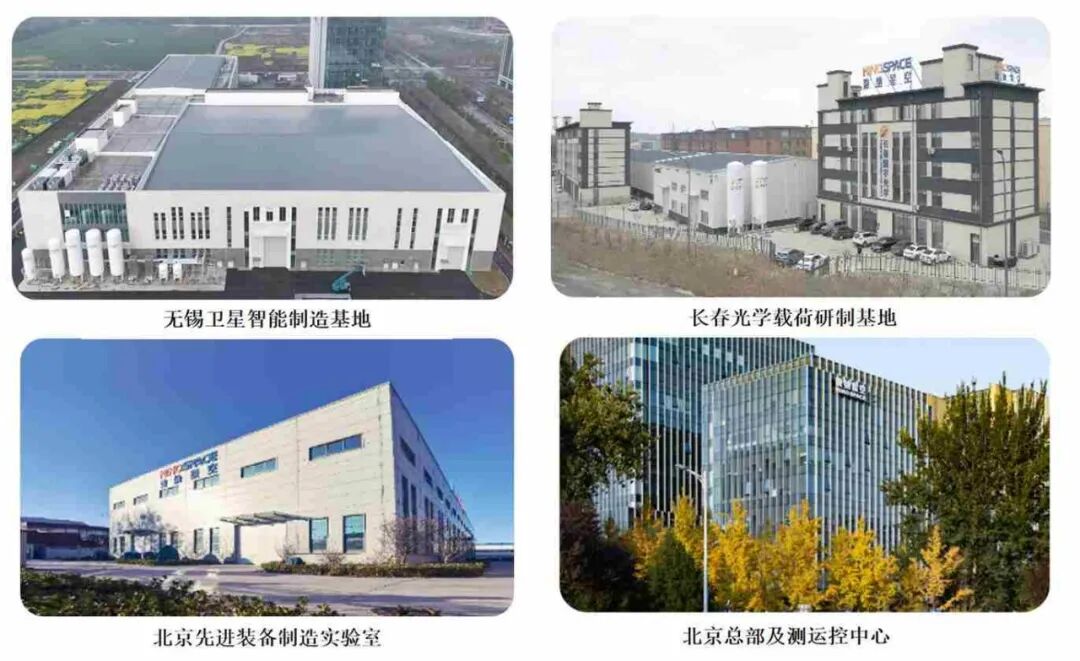
Large-Scale Satellite Production System (Prospectus)
From an asset perspective, as of the end of 2025, Weina Xingkong holds one industrial land property right in Wuxi, Jiangsu (covering 33,300 square meters). Its offices, R&D facilities, assembly and testing areas, factory workshops, and warehousing and logistics for production and operation are distributed in Beijing (Haidian and Changping), Changchun, Shanghai, Meishan, and Chengdu, all on a leased basis.
Information reveals that Weina Xingkong’s intelligent park in Wuxi High-tech Zone has commenced initial trial production this year. As a ‘Star Factory’, it undertakes national and commercial orders such as the ‘Taijing Constellation’. It is currently the largest and most intelligent satellite mass production base in Jiangsu Province, integrating R&D, production, testing, and exhibition.
Billion-Dollar Unicorn Eyes IPO
Weina Xingkong is a unicorn in the commercial space sector, valued at over 10 billion yuan.
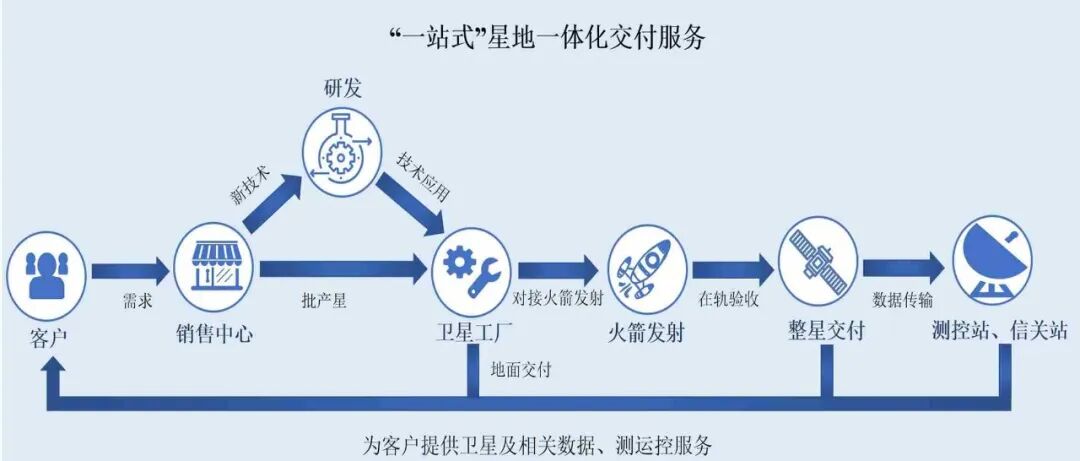
Founded in 2017, Weina Xingkong’s main business encompasses commercial satellite R&D, manufacturing, sales, and ‘one-stop’ satellite-ground integrated delivery services. It has launched a cumulative total of 32 satellites. The company owns the ‘Taijing Constellation’, approved by the National Development and Reform Commission to plan 112 satellites, and boasts an annual production capacity of 150 satellites at its Wuxi Satellite Intelligent Production Line. It is one of the few commercial satellite manufacturers in China capable of developing low-orbit remote sensing, communication, and navigation enhancement satellites and achieving initial mass production.
As 2026 unfolds, amid the global commercial space boom and China’s commercial space sector gradually transitioning from technological verification to engineering applications and industrial layouts, a wave of commercial space listings is emerging. Weina Xingkong is poised to claim the title of ‘first privately-owned commercial satellite stock’.
On May 11th, Weina Xingkong submitted its prospectus to the STAR Market, positioning itself as a ‘Space New Infrastructure Service Provider’ and a ‘Driver of China’s Commercial Space Innovation Ecosystem’. It plans to raise 5 billion yuan, with an expected IPO market value of no less than 10 billion yuan.
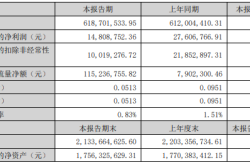
Financially, Weina Xingkong’s revenue has surged. From 2023 to 2025, its annual revenues were 51 million yuan, 40 million yuan, and 385 million yuan, respectively, with a compound annual growth rate of 174.38%. However, due to the early stages of commercial space marketization, where large-scale orders are yet to materialize, and ongoing R&D and asset investments, Weina Xingkong has not yet achieved profitability.
The IPO proceeds will be allocated to five projects, including the ‘Headquarters and R&D Center Construction Project’, ‘Taijing Satellite Constellation Construction Project (Phase I)’, and ‘Satellite Platform Core Unit R&D and System Integration Construction Project’. Among them, the total investment for the Headquarters and R&D Center Construction Project is approximately 1.858 billion yuan, with an expected construction period of four years.
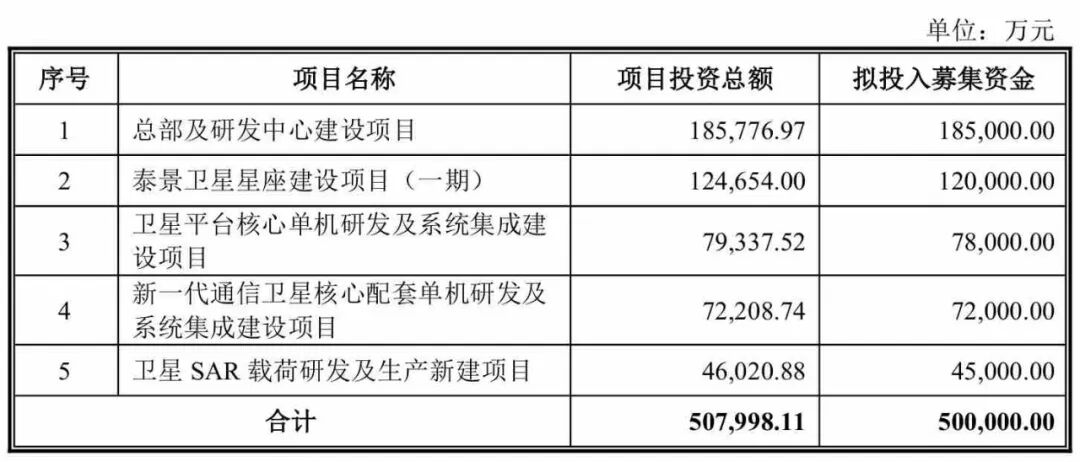
Use of Proceeds (Prospectus) 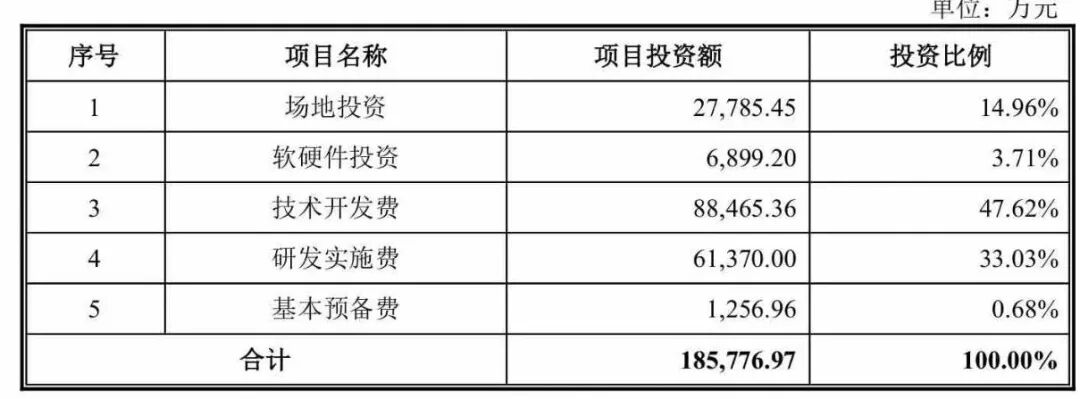 Headquarters and R&D Center Construction Project (Prospectus)
In terms of personnel, as of the end of 2025, Weina Xingkong employed a total of 397 individuals, with R&D personnel accounting for over 30%.
Commercial Space Bolsters ‘Ground Infrastructure’
Not just Weina Xingkong, as the industry progresses towards large-scale and industrialized development, commercial space enterprises are frequently acquiring land and establishing factories, transitioning from manual to mass production.
For instance, in May this year, Galactic Energy acquired an industrial plot in Yizhuang for the construction of the ‘Pallas’ reusable liquid launch vehicle headquarters and R&D production base project.
In March this year, LandSpace secured a commercial plot in Yizhuang, Beijing, having previously acquired two industrial plots there for the construction of the ZQ-3 Satellite-Rocket Integrated Megafactory and Headquarters Project, and the ZQ Rocket Megafactory and Headquarters Base Project.
Besides deploying in Beijing, many commercial space enterprises are also establishing manufacturing bases and R&D centers in hotspot cities such as Wuxi, Xi’an, Chengdu, Nansha, and Haiyang.
As a vital force in ‘Space New Infrastructure’, commercial space enterprises’ investments in ‘ground infrastructure’ are not merely about constructing buildings; they are substantially determined by the industry’s unique production needs and strategic demands.
Firstly, rocket and satellite factories typically cannot be replaced by ordinary standard factories due to their highly specific and non-standard requirements. For instance, they require ultra-high clear heights (often 10-20 meters) for lifting rocket bodies and installing bridge cranes; they need extra-large spans and high ground loads to accommodate the transportation of large components; and they must meet explosion-proof and anti-static requirements.
Secondly, commercial space often involves military confidentiality qualifications and weapons and equipment R&D and production licenses, which necessitate independent and enclosed factory areas, independent security monitoring, and physical isolation of classified networks. Owned space more easily fulfills these qualification compliance requirements.
Thirdly, the certainty requirement for entering mass production stages. While early-stage R&D for commercial space enterprises can be conducted in leased factories, entering batch manufacturing (producing several to dozens of rockets or hundreds of satellites annually) requires long-term and stable possession of land and factories to mitigate external environmental fluctuations.
Simultaneously, having owned land use rights and self-built bases is viewed as a sign of a company’s establishment and technological capability materialization during primary market financing or IPO processes, aiding in enhancing valuations and meeting the investment conditions of state-owned assets or industrial funds.
Additionally, an undeniable driving force is that local governments often forge long-term relationships with leading commercial space enterprises through fund investments and land transfers to attract them, which is also a necessary avenue for enterprises to obtain local policy support and access relevant resources.

-
![]()
Proposed to Raise 955 Million Yuan through Private Placement! Huicheng Vacuum Boosts Localization of Ultra-Precision Optical Coating Equipment
-
![]()
Cash Flow Soars 13-Fold! What Major Strategic Move is Wuhan Five Square Optoelectronics Planning?
-
![]()
Leaked Design of vivo X500: Reverts to Circular Camera Module in Top-Left Corner, Pays Homage to Classic X90 Aesthetic
-
![]()
DeepSeek Shows Signs of Foraying into Code Agents, Launches WeChat Official Account Focused on Harness
-
![]()
Auto Companies Deny Claims That ‘Cooperation with Huawei Is Non-Essential’, as Huawei Transforms into a ‘Public Platform’
-
![]()
Starship to Independently 'Return to the Launch Tower': SpaceX's Ambitions Extend Beyond Rocket Building to Dominating Space Transportation
-
![]()
Starship Set to Independently 'Return to the Launch Tower': SpaceX is Revolutionizing Space Transportation, Not Just Building Rockets
-
![]()
Anthropic and OpenAI Face Off Against Deepseek