SpaceX is Set to Break the Record for the Largest IPO in Human History, A Space Narrative of Ambition, Ledgers, and Trillionaires
 06/12 2026
 634
634
This is the 70th original article from Thinking AI Society
Approximately 1850 words in total, with an estimated reading time of 6 minutes
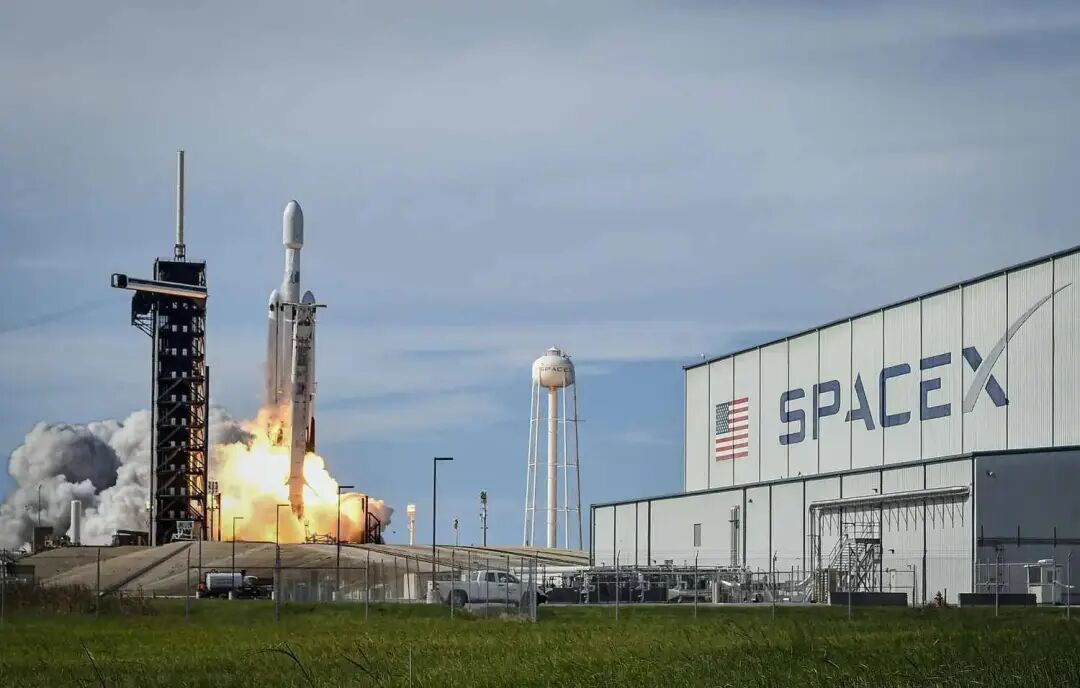
Today, SpaceX will list on Nasdaq under the ticker symbol SPCX. This is no ordinary IPO but a capital extravaganza poised to rewrite the history of capital markets—$75 billion in funds raised, a $1.77 trillion valuation, and subscription demand exceeding $250 billion, with each figure pushing the boundaries of what humanity imagines for a "listing."
The World's Largest IPO Breaks More Than Just Records
Let's first discuss just how "world's largest" this is.
When Saudi Aramco went public in 2019, raising $29.4 billion, it left the world astounded.
In 2026, SpaceX aims to raise a base of $75 billion. If underwriters exercise their overallotment option, total funds raised could surge to $86.25 billion—nearly triple that of Saudi Aramco and more than triple the $25 billion raised by Alibaba in its 2014 U.S. IPO.
What's even more unconventional is its pricing approach. Traditional large IPOs typically announce a price range first, gauge market reaction through a roadshow, and then finalize the price. SpaceX skipped this step, locking in a fixed issue price of $135 after multiple pre-roadshow rounds.
This "fixed-price" model is extremely rare in the U.S. stock market but more common in Asian and European markets. Five top investment banks—Goldman Sachs, Morgan Stanley, Citi, JPMorgan Chase, and others—teamed up to underwrite the offering, joined by 18 additional banks, practically roping in every notable institution on Wall Street.
Subscription data is even more astonishing. On June 9, foreign media revealed that global investor demand had surpassed $250 billion, nearly four times the total shares offered.
What does this mean? For every $4 wanting to invest in SpaceX, $3 will be turned away.
This fervor has even triggered a "capital suction effect"—recent corrections in U.S. tech stocks and Bitcoin have led many analysts to believe that investors are selling off other assets to raise funds for subscriptions.
But behind the excitement lies a nuanced detail: SpaceX has reserved up to 30% of the offering for retail investors.
In traditional large IPOs, retail investors typically receive only 5%-10%. When Facebook allocated 15% to retail investors, it was already considered groundbreaking.
SpaceX's move, rather than being inclusive, seems designed to create a capital frenzy with mass participation.
One Profitable Business, Two Money-Losers
Is a $1.77 trillion valuation expensive?
Let's examine the books. SpaceX reported $18.67 billion in revenue in 2025, up 33% year-over-year—a impressive growth rate. But what about net profit? It swung from a $791 million profit in 2024 to a $4.94 billion loss in 2025. In the first quarter of 2026, revenue hit $4.69 billion, but net losses widened to $4.27 billion. Cumulative losses now exceed $41.3 billion.
SpaceX's business can be divided into three segments.
Starlink is currently the only profitable division. With about 9,600 satellites in orbit covering 164 countries and over 10.3 million paying users, it generated approximately $11.387 billion in revenue and $4.423 billion in operating profit in 2025.
However, red flags are emerging: Average Revenue Per User (ARPU) has plummeted from $99 in 2023 to $66 in the first quarter of 2026, a one-third drop in three years. While user numbers grow, individual spending power dilutes.
Space launch services. In 2025, SpaceX completed 165 Falcon 9 launches—impressive at first glance. But 122 were for its own Starlink satellites, leaving only 43 for external clients. The space division lost $657 million in 2025, with Starship development burning another $3 billion annually.
xAI is the biggest money pit. After merging with SpaceX in February 2026, xAI reported a $6.399 billion operating loss in 2025 and $7.7 billion in capital expenditures in the first quarter of 2026. To offset costs, SpaceX signed a cloud computing agreement with Google, where Google pays $920 million monthly to lease about 110,000 Nvidia GPUs, along with a $1.25 billion monthly computing contract with Anthropic.
Morningstar calculated that under a discounted cash flow model, SpaceX's fair valuation is just $780 billion—less than half its IPO pricing.
PitchBook pegs fair value at $1.5 trillion, leaving a $270 billion premium for space narratives, AI hype, and the "Musk halo."
Musk to Become the World's First Trillionaire
At a $1.77 trillion valuation, Musk's equity stake in SpaceX will increase by about $223 billion.
Combined with his holdings in Tesla, X, and other assets, his net worth could surpass $1 trillion. This milestone could be achieved even if the stock price rises just 2.2% from $135 to $138.
But more noteworthy than the wealth figure is the concentration of power.
SpaceX employs a dual-class share structure with Class A shares (1 vote each) and Class B shares (10 votes each).
Musk holds 93.6% of Class B shares, retaining over 82% voting control post-IPO.
This means that while he owns only about 12.3% of the company's economic interest, he controls over half the board seats and can block any resolution to remove him.
Such concentrated control in a $1.77 trillion public company is unprecedented in global capital markets.
The nonprofit Shareholder Value Protectors Alliance has publicly criticized this governance structure as "a novel and reckless way to severely weaken shareholder protections."
A deeper question arises: When one person's business empire spans aerospace, AI, social media, electric vehicles, and brain-computer interfaces—all tightly controlled through dual-class shares—is this an entrepreneur chasing dreams or a commercial empire quietly taking shape?
SpaceX's listing, in a way, encapsulates the 2026 tech capital frenzy.
OpenAI and Anthropic are also lining up for IPOs, with the three companies potentially adding nearly $4 trillion in market value to global public markets.
Nasdaq and FTSE Russell have revised rules to fast-track giant tech firms into indices.
But amid the euphoria, sober questions linger. When half a company's valuation is based on "future narratives," and when one individual's wealth and power approach unprecedented levels, is the capital market rewarding innovation or funding ambition?
The answer lies in people's hearts. Regardless, today will surely be written into the textbooks of capital history.
All content is sourced from publicly available information
Written casually in my spare time for sharing, representing only personal views
-
![]()
Proposed to Raise 955 Million Yuan through Private Placement! Huicheng Vacuum Boosts Localization of Ultra-Precision Optical Coating Equipment
-
![]()
Cash Flow Soars 13-Fold! What Major Strategic Move is Wuhan Five Square Optoelectronics Planning?
-
![]()
Leaked Design of vivo X500: Reverts to Circular Camera Module in Top-Left Corner, Pays Homage to Classic X90 Aesthetic
-
![]()
DeepSeek Shows Signs of Foraying into Code Agents, Launches WeChat Official Account Focused on Harness
-
![]()
Auto Companies Deny Claims That ‘Cooperation with Huawei Is Non-Essential’, as Huawei Transforms into a ‘Public Platform’
-
![]()
Starship to Independently 'Return to the Launch Tower': SpaceX's Ambitions Extend Beyond Rocket Building to Dominating Space Transportation
-
![]()
Starship Set to Independently 'Return to the Launch Tower': SpaceX is Revolutionizing Space Transportation, Not Just Building Rockets
-
![]()
Anthropic and OpenAI Face Off Against Deepseek