A Staggering 2 Trillion USD Market Cap! How SpaceX, with Its Relentless Launches and Occasional Explosions, Became the Largest IPO in History
 06/15 2026
 451
451
Securing Your Dominance in Extraterrestrial Civilization Transportation
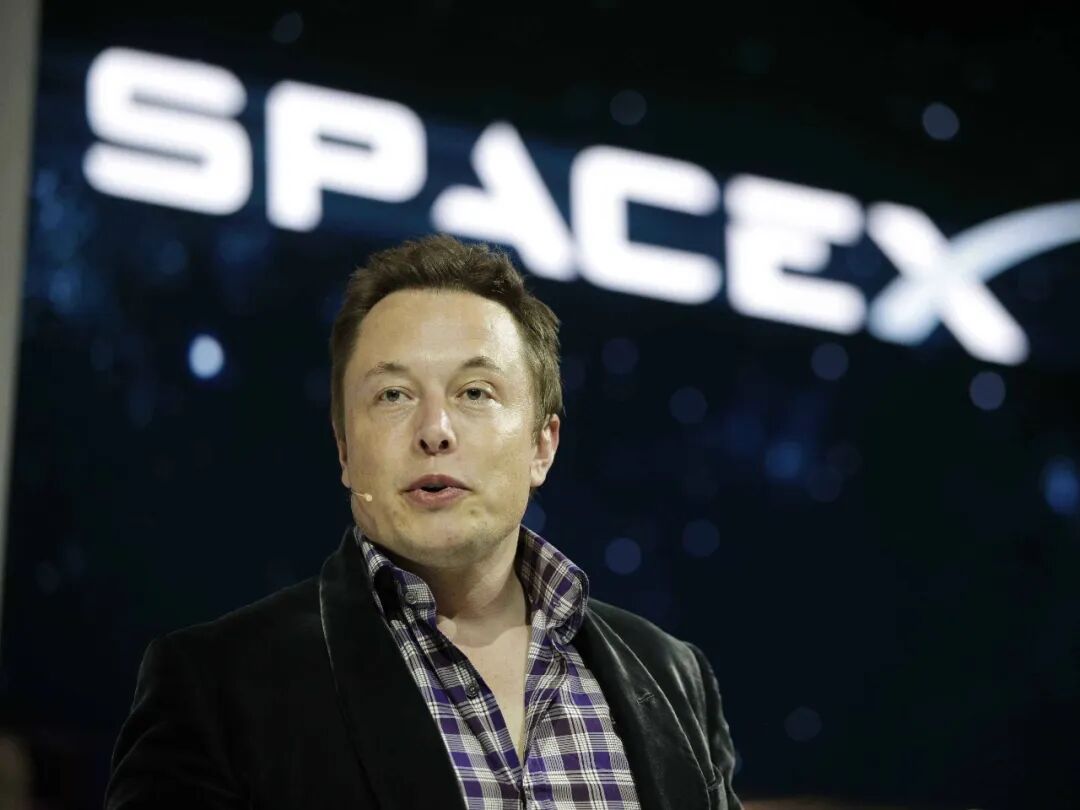
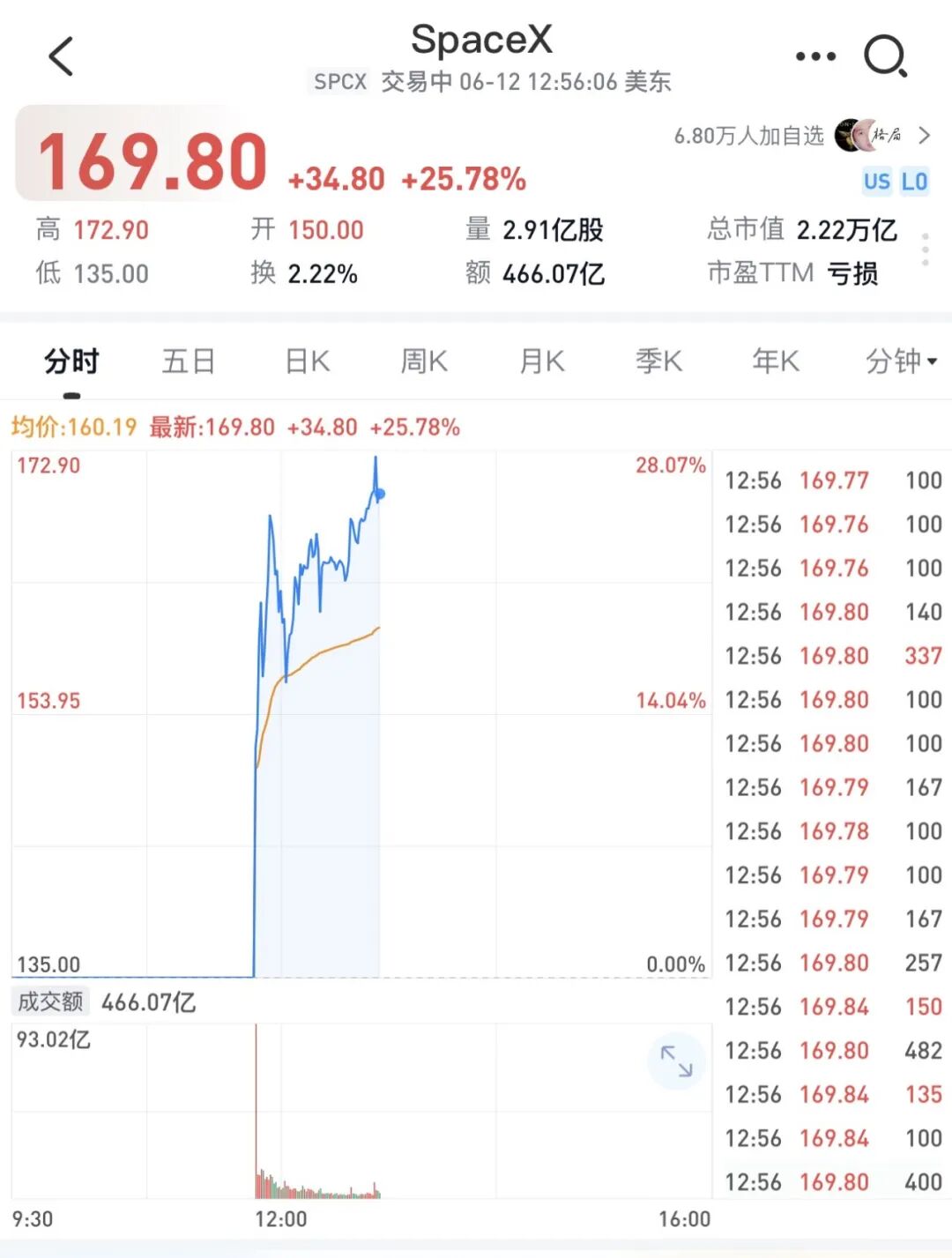
On June 12 (local time), Elon Musk's SpaceX announced plans to raise 75 billion USD through an initial public offering (IPO), setting the offering price at 135 USD per share. This move positions it as the largest IPO in history. As of the press time, the stock price had surged by over 25%, reaching a total market capitalization of 2.2 trillion USD, with a peak price of 172 USD per share.
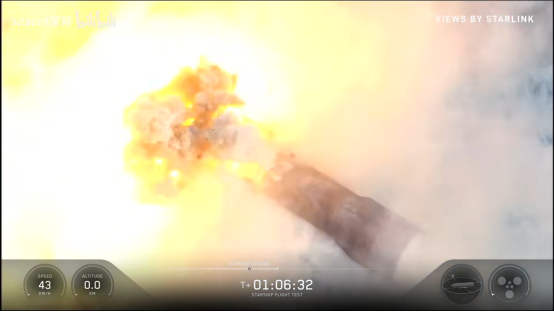
During its most recent launch, many observers witnessed the Starship explode over the ocean at the end and assumed that SpaceX had 'failed' yet again.
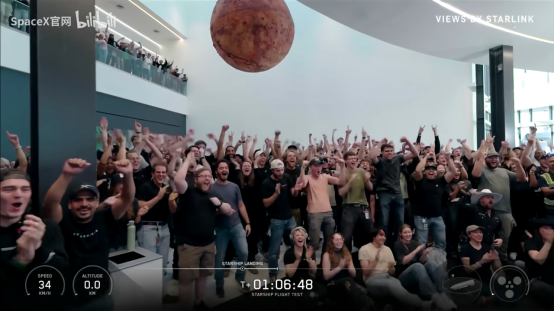
However, the reality is quite the opposite. For SpaceX, this test flight achieved nearly all its core objectives—otherwise, SpaceX's engineers wouldn't have celebrated so enthusiastically.
The focus of this Starship launch was not 'full recovery' but rather validating the entire flight process: successful ignition, hot separation, simulated satellite deployment, re-entry into the atmosphere, attitude control, engine restart, and a controlled soft landing in the ocean. Nearly all the most critical data points were obtained. Musk's SpaceX appears to be seizing dominance in extraterrestrial civilization transportation.
Regarding the final explosion over the ocean, many aerospace engineers anticipated it from the outset. After the Starship splashed down, residual fuel remained in the engines. With the vessel tilting, seawater impact, and the ultra-high temperatures of the engine casing, a secondary explosion was highly likely.
Setting aside this final explosion, the successful launch of the V3 alone places SpaceX in a leading position. If left unchecked and domestic enterprises fail to catch up, given the first-come, first-served principle for extraterrestrial satellite orbits, the question of how domestic Starlink can catch up will become an unavoidable issue for China's commercial space industry. The race for dominance in extraterrestrial civilization transportation is becoming increasingly urgent.
01 The Secret Behind V3's 'Ocean Explosion'
The most eye-catching moment of the entire launch was undoubtedly the V3's final crash. For safety, SpaceX proactively activated the Flight Termination System (FTS) to further disintegrate the spacecraft.
In a sense, the larger the 'fireball,' the more complete the flight state and the more thorough the data recovery. Within SpaceX, whether it 'exploded' was never the priority—the key was whether they obtained the data needed for the next iteration. The engineers' jubilant reactions captured on camera prove that SpaceX secured the desired data. As for this test's 'failure,' they'll simply note the data for next time.

Their excitement stems from the fact that the Starship increasingly resembles not a traditional rocket but a 'rapidly iterating super transportation system.' From a data perspective, standing 124 meters tall and weighing 5,500 tons, with 33 Raptor third-generation engines igniting simultaneously, it instantly generated over 9,000 tons of thrust, propelling the Starship to become one of the most powerful spacecraft in human history.
More remarkably, unlike traditional rockets with 'extremely low fault tolerance,' during this ascent, even if some engines automatically shut down, the remaining engines could adjust their burn times to compensate for the thrust deficit, ensuring a successful launch.
What excites outsiders most is that SpaceX has finally begun validating 'full mission capability.' Previous test flights merely proved 'it can fly'; the V3, however, completed simulated satellite deployment, space attitude control, re-entry into the atmosphere, high-temperature ablation resistance, engine restart, and a controlled soft landing in the ocean.
Especially during re-entry, plunging into the atmosphere at Mach 25, enduring temperatures of 2,600°C, and maintaining uninterrupted Starlink live streaming throughout—this was no longer a 'test toy' but a validation of future large-scale space transportation capabilities. More critically, SpaceX is gradually subverting traditional aerospace development models.
In the past, the aerospace industry feared failure—one explosion could halt progress for years. SpaceX's approach, however, resembles that of internet companies: rapid trial and error, frequent launches, and in-flight improvements. While others build rockets like artworks, SpaceX builds them more like '3D prints,' where engineering focuses not on 'perfection in one go' but on flexible, iterative improvements. This is what makes the Starship truly formidable.
Because its goal isn't just 'reaching space' but 'making space access cheap and frequent enough.' Behind this lies a crucial industry metric: when space transportation costs truly drop, many things that once sounded like science fiction could suddenly become reality.
02 The High Cost Conundrum: Stifling Innovation
When space transportation costs truly drop, many things previously confined to science fiction could suddenly become economically viable. Historically, the biggest barrier to human space access wasn't 'technical infeasibility' but 'prohibitively high costs.'
Today, launching 1 kilogram of cargo into orbit remains extremely expensive, meaning many space projects, while technically feasible, cannot be commercialized. However, if reusable super-carrier systems like the Starship can reduce launch costs by an order of magnitude or more, the entire world's industrial logic will be rewritten.
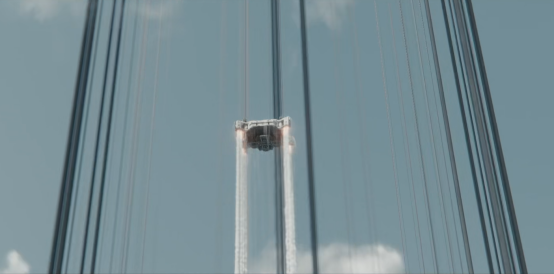
Source: *The Wandering Earth 2* Space Elevator
The first changes will occur in global communication systems. Future low-Earth orbit satellite counts could jump from 'thousands' to 'six figures,' potentially achieving true global seamless network coverage. Today's communication dead zones—deserts, oceans, polar regions, mountains, and even ocean-going freighters and aircraft—could directly access high-speed networks. Many countries' current reliance on ground-based infrastructure for communication could be upended.
Next, manufacturing could undergo a revolution. Space's vacuum and microgravity environment make it ideal for producing high-end materials, chips, and drug crystals that are extremely difficult to manufacture on Earth. Many laboratory-scale technologies could become commercially viable for the first time as transportation costs decline.
Even energy systems could transform, such as space-based solar power stations. Previously deemed 'fantasy,' the core issue was 'inability to transport equipment.' If future low-cost transportation enables massive orbital deployments, humanity could, for the first time, access nearly all-weather, weather-independent space energy.
Most importantly, human activity could, for the first time, truly break free from 'Earth's surface.' Historically, all human industries, logistics, energy, and the internet have been confined to Earth's gravity well. Once space access costs plummet, lunar bases, orbital factories, space tourism, and deep-space resource extraction will shift from 'possible' to 'worth investing in.'
Many now view the Starship as merely a technical demonstration by a space company, but what it could truly alter is the cost structure and industrial boundaries of human society for decades to come.
As for what Americans will do with the Starship, public information already provides answers. The Starship is slated to enter commercial operations in late 2026, with SpaceX's business empire heavily reliant on its stable orbit insertion. Related business plans include:
- Starlink: SpaceX aims to launch V3 satellites using Starship in the second half of the year. Each V3 satellite is designed for a downstream capacity of up to 1 Tbps, with a single Starship launch capable of deploying up to 60 V3 satellites into low-Earth orbit—a potential 20-fold increase in downstream capacity compared to Falcon 9 launches. By mid-2027, Starship is expected to begin launching Starlink V2 satellites.
- Crewed Lunar Missions: The Starship is NASA's sole designated Human Landing System (HLS) for the Artemis III mission, under a contract worth approximately 2.9 billion USD. The Artemis IV contract amounts to roughly 1.15 billion USD. The V3 integrates in-orbit propellant transfer interfaces to support mission execution.
- Orbital Data Centers: Deploying 100 GW of computing power annually via satellites carrying over 100 kW per metric ton would require thousands of launches and transporting approximately 1 million metric tons of cargo to orbit each year. Other businesses include P2P Earth transportation, space tourism, lunar/Mars cargo and passenger transport, in-orbit manufacturing, and asteroid mining—all contingent on the Starship's frequent and stable operations, forming the core pillars of SpaceX's long-term valuation narrative.
From an application standpoint, are Americans the only ones capable of such strategies? Not necessarily. However, constrained by high launch costs, China cannot yet afford to launch rockets and satellites as 'extravagantly.'
03 Can Latecomers Catch Up?
Many still perceive China's commercial space sector as stuck in the 'rocket-launching' phase, but in reality, an industrial race for 'space infrastructure' has already begun.
In 2025, China conducted 92 space launches, with commercial entities accounting for 50—the first time exceeding half. A total of 311 commercial satellites entered orbit, comprising 84% of the year's total. The commercial space industry's core scale surpassed 1 trillion RMB. An industry once heavily reliant on state projects is rapidly commercializing and industrializing.
More critically, China's commercial space competition has shifted from 'reaching space' to 'achieving low-cost, high-frequency, and large-scale networking.'
Over the past year, leading firms like LandSpace, CAS Space, Space Pioneer, Galactic Energy, and iSpace have collectively rushed toward IPOs, with reusable rockets becoming the most crowded track. Everyone recognizes that future commercial space success hinges not on rocket thrust but on reducing launch costs to industrial assembly-line levels.
Meanwhile, China's satellite industry is undergoing fundamental changes. Satellites were once bulky, expensive, and had long launch cycles. Now, the industry is racing toward 'micro-nano + batch + networking' models. Changguang's micro-nano remote sensing satellites (Jilin-1) have reduced platform weight from hundreds of kilograms to the 20-kilogram range, with batch production costs dropping by orders of magnitude. High-throughput communication satellites, through frequency reuse and multi-beam technologies, have boosted communication capacity by severalfold to even tenfold.
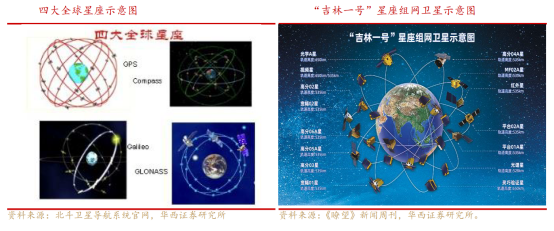
More notably, China's low-Earth orbit satellite internet is entering large-scale deployment. By March 2026, the GW constellation had launched over 150 satellites, and the Qianfan constellation had launched 108, with an initial testing and control network established. Meanwhile, China has submitted a one-time application to the International Telecommunication Union (ITU) for an additional 203,000 satellite frequency and orbit resources.
The signal is clear: space orbits are becoming the next 'digital territory.' Low-Earth orbit and spectrum resources operate on a 'first-come, first-served' basis. Whoever completes large-scale networking first will dominate future satellite internet, global communications, and low-Earth orbit data networks. Thus, China's commercial space competition now extends beyond rockets and satellites—it's about securing the 'space gateway' for the 6G era.
This is why the state has formally classified satellite internet as 'new infrastructure.' Future communication networks may no longer compete solely among ground stations but among those capable of building 'integrated space-ground networks.'
From reusable rockets to low-Earth orbit constellations; from micro-nano satellites to high-throughput communications; from the next-generation Beidou system to domestically produced space-borne rubidium atomic clocks achieving self-sufficiency—China's commercial space sector is not merely undergoing industrial upgrading but pre-building the space communication infrastructure for decades to come.
Epilogue
From a commercial space perspective, the race for low-Earth orbit constellations is no longer about 'launching a few satellites' but about securing infrastructure access for the 6G era. Whoever first establishes low-cost, high-frequency, and sustainable launch capabilities will dominate finite orbital resources and the next-generation global communication network. The true decisive factor? Reusable rockets.
Over the past year, China's commercial space sector has accelerated markedly. Firms like LandSpace, iSpace, and Galactic Energy are advancing reusable rocket validations, with multiple companies completing kilometer-scale vertical takeoff and landing, engine multiple ignitions, and recovery control tests. This signifies China's commercial space sector transitioning from 'capable of launching' to 'reducing costs.'
Because future competition won't hinge on occasional rocket launches but on industrial-scale, high-frequency, and low-cost satellite orbit deployments. Whoever achieves this first will likely control the narrative of next-generation space communication networks.
© THE END
The materials are all from official public sources.
This article does not constitute any investment advice.
This article is original to Baker Street Detective and may not be reproduced without permission.
The images are sourced from public information. If there is any infringement, please contact us for deletion.
-
![]()
Proposed to Raise 955 Million Yuan through Private Placement! Huicheng Vacuum Boosts Localization of Ultra-Precision Optical Coating Equipment
-
![]()
Cash Flow Soars 13-Fold! What Major Strategic Move is Wuhan Five Square Optoelectronics Planning?
-
![]()
Leaked Design of vivo X500: Reverts to Circular Camera Module in Top-Left Corner, Pays Homage to Classic X90 Aesthetic
-
![]()
DeepSeek Shows Signs of Foraying into Code Agents, Launches WeChat Official Account Focused on Harness
-
![]()
Auto Companies Deny Claims That ‘Cooperation with Huawei Is Non-Essential’, as Huawei Transforms into a ‘Public Platform’
-
![]()
Starship to Independently 'Return to the Launch Tower': SpaceX's Ambitions Extend Beyond Rocket Building to Dominating Space Transportation
-
![]()
Starship Set to Independently 'Return to the Launch Tower': SpaceX is Revolutionizing Space Transportation, Not Just Building Rockets
-
![]()
Anthropic and OpenAI Face Off Against Deepseek