From Pinduoduo to the World Cup: The Hidden Stories of Two Industrial Belt Brands
 06/15 2026
 565
565
Author|An Yu
Editor|Hu Zhanjia
Operations|Chen Jiahui
Produced by|LingTai LT (ID: LingTai_LT)
Header Image|Provided by Pinduoduo
Summer 2026, the FIFA World Cup in the USA, Canada, and Mexico.
Jordan faces Argentina. The camera pans across the players' jerseys. The logo on the chest isn't Nike or Adidas—it's three letters: KELME. Cut to another scene: a banner on the sidelines reads "Ginza Luggage."
No million-dollar endorsement deals with superstars. No decades of burning cash to build global recognition. Two Chinese brands stood on football's biggest stage.
One, from Jinjiang, Fujian, makes football gear—2,000 daily orders on Pinduoduo. The other, from Pinghu, Zhejiang, makes luggage—500 daily orders on Pinduoduo.
Two merchants from industrial belts did the same thing: made it to the World Cup. Not as spectators, but as protagonists. Not by riding trends, but by securing licenses. The question is: How?
Thousands of factories dot China's industrial belts, from Yiwu to Dongguan, from Quanzhou to Wenzhou. Business-savvy Chinese are never in short supply. Why them? Why did these two "middle-tier" brands performing well on Pinduoduo get tickets to the world stage?
The answer lies hidden: From sewing machines in contract manufacturing workshops to the World Cup spotlight, the gap isn't just money and resources—it's a new commercial infrastructure. Pinduoduo is the most critical piece of this infrastructure, but not the whole picture.
The story begins earlier.
 The Metamorphosis of Contract Manufacturers
"We didn't expect high volumes at first." When Kelme joined Pinduoduo in 2020, internally, it wasn't taken seriously.
Football gear is a niche market. Established brands relied on offline distributor networks—layer upon layer of markup, payment terms starting at three months. They were skeptical of "group buying." In a vast sports and outdoors category, what waves could a football shoe seller make?
Then the wave came—and it was massive.
Pinduoduo's sports and outdoors users surpassed 400 million. Among them, Gen Z, small-town middle class, and county-level high-spending families dominated—precisely the groups hardest and costliest for professional football brands to reach through traditional channels. Ask a high school football team in a third- or fourth-tier city to spend $150+ on imported cleats? Unrealistic. But give them professional-grade quality at half the price, with group-buy discounts pushing it even lower, and things change.
"We locked in these 400 million with 'professional quality + affordable prices,'" said Cao Zhen, a Kelme executive. "Group buying is perfect for team procurement. The two gears meshed and started turning. Now 2,000 daily orders."
2,000 orders aren't astronomical for a top sports brand. But for a vertical football brand, for users previously ignored by big brands, this number meant something else: demand always existed, just blocked by channel barriers.
Pinduoduo tore down a wall.
More critically, Kelme's Pinduoduo store became a testing ground. Which styles moved? Which colors sold? What price points hit the sweet spot? Data spoke directly, with conclusions in 48 hours. This was orders of magnitude faster than traditional retail's "stock—wait for feedback—adjust inventory" cycle.
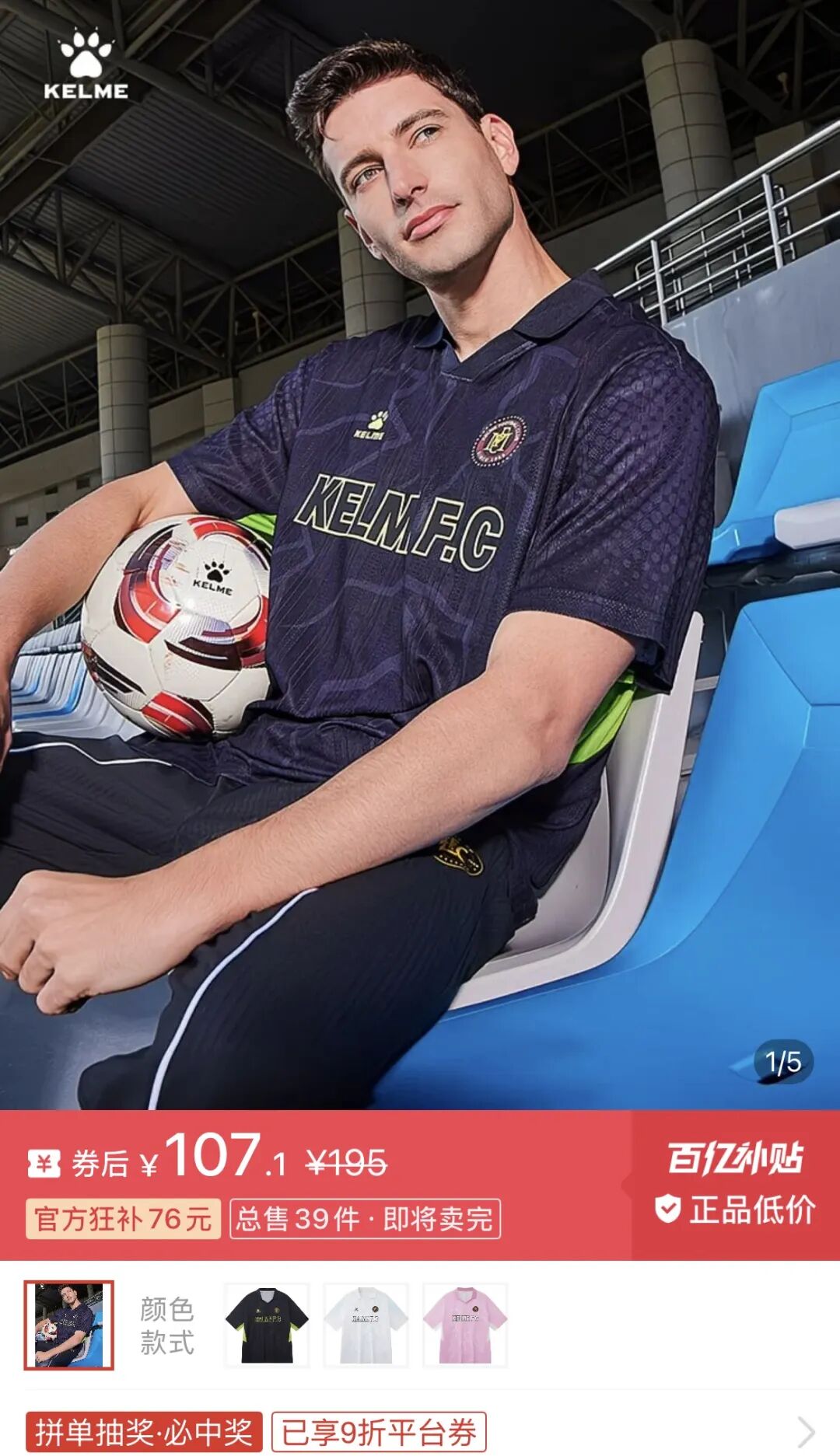
▲Figure: Kelme's Pinduoduo store
Ginza Luggage's story is similar but bolder.
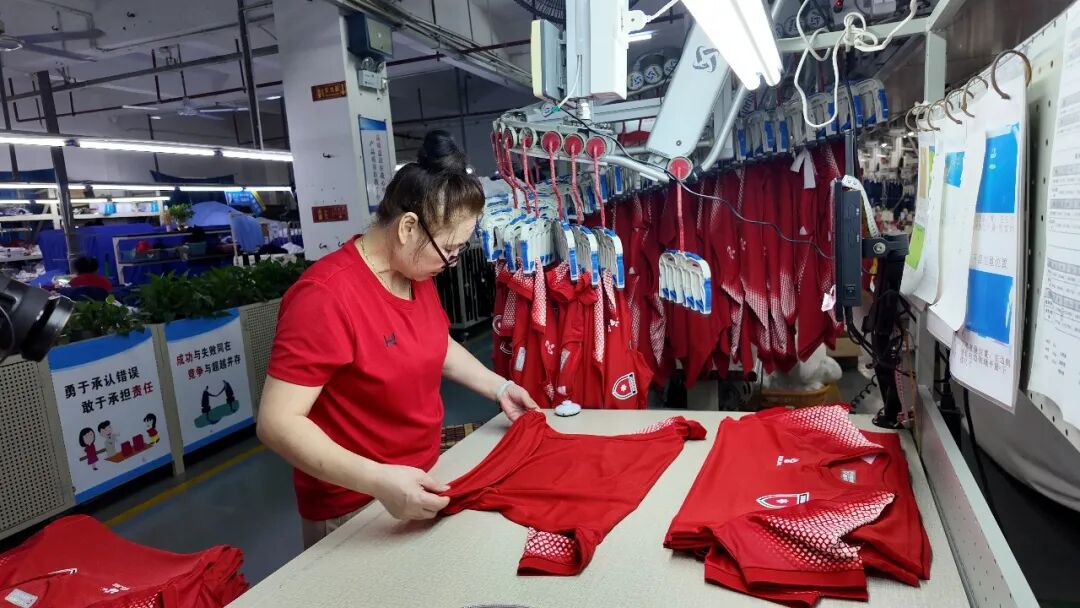
This Pinghu luggage factory, starting on Pinduoduo, used the platform as its top channel for new product testing. With 500 daily orders, its operating logic was brutally simple: launch, analyze data, iterate, adjust. If it worked, double down; if not, cut it. No hesitation.
"Our 'ugly-cute' bags performed well at launch. We got overconfident, upgraded them to 'cute' versions, and they sold worse," said Wang Xiang, assistant to Ginza's GM. "Later, we realized the market was saturated with 'pretty' products. Consumers needed contrast as a palate cleanser. This counterintuitive insight came from Pinduoduo user data and directly fed into production plans."
Data flowed from consumers to factories—no wholesalers, no regional agents, no markups. Nearly impossible in traditional retail, this was routine on Pinduoduo. A factory boss selling "ugly-cute" bags might know what the next generation wants before a department store buyer.
Two brands, two niches, same underlying logic: validate with data first, then pursue brand upgrading.
But Pinduoduo alone couldn't get them to the World Cup.
Kelme's foundation was contract manufacturing. Jinjiang's industrial cluster is impenetrable—from fabric R&D to finished garments, a supplier or a 20-year veteran master is always two steps away. In 2014, Kelme acquired Chinese operating rights for the Spanish brand KELME; in 2018, it reverse-acquired the global brand.
"We walked paths no one else had," Cao Zhen said of those years. Manufacturing prowess built during the contract era became the leverage for rebranding. Jinjiang's sports gear cluster gave them a complete chain from fabric to jersey.
Ginza's journey was more typical—and longer.
Founded in Wenzhou in 1991, it moved to Pinghu, Zhejiang, in 2003 and spent two decades in contract manufacturing. Today, through wave after wave of global IP collaborations—Hello Kitty, One Piece—it honed its craft.
"Multiple global IP collaborations and industry-leading production strength gave us the confidence to secure licenses," Wang Xiang said.
Contract manufacturing isn't shameful; what's shameful is doing it forever, until death.
Media reports from Tianyancha show Ginza spent a decade transforming into a self-owned brand, graduating from Hello Kitty/One Piece collaborations to FIFA official licensing. This leap wasn't just about brand operations—it was the market revaluing manufacturing capabilities. Billing by the hour became billing by brand premium.
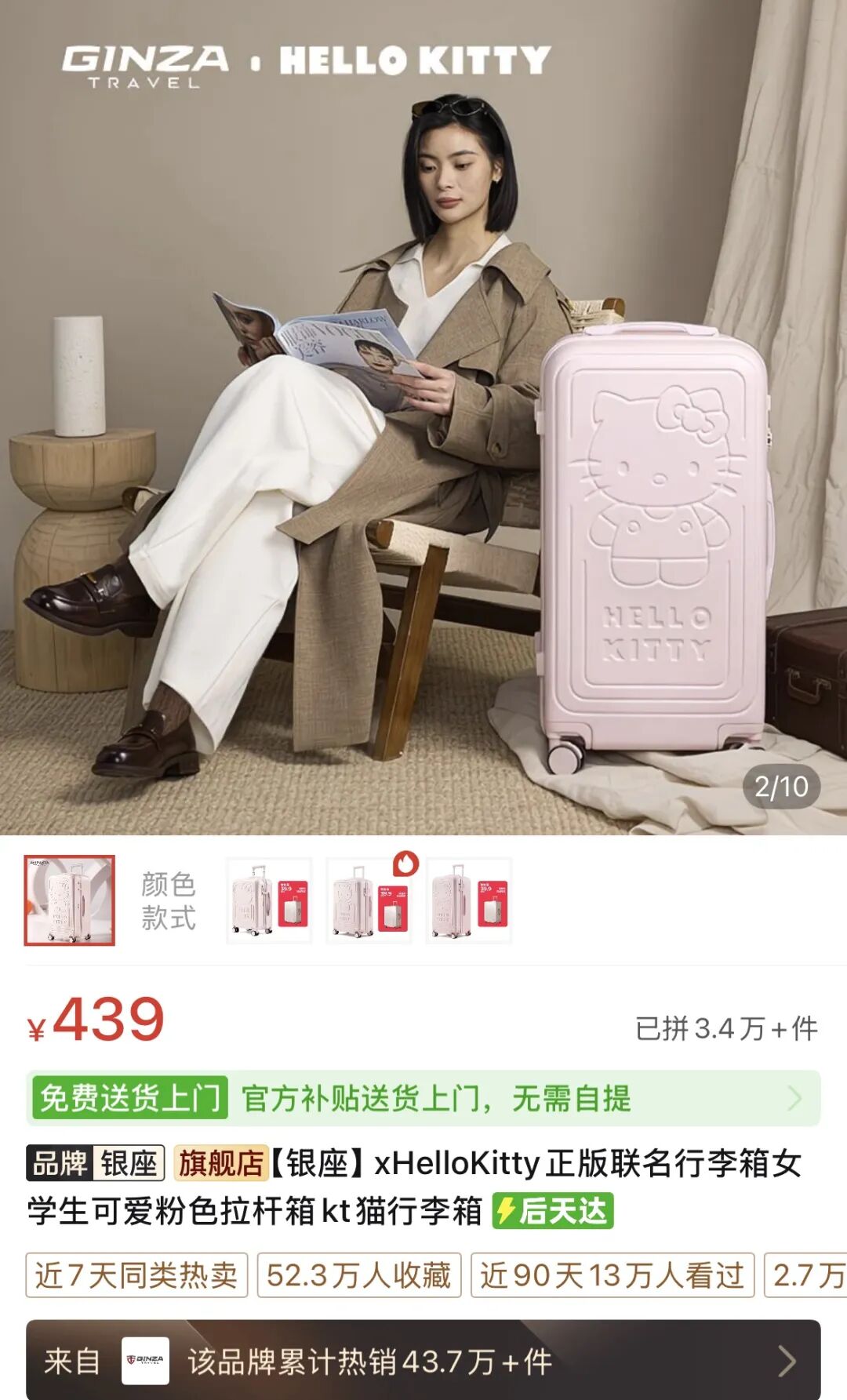
▲Figure: Ginza's Pinduoduo store
The commonalities are clear:
These weren't marketing-heavy legacy brands but grassroots players from industrial belts. Jinjiang's sports gear cluster and Pinghu's luggage cluster gave them manufacturing confidence; Pinduoduo gave them consumer access and data feedback.
On one side, decades of manufacturing accumulation in industrial clusters. On the other, the digital data highway of e-commerce. When these systems connected and gears meshed, the path from workshop to World Cup opened.
But one key player hasn't entered the story yet.
From gaining traction on Pinduoduo to securing World Cup licenses, how was that leap made? How did two industrial belt brands convince FIFA to hand them their logos?
The catalyst wasn't just their own efforts.
But that wasn't enough.
Reaching consumers was just the entry ticket. What truly got them World Cup access was "speed."
 How Pinduoduo Trained Them for World Cup Speed
Pinduoduo's "speed" trained them for World Cup "speed."
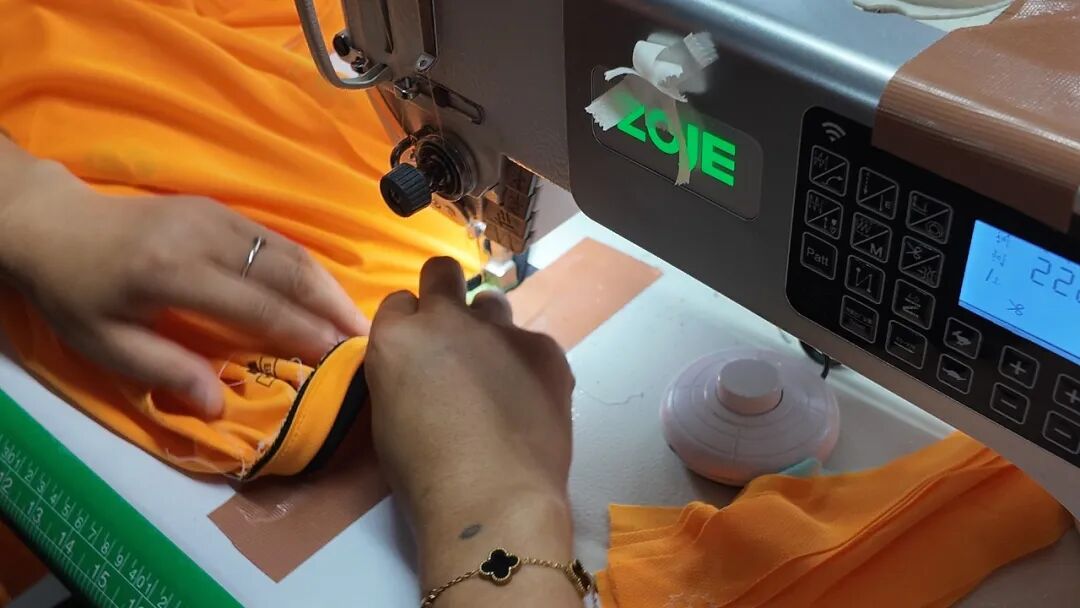
Kelme's "72-Hour On-Demand" system is fully operational for the Northeast Super League. From fabric weaving, digital printing, precision stitching to final inspection, the entire process is digitally controlled—order to delivery in 72 hours.
This capability wasn't built for the World Cup. It was honed on Pinduoduo.
Pinduoduo users demand speed—place an order today, expect delivery tomorrow. Factories initially balked: traditional apparel cycles took weeks, not 72 hours. But orders and data pushed them to accelerate until they realized: 72 hours was possible.
Ginza followed a similar path but with different logic: small-batch testing—launch multiple styles in small volumes, scale production for hits, and iterate rapidly based on feedback.
"Rapid market feedback made Pinduoduo our top channel for new product testing," Wang Xiang said. Cao Zhen put it bluntly: "Platform feedback accelerated our speed."
Two statements, same meaning: Pinduoduo wasn't just a sales channel—it was a speed bootcamp.
The World Cup didn't want deep pockets; it wanted rapid response. Failing to deliver in 72 hours or unable to run small-batch tests meant even a $100M sponsorship would crumble with a supply chain snag. Pinduoduo's 48-hour traffic support, subsidies, and group-buying model were essentially "stress tests"—forcing production capabilities to iterate until they became genuine strengths on the World Cup stage.
Kelme sponsored two national teams: Jordan and Bosnia and Herzegovina.
Choosing Jordan was strategic. As an AFC official sponsor, Jordan reached the Asian Cup final—a historic first—and qualified for the World Cup for the first time. A low-cost, high-story, high-exposure team—a shrewd calculation.
Choosing Bosnia and Herzegovina was about legacy. Dzeko and Pjanic may have passed their peaks, but the team's return to the World Cup after 12 years kept fan sentiment and topic popularity (trending topics) alive. Together, Kelme ranked fourth globally among sports brands sponsoring national team jerseys at this World Cup—behind Nike, Adidas, and Puma.
"It happened naturally, not by design," Cao Zhen said.
Half-true. Preparation existed, but qualification relied on industrial chain strength—global fourth place wasn't bought but earned through the 72-hour delivery system.
Ginza's path differed, but the logic aligned.
Securing FIFA's exclusive luggage license for China faced competition. Why them? They weren't new to global IP collaborations—Hello Kitty, One Piece—and knew the drill. More critically, they pioneered China's first fully automated hard-shell luggage line, producing 6 million units annually with stable capacity.
Global explosive orders like the World Cup demand short cycles and high quality control—small factories can't handle it; big factories ignore it. Ginza could.
"Core is IP operation capability plus 30+ years of production experience," Wang Xiang said.
Two brands, one hidden thread: not money, but industrial chain + digital capabilities, earned them a seat at the table.
 Digitalization is the FoundationThe Real Beginning Comes After the World Cup
The event spotlighted Jinjiang's sports industrial belt and Pinghu's luggage belt—a good thing. But real change isn't on the pitch; it's in the factories.
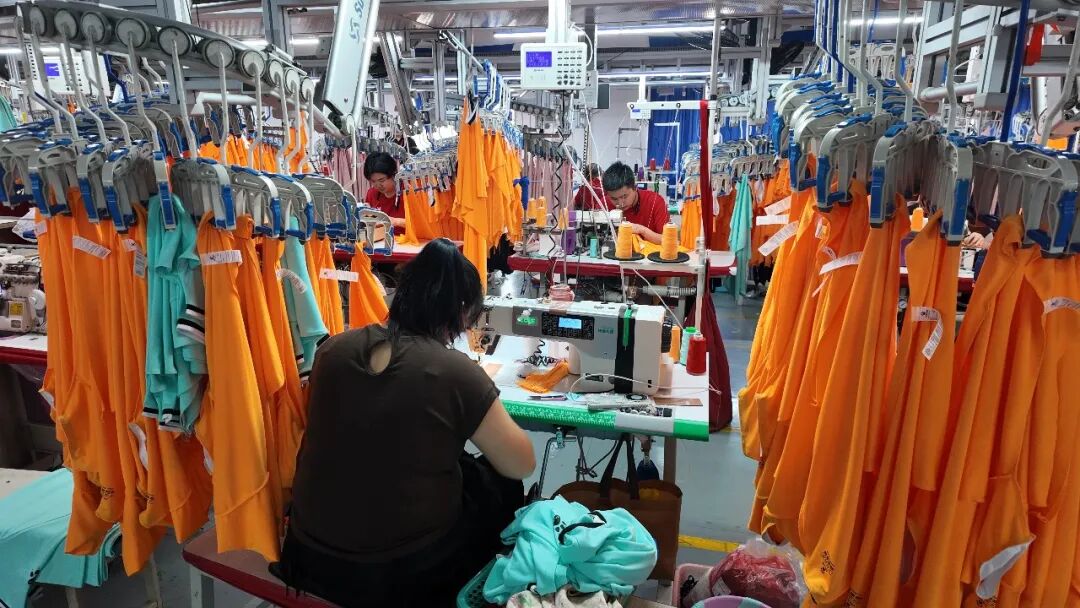
Kelme's 72-hour customization system keeps running; World Cup orders are just one line. In Ginza's workshop, 100+ AGV robots move materials while intelligent molding machines operate 24/7. To build this system, Ginza invested $4.5 million in a smart factory, forcing nearly 400 upstream suppliers of fabrics, trims, and hardware to digitize synchronization (synchronously).
One factory's upgrade pulls an entire supply chain forward. That's the real legacy of the World Cup.
From "Made in China" to "Brands of China," the World Cup is a litmus test. But it's a starting point, not an endpoint. Pitch exposure is fleeting; factory upgrades endure.
In this, Pinduoduo is a connector, not a "booster."
"Booster" sounds too soft. Pinduoduo's role is concrete—it connects demand and production through data flows.
On the demand side, 400 million sports enthusiasts buy gear on the platform, reaching users traditional channels can't. On the production side, 48-hour traffic support and real-time data feedback train factories in rapid response. On the brand side, event heat (heat) monetizes instantly—jerseys from the Mongolian Super League go live on Pinduoduo right after matches, creating a near-zero-distance purchase path.
"Pinduoduo helps us sell; we help Pinduoduo's users get better products," Cao Zhen said. This isn't PR fluff—it's the reality of data flowing between both ends. Platforms have orders, factories have capabilities, consumers have demands—the three mesh, and the gears turn autonomously.
The World Cup will end. The 32 teams will have winners and losers.
But industrial belt businesses won't stop. Jinjiang's factories burn midnight oil; Pinghu's workshops buzz with robots. The next World Cup might feature more Chinese brand stories.
Match scores have winners and losers. Factory upgrades never end.
-
![]()
Proposed to Raise 955 Million Yuan through Private Placement! Huicheng Vacuum Boosts Localization of Ultra-Precision Optical Coating Equipment
-
![]()
Cash Flow Soars 13-Fold! What Major Strategic Move is Wuhan Five Square Optoelectronics Planning?
-
![]()
Leaked Design of vivo X500: Reverts to Circular Camera Module in Top-Left Corner, Pays Homage to Classic X90 Aesthetic
-
![]()
DeepSeek Shows Signs of Foraying into Code Agents, Launches WeChat Official Account Focused on Harness
-
![]()
Auto Companies Deny Claims That ‘Cooperation with Huawei Is Non-Essential’, as Huawei Transforms into a ‘Public Platform’
-
![]()
Starship to Independently 'Return to the Launch Tower': SpaceX's Ambitions Extend Beyond Rocket Building to Dominating Space Transportation
-
![]()
Starship Set to Independently 'Return to the Launch Tower': SpaceX is Revolutionizing Space Transportation, Not Just Building Rockets
-
![]()
Anthropic and OpenAI Face Off Against Deepseek