Controversy Rages On! SpaceX's IPO Unveiled: Is Musk a Visionary or Just a Dreamer?
 06/15 2026
 597
597
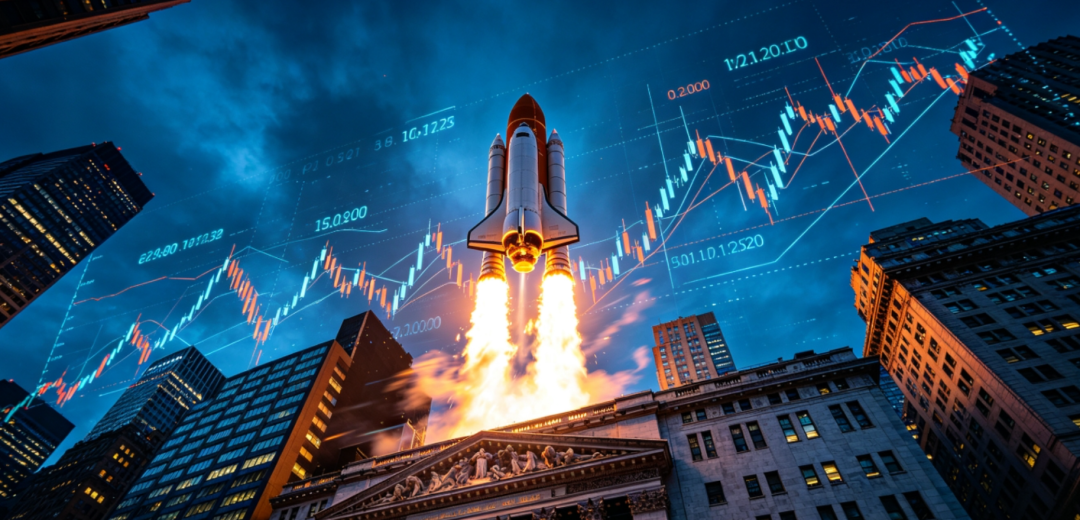
On the evening of June 12 (Beijing Time), SpaceX's official listing on Nasdaq marked a historic moment on Wall Street. Opening at $150, the stock soared to a high of $176.52 during the session, closing its first day with a 19.22% gain and a market capitalization exceeding $2.1 trillion.
Musk's net worth subsequently soared past $1 trillion, crowning him as the first 'trillionaire' in human history.
However, the IPO of this trillion-dollar aerospace behemoth has been shrouded in controversy from the outset: How can a company with a net loss of $4.94 billion in 2025 command a valuation of $1.77 trillion?
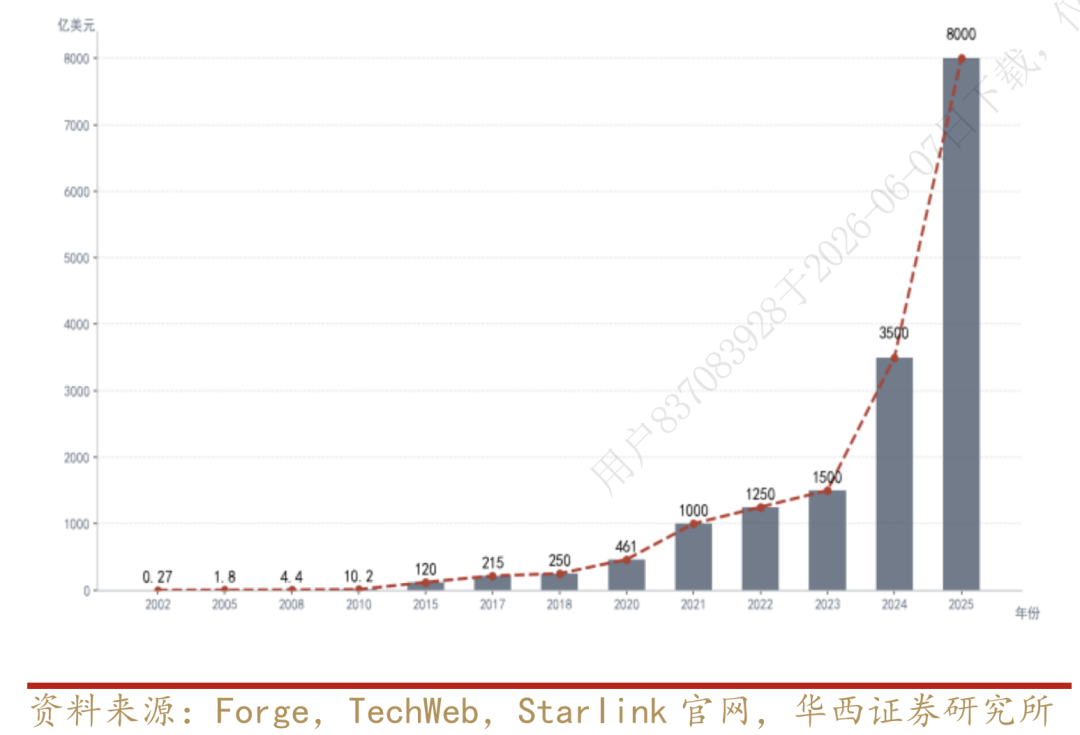
Figure: Evolution of SpaceX's valuation.

How Was History's Largest IPO Born?
On June 3 (local time), SpaceX filed its final prospectus with the U.S. Securities and Exchange Commission, announcing plans to issue approximately 555.6 million shares at a fixed price of $135 each, raising a base capital of $75 billion and valuing the company at approximately $1.77 trillion.
This figure directly eclipsed Saudi Aramco's 2019 IPO record of $29.4 billion, making it the largest IPO in global capital market history.
Unlike traditional IPOs, which set a price range before roadshows and book-building, SpaceX directly announced a fixed price, fueled by overwhelming demand. Total subscriptions exceeded $350 billion, more than four times oversubscribed, with nearly one-third of institutional investors failing to secure allocations.
Market reactions to this pricing mechanism were mixed, but the result was undeniable: demand far exceeded expectations.
Public information reveals that Goldman Sachs, Morgan Stanley, Bank of America, Citi, and JPMorgan Chase served as joint lead underwriters, forming a star-studded underwriting team. The company listed under the ticker SPCX on both the Nasdaq Global Select Market and the Texas Stock Exchange simultaneously.
The prospectus disclosed that Musk would retain over 85% of the company's voting rights post-IPO, firmly controlling business decisions.
On listing day, retail investors bought $18.1 million worth of shares within the first 20 minutes, making SPCX the second-most traded stock of the day after Nvidia. From open to close, bulls and bears engaged in fierce competition, with first-day trading volume exceeding $85 billion.
The significance of this 'IPO of the century' extends beyond the numbers themselves.
SpaceX's public market debut as an unprofitable company underscores a reality: capital markets are willing to pay a premium in advance for technology platforms with truly disruptive potential.
Why All the Controversy?
A company attracting $350 billion in subscriptions while facing public criticism from two protagonists of 'The Big Short' film says it all.
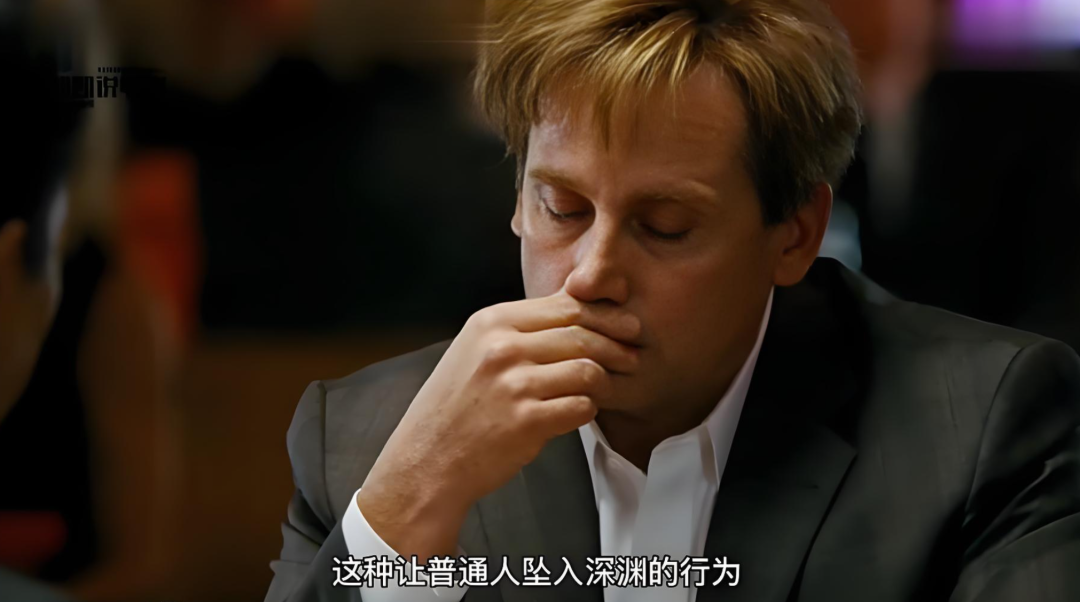
Short-selling master Jim Chanos bluntly stated on the eve of the IPO: 'Under any reasonable assumption, this company is not worth $1.75 trillion within the next five years.' Another 'Big Short'原型 (prototype, translated to 'figure' for better context) , Michael Burry, was even more direct: 'Nothing in the S-1 filing justifies a valuation of $1 trillion, let alone $2 trillion.'
The skeptics' logic is straightforward. SpaceX reported $18.67 billion in revenue and a $4.94 billion loss in 2025; in Q1 2026, revenue reached $4.694 billion, but net losses widened to $4.276 billion—nearly matching last year's total.
The core issue lies in SpaceX's acquisition of xAI and its foray into AI, which has sent capital expenditures soaring. In Q1 2026, capex accounted for a staggering 215% of revenue, meaning the company spent $2.15 for every $1 earned.
But on the flip side, these massive losses were reinvested into core infrastructure: Starship development, Starlink expansion, and xAI's computing power clusters.
Morningstar analysts pegged fair value at $780 billion, while Goldman Sachs predicted xAI's revenue could skyrocket from approximately $3.2 billion in 2025 to $322 billion by 2030—a hundredfold increase in five years.
The crux of the disagreement lies in whether SpaceX is an aerospace company or a super infrastructure platform spanning aerospace, satellite internet, and AI. Is the $1.77 trillion valuation a bubble or forward pricing? The answer may take five years or more to emerge.
Behind the Three Major Businesses
To understand SpaceX's value, one must dissect its three core business segments.
Starlink: The Cash Cow. This is SpaceX's most mature business. By the end of 2025, Starlink had surpassed 10.3 million users globally, covering 164 countries and regions, with a business footprint reaching over 3 billion people. Full-year 2025 revenue hit $11.4 billion, accounting for 61% of total company revenue and growing nearly 50% year-over-year; operating profit reached $4.4 billion, with an EBITDA margin of 63%.
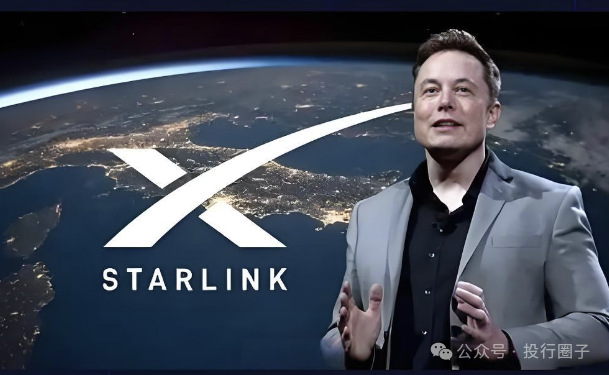
Starlink generates cash to fund the other two capital-intensive segments.
Rocket Launches: The Technological Foundation. This is where SpaceX began. By March 2026, SpaceX had delivered approximately 7,400 metric tons of payload into orbit, with 2025 launch mass exceeding 2,200 metric tons—accounting for over 80% of global orbital launch capacity during the period.
Falcon 9 completed 165 launches last year, slashing orbital launch costs from the industry's historical average of $18,500 per kilogram to just $2,700.
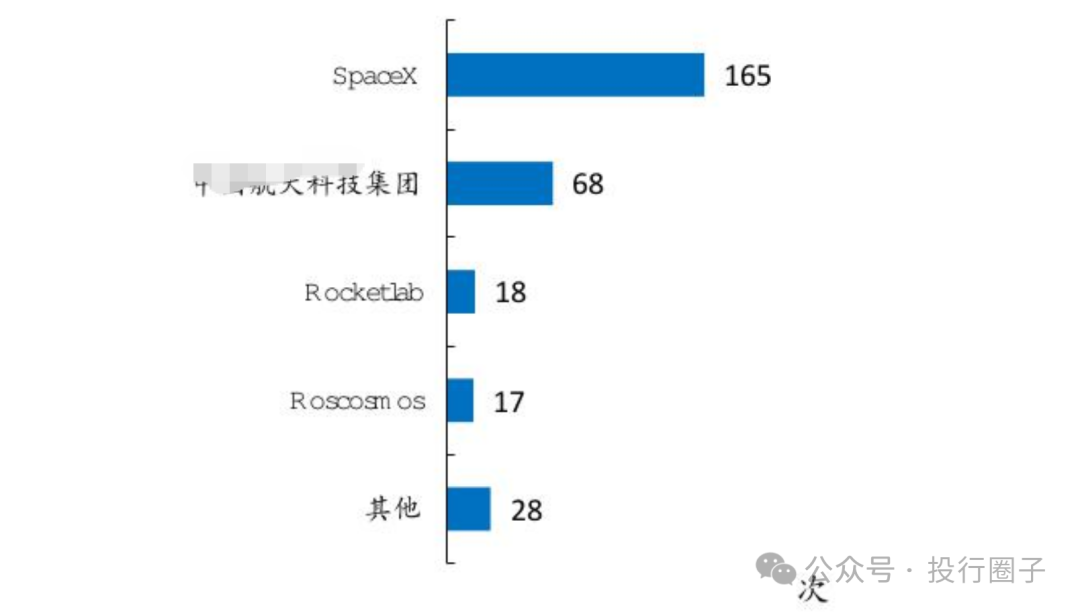
Image source: Kaiyuan Securities Research Institute.
Falcon 9's reusable technology has made launch costs far lower than all competitors. NASA, the U.S. military, and numerous commercial satellite clients deeply rely on this launch corridor, making it nearly irreplaceable in the short term.
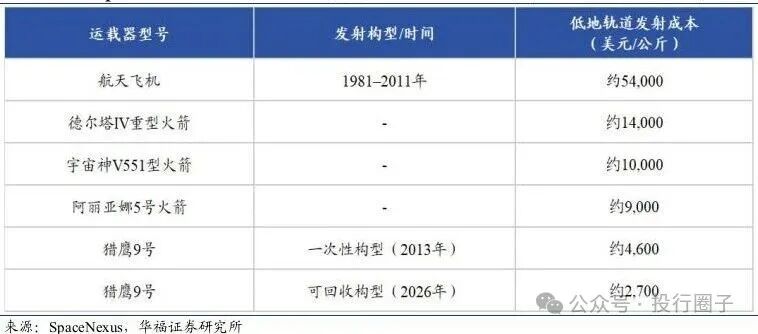
Image source: Huafu Securities Research Institute
However, the launch business is currently unprofitable on paper due to Starship's R&D investments.
In 2025 and Q1 2026, SpaceX invested billions of dollars in the Starship program. Once fully operational, launch costs are expected to plummet further to around $100 per kilogram—a nearly 96% reduction.
AI: The Amplifier of Imagination. This is the most capital-intensive but also the most imaginative segment. AI operations lost over $6 billion in 2025. However, SpaceX has incorporated all xAI computing assets into its portfolio and secured massive computing orders from Google, Anthropic, and others.
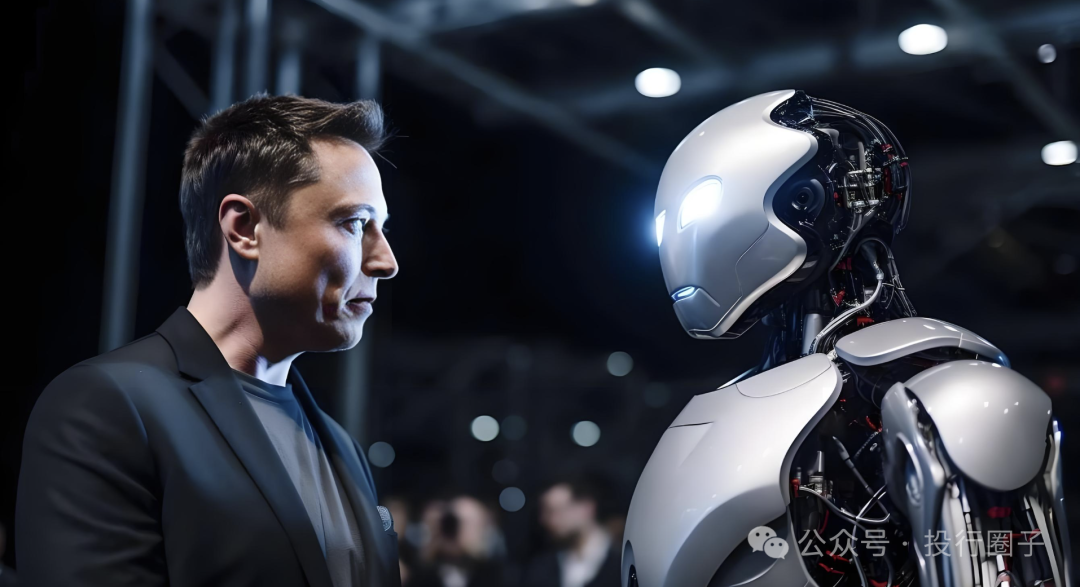
According to disclosures, Google agreed to pay SpaceX approximately $920 million monthly from October 2026 to June 2029.
SpaceX's prospectus cites a total addressable market (TAM) of $28.5 trillion, with 85% attributed to AI.
SpaceX's Three Core Business Performances (2025 Data)
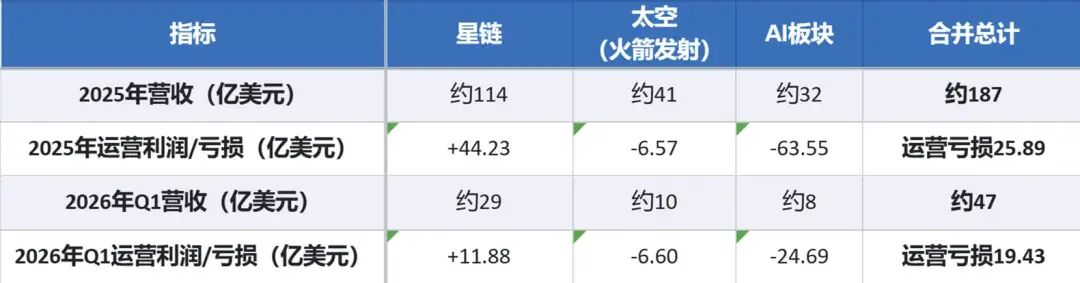
Data sources: SpaceX prospectus, Sina Finance, Huaxi Securities Research Institute, etc.
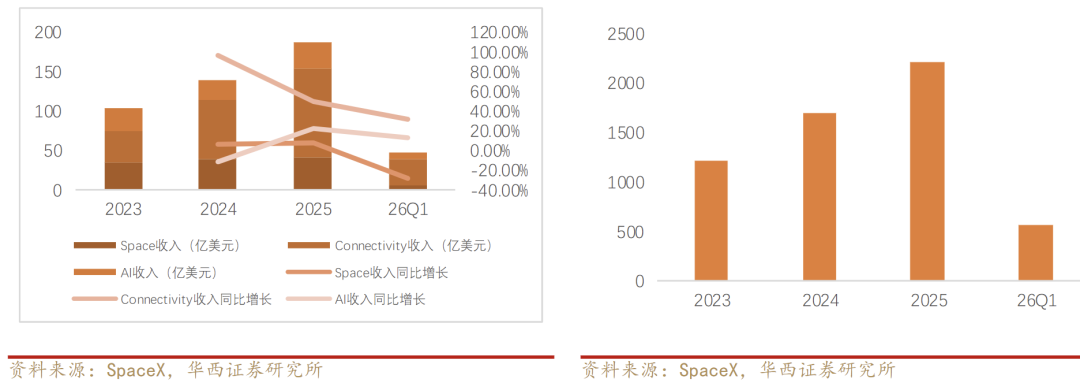
Image source: Huaxi Securities Research Institute/SpaceX prospectus and public disclosures
From 'Pie in the Sky' to 'Baking the Pie': Lessons Learned
With this context, revisiting whether Musk is a 'visionary' or just a dreamer yields a clearer answer.
Extending the discussion, how can the next Musk be cultivated?
Since its founding in 2002, SpaceX has endured countless rocket explosions and near-bankruptcy moments.
From Falcon 1's three failed test flights that nearly drained funds, to Falcon 9's rocket recovery revolutionizing aerospace economics, to Starship's V3 version completing its first full-process test flight on the eve of the IPO—deploying simulated satellites, re-entering at Mach 25, and achieving a soft ocean landing—nearly all core objectives were accomplished.
Musk's style has never been about 'promising what can be achieved today,' but rather 'telling you what might be possible in a decade and then relentlessly pursuing that vision.'
This 'first promise, then deliver' model inevitably draws comparisons to another story unfolding in Hefei, China.
A widely circulated saying in Hefei goes: 'We're either recruiting projects or on the way to recruit projects.' But unlike many local governments pursuing 'quick implementation and quick returns,' Hefei follows a 'long-termism' path.
Data shows that Hefei's technology spending as a share of fiscal expenditure consistently ranks among the highest in Chinese cities. Fiscal funds enter high-risk, long-cycle fields as 'patient capital,' with durations extending up to 20 years and risk tolerance reaching 80% for some seed funds.
Hefei's state-owned assets once saved BOE from collapse with an investment of less than $1 billion, spawning a $100 billion-class display panel industry cluster. They also made a bold bet on NIO, creating China's new energy vehicle benchmark in Hefei.
This is the underlying logic of the 'Hefei Model': success isn't measured by short-term financial metrics, but by long-term industrial development trends.
Hefei doesn't just invest money—it invests in mechanisms. From deploying technology commercialization teams to mine high-quality research from universities and institutes, to legislating technology manager roles ensuring research outcomes have 'takers,' funding, and application scenarios; from exploring 'rights assignment + transfer + profit-sharing' reforms to implementing chain chief systems connecting labs with factories—Hefei uses a systemic institutional framework to push papers from 'shelves' to 'marketplaces.'
To date, this mechanism has mined over 9,000 research outcomes from universities and institutes, facilitated the launch of over 3,000 new companies, including nearly 200 valued at over $100 million.
SpaceX's $1.77 trillion valuation is essentially the capital market voting with the logic of 'patient capital,' not paying for current profits but prepaying for infrastructure positioning in the next decade.
This is strikingly similar to Hefei's approach of nurturing a hundred-billion-level industrial cluster over 20 years.
Both are doing the same thing: using strategic resolve to hedge against uncertainty and long-termism to outpace short-sighted thinking.
There is an old Chinese saying, 'Efforts are never wasted.' All the efforts made will not be in vain.
Many of the 'pies' Musk has drawn have already been baked: reusable rockets have gone from 'impossible' to commonplace, and Starlink has evolved from a PowerPoint presentation to 10.3 million users. The companies Hefei has bet on—BOE has become the backbone of China's panel industry, and NIO has established itself in the new energy
What are your insights or perspectives on this particular subject?

Disclaimer: Our dedicated team has been immersed in the realm of financial self-media for a solid 13 years, with a laser focus on providing in-depth analyses of capital markets, listed entities, and the cutting-edge developments in the business and technology sectors. Presently, we boast a substantial following of over 3 million fans across various platforms. We are always on the lookout for insightful contributions and are willing to compensate contributors if their work is selected for publication. Should you come across any copyright concerns pertaining to articles or images cited within our content, we kindly request that you reach out to our administrators. Upon verification, they will promptly address the issue by correcting the source, acknowledging the author, remunerating as necessary, or removing the content in question.
-
![]()
Proposed to Raise 955 Million Yuan through Private Placement! Huicheng Vacuum Boosts Localization of Ultra-Precision Optical Coating Equipment
-
![]()
Cash Flow Soars 13-Fold! What Major Strategic Move is Wuhan Five Square Optoelectronics Planning?
-
![]()
Leaked Design of vivo X500: Reverts to Circular Camera Module in Top-Left Corner, Pays Homage to Classic X90 Aesthetic
-
![]()
DeepSeek Shows Signs of Foraying into Code Agents, Launches WeChat Official Account Focused on Harness
-
![]()
Auto Companies Deny Claims That ‘Cooperation with Huawei Is Non-Essential’, as Huawei Transforms into a ‘Public Platform’
-
![]()
Starship to Independently 'Return to the Launch Tower': SpaceX's Ambitions Extend Beyond Rocket Building to Dominating Space Transportation
-
![]()
Starship Set to Independently 'Return to the Launch Tower': SpaceX is Revolutionizing Space Transportation, Not Just Building Rockets
-
![]()
Anthropic and OpenAI Face Off Against Deepseek