SpaceX Market Value Tops $2 Trillion: Who’s Fueling Musk’s Space Ambitions?
 06/18 2026
 575
575
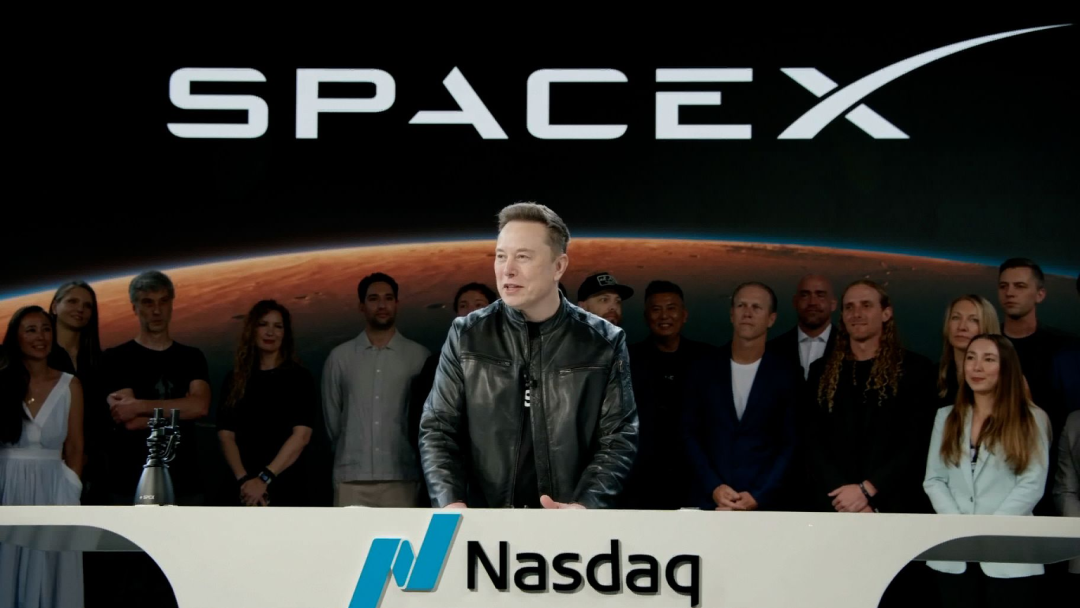
On June 12th, SpaceX made its stock market debut on NASDAQ, priced at $135 per share. By the closing bell, shares had surged 19.3% to $160.95, propelling the company’s market capitalization beyond $2.10 trillion and marking the largest initial public offering (IPO) in history.
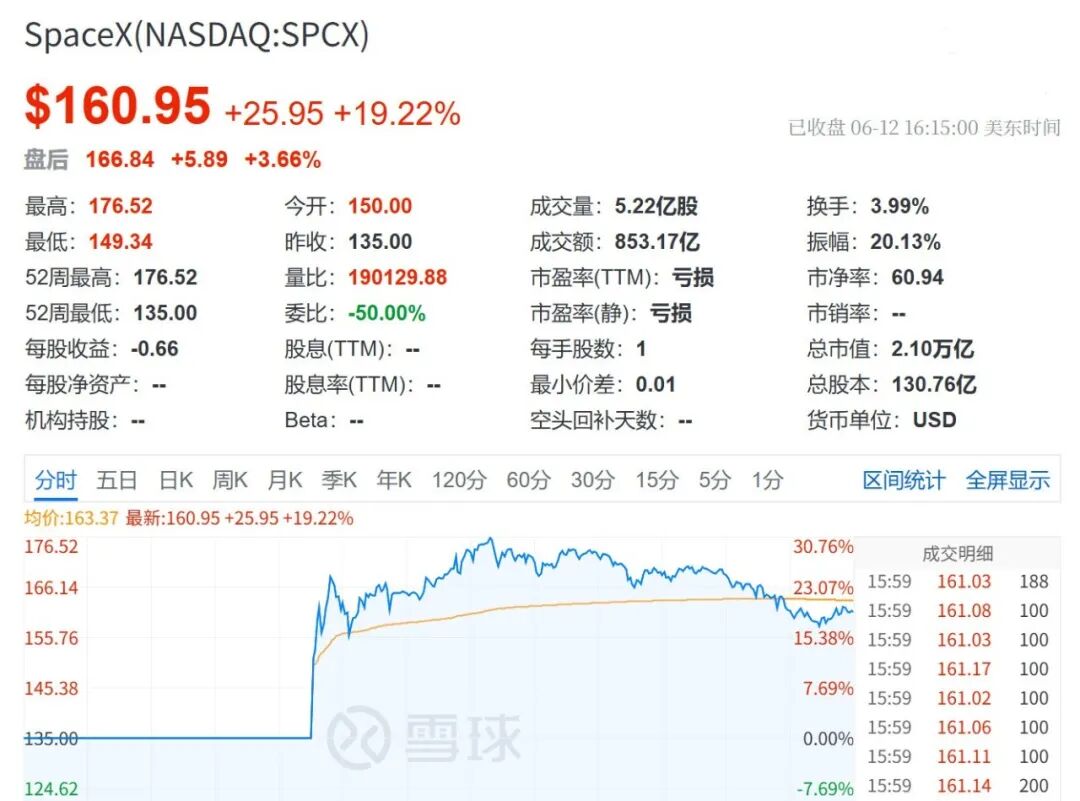
Image Source: Xueqiu
Behind this meteoric rise lies not just investor enthusiasm or Musk’s ascent to global wealth supremacy, but a sophisticated financial strategy involving “passive funds being compelled to buy”—a dynamic set to intensify in the weeks ahead.
01 First-Day Trading: A Textbook IPO Triumph
Key Metrics: Issue Price: $135/share; Opening Price: $150/share (+11.1%); Intraday High: $176.52/share; Closing Price: $160.95/share (+19.3%); First-Day Volatility: 26.5%.
At closing, SpaceX’s valuation eclipsed $2.10 trillion, surpassing Saudi Aramco and joining Apple, Microsoft, and NVIDIA in the exclusive “$2 Trillion Club.”
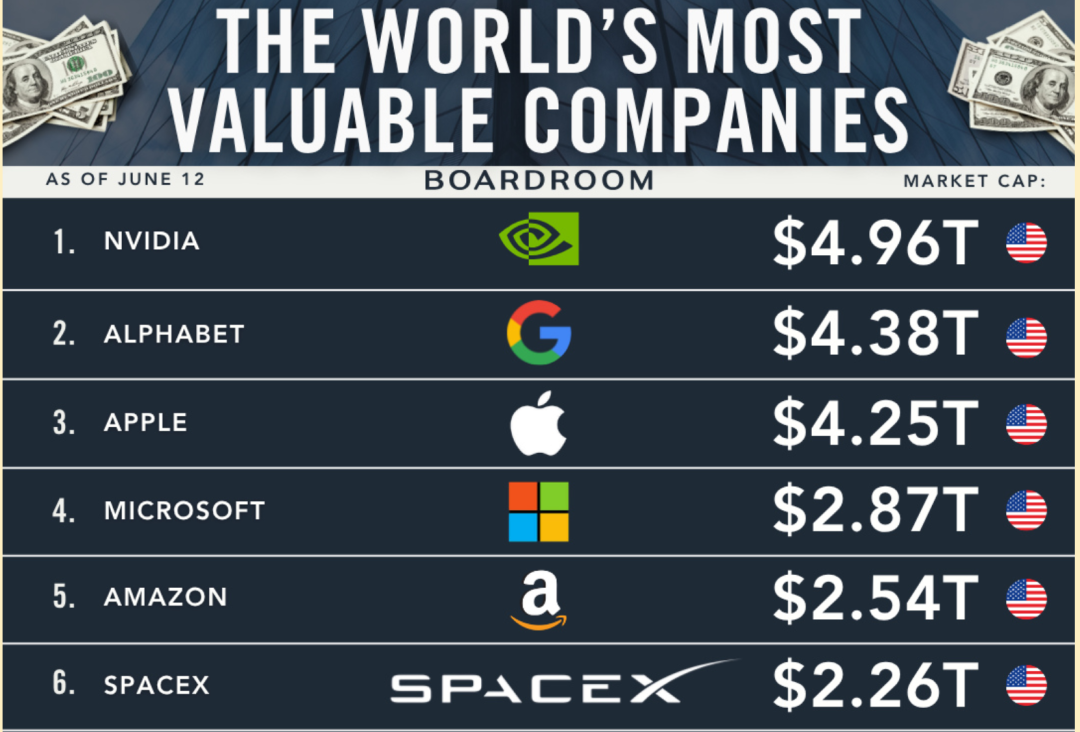
Image Source: Internet
Musk’s personal stake soared, pushing his net worth past $1 trillion. For him, wealth is merely a metric.
However, the focus here shifts to a critical yet overlooked factor: the link between the first-day rally and impending “forced buying” pressures.
02 Who’s Buying SpaceX?
The 19.3% first-day gain was driven by four key player groups:
- IPO Placement Institutions: Underwriters like Goldman Sachs and Morgan Stanley.
- Active Management Funds: Investors acting on proprietary research.
- Retail Investors: Individuals purchasing shares through regulated channels.
- Thematic ETFs: A handful of funds, such as Tema Space Innovators ETF, designed to rapidly accumulate SpaceX positions—though their scale remains insufficient to sustain a $2 trillion valuation alone.
ETF.com reports that Tema Space Innovators ETF (NASA), launched in late March, surpassed $1 billion in assets within 37 trading days, explicitly positioned to “anticipate SpaceX’s listing.”
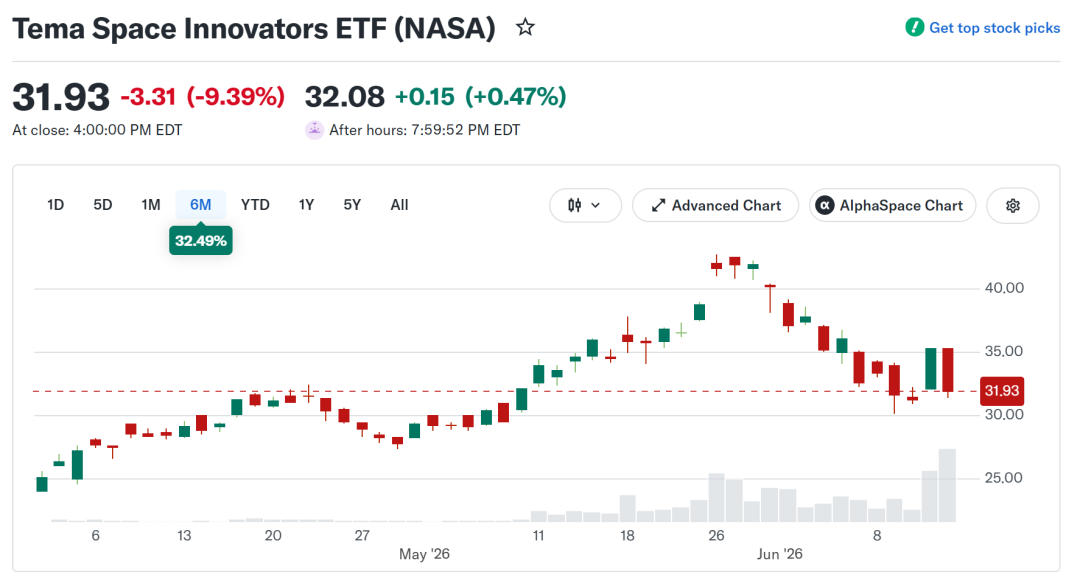
Image Source: Internet
Yet the true “index inclusion rush” will unfold from mid-July to early August, when “forced buying” dynamics truly kick in.
03 The “Index Inclusion” Game Explained
The mechanics are more intricate than they appear.
1. Limited Free Float: SpaceX’s IPO featured just 555.6 million Class A shares (4.25% of total shares outstanding), a fraction of the 15–20% typical for large listings. Most shares remain locked with insiders like Musk, restricting market liquidity.
2. Dual-Class Share Structure:
- Class A: 1 vote per share, freely tradable.
- Class B: 10 votes per share, held by Musk and insiders, non-tradable.
Despite owning less than 50% of total shares (combining Class A and B), Musk retains ~85–90% voting control via Class B’s 10x voting power.
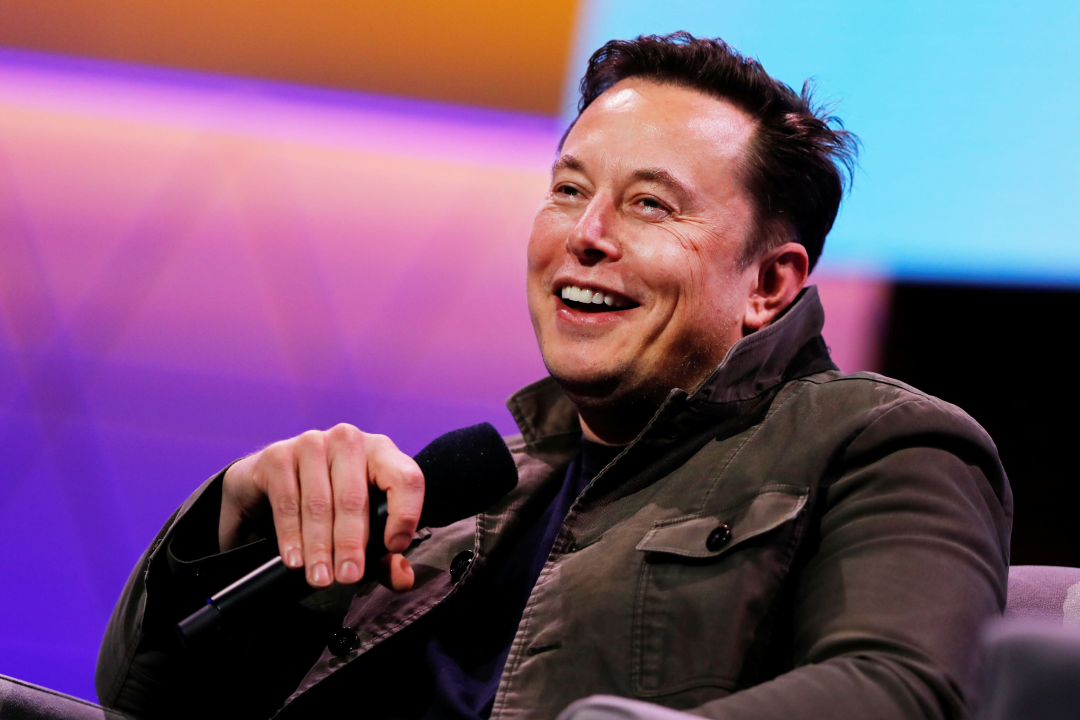
Image Source: Internet
Implications: Even if investors acquire all tradable Class A shares, Musk’s dominance remains unchallenged. The capital market’s “voice” over SpaceX is largely symbolic; long-term direction rests firmly in Musk’s hands.
3. Index Rule Modifications:
- Nasdaq: Effective May 1, 2026, new listings can join the Nasdaq 100 Index after just 15 trading days (down from 3 months) if ranked in the top 40 by market cap. The “10% free float” requirement has been waived, with low-float companies receiving reduced weightings.
- FTSE Russell: IPOs can enter indices 5 trading days post-listing if they meet investable market cap thresholds (e.g., $13.5 billion for the FTSE Global Equity Index Series), bypassing annual reviews.
- S&P Dow Jones: Maintained a 12-month maturity period, profitability rules, and free-float standards, barring SpaceX from the S&P 500 for at least a year unless profitability criteria are met.
- MSCI: SpaceX is expected to join the MSCI Global Standard Indexes ~10 trading days post-listing, adhering to existing fast-inclusion rules for large IPOs.
Nasdaq 100 and MSCI’s aggressive timelines suggest SpaceX could enter the Nasdaq 100 Index ~15 days after listing.
Image Source: Internet
What This Means: Passive funds tracking the Nasdaq 100, MSCI indices, or Russell 1000 will be compelled to buy SpaceX shares in the coming weeks, regardless of price or valuation—a phenomenon known as “forced buying.”
04 ETF Inflows: A Tidal Wave of Capital
U.S. passive index funds manage over $8 trillion in assets. If indices like Nasdaq 100, Russell 1000, and MSCI include SpaceX, conservative estimates project hundreds of billions in inflows. Even investors avoiding SpaceX shares directly may become passive shareholders.
“Forced buying” will peak from mid-July to early August, subjecting SpaceX to two distinct tests:
- First Week: Driven by active funds, retail investors, and market sentiment.
- Mid-July Onward: Driven by passive funds and rule-based demand.
Image Source: Internet
The outcome will determine whether SpaceX can sustain its $2 trillion valuation—the capital markets’ biggest悬念 in 2026.
05 SpaceX’s Core Business: Rocket + Starlink + Computing “Trinity”
While market mechanics drive short-term volatility, SpaceX’s long-term value hinges on its business fundamentals. The S-1 filing reveals three interlocking pillars:
1. Rockets: The Gateway
Falcon 9 slashed launch costs from $60,000/kg (Space Shuttle era) to $2,700/kg. Starship aims to reduce this below $200/kg, making the space economy viable.
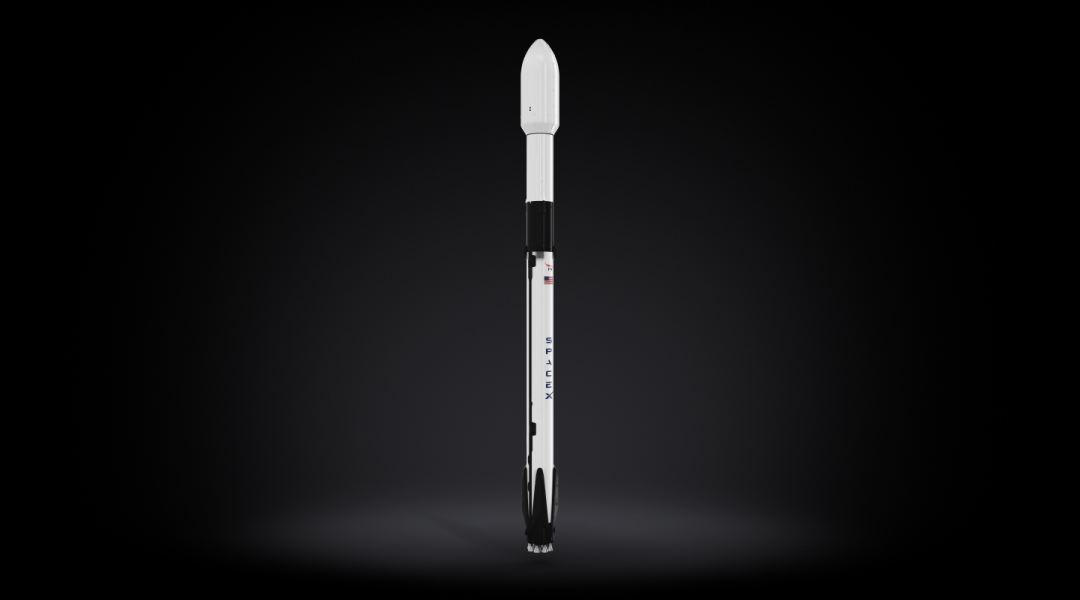
Image Source: Internet
2. Starlink: The Cash Engine
In 2025, Starlink generated $11.387 billion in revenue and $4.423 billion in operating profit, with 10.3 million subscribers—SpaceX’s largest profit center and funding source for its empire.
3. AI Computing: The Future
The S-1 discloses $7.7 billion in AI-related capex for 2025, the largest R&D line item. Space-based data centers (orbital computing) leverage vacuum cooling, 24/7 solar power, and Starlink connectivity to overcome terrestrial limitations.
4. ITAR Moat: SpaceX’s technologies (Falcon, Dragon, Starlink, Starship) fall under International Traffic in Arms Regulations (ITAR), cementing its status as a defense contractor.
Strategic Summary: SpaceX uses rocket revenue to fund Starlink, Starlink profits to fund data centers, and data center computing power to redefine AI’s boundaries. This forms a vertical closed loop: launch → communication → computing → AI training/services.
Rockets provide access, Starlink delivers connectivity and users, and data centers supply computing power and new revenue streams. All three share R&D, engineers, and supply chains—SpaceX’s deepest competitive advantage.
06 Investor Caution: Financials Matter
The market bets on tomorrow; financials reflect today.
A $2.10 trillion valuation corresponds to annual revenue below $20 billion, yielding a price-to-sales (P/S) ratio exceeding 100x. With a $4.94 billion net loss in 2025, the price-to-earnings (P/E) ratio is inapplicable.
For tech giants like Apple and Google, P/S ratios typically range from 10–20x, rarely surpassing 30x. SpaceX’s current ratio is astronomical—a “price-to-dream” metric.
Investors are not paying for present profitability but for future milestones: Starship’s full reusability, commercialization of space-based data centers, and Mars cargo missions. Delays could erase the market’s “faith premium.”
Image Source: Internet
Our chief analyst has developed a proprietary valuation model for SpaceX, yielding a figure significantly below $1.7 trillion. For details, join our paid research group (see article end).
Conclusion
SpaceX’s 19.3% first-day surge reflected institutional placements, active funds, and retail demand, with passive index funds yet to enter. Behind its $2.10 trillion valuation lies a system of passive funds and index rules—and above them, SpaceX’s true business landscape: rockets, Starlink, and space computing, each a cornerstone of humanity’s next frontier.
Yet even the most compelling narrative requires time to deliver. With a $4.94 billion annual loss and a 100x P/S ratio, investors are betting not on current earnings but on long-term faith in “humanity’s march to space” and absolute trust in Musk.
Image Source: Internet
Whether this belief holds remains uncertain. What is clear is that mid-to-late July’s index fund voting will serve as the first critical test of SpaceX’s valuation.
So, esteemed investors, will you buy a ticket to this journey? Share your thoughts in the comments!
- END -
-
![]()
Proposed to Raise 955 Million Yuan through Private Placement! Huicheng Vacuum Boosts Localization of Ultra-Precision Optical Coating Equipment
-
![]()
Cash Flow Soars 13-Fold! What Major Strategic Move is Wuhan Five Square Optoelectronics Planning?
-
![]()
Leaked Design of vivo X500: Reverts to Circular Camera Module in Top-Left Corner, Pays Homage to Classic X90 Aesthetic
-
![]()
DeepSeek Shows Signs of Foraying into Code Agents, Launches WeChat Official Account Focused on Harness
-
![]()
Auto Companies Deny Claims That ‘Cooperation with Huawei Is Non-Essential’, as Huawei Transforms into a ‘Public Platform’
-
![]()
Starship to Independently 'Return to the Launch Tower': SpaceX's Ambitions Extend Beyond Rocket Building to Dominating Space Transportation
-
![]()
Starship Set to Independently 'Return to the Launch Tower': SpaceX is Revolutionizing Space Transportation, Not Just Building Rockets
-
![]()
Anthropic and OpenAI Face Off Against Deepseek