Soaring to Success or a Ponzi Scheme? The Realities Behind SpaceX's $2 Trillion Valuation
 06/21 2026
 623
623
Since SpaceX went public, a plethora of articles have emerged, dissecting its every move.
A primary reason for this scrutiny is its staggering $2 trillion valuation, a figure that seems almost fantastical. In the face of such valuation, it's easy for people to lose sight of rational judgment.
This article aims to ground the discussion in the realms of physics and finance, providing a clearer perspective.
On the day SpaceX went public, Nobel laureate in economics Paul Krugman didn't mince words in his Substack column, labeling it a 'human-shaped Ponzi scheme.'
While Krugman's statement is provocative, it has sparked debate—after all, SpaceX is not just an empty promise. Its Falcon 9 rockets are launching, Starlink is providing internet services, and over 10,000 operational satellites are circling in low Earth orbit.
Yet, Krugman's skepticism shouldn't be dismissed. When a company with around $18.7 billion in revenue, still in the midst of heavy capital investment, is propelled by the public market to a valuation exceeding $1.77 trillion or even $2 trillion, one must question: Is the market buying into cash flow or a long-term vision centered around Musk, Mars, AI, and space infrastructure?
This is no ordinary IPO; it's a collective wager by capital markets on a novel hybrid entity.
Certainly, SpaceX continues to launch rockets, build spacecraft, and deliver payloads for NASA, governments, and commercial clients.
However, in the eyes of the public market, SpaceX has been dissected into three distinct identities: a reusable rocket company, a global satellite internet provider, and a space infrastructure firm aiming to deploy AI computing power in orbit.
Rockets form its industrial backbone, Starlink generates subscription revenue, and orbital AI computing power fuels future aspirations. Together, investors seem to envision not just launch pads and fuel tanks but a valuation trajectory akin to that of an AI company.
Yet, when measured against the laws of physics, the situation becomes more grounded (and serious).
Every aspect of SpaceX's narrative is anchored in tangible materials. Rockets require steel, engines, liquid oxygen, and methane; Starlink must maintain a low Earth orbit network of over 10,000 satellites, with more than 1,600 already retired.
Orbital AI computing power must grapple with a question far removed from Silicon Valley's usual concerns: How much surface area is needed to dissipate the waste heat generated by computing power?
Thus, the pressing question post-IPO is not whether SpaceX possesses technical prowess but how the market is valuing it. After all, SpaceX hasn't shed its heavy industrial identity; it has merely accelerated aerospace engineering into a realm of higher frequency, rougher edges, and closer alignment with manufacturing learning curves.
The most concerning aspect of its valuation stems from this very fact: The market hasn't overlooked the steel, fuel, and ongoing capital expenditures—it sees them but still insists on valuing this steel-burning machine with the imagination of a cloud computing company. This isn't a misunderstanding but a selective blindness.
——Introduction
01
Not Mars Romance, But the Ledger of Every Kilogram of Material
When the public discusses SpaceX, Mars, Musk, Iron Man, or the sight of a first-stage booster landing vertically often come to mind.
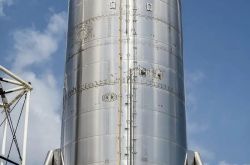
Yet, a crucial entry point into the aerospace industry lies in a material choice: Starship ultimately abandoned carbon fiber for stainless steel.
This wasn't an aesthetic decision but a manufacturing calculation.
According to Musk, carbon fiber costs around $135 per kilogram, with a waste rate of about 35%, bringing the effective cost closer to $200 per kilogram; in contrast, 301 stainless steel costs around $3 per kilogram.
This isn't a marginal difference but a cost gap of several orders of magnitude.
Traditional aerospace intuition favors lighter, more expensive, and advanced materials as closer to the future.
But SpaceX reverses this logic—a material that's significantly cheaper, easier to machine, more suitable for on-site rework, and with a more mature supply chain not only reduces procurement costs but also transforms the entire manufacturing rhythm.
Traditional aerospace resembles bespoke engineering, where each rocket strives for near-perfect individuality, and every failure demands a lengthy investigation.

SpaceX, on the other hand, resembles a high-pressure production line thrust into on-site environments, not pursuing elegance in every prototype but aiming to build quickly, test early, and gather dense feedback.
This is where stainless steel shines. Carbon fiber at $135 per kilogram fits the traditional industry narrative; stainless steel at $3 per kilogram supports an industrial system of continuous trial and error, rework, and cost reduction.
Moreover, stainless steel isn't just cheap. As Musk explained, it gains strength in cryogenic environments, and its high-temperature resistance benefits thermal protection during re-entry.
This forms the first layer of SpaceX's practical foundation: It's not transforming aerospace through Mars narratives but through manufacturing systems.
But problems arise here. Software can be copied; steel cannot.
Code deployed once can serve more users; rockets must be manufactured, inspected, launched, and refurbished repeatedly, while satellites must be sent into orbit in batches. Its costs, risks, and capital expenditures unfold along industrial throughput.
When it comes to Starlink, this ledger becomes a more concrete issue of cash flow and depreciation.
02
Mars Colonization: Myth or Black Hole?
Mars colonization is the most enduring and hardest-to-audit aspect of SpaceX's narrative.
Technically, many of Starship's designs serve this goal: greater capacity, reusability, in-orbit refueling, deep-space flight capability, and driving single-launch costs to unprecedented lows.
Mars isn't just a promotional symbol; it shapes SpaceX's engineering choices.
But from a valuation perspective, Mars colonization resembles a far-future option that can't be discounted using conventional cash flow methods.
Suitable launch windows between Earth and Mars occur only about every 26 months.
Even ignoring life support, radiation protection, landing reliability, energy systems, in-situ resource utilization, and long-term ecological closure, merely transporting sufficient mass to Mars entails repeated launches, in-orbit resupply, and massive capital expenditures—each link is not software-like expansion but an engineering ledger superposition (stacked) with mass, energy, time windows, and failure probabilities.
This is where the Mars narrative faces its toughest scrutiny.
Once it enters valuation models, it must answer a set of real-world questions: When will the first humans depart? What is the cost per ton of effective payload to Mars? How will the round-trip system close? Where will energy, water, oxygen, and building materials for long-term habitation come from? What income will these investments ultimately correspond to?
Until these questions are answered, Mars colonization resembles the edge of a capital black hole: It attracts imagination but also absorbs cash flow.

It makes SpaceX seem unlike an ordinary aerospace company but also leaves investors struggling to discern which investments are building profitable infrastructure and which are merely paying for a distant, unaccountable civilizational narrative.
It's the most unreliable part of the company's valuation but also the most dynamic: It explains why the market is willing to grant it far more imagination than traditional aerospace firms while also explaining why this imagination must be repeatedly questioned by physical laws and financial audits.
03
Starlink: Not Space Fiber, But a Network Depreciating Daily
If SpaceX had only rockets and Mars, it would be a highly specialized aerospace company but hard to price as a $2 trillion platform.
What propels it toward 'platform company' imagination is Starlink.
Starlink resembles a fiber-optic cable strung across the sky: Users buy terminals, pay monthly fees, and the network covers the globe with subscription-based revenue.
This narrative appeals to public markets—build once, charge long-term, with the platform becoming more valuable as more users join.
But low Earth orbit satellites are not fiber-optic cables.
According to Jonathan McDowell's statistics, as of mid-June 2026, SpaceX had launched 12,318 Starlink satellites, with 10,671 still in orbit, 10,655 operational, and 1,647 non-operational.
Non-operational means broken or failed.
In other words, Starlink is not a one-time hardware asset but a dynamic system launching over 12,000 satellites while continuously losing more than 1,600.
This is where the beautiful metaphor of 'space fiber' falls short.
A ground-based fiber-optic cable, once buried, can operate stably for years; a low Earth orbit satellite is perpetually consumed by the orbital environment.
It must constantly maintain its orbit, avoid collisions, adjust its attitude, endure atmospheric density changes from solar activity, and ultimately be retired or re-enter the atmosphere.
Studies based on existing experience suggest that a Starlink satellite's operational lifespan is only 4 to 6 years.
Thus, with roughly 10,655 operational satellites, a 4- to 6-year lifespan means: Even without expansion, merely maintaining the current scale requires SpaceX to replace approximately 1,775 to 2,664 satellites annually.
That's about 5 to 7 per day.
This isn't a one-time infrastructure investment but a fragile system highly dependent on continuous resupply.

In February 2022, SpaceX experienced a landmark event.
A mission launched 49 Starlink satellites, which then encountered a geomagnetic storm, causing a sharp increase in high-altitude atmospheric drag. Officials later stated that up to 40 satellites failed to raise their orbits and ultimately re-entered the atmosphere.
The significance of this event lies not in the cost of the 40 satellites but in reminding investors: Low Earth orbit internet is not as simple as placing servers in the cloud. Every node is moving, avoiding collisions, and aging. Every space weather disturbance can rewrite the network's operational costs.
You might argue that SpaceX's unparalleled high-frequency launch capabilities and lower costs make it better suited than most competitors to operate such low Earth orbit networks; but the flip side of this fact is that it must sustain these high-frequency launch capabilities to prevent the network from being slowed by its own depreciation.
For SpaceX, network resupply is also key to its vertical integration story—it builds rockets, satellites, launches them, and sells services, creating a closed loop with high replication barriers.
But a closed loop doesn't mean it's free.
Starlink does have network effects, but not the nearly zero-marginal-cost variety seen in software platforms; every additional layer of coverage, every new batch of users, comes with real hardware increments and rising maintenance costs.
This is the most easily overlooked point in SpaceX's valuation: The market buys into subscription revenue imagination, but the ledger runs on low Earth orbit hardware depreciation.
04
Heat Dissipation: Space Is Cold, but Vacuum Is Like a Thermos
If Starlink propels SpaceX toward a platform company, orbital AI computing power pushes this narrative into the most expensive realm of imagination.
This story aligns with current tastes. Ground-based AI data centers are constrained by electricity, land, water, environmental approvals, and grid access speeds; in contrast, space seems to offer stable solar energy, vast space, and fewer ground-based constraints.
This is also a key part of the mythic narrative: Since SpaceX can launch at low cost, it's suitable for moving AI computing power into orbit.
But here lies the most dangerous intuitive error: Space is cold, so space is suitable for heat dissipation.
NASA's small satellite thermal control materials state it plainly: There is no convection in a vacuum, so heat can only transfer via radiation and conduction, with spacecraft relying primarily on radiation for heat exchange with the external environment.
In other words, the air cooling, water cooling, and cooling towers common in ground-based data centers don't work the same way in orbit.
This immediately brings AI computing power back to thermodynamics—the thermos dilemma of orbital AI.
The least romantic aspect of high-power chips is that they convert nearly all electricity into heat. A 10-kilowatt AI payload means roughly 10 kilowatts of waste heat must be dissipated; a 100-kilowatt computing module means 100 kilowatts of heat can't remain inside the module.
Engineers can design radiators, deploy radiation panels, and use liquid loops to transfer heat to external surfaces, but each comes with costs in mass, area, reliability, and launch expenses.
Even for a 10-kilowatt payload, radiators would span dozens of square meters; at 100 kilowatts, radiation area would need to exceed 100 square meters. This means solar panels, radiators, structure, attitude control, and fault redundancy all scale up.
Thus, orbital AI computing power isn't 'impossible.' Its problem is sharper: This isn't a software issue but a unit economics problem.
How much power supply is needed per watt of computing power? How much radiation area is needed per watt of waste heat? How will in-orbit hardware upgrade with each chip generation, and how will failed units be replaced? Ground-based data centers can swap GPU generations every 18 to 24 months—how will already-launched AI hardware keep pace?
But the truly alarming part may not be the concept itself—any cutting-edge company should have bold visions.
This is how the market reacts: When a company makes claims such as "space is cold, so it's ideal for heat dissipation," and almost no one takes the time to calculate the actual size a radiation panel would need to be, the narrative has already surpassed the constraints of physics, and hidden risks have been concealed.
05
Valuation: Software Multiples Versus Industrial Ledgers
SpaceX cannot be valued as an ordinary manufacturing company.
It boasts reusable rockets, tens of thousands of operational satellites in orbit, a global user base, government and commercial contracts, vertically integrated manufacturing capabilities, and Musk's proven ability to mobilize capital across multiple industrial cycles.
Yet, it also cannot be simply categorized as a software, cloud computing, or AI company.
The allure of software companies lies in their extremely low marginal costs for replication. When Microsoft sells another copy of Office, or a cloud provider serves additional users, servers and electricity are required, but the core product replication does not involve the daily cost pressure of launching 5 to 7 hardware units into orbit.
Software expansion is akin to adding more pipes to an existing reservoir; SpaceX expansion is more like managing an ever-growing ocean fleet—requiring self-built ships, resupply, maintenance, and regular replacement of expired vessels.
This is the crux of the valuation debate: Its true value stems from restructuring heavy industrial systems, its valuation premium from platform narratives, and its long-term success depends on whether these two can genuinely merge into a closed loop that balances efficiency and profitability.
This vulnerability was quickly and acutely recognized—Professor Damodaran of New York University, dubbed the "Valuation Dean," bluntly stated on television that the "Total Addressable Market" figure in the prospectus appeared to be written by Grok, not bankers, and he dismissed it as "a hallucination."
CFRA analyst Keith Snyder publicly questioned whether SpaceX truly warranted a $1.77 trillion valuation.
Of course, the bullish camp was equally resolute: Altimeter's Gerstner firmly believed in its AI prospects, while another long-term advocate even claimed that the 2030 revenue forecast "still underestimates it."
The same prospectus was interpreted as a hallucination by some and an underestimation by others—this alone indicates that what the market is purchasing is not a set of verifiable numbers but a belief in the future.
There is another form of gravity—not from Earth, not from orbit, nor from thermodynamics, but from the mechanical structure of financial markets themselves.
Krugman's phrase "human-shaped Ponzi scheme" does not derive its sharpness from the word "scheme"—SpaceX possesses real assets, as established earlier.
Its sharpness lies in the mechanism: when a company requires a price-to-sales ratio of nearly 95 (or over 100 post-IPO, based on a $1.77 trillion valuation) to justify its price, investors are buying not just rockets, satellites, and users but an entire narrative contract about Musk, Mars, AI, and space monopoly.

More pointedly, this contract is not necessarily sold only to those who actively believe in it.
What Krugman truly fears is the indexing mechanism. Once SpaceX is swiftly included in major indices like the NASDAQ 100 or FTSE Russell, many funds will purchase it not because they comprehend Starship's reuse frequency, Starlink's network replenishment depreciation, or orbital AI's heat dissipation area but simply because index funds must buy.
Passive investing, intended to be a safe haven for ordinary people avoiding speculative stocks, may here become an automatic conveyor belt, delivering ordinary families in mutual funds directly onto the battlefield of this valuation experiment.
This conceals a rarely acknowledged injustice—those who designed this machine and cashed out from this IPO—Musk, underwriters Goldman Sachs and Morgan Stanley, and early investors cashing in on this IPO—secure guaranteed liquidity.
Meanwhile, ordinary families quietly placed at the table by indices inherit an uncertain valuation experiment. The bettors and the payers are never the same from the outset.
This is the truly noteworthy aspect of the "human-shaped Ponzi scheme."
It does not claim SpaceX lacks real assets but points out an old Wall Street tactic—Musk's genius narrative drives up valuations, which in turn reinforce the narrative; Wall Street packages the narrative into a mega-IPO, and indexing rules transmit the price to passive funds. Thus, a real industrial company is placed into an even more real financial amplifier.
This brings us back to the core of the article: SpaceX's issue is not falsity—quite the opposite, it is very real, with steel, engines, satellites, launch pads, and a functioning low-Earth-orbit network.
The real problem is that capital markets have translated these real assets into valuation multiples akin to those of software companies and, through indexing mechanisms, forced many who did not actively bet to shoulder these valuation assumptions.
Thus, while Krugman's judgment can be refuted, his warning cannot be ignored. SpaceX is not a traditional Ponzi scheme but rather a company with real industrial assets placed into a narrative amplifier by Wall Street.
The laws of physics will ultimately scrutinize its rockets, satellites, and orbital AI; but before that, passive funds may have already placed bets on behalf of tens of millions of ordinary investors.
06
The Myth Can Still Be Realized: Remember Four Accounts
Now we enter the most intriguing part of the article—half the reason this story is so sensational is the sheer magnitude of the numbers. Beyond a certain point, people lose their ability to judge.
In reality, no matter how large the numbers, there are financial methods to assess their worth, and someone has already done the math for SpaceX.
Damodaran calculated the future cash flows from SpaceX's two proven businesses—rocket launches and Starlink—discounted back to today under the rule of "the farther, the steeper the discount," totaling roughly $1.2 trillion, already a generous estimate.
But the market values it at $2 trillion. Subtract the calculable $1.2 trillion, and the remaining $800 billion reflects not rockets or Starlink but the market's price tag for a near-science-fiction narrative: moving AI computing power into orbit.
You need not debate whether this $800 billion is justified by belief; if you follow this story, you only need to remember four accounts, four numbers.
The first account is launch frequency. For the narrative to hold, Starship must achieve "one launch per week" by around 2027—about fifty launches a year. Only then will the cost of "sending one kilogram to space" drop from over $2,000 today toward the $100 SpaceX targets for 2030.
Its predecessor, Falcon 9, flew 165 times last year alone, proving high-frequency reusability is not fantasy; but Starship is far behind—only a dozen flights in three years, with its latest generation's maiden flight in May failing to recover the booster. To meet the 2027 target, this math must add up.
The second account is AI's annual revenue. Goldman Sachs estimates SpaceX's 2030 AI revenue at $322 billion—if it falls short, this valuation collapses.
Currently, each AI1 satellite carries roughly 150 kilowatts of computing power; to reach $322 billion, SpaceX needs a fleet of one million satellites (already stated in filing materials), totaling over 100 gigawatts.
This means building a business from scratch to achieve nearly two to three times NVIDIA's global data center revenue (which stands at $100–190 billion annually) within five years.
The third account is Starlink subscriptions.
Monthly revenue per user has already dropped from $99 to $66, making pricing highly competitive. For this math to hold, SpaceX cannot rely on price hikes but must reduce service costs per user through technology and scale faster than prices fall—its gross margin must climb from 7% in 2024 and ~20% in 2026 to a level where lower prices become more profitable.
The fourth account is launch costs, Musk's proudest achievement: roughly 67% launch gross margins, unmatched globally.
But this is because only SpaceX can currently reuse rockets at scale; once Blue Origin, Amazon's Kuiper, and others achieve reusability, this margin may not hold. Thus, it resembles a faith-based stubbornness—once competition catches up, 67% will thin out.
If any of these four accounts fails to deliver in their respective years, the $800 billion narrative will crack first; whether that crack is filled or widens into collapse will become clear within a few years.
Thus, SpaceX's $2 trillion valuation is likely another belief-based estimate. The good news is that Musk has "won" at valuation before: Tesla was once derided as science fiction but solidified its stock price through delivered production volumes and profits. The bad news is that this vision is grander and harder to realize than any before.
-
![]()
Proposed to Raise 955 Million Yuan through Private Placement! Huicheng Vacuum Boosts Localization of Ultra-Precision Optical Coating Equipment
-
![]()
Cash Flow Soars 13-Fold! What Major Strategic Move is Wuhan Five Square Optoelectronics Planning?
-
![]()
Leaked Design of vivo X500: Reverts to Circular Camera Module in Top-Left Corner, Pays Homage to Classic X90 Aesthetic
-
![]()
DeepSeek Shows Signs of Foraying into Code Agents, Launches WeChat Official Account Focused on Harness
-
![]()
Auto Companies Deny Claims That ‘Cooperation with Huawei Is Non-Essential’, as Huawei Transforms into a ‘Public Platform’
-
![]()
Starship to Independently 'Return to the Launch Tower': SpaceX's Ambitions Extend Beyond Rocket Building to Dominating Space Transportation
-
![]()
Starship Set to Independently 'Return to the Launch Tower': SpaceX is Revolutionizing Space Transportation, Not Just Building Rockets
-
![]()
Anthropic and OpenAI Face Off Against Deepseek