From National Pride to WPS Controversy: The Dilemma Faced by Zou Tao of Kingsoft Office
 06/23 2026
 504
504

The old saying, "the free option is often the most costly," rings particularly true in the PC industry.
On June 21, the hashtag "#BetrayedByWPS" went viral on Weibo, with numerous users taking to social media to complain that WPS, once celebrated for its free downloads and Chinese-language features, had morphed into an "invisible assassin," causing system slowdowns and document losses.
Wang Gaofei, CEO of Weibo, joined the fray, stating pointedly, "Betrayed by WPS? What we're truly betrayed by is the illusion of 'domestic substitution.'" Although Wang clarified that his tweet was AI-generated, this bold remark thrust Kingsoft Office, the company behind WPS, into the spotlight.
How should Kingsoft Office strike a balance between commercial expansion and user experience?
From Sentimental Narratives to Profit-Driven Strategies
WPS, established in 1989, embodies the dreams and perseverance of China's first-generation programmers. Founder Qiu Bojun had a singular vision: to break free from external constraints and provide Chinese people with their own Chinese-language office software.
WPS and Qiu Bojun's influence turned Kingsoft Software, the predecessor of Kingsoft Office, into an early "talent cradle" in China's internet industry. IT luminaries such as Lei Jun and Chen Rui (Chairman of Bilibili) have backgrounds at Kingsoft Software.
Kingsoft Software's 30-year history reflects the passion and rivalries of Chinese programmers, evoking a strong sense of nostalgia. However, this venerable company seems to have undergone a transformation, with unsettling signs emerging.
Capital market KPIs are compelling compromises in user experience. Kingsoft Office, now a publicly traded company with a market capitalization exceeding 100 billion yuan, is no longer the small workshop that prioritized "making Office affordable for ordinary people." As a star company on the SSE STAR Market, it must answer to shareholders and maximize profits throughout the user lifecycle. To maintain market competitiveness, it must also strive for continuous performance growth.
Under this dual pressure, the company's business strategies are likely to become aggressive, making it difficult to safeguard user experience.
The classic script of "free to market, paid to harvest" has been in play. Through its domestic label and early free promotion strategies, WPS has amassed a vast user base, which should have been a solid foundation for market-oriented transformation. However, WPS has been overly eager to monetize, with increasingly complex membership tiers and fragmented benefit packages, leading to more paywalls and selective neglect of free users.
As a company with sentimental appeal, Kingsoft Office carries the "domestic substitution" halo, with users holding high expectations. However, the reality gap is stark.
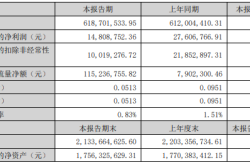
The psychological dissonance between increased marketing spending and declining product experience is evident. The Q1 2026 financial report shows that Kingsoft Office's sales expenses reached 273 million yuan, up about a quarter year-on-year. The company places high importance on marketing investments. However, it has failed to address common pain points for WPS users, such as C-drive storage consumption and system slowdowns.
This contrast leaves users feeling "neglected," leading to questions: Can basic functionalities be improved before heavy promotion?
The "nested doll" subscription model undermines user trust. From regular members to premium members and then to AI members, paid features are increasingly segmented, resulting in diminished user rights. To make WPS usable and efficient, users may need to continuously top up.
Excessive feature isolation smacks of coercion. While this may boost average user revenue in the short term, it plants a ticking time bomb of trust. If users find that paying does not deliver the desired experience, social media becomes an outlet for dissatisfaction.
Operational Costs Shifted by 'Technological Arrogance'
Many consumers, including the author, adhere to "freedom purism"—manufacturers should not "dictate" how products are used. If you disrespect my freedom, I'll switch to another brand.
Unfortunately, Kingsoft Office seems to misunderstand this principle.
Default installation options reveal WPS's "technological arrogance." Regarding temporary file storage and cloud backup space, WPS sets the default file paths to the system directory on the C-drive during installation.
This practice is not unique to Kingsoft Office; many IT companies do the same. The core issue is that WPS is often pre-installed on office computers in companies and government agencies, where hardware is subpar, and users rarely pay attention to settings. WPS's approach easily leads to computer slowdowns and crashes due to C-drive overload.
Prioritizing technological convenience over user needs is the spark that ignited this public sentiment.
In terms of after-sales service, Kingsoft Office has been criticized for "passive responses." Faced with negative feedback from corporate and government users, Kingsoft Office's customer service suggested solutions like "uninstall and reinstall" or "manually select and clean up."
This approach lacks professionalism. Many users are tech novices, and being asked to "do it themselves" exacerbates their anxiety. This lazy practice essentially shifts problem-solving costs to users.
Paid users' rights suffer from "blurry boundaries." Many users report that even after purchasing membership services, WPS frequently displays promotional ads for higher-tier memberships or other value-added services.
Users pay for peace, only to find merchants want more. This "paid yet disrespected" experience lacks respect and ignores the core image of office software: stability and trustworthiness.
Finally, in terms of user privacy, WPS's "default paths" may pose leakage risks. Due to these default paths, WPS centrally stores caches and temporary data of numerous user files in deep system directories, making it difficult to completely erase residual data after uninstallation.
For office software widely used in government and corporate settings, data residue implies leakage risks. As a tech company, Kingsoft Office cannot be unaware of this. The failure to address it likely stems from attitude issues.
Zou Tao's Strategic Resolve
If the previous issues can be attributed to product managers and frontline staff, the following discussion involves strategic judgments at the highest decision-making level, which is the core contradiction behind this public sentiment.
Specifically, if the business direction personally promoted by the company chairman significantly deviates from user needs, no matter how hard frontline employees work, it will be futile.
The phased disconnection between Zou Tao's "AI Strategy" and user perception is the most prominent issue at Kingsoft Office. Under Chairman Zou Tao's leadership, WPS AI has become a key development focus for the company.
Objectively, betting on AI is an inevitable trend in the office software industry, and Zou Tao's decision is correct in direction. However, corporate resources are limited. If R&D and operational resources are overly allocated to new AI businesses, the optimization of basic functional experiences will be marginalized, which may be one reason for the dissatisfaction among many WPS users.
This strategic misalignment reflects the "big company syndrome." Under Chairman Zou Tao's leadership, Kingsoft Office has transitioned from a startup to a publicly traded company, with its market capitalization once exceeding 100 billion yuan. However, rapid corporate expansion has brought typical big company ailments.
As management layers increase, senior management's sensitivity to ordinary users' pain points declines, with decisions relying more on financial reports than user feedback. Why have long-standing issues like C-drive consumption and ad pop-ups remained unresolved? Largely because these problems are not yet "severe" enough to show up in financial data.
More critically, the "domestic substitution" dividend has created path dependency. During Zou Tao's tenure, Kingsoft Office has fully enjoyed the dual dividends of domestic substitution policies and market sentiment. In government agencies, state-owned enterprises, educational institutions, and other institutional settings, WPS is virtually the only domestic software choice.
This has created a seller's market with low user bargaining power, reducing Kingsoft Office's motivation to improve its software. This prolonged tailwind has also led company executives to misjudge, believing that consumer sentiment can be infinitely exploited and users will not easily leave. However, the current public sentiment storm shows that this complacent assumption is merely wishful thinking.
Moreover, the "procedural" PR response to public sentiment lacks sincerity. As of the article's completion, WPS has not issued an official response. Only some WPS customer service channels have provided formulaic replies, such as "We have received the issue and will forward it to the product department for subsequent evaluation and experience optimization." These dry responses neither admit product shortcomings nor provide a clear rectification timeline, making problem-solving impossible. This also reflects Kingsoft Office's lack of emergency plans for crisis PR.
The Art of Balancing 'Stability' and 'Progress'
After sorting out the issues, a more worthy discussion is: Which direction should Kingsoft Office take next?
To resolve the controversy, Kingsoft Office needs to find a new balance between commercial growth and user experience, fundamentally correcting its current development bias.
The following four adjustments may serve as a starting point for rebuilding user trust.
Returning to 'Technology-Driven Development' is Fundamental
People respect "Kingsoft Software" because of the founder's technological feat—writing 122,000 lines of code alone on one computer over fourteen months. The geek spirit is the essence of Kingsoft Software, and the same applies to Kingsoft Office.
WPS needs to revert to its original philosophy, shifting its focus from monetization to efficiency improvement. Take WPS AI as an example; it should be a seamlessly integrated intelligent assistant, not an additional paid plugin.
Simplifying the Membership System and Stopping the Erosion of User Trust
Kingsoft Office needs greater determination to simplify its current membership system. The key to simplifying the membership structure lies in stopping deceptive promotions and clarifying the boundaries of each paid right.
The company can refer to existing mature models in the industry, such as a triple-charge architecture of free basic functions, subscription-based value-added services, and API ecosystem services. This architecture remains user-friendly for ordinary users while providing sufficient paid value for heavy users and corporate clients.
Confronting the Illusion of 'Domestic Substitution' and Correcting the Development Mindset
"Domestic substitution" is an opportunity for development but should not be an excuse to evade problems. Users are willing to pay for local software out of support and expectation. WPS should demonstrate genuine product strength instead of creating a self-deceptive sentimental filter.
It is essential to guard against the inertia of "complaining without changing." The biggest obstacle to corporate improvement is path dependency. WPS has a large market presence, and many users continue to use it despite complaints, leading the company to believe "it's not a big issue" and lose motivation for optimization.
However, markets are not static, and competition in the office software sector never ceases. Once a more sincere and efficient alternative emerges, long-accumulated dissatisfaction will erupt, and user attrition will occur much faster than expected.
Although the direction for Kingsoft Office's improvement is clear, as the saying goes, "easier said than done." Whether the final improvement plan can be implemented and its effectiveness will depend on the methods and determination of Company Chairman Zou Tao.
With over 30 years of development, can Kingsoft Office navigate through cycles? We await the outcome.
-
![]()
Proposed to Raise 955 Million Yuan through Private Placement! Huicheng Vacuum Boosts Localization of Ultra-Precision Optical Coating Equipment
-
![]()
Cash Flow Soars 13-Fold! What Major Strategic Move is Wuhan Five Square Optoelectronics Planning?
-
![]()
Leaked Design of vivo X500: Reverts to Circular Camera Module in Top-Left Corner, Pays Homage to Classic X90 Aesthetic
-
![]()
DeepSeek Shows Signs of Foraying into Code Agents, Launches WeChat Official Account Focused on Harness
-
![]()
Auto Companies Deny Claims That ‘Cooperation with Huawei Is Non-Essential’, as Huawei Transforms into a ‘Public Platform’
-
![]()
Starship to Independently 'Return to the Launch Tower': SpaceX's Ambitions Extend Beyond Rocket Building to Dominating Space Transportation
-
![]()
Starship Set to Independently 'Return to the Launch Tower': SpaceX is Revolutionizing Space Transportation, Not Just Building Rockets
-
![]()
Anthropic and OpenAI Face Off Against Deepseek