Robot Traffic Outpaces Human Traffic: With AI Needing No Rest or Cash, Who Will Purchase Ad Slots?
 06/23 2026
 622
622
Click on the blue text to follow our updates.
For years, the scenario of AI robots dominating humanity has been a staple in sci-fi cinema. With the AI industry's swift evolution, the steady climb in robot traffic is now an undeniable reality. Recently, it was reported that robot traffic has, for the first time, eclipsed human traffic, sparking the question: Has the AI era that will transform humanity finally arrived?

I. Robot Traffic Overtakes Humans for the First Time
According to a report by Kuaikeji, Cloudflare CEO Matthew Prince recently announced that internet robot request traffic has, for the first time, surpassed human traffic.
Current data indicates that robots now account for 57.5% of website HTTP requests, with humans contributing just 42.5%. This transition occurred sooner than Prince's initial forecast.
Prince had originally anticipated this milestone might be reached by the end of 2027, later revising his estimate to early 2027. However, the swift ascent of AI agents has seen traffic growth far outstrip predictions.
While some netizens advocate for distinguishing between crawlers, robots, and AI agents, Prince underscores that these represent similar behaviors, differing only in how users perceive their worth.
Beyond conceptual debates, the report's core data reveals a significant shift in traffic composition. Throughout 2025, automated traffic across the internet surged by 23.51% year-on-year, compared to a mere 3.10% increase in human activity traffic. This substantial growth gap underscores that machine traffic is now the primary driver of internet traffic expansion. The main catalyst for this change is the widespread adoption and deployment of generative large models.
This traffic realignment is not uniform across the internet but is concentrated in specific industries. The report explicitly states that in 2025, over 95% of AI-driven traffic is heavily focused on three major commercial sectors: retail and e-commerce, streaming media and media, and tourism and hospitality.

II. Is AI Truly Transforming Humanity?
Recently, a news story sparked widespread concern: AI robots' internet traffic has, for the first time globally, surpassed human traffic. Many people panicked upon seeing this headline, questioning whether AI is about to "take over" the internet and render humanity obsolete.
Firstly, this headline is more a source of statistical anxiety. Much of the public discussion has overly dramatized this traffic shift, interpreting it as a sign of AI's all-encompassing superiority over humans. This is, in fact, a one-sided misinterpretation of the industry's current landscape. From a practical usage perspective, human internet behavior is highly fragmented, intermittent, and time-sensitive, with clear limits on schedules, contexts, and needs. Ordinary individuals only go online during specific leisure, work, or study periods, browsing content, clicking pages, and visiting websites with limited frequency, leaving substantial idle periods.
In contrast, AI robots operate entirely differently. They require no rest, do not experience fatigue, and are not constrained by context, enabling 24/7 uninterrupted page visits, content scraping, and data interactions. Especially for numerous small and medium-sized websites, news sites, and tool platforms with limited user engagement, human traffic is naturally low, while AI's high-frequency, batch, and uninterrupted scraping behavior rapidly accumulates massive traffic. In essence, this traffic shift does not imply that humans are abandoning the internet but rather that AI's behavioral patterns naturally align with traffic statistics rules. This structural difference does not denote absolute superiority but carries significant industrial signaling value, which we must acknowledge.
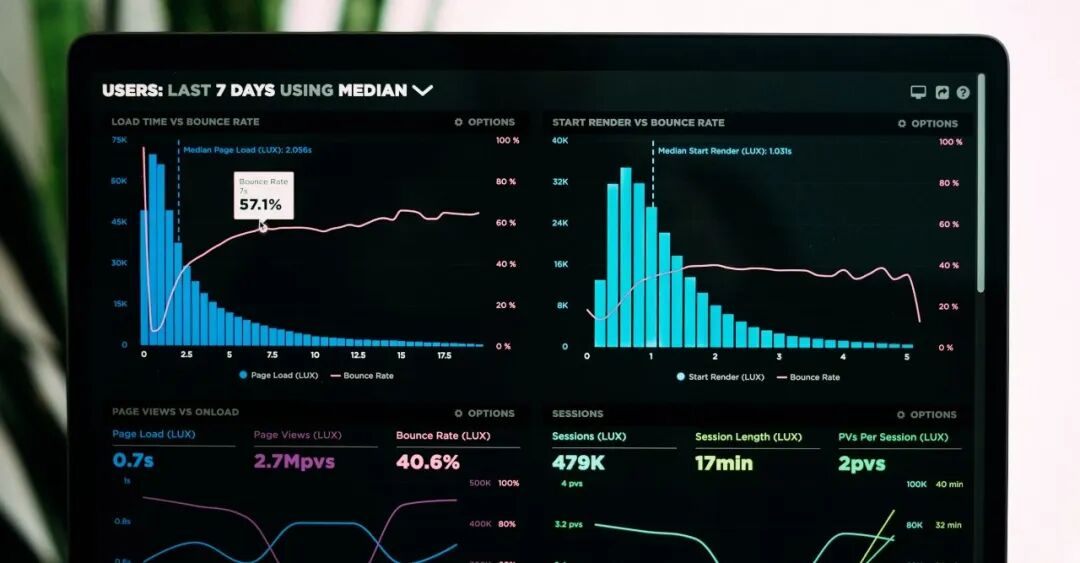
Secondly, the true significance of this traffic inflection point lies in signaling the end of traditional traffic economy models. What has been the underlying logic of internet commerce for the past two decades? It assumed a living human at the other end of the network. Because we defaulted to assuming that users behind screens were human, our commercial monetization strategies revolved around human attention. Although we often joked online that we never knew if a cat or a person was on the other side, most product designs relied on the assumption of real human readers. Consequently, metrics like click-through rates, dwell times, conversion rates, and cost-per-mille for ad placements—all highly regarded in the internet industry—were built on the premise that "humans act impulsively, make mistakes, and are visually attracted."
However, when the primary traffic source becomes AI, the situation fundamentally changes. AI does not experience visual fatigue, nor is it enticed by colorful pop-up ads, let alone make impulsive purchases after reading an emotional story. If your website visitors are all cold crawlers and intelligent agents, what value do your carefully designed ad placements hold? No matter how high your UV (Unique Visitors) or PV (Page Views), they cannot translate into real commercial purchasing power. This undeniably signals that the traditional profit model of "gathering popularity to sell ads for monetization" is facing foundational collapse, necessitating a complete reconstruction of the internet's commercial closed loop. We could even say, in stark terms, that in this era, "reconstruct or perish."

Thirdly, the internet's audience priority is quietly undergoing a transformation. For a long time, all internet product design intentions, content production logic, and website architecture were centered on adapting to human user experiences. Whether interfaces were simple, content understandable, operations convenient, and reading experiences comfortable were core optimization directions, all serving human users' needs. However, as AI traffic becomes the internet's primary source, the market's service focus is shifting quietly.
Now, more websites, platforms, and content producers prioritize AI's scraping, parsing, and training needs over human reading and usage experiences. Website code architectures, content layouts, keyword placements, and data presentation formats are all adjusting to facilitate AI crawler scraping, AI model learning, and AI algorithm recognition. Much content no longer pursues human reading quality but instead prioritizes data tidiness, logical standardization, and precise tagging, solely to adapt to AI's computational logic. Particularly, many media websites now prioritize maximizing GEO (presumably referring to some AI-friendly metric) over human readability, marking a fundamental shift.
The core industrial change brought by this shift is that human user experience is no longer the industry's top criterion. We are transforming from the internet's core service objects into secondary, passive audiences for AI-scraped data. Platforms now serve AI and algorithms first, with humans merely enjoying content and services incidentally. This priority reversal will continuously reshape the internet's content, product, and market ecosystems. Future internet competition will no longer focus on human users but on AI adaptability and data training value—a profound industry transformation overlooked by many.

IV. Connection-Oriented Work Requiring Human Traits Will Become Central
Zooming out from the internet to the broader macroeconomic and productivity transformation dimensions, this AI wave brings far more than just unemployment concerns. As AI advances rapidly, most ordinary, standardized, and codifiable productivity tasks will undoubtedly be ruthlessly replaced by AI. There's no point in avoiding this—it's the inevitable cost of industrial upgrading, affecting both physical and mental labor.
However, this does not mean humanity is entirely out of the game. On the contrary, as machines become more human-like, work requiring genuine human connection, emotional resonance, and complex value judgments will become extremely scarce. Future economic growth will not originate from cold, code-driven factories but from warm, human-intensive industries.
Examples include psychological healing, deeply customized high-end services, commercial negotiations requiring high trust, and even artistically flawed yet spiritually rich creations. Once productivity is fully liberated and leveled by AI, the only sources of premium pricing and commercial moats will be "humanity" itself. Machines solve the "how" questions, but the "why" and "for whom" remain anchored by the human soul.
So, returning to the initial question: Is AI traffic surpassing humans frightening? Not at all. Computational power surpassing physical strength is a natural progression of technological development. In this transformation, humanity need not compete with machines on speed and efficiency but should learn to coexist with AI, delegating repetitive tasks to machines while reserving creativity, emotion, and connection for ourselves. This is the survival wisdom we need in the AI era.
Therefore, facing this fundamental transformation in traffic patterns, we must recognize that we are evolving from the digital survival era to an intelligent survival era. Embracing AI and even harnessing it for our purposes has become an inevitable direction—but are we truly prepared for it?
END
-
![]()
Proposed to Raise 955 Million Yuan through Private Placement! Huicheng Vacuum Boosts Localization of Ultra-Precision Optical Coating Equipment
-
![]()
Cash Flow Soars 13-Fold! What Major Strategic Move is Wuhan Five Square Optoelectronics Planning?
-
![]()
Leaked Design of vivo X500: Reverts to Circular Camera Module in Top-Left Corner, Pays Homage to Classic X90 Aesthetic
-
![]()
DeepSeek Shows Signs of Foraying into Code Agents, Launches WeChat Official Account Focused on Harness
-
![]()
Auto Companies Deny Claims That ‘Cooperation with Huawei Is Non-Essential’, as Huawei Transforms into a ‘Public Platform’
-
![]()
Starship to Independently 'Return to the Launch Tower': SpaceX's Ambitions Extend Beyond Rocket Building to Dominating Space Transportation
-
![]()
Starship Set to Independently 'Return to the Launch Tower': SpaceX is Revolutionizing Space Transportation, Not Just Building Rockets
-
![]()
Anthropic and OpenAI Face Off Against Deepseek