From Frenzy to Rationality: Transformation and Reconstruction of the 2026 World Cup Marketing Battle
 06/25 2026
 502
502
Diversified Marketing 'Battle'
The 2026 USA-Canada-Mexico World Cup marks the first time in history that the tournament is jointly hosted by three countries, featuring an expanded 48-team format with 104 matches—the 'largest-ever' edition. However, the marketing battles off the pitch began even earlier and with more drama than the on-field rivalries. While the 'Chinese national team' remains absent from the competition, Chinese companies have engaged in a uniquely diversified marketing 'battle' on the global commercial stage.
Commercial Scale Reaches New Heights
Sponsorship Landscape Undergoes Major Reshuffle
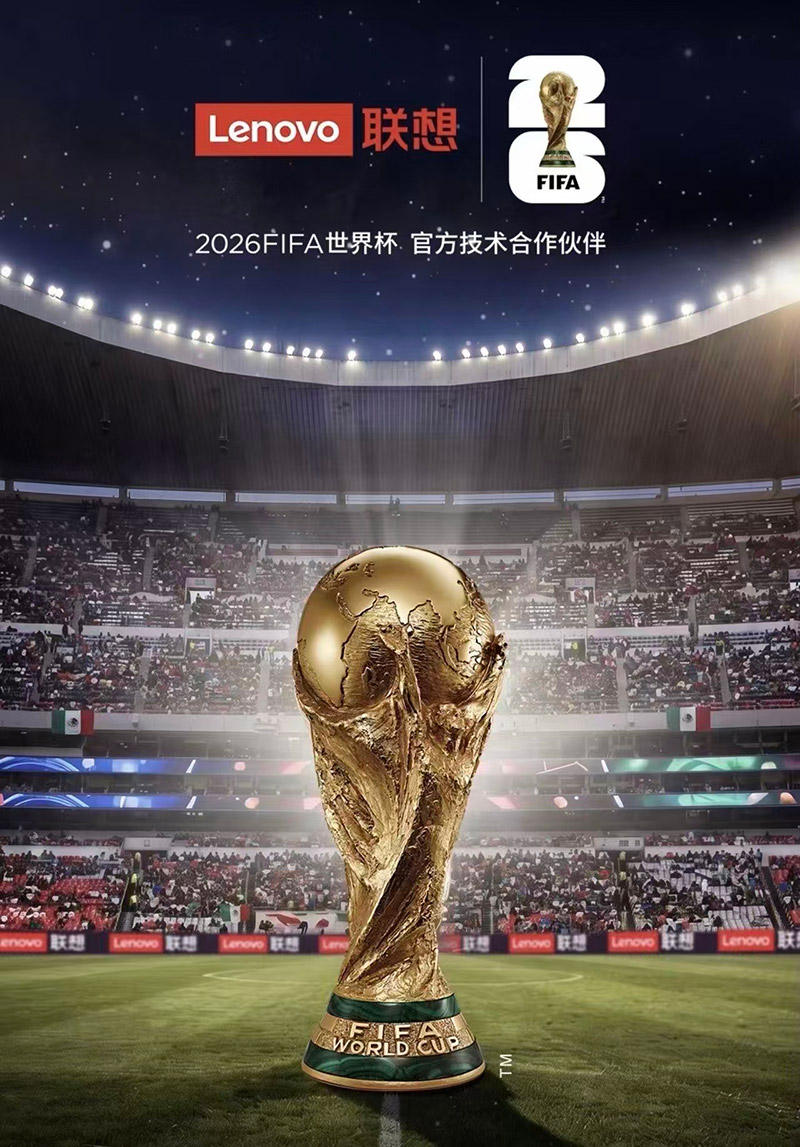
The commercial scale of this World Cup has reached unprecedented levels. According to FIFA projections, event revenue for 2026 is expected to reach approximately $8.9 billion, with the total revenue target for the 2023-2026 four-year commercial cycle set at $13 billion. Among this, brand sponsorship revenue is projected to surge to the $2.8-3 billion range, marking a substantial over-40% increase from the Qatar World Cup. Sponsorship and marketing contracts alone will generate $2.5-3 billion in revenue for FIFA, while media rights have also soared, with sports analysis firms estimating copyright income for this edition will exceed $3.9 billion.
Competition for sponsorship slots intensified early, with FIFA announcing in March 2026 that all global sponsorship positions had been sold out. However, the sponsor lineup underwent a dramatic reshuffle. FIFA's sponsorship hierarchy consists of four tiers: FIFA Partners, World Cup Premier Partners, World Cup Sponsors, and newly introduced Regional Supporters. Among the 16 global sponsors for this edition, the most notable changes occurred within the Chinese corporate contingent, which saw a 'major retreat' followed by 're-upgrading'.
Vivo withdrew from top-tier sponsorship, while Wanda had its rights suspended due to funding issues, ending the era of Chinese brands 'flocking' to official sponsorship slots. Ultimately, only three Chinese companies remained on the official list: Lenovo (Tier 1 Partner), Hisense, and Mengniu (Tier 2 Sponsors), with a combined investment of approximately $350 million—a nearly 70% decline from the $1.395 billion invested by six companies in 2022.
This rotation of top-tier sponsors essentially represents a substitution of 'technology going global' for 'capital going global': Wanda's approach previously focused on capital and asset entry into global markets, paying around $150 million annually in sponsorship fees to secure FIFA's top-tier resources. In contrast, Lenovo's strategy emphasizes the global integration of AI, computing power, and hardware infrastructure. From 'spending heavily for exposure' to 'trading technology for rights', the logic underlying Chinese companies' participation in the World Cup is undergoing a fundamental transformation.
Evolution of Sponsorship Logic
From 'Chasing Top-Tier Status' to 'Tiered Integration'
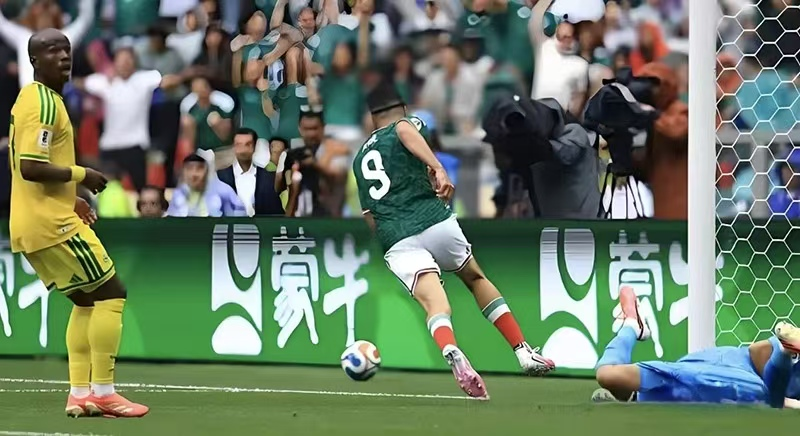
The contraction in sponsorship scale does not signify companies abandoning the World Cup but rather an upgrade in strategy. E-commerce experts summarize the full picture with data: 'During the 2026 USA-Canada-Mexico World Cup, Chinese companies' sponsorship scale declined significantly compared to the previous edition, reflecting a rational return.' An important objective factor contributing to this 'cooling' is the delayed domestic copyright agency by CCTV, with companies concerned that failure to secure broadcasting rights would undermine domestic communication effect (translation: 'transmission effectiveness') for sponsors. However, the flip side of reduced investment is a more refined and differentiated approach to participation. 'Now it's about tiering—tailoring sponsorships to corporate needs.' This tiered integration manifests across three levels:
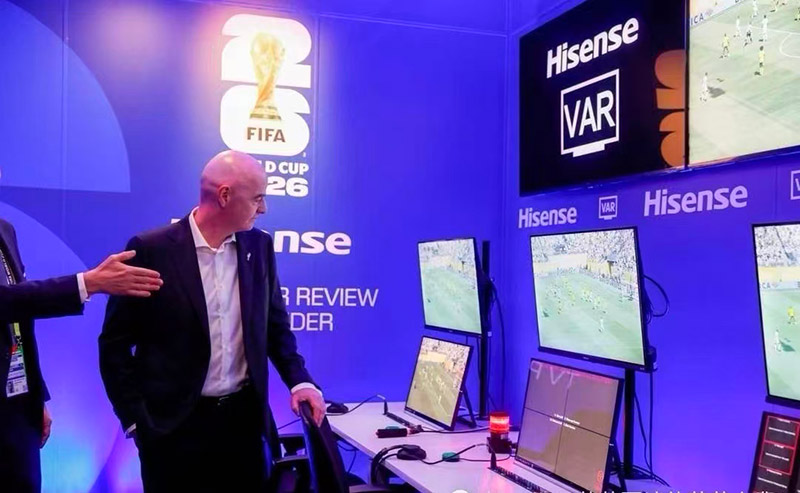
Level 1: Technological Integration. As the official technology partner, Lenovo deployed its Football AI Super Agent, 3D digital human visualization solutions, and referee-view AI video enhancement systems in actual competition. Hisense, as the VAR display technology partner, installed its self-developed RGB-Mini LED televisions in the video referee center—marking the first time Chinese display technology has deeply integrated into core adjudication processes of a top-tier event.
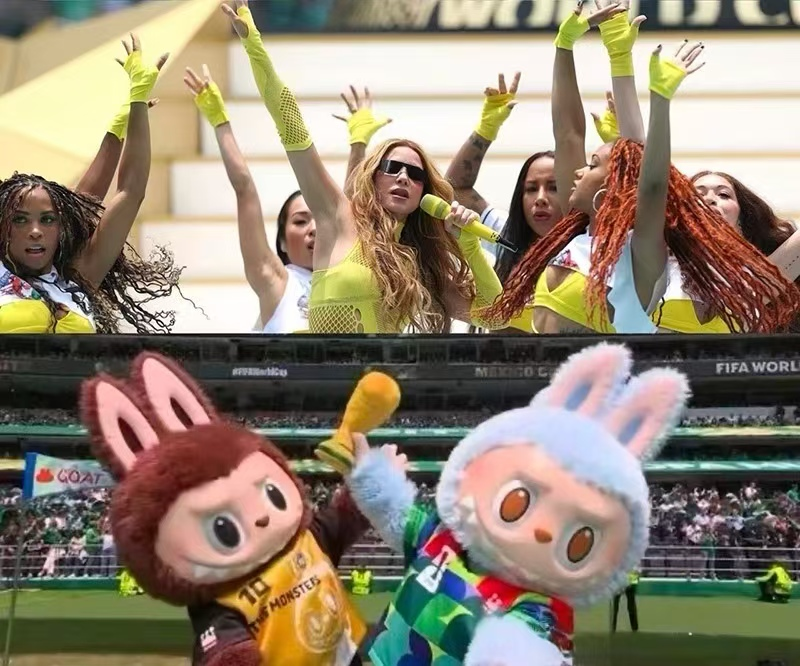
Level 2: Content and IP Co-Creation. LABUBU became a specially invited Chinese original IP for the World Cup opening ceremony and starred in the official single's music video. This marked the first time a Chinese domestic trendy IP appeared as an independent cultural symbol at a global top-tier sports event, with many foreign fans mistaking it for the official mascot.
Level 3: Cultural Expression and Consumption Chain Extension. Milkground became the global official cheese, Wuliangye secured the official Baijiu (Chinese white liquor) collaboration, and Cotti Coffee became the official licensed product retailer for the World Cup, launching authorized products such as official commemorative tickets and team merchandise in stores. Each company sponsored areas aligned with their respective domains, meeting distinct needs.
Off-Pitch 'Guerrilla Warfare'
Lightweight and Diversified Approaches
As official sponsorship thresholds rise and competition intensifies, many brands have chosen to bypass FIFA and 'curve their way in' to capture World Cup traffic.
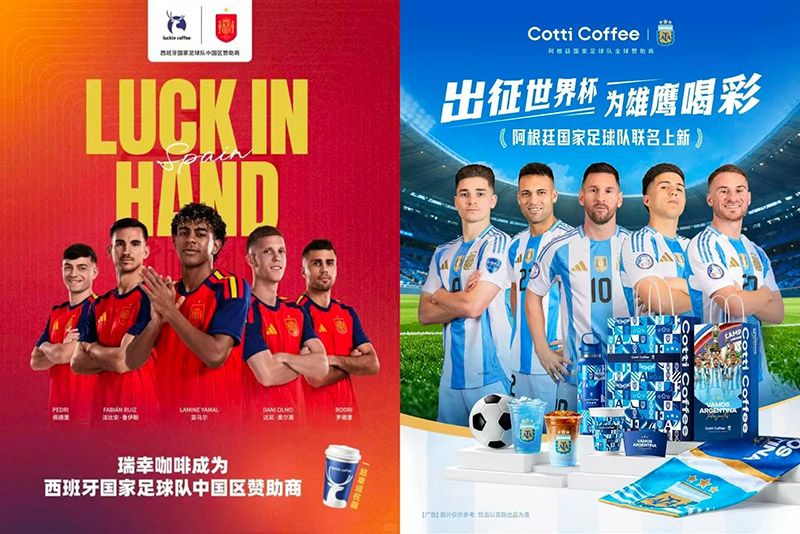
Team sponsorships emerged as a popular pathway, with the Argentine national team becoming the most sought-after target. By kickoff, brands such as Mizon, Du Xiaoman, Cotti Coffee, and Ant International had secured Chinese regional sponsorships or official partnerships. Luckin Coffee simultaneously sponsored both the Portuguese and Spanish national teams in China, updating thematic packaging across over 33,000 offline stores.
Celebrity endorsements also surged, with Dreame Technology signing Cristiano Ronaldo, Wang Laoji naming Erling Haaland as its global brand ambassador, and Dongpeng Beverage's 'Hydrate' line securing Kylian Mbappé. As of June 13, at least eight tea and coffee brands had launched multiple marketing campaigns.
Content platforms became new battlegrounds, with Migu leveraging event services to drive its telecommunications and content consumption ecosystem, Xiaohongshu attracting casual sports users through full-match livestreams, replays, and fan interaction communities, and Douyin promoting the concept of 'Being There Is Playing' around the World Cup, launching 'Understand Football Conference' across 35 match days.
This 'leveraging small forces to achieve big results' lightweight approach became mainstream due to brands' Ultimate pursuit (translation: 'relentless pursuit') of cost-effectiveness amid tightened marketing budgets—prioritizing depth of integration over quantity of presence.
Global Brands' 'Narrative Revolution'
If Chinese brands' evolution represents a shift 'from frenzy to rationality', global brands' marketing progression embodies a move 'from advertising to culture'.
Adidas launched 'Backyard Legends', starring Timothée Chalamet, Lionel Messi, David Beckham, Zinedine Zidane, and others, blending 1990s street aesthetics with AI special effects. Nike, under the theme 'Rip The Script', united football legends with cross-border celebrities, abandoning efforts to define everyone's viewing experience with a single blockbuster in favor of building an open football cultural ecosystem.
Lego featured Lionel Messi, Cristiano Ronaldo, Kylian Mbappé, and Vinícius Júnior assembling the FIFA World Cup Trophy together, garnering immense views within 24 hours of release solely through the players' Instagram accounts. Budweiser, FIFA's partner for 40 years, released 11 limited-edition collector cans and erected a 100-meter-plus giant beer can wall in Shanghai's Xujiahui district. Unilever, as the official personal care sponsor, mobilized 50,000 creators to conduct marketing across over 120 markets.
The common trait of these cases is a shift from one-way brand exposure to two-way emotional resonance—no longer attempting to 'tell' consumers who the brand is, but 'inviting' them to participate in the brand narrative.
Deep Integration into User Scenarios
Looking back at this World Cup marketing battle, several clear trends have emerged.
First, a return from 'quantity' to 'quality'. Chinese brands no longer pursue the 'face' of sponsor numbers but instead prioritize the 'substance' of technological integration and content co-creation. Lenovo's deep AI technology integration into event operations and Hisense's display technology Connect to the referee system (translation: 'integration into the referee system') signify Chinese companies' upgrade from 'advertisers' to 'technology co-builders'.
Second, diffusion from 'official' to 'diversified'. Official sponsorships are no longer the sole pathway, with team sponsorships, celebrity endorsements, licensed retail, and content platforms—ushering in an era of 'tiered monetization' of traffic.
Third, an upgrade from 'exposure' to 'resonance'. Whether through Adidas' street aesthetics, Nike's cultural ecosystem, or Mengniu and Hisense's collaborative interactions and LABUBU's IP breakthrough, the core proposition of brand marketing has shifted from 'letting more people see me' to 'letting more people participate in me'.
Shengma Finance believes World Cup marketing has never been a simple 'money-throwing game'. As traffic dividends peak and attention costs rise, only brands that truly understand the event's spirit and deeply integrate into user scenarios will prevail in this quadrennial commercial feast. While the Chinese national team is absent from the pitch, Chinese brands are using smarter approaches to write marketing narratives for this era.
END
-
![]()
Proposed to Raise 955 Million Yuan through Private Placement! Huicheng Vacuum Boosts Localization of Ultra-Precision Optical Coating Equipment
-
![]()
Cash Flow Soars 13-Fold! What Major Strategic Move is Wuhan Five Square Optoelectronics Planning?
-
![]()
Leaked Design of vivo X500: Reverts to Circular Camera Module in Top-Left Corner, Pays Homage to Classic X90 Aesthetic
-
![]()
DeepSeek Shows Signs of Foraying into Code Agents, Launches WeChat Official Account Focused on Harness
-
![]()
Auto Companies Deny Claims That ‘Cooperation with Huawei Is Non-Essential’, as Huawei Transforms into a ‘Public Platform’
-
![]()
Starship to Independently 'Return to the Launch Tower': SpaceX's Ambitions Extend Beyond Rocket Building to Dominating Space Transportation
-
![]()
Starship Set to Independently 'Return to the Launch Tower': SpaceX is Revolutionizing Space Transportation, Not Just Building Rockets
-
![]()
Anthropic and OpenAI Face Off Against Deepseek