After AI Short Dramas Hit Their Peak, Douyin Chooses a Different Path
 06/26 2026
 695
695
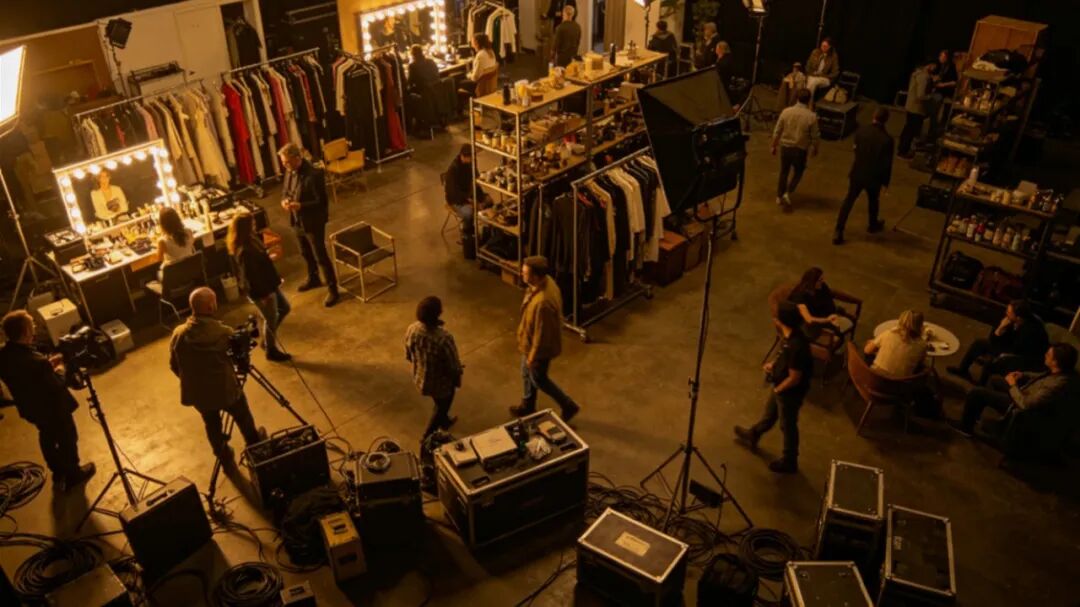
Throwing money, cutting costs, and seeking a way forward—AI short dramas enter the second half.
Not long ago, Douyin Group's Short Drama Copyright Center quietly launched a new incentive policy: For unreleased vertical-screen live-action short dramas, as long as they adopt a model combining live-action actors with AI production, they can participate in a rating-based guarantee system. S-tier works can receive up to 1 million yuan, A-tier 600,000 yuan, and B-tier 400,000 yuan, along with multi-platform traffic distribution and joint commercial promotion.
This news caused a bigger ripple in the short drama circle than many expected. Just half a year ago, the industry was still discussing whether "pure AI short dramas would completely replace live-action ones." Film production rates in Hengdian declined, actor salaries were halved, and the viewership of AI-simulated dramas surpassed last year's total in just six months... All signs pointed to the same conclusion: technology is disrupting the industry.
But Douyin's choice this time is intriguing. Instead of doubling down on pure AI generation, it placed its bets on a fusion route of "real people + AI." It sends a signal: the industry is cooling down from the frenzy of AI replacing everything, rethinking the relationship between technology and humans—deciding which parts should be left to machines and which must involve real people.
In this article, let's discuss this matter.
01
After the AI Short Drama Boom
Problems Surface
Let's look at some data to feel the explosive force of this wave of AI short dramas.
According to the China Network Audio-Visual Association, in the first quarter of 2026, the industry released approximately 128,000 micro-short dramas, with AI short dramas accounting for over 95%. The market size is expected to reach 24 billion yuan for the year, with the user base surpassing 280 million. In January 2026 alone, 14,634 AI animated dramas were released, averaging over 470 new titles per day. During the Spring Festival season, AI animated dramas accounted for nearly 30% of the 8.67 billion total views.
The cost reduction on the production side has been revolutionary. A hundred-episode short drama, traditionally shot with live actors, would start at several hundred thousand yuan, not to mention the time costs of actor schedules, location rentals, and post-production special effects. AI production has slashed this figure to tens of thousands, with extreme cases seeing costs of just a few thousand yuan and production times of a few days. With tools like Seedance and Ji Meng, scriptwriting, visual generation, dubbing, and editing can almost be done in one go, turning the "one-person crew" from a meme into reality.
But problems have followed, emerging earlier than many expected.
AI-generated content naturally tends to fit the optimal solutions in its training data, resulting in similar camera languages, character settings, and plot twists. Users watching ten dramas may find eight follow the same formula, leading to rapid aesthetic fatigue. DataEye's monitoring shows that the user retention curve for AI short dramas declines significantly faster than for live-action dramas, with many users swiping away after just a few seconds.
Next is the expressive bottleneck. While purely AI-generated characters can look realistic in static images, their movements give them away. Subtle expressions, eye movements, and emotional progression are things AI currently cannot replicate. Genres like ancient fantasy, where character dynamics are less demanding, fare better, but modern urban romance or realistic themes immediately feel off. CCTV Finance has also reported that many production companies have discovered AI can only produce standardized templates, lacking the layered performances of real actors.
Moreover, many assume AI is just about saving money, but those who have actually done it know it's not that simple. Image generation is random, requiring repeated "card draws" to screen for usable material, with computational costs skyrocketing. A 25-minute short drama can cost anywhere from a few thousand to tens of thousands in model computational costs alone. Add in consistency corrections, lip-sync alignment, and continuity fixes, and the cost of pure AI high-quality dramas isn't as low as imagined.
The National Radio and Television Administration has also explicitly required that, starting April 2026, unregistered AI animated drama works be taken down, with existing works required to undergo re-examination within a deadline. AI-generated content must be clearly labeled, and classic themes are not allowed to be radically adapted or vulgarized. This means the era of wild growth is over, compliance costs are rising, and low-quality, high-volume tactics won't work anymore.
So, you see, at this juncture, the ceiling for the pure AI route is becoming visible. Technology solves production efficiency issues but not content quality; it lowers entry barriers but also drags down the overall standard. With thousands of new dramas flooding the market daily, user attention has become the scarcest resource.
This makes Douyin's push for "real people + AI" logical.
02
Why 'Real People + AI' Is the Answer Now
"Live-action actors combined with AI production" doesn't sound revolutionary—more like a pragmatic compromise. But precisely this compromise may be the most reasonable path at this stage.
The logic is simple: separate what humans and machines do best.
What do real people handle? Performance, emotion, eye movements, subtle expressions, and close-up shots requiring warmth and empathy. These are AI's current weaknesses and the core of user immersion in a drama.
What does AI handle? Large-scale exterior shots, special effects, background replacements, crowd scenes, and empty shots—production elements that are costly and time-consuming but low in technical complexity. These are traditional filming's biggest budget burners and where AI can best reduce costs.
Teams in the industry have already crunched the numbers: using real actors for emotional close-ups and AI for large scenes and exteriors can save nearly 60% on special effects and location costs. Production cycles can also be significantly shortened, as many scenes don't require on-site shooting—green screen filming with AI background synthesis suffices.
Looking back a few months, Douyin's short drama moves have been dense (intense).
In April, it launched a call for live-action short dramas based on film and TV IPs, offering up to 50,000 yuan per script and up to 3 million yuan in guarantees for finished works. In May, it announced a 2026 budget of over 1.5 billion yuan in guarantees for live-action short dramas, with an additional 1.5 million yuan in incentives for top-tier dramas, along with a 200 million yuan special fund to support innovative themes. In early June, it upgraded its innovative theme awards, adding a B-tier rating to cover small and medium-sized teams.
With such a large funding pool, it's impossible to bet everything on pure AI content. The hybrid model of "real people + AI" offers both the cost-efficiency and productivity gains of technology and the user base retention of live-action content, making it a far steadier choice.
It's not just Douyin—the entire industry is moving in this direction.
Tencent Video proposed a full-stack reconstruction approach for AI short dramas this year, but its focus is also not on pure AI replacement but on "using technology as a lever to reduce costs and broaden content supply."
Tencent's logic is that AI drives production efficiency, allowing more creative teams to experiment at low cost, but the core creativity and performances of content still rely on humans. Tencent's Huolong Animated Dramas follow a high-quality route while collaborating with China Literature on animated micro-short drama licenses—essentially a hybrid approach of IP + technology.
Kuaishou hasn't launched a separate animated drama app but has earmarked 800 million yuan to explore diversified profit-sharing, 200 million yuan in cash to incubate high-quality content, and a 1 billion-level traffic pool to support good content. Its collaboration with Kling AI began last year, focusing on empowering creators with tools rather than the platform mass-producing AI dramas itself.
iQIYI is even more direct, increasing investment in high-quality live-action adaptations of IPs while fully opening up collaborations for AI-simulated dramas, launching AI-innovative micro-short dramas like *Mojia Mechanism*. It's a two-pronged approach: maintaining quality while exploring new paths.
Even overseas markets follow the same trend. DataEye shows the overseas AI-generated short drama market was worth about $100 million in 2025 and is expected to hit $650 million in 2026. In Q1, AI dramas' share of the top 100 overseas short drama materials surged from 2% to 16%. But the fastest growth isn't in pure AI dramas—it's in hybrid forms like AI-simulated humans and AI secondary processing of live-action footage. Wondershare also mentioned at the Shanghai TV Festival that AI short dramas are moving from efficiency competition to content strength and refinement, with market competition shifting from speed to quality.
Why are everyone as if by prior agreement (unanimously) choosing the hybrid route? Because the industry is slowly realizing a truth: AI is a production tool, not the content itself.
Audiences watch dramas for stories, characters, and emotional resonance—things that ultimately require human creation. Technology can reduce production costs and boost output, but if the content itself falls flat, higher output just means more garbage.
This is where the value of "real people + AI" lies: it doesn't seek to replace humans with technology but to free creators from tedious, repetitive labor, allowing them to focus more on storytelling and performance. This isn't a step backward but a more mature view of technology.
03
The Underlying Logic of the Content Industry Is Being Redefined
At this point, we've moved beyond short dramas alone. The viability of the "real people + AI" model means the production relations of the entire content industry are changing.
The first change is in how production barriers are defined.
Previously, the barrier to making short dramas was capital, connections, and production teams. You needed money to hire actors, rent locations, and handle post-production. After AI emerged, many said barriers disappeared—anyone could be a director. But the reality is different; barriers have just shifted. In the pure AI era, the barrier became prompt engineering, model selection, material screening, and post-production retouching.
In the "real people + AI" phase, barriers evolve again. You need to understand the basics of live-action filming—knowing which shots must be real and which can be AI-generated. You need to grasp AI tools' limitations—knowing what effects are achievable and what isn't. You also need project management skills to efficiently coordinate live-action and AI production lines.
This is actually a higher-dimensional barrier. It doesn't block everyone but filters for truly content- and technology-literate composite teams. Pure tech teams can't create good content, and pure traditional teams can't leverage technology well—only those who understand both can reap the rewards.
The second change is the accelerating industrialization of content production.
Traditional short drama production resembles cottage industries—one project, one team, disbanding after completion, with no experience accumulation. AI tools have standardized and made many processes reusable. Scripts can be AI-assisted in generation and evaluation, storyboards automatically generated, scenes and props sourced from digital asset libraries, and post-production special effects follow unified workflows.
The "real people + AI" model retains handcrafted core elements in an industrialized production line. Basic parts use assembly lines for efficiency, while key parts rely on humans for quality. This mirrors automotive industry development: starting with full handcrafting, then full automation, and finally realizing high-end products still need human-machine collaboration—machines handle precision and efficiency, workers handle critical processes and quality control.
The third change is in platforms' evolving roles.
Previously, platforms were mainly distributors—you made content, they distributed it, and profits were shared. Now, platforms are increasingly involved in production. Douyin's incentive policies go beyond funding to include rating standards, promotional support, and IP library access. Tencent and Kuaishou follow similar logic, providing tools, funds, and standards to guide creators toward platform goals.
This reflects platforms' anxiety over content quality. With AI enabling infinite content production capacity (output), platforms fear not a lack of content but an oversupply of low-quality content. User time is limited—if low-quality content dominates traffic, high-quality content gets less exposure, ultimately harming platform retention and commercial value.
So what platforms are doing is essentially "upgrading" the industry. Using incentives to guide higher-quality hybrid content, using tech tools to reduce production costs for premium content, and using rating and profit-sharing systems to widen the revenue gap between good and bad content. The goal is to shift the industry from quantity competition to quality competition.
In the end, we circle back to the old question: Will AI replace creators?
The short drama industry's ups and downs over the past year offer partial answers. AI can replace standardized, repetitive labor—tasks requiring no creativity or emotional investment. But what truly determines a work's quality—the story's core, character arcs, emotional resonance, and detail warmth—are things AI can't deliver now or in the short term.
The "real people + AI" model thrives because it acknowledges this reality. Technology expands boundaries; humans guard the soul. The two aren't substitutes but collaborators.
Of course, this path won't be smooth. Seamlessly integrating live-action and AI production, calculating costs, defining copyrights, and assigning blame for AI-generated issues are all unresolved questions. Platform incentive policies are just a start—their effectiveness depends on market and user feedback.
But the direction is clear. Every technological revolution in the content industry ultimately aims to make good stories easier to tell and more people able to tell their own. AI does this; "real people + AI" does too. Technology is always a means; stories are the end.
— END —
-
![]()
Proposed to Raise 955 Million Yuan through Private Placement! Huicheng Vacuum Boosts Localization of Ultra-Precision Optical Coating Equipment
-
![]()
Cash Flow Soars 13-Fold! What Major Strategic Move is Wuhan Five Square Optoelectronics Planning?
-
![]()
Leaked Design of vivo X500: Reverts to Circular Camera Module in Top-Left Corner, Pays Homage to Classic X90 Aesthetic
-
![]()
DeepSeek Shows Signs of Foraying into Code Agents, Launches WeChat Official Account Focused on Harness
-
![]()
Auto Companies Deny Claims That ‘Cooperation with Huawei Is Non-Essential’, as Huawei Transforms into a ‘Public Platform’
-
![]()
Starship to Independently 'Return to the Launch Tower': SpaceX's Ambitions Extend Beyond Rocket Building to Dominating Space Transportation
-
![]()
Starship Set to Independently 'Return to the Launch Tower': SpaceX is Revolutionizing Space Transportation, Not Just Building Rockets
-
![]()
Anthropic and OpenAI Face Off Against Deepseek