E-commerce Division and Centralized Staffing: What’s Next for Kuaishou?
 07/28 2026
 369
369
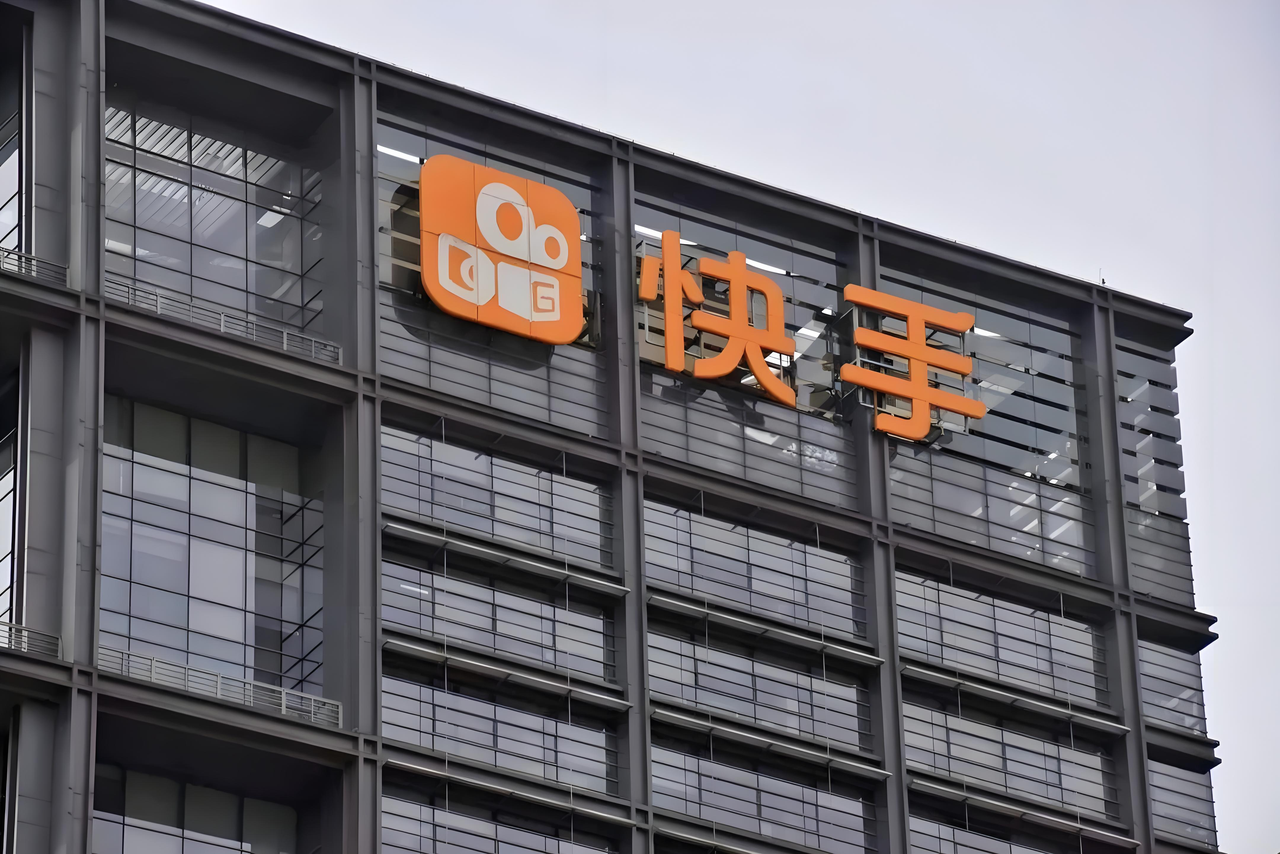
In July, Kuaishou appears to be stepping on both the accelerator and the brake at the same time.
On July 2, Kuaishou’s Kling AI announced the completion of its first round of financing, raising nearly $3 billion and achieving a post-investment valuation of approximately $18 billion. Tencent was among the co-lead investors. Just four days later, in the early hours of July 6, Kuaishou disclosed that Tencent had sold 273 million Class B shares through off-exchange block trades, reducing its stake from 15.68% to 9.37% and officially stepping down as a major shareholder.
The buyer for both transactions was the same entity, with a 96-hour gap between the deals. First, they increased their stake in Kuaishou’s most promising new venture, then significantly reduced their position in the legacy business—a sequence that anyone familiar with primary market transactions recognizes as no mere coincidence.
Before the dust settled on these capital moves, two significant business developments followed.
On July 8, Kuaishou’s e-commerce division underwent a structural overhaul, splitting into three dedicated teams: brands and commercialization, influencers, and unbranded merchants. The unbranded segment was further categorized into three tiers based on average order value: premium consumption, daily life consumption, and everyday consumption. Three days later, on July 11, Wang Jianwei, head of Kuaishou’s e-commerce and commercialization, took on additional leadership of the local services division, reporting directly to CEO Cheng Yixiao, while former head Liu Xiao stepped down from all roles.
Now, commissions, advertising fees, and transaction fees—Kuaishou’s three most profitable revenue streams—are consolidated under one leader.
Just two months prior, in February 2026, Kong Hui, who had recently taken over e-commerce operations, was reassigned back to the commercialization division after only three months in the role. Her tenure was so brief that she barely had time to produce a complete 618 sales report.
When viewed together, these events reveal that Kuaishou is pursuing two parallel strategies: tightening control over its established businesses while spinning off its new ventures. Both strategies rest on a shared assumption—that organic growth alone cannot sustain the core business.

Rewind to 2023, when Wang Jianwei took over Kuaishou’s e-commerce operations from CEO Cheng Yixiao. At the time, Cheng stated that the move aimed to improve business synergy and free up his attention for new company-wide opportunities.
Back then, e-commerce growth still carried residual momentum from its 78% peak in 2021. Since then, it has steadily declined: 31% in 2023, 17% in 2024, and 15% in 2025. For 2026, Nomura Securities forecasts growth of around 7%. Typically, when growth slows to a critical point, companies stop disclosing it. Starting in Q1 2026, Kuaishou no longer separately reports e-commerce GMV, bundling it under “other services” in its financial reports.
The user side isn’t faring much better. In 2025, quarterly DAUs were 408 million, 409 million, 416 million, and 408 million, respectively, with a quarterly decline of about 8.7 million in Q4. MAU growth slowed to 0.7%, the lowest since the company’s listing. In Q1 of this year, DAUs rebounded to 413 million, but this appears to be more of a boost from Lunar New Year content than a true trend reversal. Kuaishou’s domestic penetration rate has nearly reached its ceiling—a challenge all traffic-based businesses face at the inventory stage, and Kuaishou is no exception.
Before Wang Jianwei took over e-commerce, his earlier career is noteworthy. He joined Kuaishou in 2019, drove main-site DAU to a peak of 290 million with the Spring Festival Gala project the following year, and joined the executive management committee. By the end of 2022, he was tasked with reviving commercialization, and a year later, he was sent to rescue e-commerce. His career path shares a common trait: each time, he was entrusted with a slowing but not yet stagnant business.
This pattern of assignments suggests an alternative explanation beyond “most trusted operator”: management tends to assign difficult tasks to individuals who can handle pressure.
Kong Hui’s brief three-month tenure was the latest validation of this logic. A leadership change on the eve of 618 was a blunt assessment; her reassignment back to her original role, rather than outright dismissal, indicates that the appointment was test-driven, with management offering not just trust but also a trial window.
The July 8 structural adjustment was Kuaishou’s latest effort to dissect its e-commerce business.
Kuaishou’s e-commerce inventory is dominated by apparel (over 25%), jewelry, beauty, and wellness (about 22%), with the rest consisting of scattered daily necessities and food—essentially a mix of non-standardized products, low-decision-threshold items, emotionally driven purchases, and direct-from-manufacturer supplies.
A user might buy both a few-dollar pack of tissues and a few-thousand-dollar piece of gold in the same livestream, but the decision-making processes behind these purchases are entirely different. After years of mixed operations, this split addresses the most immediate symptom.

Source: Internet
Brand and commercialization operations went to Kang Le, one of the few executives at Kuaishou who truly understands the complexities of brand business; influencer operations were assigned to Song Zhen, modeled after Douyin’s creator ecosystem; unbranded products were divided into three tiers by average order value, similar to Douyin’s 2023 brand-unbranded grouping, but with a finer split for unbranded goods.
On the same day, Kuaishou’s e-commerce division issued another announcement, cracking down on “scripted drama drainage (traffic generation) + PK livestream sales” without a grace period for rectification. The structural adjustment and content governance, launched on the same day, target the same issue—repurchase rates. Kuaishou repeatedly emphasizes year-over-year improvements in repurchase frequency in its financial reports, but if the bulk of repurchases are driven by low-priced necessities among unbranded goods, no matter how high the frequency, average order value won’t rise. The ceiling was always there; it was just obscured by the narrative of “improved repurchases” in past years.
However, structural adjustments mostly address execution-level efficiency. In brand ecosystems, Douyin faces the challenge of aligning its services with brands’ existing layout needs and organic growth aspirations. Kuaishou, however, must proactively explain its platform value to drive brands from awareness to entry.
The stronger Kuaishou’s personalized trust and the deeper the emotional connection between influencers and users, the harder it becomes for brands to establish a presence. This is a platform-specific paradox that can’t be resolved by simply changing leaders or reporting lines. Brand advertising revenue once plummeted by 50%—a number that speaks more directly to the problem than any organizational chart.
Of course, this strategy isn’t without results. During this year’s 618, Kuaishou’s brand merchant GMV surged by over 120% during the peak promotion period, with nearly 300 products exceeding 10 million yuan in a single session. Pan-shelf GMV rose 65% year-over-year, search-driven transactions grew 110%, and plus-size women’s apparel GMV in the fashion category jumped 208%. These numbers show that Kuaishou’s e-commerce is still moving toward branding, shelving, and search-driven models within the inventory game—and not slowly, either.
Yet these achievements came against a backdrop where overall e-commerce growth was just 0.9%, total GMV growth was 4%, and this year’s 618 was dubbed “the lowest-key in 16 years.” Local highlights can’t offset broader market slowdowns—that’s Kuaishou’s reality today.
More troubling is that Kuaishou is also eroding its own commercial credibility. Early this year, a Kuaishou subsidiary was fined 26.6929 million yuan by the State Administration for Market Regulation for seven violations, including failure to disclose information, illegal fees, and neglect of consumer safety obligations—a record fine in the livestream e-commerce sector. Notably, the platform operator itself, not a top influencer or MCN, was directly penalized. Later, it was fined another 119 million yuan for content issues.
Every drop in regulatory trust increases brand caution in entering the platform—a cost not visible in organizational charts.

If the e-commerce split addresses “who sells and what,” the July 11 personnel adjustment tackles another question: who oversees the big picture?
After the local services division was placed under Wang Jianwei, the three major monetization engines—commissions, advertising, and transaction fees—were concentrated under one person for the first time. Kuaishou’s content traffic, ad placement, e-commerce transactions, and local services effectively merged.
In contrast, the list of departures grows: in September 2025, Xiao Gu, the former head of local services, became a business advisor; Kong Hui, who took over in February 2026, was reassigned after three months; and in July 2026, Liu Xiao stepped down from all roles. Sources close to Kuaishou suggest she may join the Kling system—if true, this personnel move may not mean Liu Xiao was “removed,” but rather that Kuaishou is shifting management talent better suited for new business rhythms away from old stories and toward new ones.
Source: Internet
Centralizing power under one person isn’t new at Kuaishou, and it’s usually accompanied by official explanations about “improved efficiency.”
After the 2022 organizational overhaul, the internal rationale was that the coupling potential between traffic ecosystems and commercialization was enormous, requiring someone deeply involved in the commercial ecosystem committee to bridge the gap. This explanation likely hasn’t changed fundamentally. But centralization is never an end in itself; it merely compresses decision-making pressure, previously distributed among several individuals, into one person’s window.
Shorter decision chains theoretically speed up responses, but whether decision quality improves is another question—the two aren’t necessarily correlated. Especially after Kuaishou repeatedly streamlined management layers and changed leaders over the past three years, the credibility of “streamlining” has diminished. Some argue that this is less about delegation and more about consolidating the long-accumulated “triangular debt” among advertising, livestreaming, and e-commerce under one person.
While this view may not be entirely accurate, it at least explains why the chosen successor is the same person who has repeatedly stepped in when “business slows but hasn’t stalled” over the past three years.
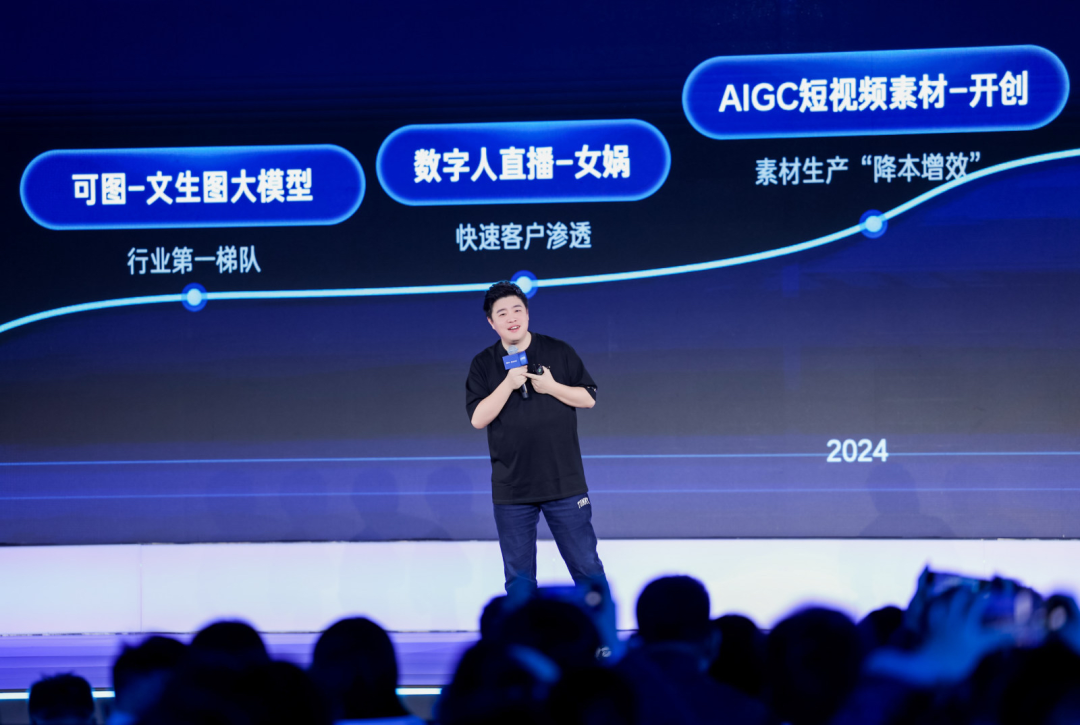
Zooming out, Cheng Yixiao is playing two games simultaneously. One involves merging e-commerce, commercialization, and local services under Wang Jianwei to stabilize the cash-cow core business, which no longer grows rapidly. The other involves aggressively pushing Kling AI outside Kuaishou’s main entity—a move that started earlier and with more determination.
In April 2025, Kling was elevated to a first-tier division less than a year after launch, directly overseen by Cheng Yixiao. By July 2026, it secured nearly $3 billion in financing at a $18 billion valuation, with Tencent, Alibaba, and Baidu all participating. After the funding round, Kuaishou’s stake in Kling dropped to about 68%, and the company explicitly stated plans for Kling to go public independently within five years. At $18 billion (over 140 billion HKD at current exchange rates), Kling’s valuation nears or even exceeds Kuaishou’s Hong Kong-listed market cap.
A subsidiary’s valuation catching up to its parent’s total market cap is rare in the internet sector. The last notable case was Ant Group’s valuation briefly surpassing Alibaba’s.
Tencent’s divestment timing is also noteworthy. Its previous exits from Meituan and JD followed the same pattern: waiting for the investee to secure independent financing and reach a satisfactory valuation before selling. After this divestment, Tencent retains a 9.37% stake, not selling outright. The market interprets this as Tencent not yet finding the valuation “worth it.”
But by first investing in Kling to lock in exposure to the new AI narrative, then offloading its Kuaishou stake, Tencent has made its stance clear: it’s no longer willing to bet on Kuaishou’s “old railway economy (Bro economy)” story but is willing to put real money behind Kling’s AI narrative. An investor willing to fund a company’s future but not hold its present is, in itself, a direct valuation opinion.
Kuaishou’s financial reports reflect this split. In Q1 this year, total revenue was 33.7 billion yuan, with Kling AI contributing over 650 million yuan, up over 300% year-over-year, nearing a $500 million annualized revenue run rate—a fourfold increase in a year. In the same report, adjusted net profit declined year-over-year, and livestreaming revenue fell 13.5%, the only negative growth among the three segments.
On one side is a new business posting triple-digit growth; on the other, an old business requiring content governance and organizational reshuffling to stop bleeding. These two narratives coexist in the same financial report, each unable to persuade the other. Capital expenditures for 2026 are expected to rise to 26 billion yuan, with most going to Kling’s computing power and R&D, while e-commerce growth is projected at just around 7%. Burning 26 billion yuan against single-digit e-commerce revenue growth—the numbers speak for themselves.
What Wang Jianwei has inherited is not so much direct control over a business empire as a financial obligation awaiting someone's endorsement. Last year, Douyin's e-commerce Gross Merchandise Volume (GMV) soared to approximately 4.4 trillion yuan, whereas Kuaishou's reached only 1.6 trillion yuan, less than one-third of Douyin's figure. According to market reports, WeChat Video Account e-commerce is experiencing growth exceeding 70%. For the time being, Meituan's prowess in fulfillment and supply chain management within local services remains unattainable for Kuaishou.
Facing encroachment from all fronts and with group resources increasingly favoring AI initiatives, Wang Jianwei is tasked with safeguarding a position that no longer witnesses significant growth but still necessitates a steady generation of cash flow.

Kuaishou is not the pioneer in discreetly omitting core financial metrics from its reports. Meituan previously obscured segment disclosures for its in-store services, and Pinduoduo downplayed disclosures of gross margins for single business lines during its peak subsidy phase of 10 billion yuan. Such practices adhere to an unspoken industry norm: when specific figures of a business vanish from financial reports, it typically signals not a loss of importance but rather such critical significance that public disclosure would directly influence the market's valuation of the entire company.
This underscores why the divergence between Kling and e-commerce warrants a broader contextual examination. Over the past two years, nearly every Chinese internet company with well-established cash-cow businesses venturing into AI has grappled with the same dilemma: whether to permit new ventures to operate autonomously, secure independent funding, and craft separate narratives.
Aliyun once pursued an independent listing but subsequently retracted. ByteDance's large model business continues to be nurtured internally, with no publicized plans for an independent listing. Kuaishou, however, has opted for the most radical approach—spinning off Kling, introducing external capital, and explicitly outlining plans for an independent listing within five years.
Behind these three distinct choices lies a common divergence in judgment: Should the potential of new ventures remain confined within the parent company to bolster the valuation of existing businesses, or should they be severed, no longer burdened with endorsing the growth apprehensions of the old guard? Kuaishou has embraced the latter, which in itself constitutes a verdict on its e-commerce core business. Rather than permitting a high-growth narrative to be hampered by the sluggish expansion of existing businesses, it opts to let it soar independently.
Whether Kuaishou's e-commerce can transcend the paradox where elevated repurchase rates culminate in lower growth ceilings ultimately hinges on its willingness to undertake an even more radical transformation of its product mix structure than its organizational restructuring—truly segregating the impulsive buying logic of non-standardized product livestreams from the trust accumulation essential for brand premium, instead of perpetually allowing them to dilute each other within the same traffic pool and recommendation algorithm.
No one has yet succeeded in this endeavor, not even Douyin.
*The featured image and illustrations in the text are sourced from the internet.
-
![]()
There are risks in going global, but we must rise to the challenge when facing 'competitors'!
-
![]()
Is Selling Cars in China Primarily a One-Time Transaction?
-
![]()
Who Should Be Responsible for the Long-Term Reliability of AION S Battery Failures: Automakers or Battery Manufacturers?
-
![]()
Millennium Civilization: Ultra-Fast Charging Spanning Thousands of Miles | BYD's Marco Polo New Silk Road Expedition Successfully Concludes in Shenzhen, Ushering in a New Era of Chinese-Western Civili
-
![]()
Apple Launches Used Phone Leasing, but Zhuanzhuan and Others May Have Different Views
-
![]()
Semiconductor Struggles: Why is the Market Turning to Apple?
-
![]()
E-commerce Division and Centralized Staffing: What’s Next for Kuaishou?
-
On the Eve of Its IPO, Avatr Finds Itself Embroiled in a 'Farce of Controversy and Belittlement'