There are risks in going global, but we must rise to the challenge when facing 'competitors'!
 07/28 2026
 566
566
Introduction
Introduction
The era of Chinese automobiles going global is one of wild growth, but 'window dividends' do not guarantee success.
'Going global now is like picking up money. If new energy vehicle makers had engines, they would have already dominated overseas markets.' Not long ago, I spoke with a frontline staff member from the international department of an automaker who had just returned from Europe. He defined the current stage as the era of wild growth for Chinese automobiles going global.
In his words, selling cars in Europe is like filling sacks with money. This aligns with our previous assessment of overseas markets as 'golden opportunities.' However, it is now clear that making money is not as easy as before. When pressed further, he revealed the difficulties he is facing: localization.
We have often heard the slogan 'In China, For China,' but previously, it was international suppliers and joint-venture automakers profiting in the Chinese market who used this phrase. Now, as Chinese automakers venture abroad more deeply, they are using this slogan to knock on the doors of global markets.
Can going global be profitable? Of course, it can.
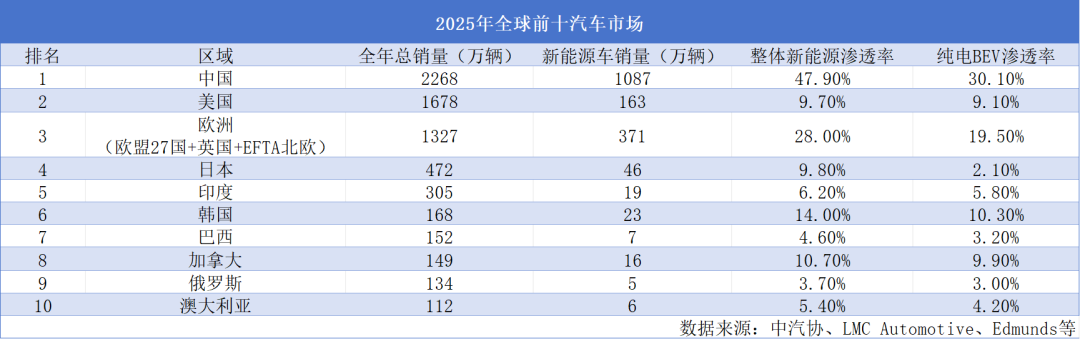
First, there is the penetration rate dividend. In emerging markets such as Southeast Asia, the Middle East, and Latin America, the penetration rate of new energy vehicles is still less than 10%, with gasoline vehicles remaining the dominant force, offering significant potential for substitution. Even in mature automotive markets like Europe and the United States, the penetration rate of new energy vehicles is not as high as in China, leaving room for growth.
Second, there is the policy dividend. Many countries are promoting carbon neutrality and updating their local automotive industries by introducing policies such as subsidies for new energy vehicle purchases and restrictions on gasoline vehicles, driving the acceleration of new energy substitution from the policy end. Europe, North America, and even Japan are taking continuous actions to advance their local new energy transitions.
Third, there is the product generation gap dividend, which is also a strength of Chinese vehicles. Local automakers overseas are slow in transitioning to new energy and have weak technological accumulation, while Chinese automakers have mature three-electric systems, intelligent cockpits, and advanced driver-assistance technologies, coupled with cost-effectiveness, giving Chinese vehicles a crushing advantage at the product level.
Are you excited now, eager to go global and sell cars to make money? Hold on, because there is a major 'pit' here—the overall incremental dividends of the industry do not equate to the profits that automakers actually earn.
01 Era of Wild Growth: Opportunities Abound, Traps Lurk Everywhere
Although overseas markets seem full of opportunities, there are no mature rules, stable environments, or fixed patterns. Chinese automakers wanting to export a vehicle to Europe must undergo carbon footprint certification, while selling to the United States requires recalculating the proportion of raw material costs, involving two sets of testing systems and compliance documents. There is no universal testing standard globally.
Moreover, policies can change at any moment, local channels are blank, peers are engaged in intense competition, and localization operation costs are high... In this era of wild growth for going global, everything is uncertain and subject to change. However, it is this uncertainty that creates a dual pattern of high-profit opportunities on one side and fatal (lethal) risks on the other.
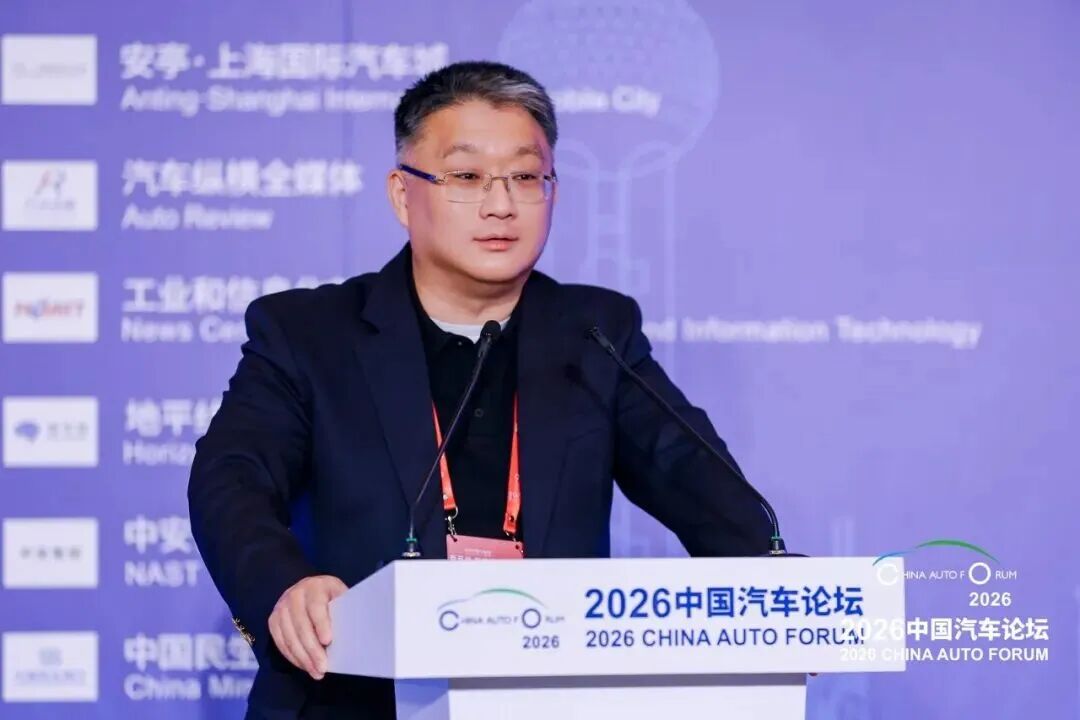
Jia Jianxu, President and Deputy Secretary of the Party Committee of SAIC Motor, stated at the 2026 China Auto Forum that Chinese vehicles going global must adhere to rules, just like 'a guest visiting a host's home.' Failing to do so will result in being expelled sooner or later.
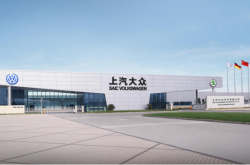
From the perspective of a pioneer, SAIC Motor certainly has the standing to say this. In the European automotive market, SAIC MG has already 'dominated,' with cumulative sales exceeding 190,000 units in the first half of this year, a 20% year-on-year increase, securing the top spot among Chinese brands in Europe for eleven consecutive years and contributing 40% of Chinese automakers' sales in Europe.
On the other hand, rules are made by people. For latecomers entering the European automotive market, the most important thing may not be to avoid mistakes urgently but to not be intimidated by the so-called rules and dare to rise to the challenge to have a chance to 'grab' a share.
The so-called 'industry rules' in overseas automotive markets are mostly inherent (ingrained) systems formed over a century of accumulation by traditional European and American automakers, adaptation (suited) to the industrial logic of the gasoline vehicle era. Traditional automakers build barriers and monopolize the market with old rules, attempting to suppress the breakthroughs of Chinese new energy automakers with mature industry inertia. How can we let them have their way?
The biggest dividend of the era of wild growth is the undetermined industry pattern and the lack of solidified new standards. Compared to overseas established automakers, Chinese automakers possess a complete new energy industrial chain, mature intelligent cockpits and autonomous driving technologies, and extreme cost control capabilities. These differentiated advantages are the confidence for latecomers to break through.
Become a rule setter, not just a follower. Why can't the new pattern and standards of the automotive industry be created and defined by Chinese automakers?
Of course, illegal activities are not allowed, and compliance is essential. However, while pursuing compliance and deep localization tactically, strategically, one must also dare to break through inherent (ingrained) frameworks.
02 Going Global to Make Money, But Definitely Not 'Mindlessly Making Money'
'Not entering the market means completely missing out on the era's dividends; blindly entering the market means being counterattacked by the disordered market and sudden risks with a high probability.' Upon truly entering overseas markets, Chinese automakers will find that they are not facing a no-man's land waiting to be developed but a new battlefield with complex rules and intertwined interests.
The biggest advantage of Chinese new energy vehicles is the accumulation of supply chain, manufacturing capabilities, and intelligent technologies in China. However, after entering overseas markets, the competitive logic is no longer solely based on product strength. Selling cars is just the beginning; what truly determines whether a company can stay is local production, channel construction, after-sales service, brand recognition, and policy adaptation capabilities.
This is why, when facing overseas markets, some companies can quickly gain a foothold while others fall into difficulties. BYD is a typical example.
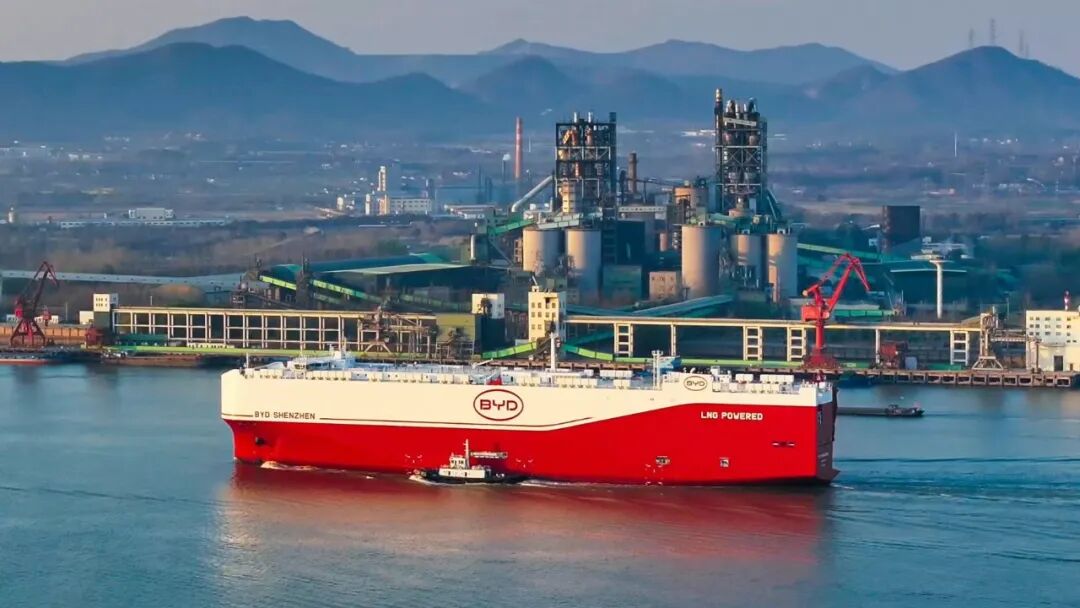
As a representative of Chinese new energy vehicles going global, BYD possesses a complete industrial system ranging from batteries, motors, and electronic control to vehicle manufacturing and overseas factory layouts. This systemic capability provides BYD with more room for adjustment when facing policy changes in different countries.
In the European market, BYD reduces the impact of trade barriers through brand building and local channel layouts; in the Southeast Asian market, it enhances supply chain responsiveness through localized production. However, even such a leading company needs to readjust its market strategies when faced with Turkey's increase in import tariffs and additional taxes on Chinese new energy vehicles.
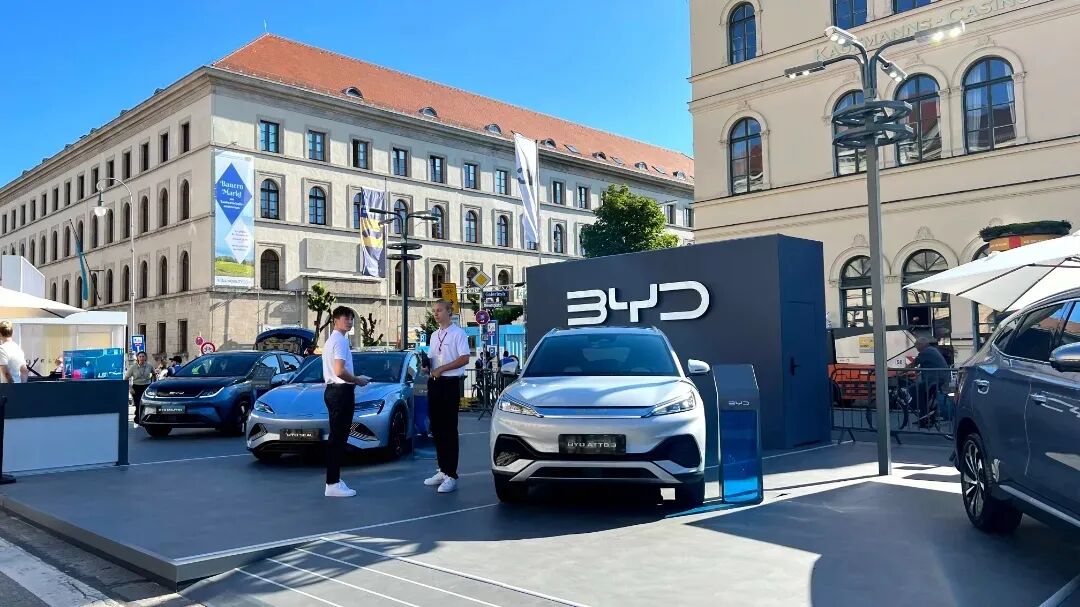
No company can easily bypass rules. If BYD proves that Chinese automobiles have global competitiveness, then Neta Auto's experience demonstrates the ' Dangerous and sinister ' (perils) of going global.
The rapid growth of the overseas market for new energy vehicles in the early stages provided a window for Chinese brands. However, market opportunities do not equate to commercial capabilities. Without sufficient validation in overseas markets, Neta Auto quickly pushed for overseas expansion, investing in factory construction and channel layout, hoping to preempt the market.
However, with policy changes, adjustments in the trade environment, and increased competition, the model of relying solely on price advantages to open up markets gradually lost effectiveness. Neta Auto's Thai factory was also affected by its parent company's financial crisis, with severely substandard production capacity and unfulfilled localized production commitments, leading to the cancellation of tax exemptions by the local government and further forming a vicious cycle.
However, Neta Auto's setback does not mean that the track for Chinese automakers going global is saturated and that latecomers have no more opportunities. Behind the industry's growing pains lies an iterative upgrade in the logic of going global. Compared to an aggressive approach of comprehensive expansion, some companies are beginning to choose routes more suited to their capabilities, such as Jiyuan Auto.
Jiyuan Auto did not choose to cast a global net but concentrated its resources in advantageous markets such as the Middle East, seeking suitable breakthroughs through product positioning, local cooperation, and channel construction. For such small automakers, finding niche markets that can form competitive advantages with limited resources can also yield results.
03 Is the Window Period Only Two Years? This Is a Prolonged Battle
Regarding Chinese automobiles going global, there has been an ongoing debate in the industry recently: With the rise of trade barriers in Europe and the United States and increased competition among Chinese automakers, the next two to three years may be the last opportunity, meaning the window period will end by 2028. However, Fu Bingfeng, Executive Vice President and Secretary-General of the China Association of Automobile Manufacturers, disagrees, stating:
'Is the window period for going global only two years? Will we stop competing after two years? Long-termism is the way to go; the Long March has just begun on this new magnificent journey. Maintain a good mindset and do not let excessive anxiety distort our actions.'
In fact, the window period for Chinese automobiles going global does not refer to how many more vehicles Chinese automakers can sell but how much time they have left to establish a global automotive market system dominated by new energy vehicles.
Exporting 10,000 vehicles proves manufacturing capabilities; however, establishing overseas factories, supply chains, cultivating local teams, and forming brand recognition are the true indicators of globalization capabilities. Over the past decade, Chinese new energy vehicles have completed the transition from technological catch-up to industrial leadership. However, from a global competitive perspective, the globalization of the Chinese automotive industry is still in the stage of transitioning from 'product output' to 'system output.'
As mentioned earlier, this is a major screen (screening) of corporate capabilities, and for different automakers, their strategies can be more flexible.
For leading companies such as BYD and Geely, the core task is not to find markets but to establish global systems. Relying on their advantages in capital, technology, and supply chains, they need to shift from simple exports to local manufacturing, replicating the capabilities of the Chinese new energy vehicle industrial chain to the global market through overseas factories, supply chain layouts, and channel construction.
For second-tier automakers, it is more important to avoid the illusion of 'being large and comprehensive.'
Overseas market resources are limited. Instead of casting a global net, it is better to concentrate efforts on breaking through several high-value regions, such as Europe and the Middle East. Choose markets with stable policies, moderate competitive pressure, and high product matching degrees, form strongholds through refined operations, and then gradually expand.
For niche brands, finding differentiated spaces is essential. The global automotive market has entered a stage of inventory (stock) competition, making it increasingly difficult to replicate the success of the Chinese market through scale. To survive, small brands need to establish irreplaceability in certain niche areas, such as off-road vehicles, feature (unique) models, and high-end customization, which can serve as new paths for Chinese brands to break through traditional giants.
Of course, regardless of the strategy, two bottom lines must be upheld.
First, the compliance bottom line. The rules of overseas markets are not obstacles but the foundation for long-term competition. Respecting local laws and establishing compliance systems are prerequisites for Chinese automobiles to truly go global.
Second, the capability bottom line. Companies must clearly understand the boundaries of their capital, supply chains, channels, and after-sales capabilities. They should not invest heavily just because they see market opportunities, nor should they engage in unprofitable expansions for the sake of sales data.
From a trend perspective, the wild growth dividends of Chinese automobiles going global are rapidly narrowing, and the first-stage dividends obtained through price advantages, information gaps, and market vacuums will eventually end. In the coming years, the global market will inevitably shift from 'whoever goes out first gains advantages' to 'whoever has a stronger system stays,' and the true determinants of victory will be brand influence, localization capabilities, supply chain control, and long-term operational capabilities.",
-
![]()
Is Design the Root of the Problem? The Lexus ES Dilemma: Despite New and Old Models Coexisting Post-Redesign, Sales Plummet by 40%
-
![]()
Are Japanese Automakers Now Taking Cues from China? A Perspective on Japan's Reversal in Learning
-
![]()
In the First Half of the Year, Car Companies’ Profit Margin Plummets to 3.8%! CPCA: Automakers Must Speed Up Battery Production Amid Upstream Pressures | MINGJING Pro
-
![]()
Tesla’s Q2 Revenue Rises, Yet Profitability Slips; Energy Storage Margins Take a Dive
-
Chinese Automakers Strike Gold Overseas: Prices Double?
-
![]()
Joint Ventures, Once Dismissed, Are Now Making a Comeback
-
![]()
Automotive Market News: Retail Penetration Rate of New Energy Vehicles Reaches 62.8%
-
![]()
Once a Sales Leader Among New Car Manufacturers, Now Selling Equipment at Bargain Prices