Who Should Be Responsible for the Long-Term Reliability of AION S Battery Failures: Automakers or Battery Manufacturers?
 07/28 2026
 446
446
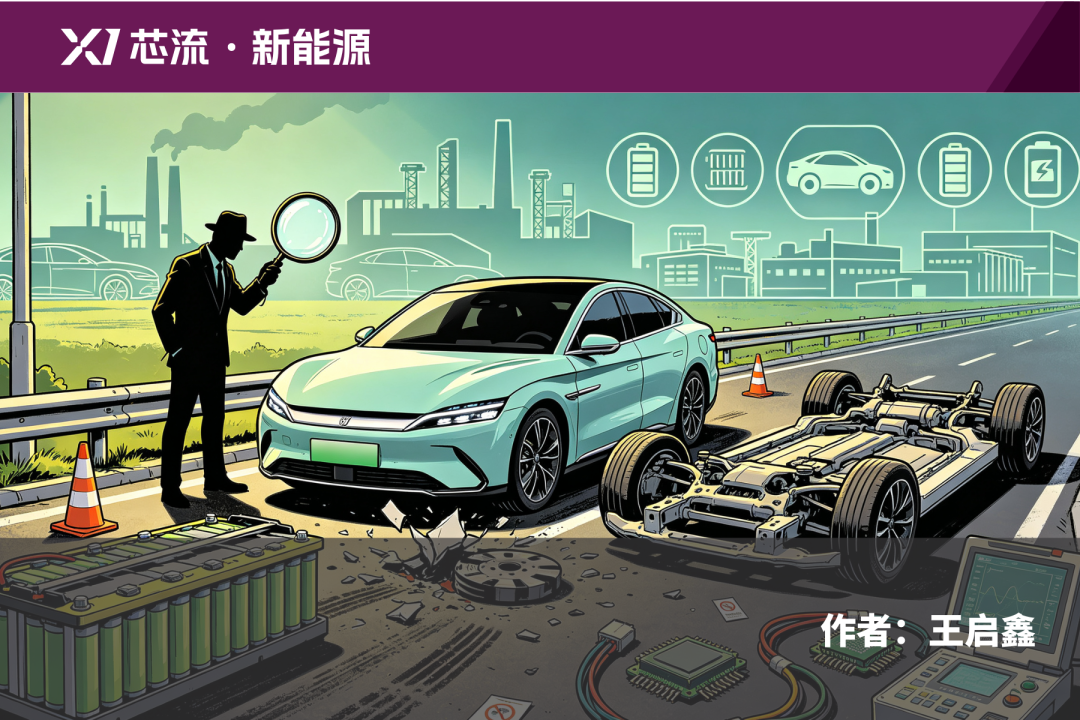
【Abstract】 A batch of GAC Aion AION S vehicles with mileage exceeding 150,000 kilometers has recently experienced power battery failures. GAC Aion has extended the warranty mileage for some vehicles equipped with 177Ah batteries from 150,000 kilometers to 300,000 kilometers, while CALB has announced direct battery system maintenance services.
The two companies have finally stepped forward to address consumer concerns, but the most critical question remains unanswered: Why did the batteries fail? Did the issue occur during cell manufacturing, system integration, or the vehicle definition stage?
The crux of this controversy is not merely about compensation. It involves not only battery failures exposed in some high-mileage vehicles but also how automakers and battery companies jointly define products, verify lifespans, and maintain safety boundaries amid cost and delivery pressures.
The following is the main text:
01
Collective Reflection Under Consumer Scrutiny
The entire situation has evolved into a precarious standoff among consumers, automakers, and battery manufacturers. Selling anxiety, escalating conflicts, or superficial explanations are not the right approaches at this stage.
However, before delving into the issues and drawing conclusions, we need to revisit what happened over the five days from the 14th to the 18th.
On July 14, Xinhua News Agency published 'New National Standards for Power Batteries Take Effect: Safety Thresholds Raised, Existing Defects Urgently Need Addressing,' revealing a detail: Since 2026, new energy commercial vehicles equipped with a certain brand's 177Ah lithium iron phosphate cells have concentratedly experienced cell swelling, leakage, and insulation failures. This brought the power battery failures of a batch of new energy commercial vehicles into the public eye.
Subsequently, the situation rapidly escalated. Many people pieced together a complete failure spectrum from complaint records over the past month on public platforms: GAC Aion AION S Plus, Aion S 580, Aion S MAX, and other models, equipped with CALB's 177Ah lithium iron phosphate cells, experienced cell swelling, safety valve blowouts, electrolyte leakage, sharp drops in insulation values, and sudden loss of power while driving after reaching 150,000 to 250,000 kilometers.
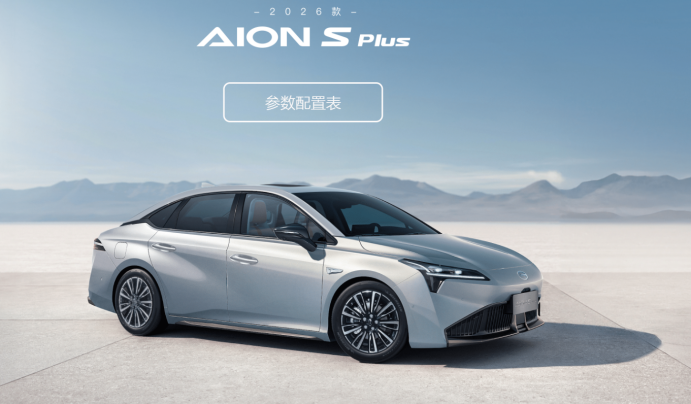
Source: GAC Aion Official Website
Four days later, on July 18, GAC Aion announced an upgrade to its warranty service, stating that it had recently received feedback from some AION S users with mileage exceeding 150,000 kilometers about power battery failures during use. For some AION S commercial vehicles equipped with CALB's 177Ah lithium iron phosphate batteries, GAC Aion extended the power battery warranty period from 8 years or 150,000 kilometers to 8 years or 300,000 kilometers, offering services such as battery big data monitoring and free replacement of faulty battery packs.
On the same day, CALB announced that it would provide direct maintenance services for the power battery systems of the affected vehicles. The two announcements did not avoid acknowledging the failures but did not specify how many vehicles were involved, which production batches were affected, or disclose the technical root cause of the cell failures.
The concentrated outbreak of these failures has placed the responsibility disputes between automakers and battery manufacturers under the spotlight.
The relationship between AION S and CALB is not just an ordinary supplier collaboration. CALB lists GAC Aion as a major client in its prospectus, stating that it is a power battery supplier for new energy vehicle brands like GAC Aion. In subsequent annual reports, CALB has repeatedly mentioned winning the 'GAC Aion Excellent Supplier' award. It has also helped GAC Aion secure the title of 'King of Ride-Hailing Vehicles.' The long-term cooperation between the two parties has formed a deep bond during GAC Aion's rapid expansion over the years.
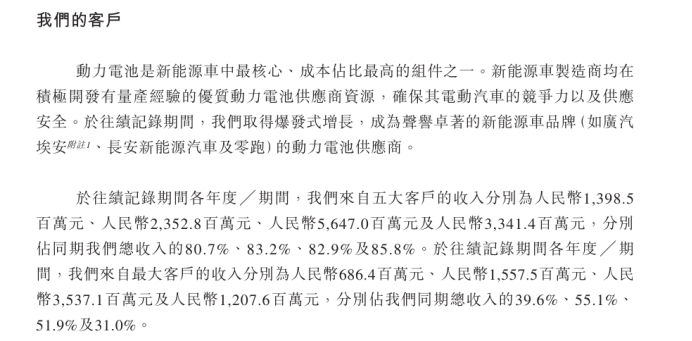
Source: CALB Prospectus
In the past, this bond supported rapid product launches and large-scale deliveries. Now, abnormal issues concentratedly emerging in some high-mileage vehicles have exposed the other side of the same supply chain: While automakers are responsible for delivering complete products to consumers, battery companies possess cell design and manufacturing data. Once failures occur beyond the warranty period, both parties can easily become entangled in disputes over responsibility boundaries.
However, for consumers, the origin of the battery is irrelevant. The car was purchased from GAC Aion, and the battery constitutes one of the most expensive and critical components of the vehicle. Automakers cannot simply shift the problem back to suppliers, nor can battery manufacturers explain product performance solely by stating they supplied 'as per customer requirements.'
The deeper contradiction lies in the fact that the stringent SOR (Specification of Requirements) defined by automakers is based on the assumption of rapid product implementation, yet it fails to recognize the complexity of the battery's microscopic world. Manufacturing defects such as ineffective electrolyte moisture control and uneven electrode coating also expose the transmission gaps between battery manufacturers' technical rigor and automotive product design and production processes.
More notably, this is not the first time the new energy vehicle industry has paid a price for manufacturing consistency issues.
In 2025, BYD Auto Industry Co., Ltd. filed a recall for some Tang and Yuan Pro vehicles. Official reports indicated that some vehicles experienced improper installation of power battery gaskets, leading to reduced sealing performance. Prolonged high-speed wading could cause water ingress into the power battery and a decline in insulation performance, potentially leading to reduced output power in extreme cases.
After new energy vehicles entered the large-scale production stage, product competition has shifted from 'whether they can be manufactured' to 'whether they can maintain consistency after hundreds of thousands of vehicles and kilometers.'
02
Microscopic Failures Eventually Lead to Macroscopic Risks
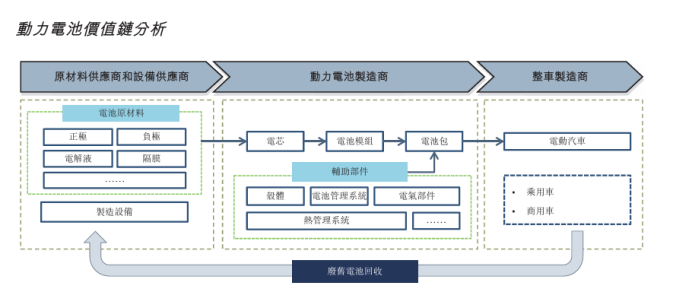
A power battery may appear quiet externally, but complex electrochemical reactions are constantly occurring inside. The positive electrode, negative electrode, separator, and electrolyte must work together over the long term within a tiny space. Material ratios, coating thicknesses, electrolyte injection volumes, environmental humidity, and packaging quality all affect cell lifespan.
First, during production, the active material slurry needs to be uniformly coated onto metal foil. If the coating is locally too thick or too thin, or if there are deviations in compaction density, differences in current density and lithium-ion transport speed may arise in different regions. While a new battery can still function normally, prolonged high-frequency charging and discharging may gradually accelerate local aging, widening the capacity, internal resistance, and voltage differences among individual cells.
Second, lithium-ion battery production is highly sensitive to environmental humidity. If the moisture content in electrode materials, separators, or the electrolyte injection environment exceeds process tolerances, moisture may participate in side reactions, consuming electrolyte and generating gases. As gas accumulates, the shell of a prismatic cell may experience increasing internal pressure, potentially manifesting as swelling or bulging externally.
It must be emphasized that bulging is merely a result and cannot solely prove that the failure is due to excessive moisture. Electrolyte decomposition, material aging, abnormal overcharging, local short circuits, and prolonged high temperatures may also cause gas generation. Only by systematically analyzing the gas composition, electrode conditions, separator damage, and production batches of faulty cells can the root cause be identified.
If the issue continues to develop, risks will escalate from the microscopic level to the entire vehicle.
Source: CALB Prospectus
Cell swelling may squeeze (Note: ' squeeze ' means 'squeeze' or 'compress' in Chinese, but it should be translated naturally in context, e.g., 'Cell swelling may compress adjacent structures') adjacent structures, altering the stress state of the module. Electrolyte leakage may reduce insulation performance. As the voltage difference among individual cells continues to widen, the battery management system will limit output power. In severe cases, the vehicle may experience a sudden drop in range, restricted power, or even an inability to drive. Multiple affected vehicle owners have reported failures including bulging, leakage, insulation abnormalities, and restricted power.
A slight coating fluctuation or a trace amount of residual moisture may only represent micron-level or trace-level deviations on the production line. However, when placed in a ride-hailing vehicle operating at high intensity daily and undergoing frequent fast charging, time will continuously amplify these issues.
This is also the most challenging aspect of industrial manufacturing. Producing a single cell with excellent performance in a laboratory is not uncommon; the difficulty lies in ensuring that millions of cells have similar performance and remain stable after years of use.
The 'Practice Sample of Digital Transformation for Small and Medium-sized Enterprises in Wuhan's Automotive Power Battery Manufacturing Industry,' published by the Ministry of Industry and Information Technology's Digital Transformation Platform for Small and Medium-sized Enterprises, points out that intelligent manufacturing of power batteries requires strengthening process parameter optimization and real-time quality monitoring to improve product consistency and yield. The power battery industry chain is long and involves many processes, and fluctuations in any link may propagate to the final product.
Therefore, the AION S incident truly requires answering not simply 'which company made a mistake' but whether the design inputs, manufacturing data, factory testing, and long-term operational data of this batch of batteries can form a complete chain of responsibility.
03
The Painful Tear Between Breakthroughs and Implementation
When initiating a new energy vehicle project, automakers typically propose performance boundaries to suppliers through the SOR (Specification of Requirements): battery capacity, total pack weight, range, fast-charging speed, lifespan, and cost must all be controlled within specific ranges.
Each requirement may seem reasonable individually, but together they can create conflicts.
Higher energy density means packing more energy into a limited space. Faster charging speeds increase the load on cells under certain operating conditions. Longer lifespans require more conservative material selection and control strategies. Lower procurement costs compress manufacturing tolerances and quality screening space.
The core contradiction of this incident lies in the vast gap between technological breakthroughs and commercial implementation. Automakers pursue high energy density, long lifespan, and low costs, incorporating a 150,000-kilometer warranty into contracts. Battery manufacturers must balance material systems, structural designs, and production capabilities. The most dangerous moments often occur when both parties know the boundaries are tight but still proceed at the fastest commercial pace.
The usage scenario of the AION S further amplifies this contradiction.
As a pure electric sedan, the AION S has long been active in the ride-hailing and taxi markets. Compared to ordinary family vehicles, commercial vehicles have higher annual mileage and more frequent charging, subjecting the battery to high cyclic stress over the long term. The fact that some faulty vehicles experienced abnormalities after exceeding 150,000 kilometers at least indicates that the original warranty boundary failed to cover a portion of real-world high-intensity usage cycles. GAC Aion's subsequent decision to extend the warranty mileage for relevant vehicles to 300,000 kilometers is itself a response to changes in usage scenarios.
However, extending the warranty can only address existing problems.
More critical is re-evaluating whether the initial lifespan verification was sufficient: Did the test conditions cover the fast-charging frequency of ride-hailing vehicles? Were high-temperature, high-state-of-charge, and continuous operation included in combined testing? Can the cell consistency screening standards identify cells that function normally initially but degrade rapidly later?
GB 38031—2025 'Safety Requirements for Power Batteries for Electric Vehicles,' which took effect on July 1, 2026, has further raised industry thresholds. The new standard adds items such as bottom impact and post-fast-charging cycle safety tests, elevating the thermal runaway requirement to no fire or explosion for the entire battery system. The regulatory logic is clear: Power battery safety must cover collisions, fast charging, and long-term use, not just the state of new batteries at the factory.
This also imposes new requirements on automakers and battery manufacturers.
Automakers cannot merely propose parameters; they must also understand the electrochemical trade-offs behind them. Battery manufacturers cannot be satisfied with samples passing tests; they must ensure batch manufacturing stability. The SOR should be a jointly verified engineering contract, not a commercial checklist where automakers push demands and battery manufacturers rush deliveries.
When technical personnel raise risks, is the company willing to delay mass production? When yield and cost conflict, does management choose to prioritize delivery or leave a wider safety margin? These decisions rarely appear in press conferences but will determine whether a vehicle can still operate safely years later.
04
Epilogue
The issues encountered by GAC Aion and CALB are by no means isolated cases in the industry.
Warranty extensions, free replacements, and direct maintenance can mitigate losses for some vehicle owners and demonstrate the two companies' willingness to jointly address existing problems. However, consumers still need a more transparent investigation result: how many vehicles are affected, which production batches are involved, how to identify potential risks, and whether vehicles without reported failures require proactive testing.
Before official technical conclusions are released, hastily assigning blame to any single party appears premature. However, one point is already clear: When a vehicle model enters the market in the hundreds of thousands, automakers and battery manufacturers jointly bear full-lifecycle safety responsibilities.
Over the past few years, China's new energy vehicle industry has prioritized speed. Longer range, faster charging, and shorter development cycles have helped companies quickly occupy the market. Now, as the industry enters a phase of stock inspection, the technical details once obscured by delivery schedules will face scrutiny over time and mileage.
Yesterday's losses have already occurred. Today, responsibilities must be clarified. Tomorrow, the industry must relearn how to think carefully and respect technology.
A truly mature new energy vehicle industry must not only install batteries in more cars but also ensure that they remain trustworthy to consumers years later.
*Header image generated by AI
- XINLIU -
-
![]()
Is Design the Root of the Problem? The Lexus ES Dilemma: Despite New and Old Models Coexisting Post-Redesign, Sales Plummet by 40%
-
![]()
Are Japanese Automakers Now Taking Cues from China? A Perspective on Japan's Reversal in Learning
-
![]()
In the First Half of the Year, Car Companies’ Profit Margin Plummets to 3.8%! CPCA: Automakers Must Speed Up Battery Production Amid Upstream Pressures | MINGJING Pro
-
![]()
Tesla’s Q2 Revenue Rises, Yet Profitability Slips; Energy Storage Margins Take a Dive
-
Chinese Automakers Strike Gold Overseas: Prices Double?
-
![]()
Joint Ventures, Once Dismissed, Are Now Making a Comeback
-
![]()
Automotive Market News: Retail Penetration Rate of New Energy Vehicles Reaches 62.8%
-
![]()
Once a Sales Leader Among New Car Manufacturers, Now Selling Equipment at Bargain Prices