Mieux Talks with Sun Erxi, Leader of Quadrant: Narrative Reconstruction and Second Pioneering Venture Abroad for Smart Hardware Manufacturers
 08/07 2026
 406
406

"Enterprises going global is essentially a form of 'second pioneering venture.' In this process, risk assessment is certainly important, but confidence and 'blindness' are also particularly crucial. After all, the sober are always correct, but only those who dive in will achieve results."
In July, on a sweltering afternoon, I sat in an electroplating workshop more than a decade older than me, sweating profusely as I dialed Sun Erxi Steffi's phone. This marked our second systematic conversation since the August 2024 interview (Dialogue | Quadrant's Sun Erxi: Chinese Robots' 'Localization Abroad' Amid the AI Hardware Wave).
After two years, our deep discussion revealed that her 'evolution speed' was faster than I had imagined. So when she jokingly asked, 'Did I give you a different impression this time?' I blurted out, 'Clearly, you've leveled up again,' accompanied by a vigorous nod—only to realize the gesture was unnecessary since she couldn't see me.
I feel that over these two years, she has reconstructed herself into what I've coined as a 'designer of industrial connectors.' Her Quadrant team hasn't disappeared; rather, she has added responsibilities within the WAIA International Industry Alliance (Full name: World AIoT Innovation Alliance, registered in Hong Kong and Brussels, dedicated to promoting various overseas ecological collaborations in the smart communication hardware sphere, including the inaugural European AIoT exhibition set for 2027. Steffi serves as the Alliance's Secretary-General.) to her personal roles. WAIA resembles a new species, constantly attempting to chisel more gaps and let in more light through the invisible walls between Chinese tech manufacturers and overseas industrial ecosystems.

The Evolutionary Curse of Platform-Based Service Organizations: Can the Ceiling of Business Models Be Broken?
"Quadrant has always had its own positioning," Steffi said. "Our strongest suit is insight—why a certain overseas market doesn't work for a company, why certain products don't sell at certain exhibitions, why clients don't buy into certain solutions..."
In the early stages, this market insight and consulting services helped Quadrant establish itself in numerous tech fields. However, being 'vertical' and 'narrow' served as both a moat and a ceiling. When business advancement reached a certain stage, relatively isolated capabilities struggled to form a sufficiently robust commercial closed loop .
In reality, many platform-based service organizations—whether tech media, incubators, startup bootcamps, or financial advisors (FA)—face similar issues: they can achieve some success, earn some money, and gather some resources by relying on efforts and resources in certain dimensions, but they struggle to achieve leapfrog growth, with the business model ceiling remaining unbroken.
I believe this is largely determined by their supporting roles as 'observers, intermediaries, and enablers.'
Steffi's exploratory practice involves collaborating with like-minded domestic and international industry organizations to form the WAIA Alliance.

"To put it simply, the Alliance adds more industrial traffic and enterprise samples across the supply chain, exploring membership models and productization."
Steffi clearly differentiates between Quadrant and the WAIA Alliance: Quadrant serves as an analytical, pragmatic insight provider and overseas market implementation partner; the Alliance functions as a resource-oriented, connectivity-focused industrial ecosystem platform. A significant cornerstone supporting the Alliance is global IoT industry events and related large-scale exhibitions. Here lies an intriguing contrast: while IoT may no longer be a top-tier trend in China, it remains highly active with a complete supply chain. However, in European and American industrial circles, it has lost its 'sexiness.' Why is this?
"Europe and America find IoT less 'sexy' because device connectivity is now taken for granted. However, China's manufacturer density and supply chain completeness still make this concept robust and full of imaginative potential in the East. Our task isn't to complain that Europe and America no longer tell this story but to help Chinese manufacturers find new anchors within their narrative frameworks."
In fact, the process of finding these anchors is also one of exploring self-upgrading for platform-based service organizations. Steffi admits, "(Breaking through the business model of platform-based service organizations) is a dilemma for many practitioners and the reason I've been 'floundering' in Shenzhen and Europe over the past year."
Finding a business model, seeing a business model, and operating a business model are three different things.
I said, "Platform-based service organizations seem to ultimately rely on content, events, and resource linkages to make money— Go around, go around , everyone generally feels there's little room for improvement. Of course, some individuals can gain fame and earn money, but essentially, it's all hard-earned money."
Steffi agreed, then made a crucial yet seemingly mundane distinction: finding a business model, seeing a business model, and operating a business model are three different things.
"Many associations and platforms start with good ideas and seem to come up with innovative concepts, but as they progress, they discover that most business models remain relationship-based, press release-driven, or event-focused."

She cited Gartner and CB Insights as examples. These renowned platform organizations are difficult to 'copy to death' not because of their beautifully written reports but because "they have continuously operating information collection teams with people actually visiting markets. They don't just stop at writing articles or creating analytical charts; they've formed a rigorous organizational management system for enterprise operations, possess strong insights, and can help clients one-on-one build industry relationship networks, screen value chains, integrate external resources, and naturally command higher bargaining power."
I said, "To obtain truly effective and useful services, one must delve into the frontlines of the industry."
Steffi replied, "Exactly. That's why data is valuable—not public data, but closed data. AI can't provide this data."
Meanwhile, the ancient format of events still holds unique value. "Many people just enjoy listening to how various products are made and meeting new people at salons and events—this is also a rigid demand. Being able to stabilize event circles is inherently valuable."
Therefore, perhaps the crux of the issue lies not in the model itself but in what you excel at and where your execution capabilities lie. This point is crucial not only for service platform organizations but also for Chinese manufacturers going global. However, even if you can achieve this, you face the next challenge: clearly explaining, demonstrating, and generating influence from how you do things.
This relates to strategic-level narrative capabilities.

The Narrative War: Chinese Manufacturers' 'Aphasia'
"Whether in the smart hardware device circle or the tech manufacturer circle," Steffi said, "many companies believe they possess certain narrative capabilities. However, truly strategically valuable narrative capabilities must be deeply rooted within the industrial chain."
Extreme examples undoubtedly include individuals like Jensen Huang and Elon Musk, who can mention a concept and instantly attract attention and action across industries, even revitalizing outdated sectors.
This capability still primarily belongs to Silicon Valley and the American industrial circle. Chinese manufacturers rely more on cost-effectiveness and functionality.
"People may view narrative capabilities as foam (bubbles), concepts created due to market growth needs. Is that really the case? And is there nothing to be done in mature markets?"
Over the past year, through the WAIA Alliance, Steffi has deeply engaged with European and American associations and exhibition systems, discovering a key difference in industrial narratives between Europe/America and China: they excel at placing technology within broader social, cultural, and policy contexts, whereas Chinese companies tend to focus on functional parameters, price advantages, and company introductions.
"This isn't about shouting slogans; it's about whether you can place products within a larger narrative framework. For example, Europe discusses carbon neutrality, aging populations, and social inclusivity... These may sound like clichés, but it depends on how you integrate them. If products and companies can find their place within such contexts, pricing becomes more than just material costs plus profit—it becomes part of a social solution."
I pondered and said, "Many domestic B2B enterprise bosses also recognize the importance of branding and narratives, but they forget amidst business operations and don't know how to connect narratives with strategy. They dare not utilize talent or fear failed cross-departmental collaborations."
Steffi responded, "This is about cost. Bosses may verbally emphasize something's importance, but have they internalized it into budgets and organizational structures? When they must use their own savings and investor pressure to test and learn, their decision-making methods change completely."

Bosses' risk tolerance determines the form of enterprises going global.
"All companies surviving today possess capabilities. However, going global as a second growth curve is meant to save the first curve. Once the window of opportunity passes, the first curve will also shrink. Balancing costs and priorities is incredibly challenging."
The Paradox of Localization: To Help Others Go Global, You Must First Possess the Ability Yourself
Speaking of going global, localization cannot be ignored—a crucial point we mentioned in our previous interview. Steffi's stance is clear: "I've always believed localization is vital and remained deeply confident. However, after serving numerous companies going global, I've found that while many bosses excel in products and business, their understanding of overseas localization often lags. This isn't entirely their fault; as we said earlier, the cost of trial and error is too high."
So how can this be resolved?
"Actually, what needs resolving is the issue of trust," Steffi replied, consistently addressing the core behind problems rather than the problems themselves. "The WAIA Alliance essentially explores two things: product issues and trust issues."
Where does trust originate? It grows from frontline collaborations.

Steffi now directly engages in strategic collaborations and work with European associations, even planning to bring domestic industry exhibitions to Europe—association branding, award selections, white paper contributions, ecological manufacturer invitations... All require coordination with foreign parties.
"If we were just a group of Chinese manufacturers 'setting up stalls' overseas, that wouldn't be our goal."
I felt she implied something deeper: "This aligns with a previous viewpoint of yours: a service organization aiming to help others go global must first have successfully gone global itself. Otherwise, as a purely domestic institution, how can it assist others in going global?"
Steffi smiled: "Exactly. You must either hire or collaborate with individuals possessing overseas experience. Going global isn't a new plate (plate) automatically growing from domestic business; it requires integrating talent and external resources."
She admitted that during this process, she "executed a bit too much, a bit too heavily," deeply involved from strategy to business development to project management.
"I'd also prefer to sit and discuss theories, but I'm not yet a boss with vast resources, so I must charge ahead on the frontlines."
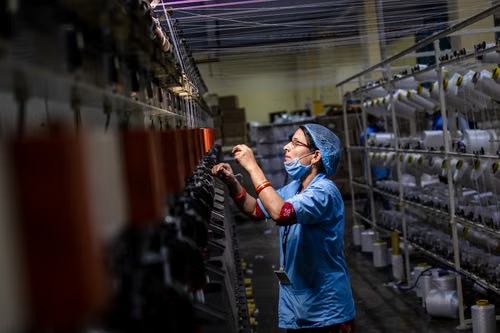
This actually conceals a truth about going global: true localization services require time zone-crossing collaborations, teams with both English proficiency and project experience, and extensive backpack-style travel—all of which entail nearly rigid costs.
"Dreams require it, slogans can be shouted, but ultimately, it depends on whether the execution team possesses these capabilities. When coaching companies, I always ask first: Do you have dedicated pre-sales engineers for overseas markets? Do you have business managers? The difference between having and not having them can be significant," Steffi said.
Ambition: The Last Irreducible Element
As our conversation neared its end, I asked:
"Facing paths no one has walked, many people feel hesitant—what if, after all this effort, it doesn't succeed? Do you experience this mindset with WAIA? I don't know if you currently have partners, but given your combined strategic and execution capabilities, do you ever feel like you're venturing alone during your entrepreneurial journey?"
"Enterprises going global is essentially a 'second pioneering venture.' In this process, risk assessment is certainly important, but confidence and 'blindness' are also particularly crucial. After all, the sober are always correct, but only those who dive in will achieve results."

We both agreed on one thing: whether going global or starting a business, the essence lies in having passion and viewing sacrifices as part of the experience.
Regarding partners, her attitude was open and clear-headed: "Partners don't necessarily have to be like me; in fact, it's precisely our weak areas that require complementarity. Of course, we must share a common bottom layer (foundational) sense of mission and belief, though our expressions can differ completely. For example, one could handle daily operations while the other focuses on strategic deployments."
In the end, she uttered the most fatalistic sentence of the entire interview:
"Ambition matters more than resources and talent. Reality is cruel; when resources run low, many people collapse. But ambition is the last thing we can cherish."
"Perhaps many attempts may not succeed in the end; that is the verdict of fate. Before fate delivers its verdict, we don't need to pre-judge its conclusion for it. When striving for outcome A, it may not be achieved, but outcomes B and C may eventually emerge—for many organizations, these are also good results."

A Final Note
This conversation ranged from business models to inner drive, from resource integration to the unpredictability of fate. It is not a success story; Steffi did not claim to have found the ultimate answer, nor did she sell a "guaranteed success in going global" narrative. She simply demonstrated how one can turn insights into actions and, in turn, let those actions refine and iterate those insights.
At the end of the interview, she asked me, "Do you think today's content is a bit too general?"
I told her no. On the contrary, this attitude of not avoiding dilemmas and not hiding costs is the rarest element in today's discussions about going global. It is also what resonates most deeply with ordinary people living in an era of immense uncertainty.
We agreed to talk again next time. After all, this grand experimental narrative of going global has only just begun.
-
![]()
Europe's 'Lagging' Struggle: The Legacy of a Decade-Old Misstep
-
![]()
BAT's Rematch in AI Office: What's Baidu's Strategy?
-
![]()
BAT Enters the AI Office Arena Again: What's Baidu's Strategy?
-
![]()
Sales Review of New Forces in July 2026: Leapmotor Surpasses 100,000 Units
-
![]()
GM Tore Down the Global Market, SAIC-GM Rebuilds It Piece by Piece
-
![]()
Is the Input Method Landscape Being Reshaped by Doubao and Qianwen?
-
![]()
Ashok Didn't Cover It, But Tesla's Head of Engineering Phil Did: FSD Algorithm Architecture, Proxy Tasks, and 300,000 GPUs
-
![]()
[In-depth Report] Systemic Symbiosis: How Foreign Investment Empowers New Pathways for Chinese Automakers to Go Global