GM Tore Down the Global Market, SAIC-GM Rebuilds It Piece by Piece
 08/07 2026
 463
463
GM’s Global Presence Persists, But It Demands More Innovative Vehicles
Original content from Autopix (ID: autopix)
SAIC-GM's farewell and resurgence unfolded almost concurrently.
On August 5th, SAIC and GM extended their joint venture agreement for SAIC-GM by two decades, securing its future until 2047.
Four words resonated at the signing ceremony: "Together Toward New Horizons." Accompanying this extension, the joint venture was entrusted with a fresh mission: starting in October this year, the ZHIJING series, independently developed by SAIC-GM, will penetrate global markets outside the U.S., leveraging GM’s existing distribution networks.
Just three weeks later, on August 28th, SAIC-GM announced the cessation of Buick Envision production for the U.S. market.
While these two events are independent, they coincidentally occurred within the same month.
The Envision’s journey began eleven years ago. In late 2015, the first batch of Envisions destined for North America departed from Yantai Port, making their way to the U.S., Canada, and Mexico the following year. Over the subsequent decade, 420,000 units were exported. Post-2017, it became GM’s sole model imported to the U.S. from China.
However, starting in 2018, the Envision faced a 25% tariff, and GM’s bid for an exemption failed. After 2025, its comprehensive import tax surged to 47.5%, eroding its cost advantage. On January 22, 2026, GM declared it would halt Envision production in China for the U.S. market, with the next-generation model slated for the Fairfax plant in Kansas by 2028.
By May of this year, the Envision’s inventory cycle in the U.S. had stretched beyond 300 days.
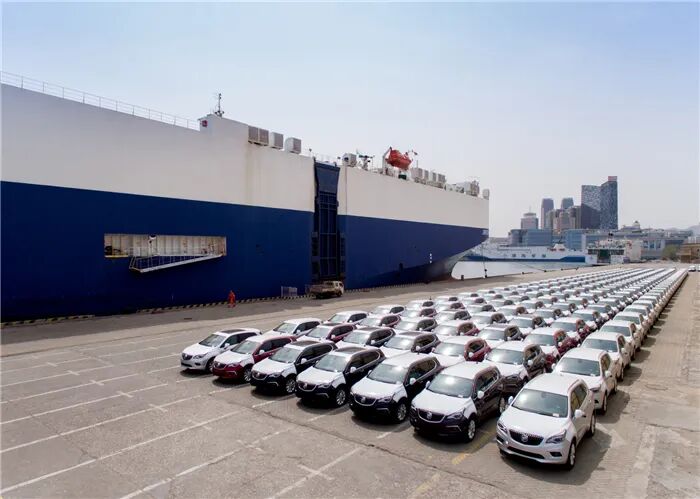
▍An old photograph of the Envision at Yantai Port
As One Door Closes, Another Opens
With tariffs slamming the U.S. market shut, GM entrusted the rest of the world to Shanghai.
01 Beyond the U.S., GM Faces a Vehicle Shortage
The renewal did not alter the 50:50 equity structure or reveal new investment figures. What changed was the division of responsibilities.
At the signing, Julian Blissett, GM’s global senior vice president and China president, emphasized that SAIC-GM had honed its local capabilities in engineering, manufacturing, and quality, enabling it to "extend these strengths to international markets in the Middle East, Africa, South America, Mexico, and the Asia-Pacific region," utilizing GM’s established sales and service networks there.
His central message was clear: SAIC-GM and PATAC will spearhead product development, while GM provides global distribution channels outside the U.S.
The execution strategy is streamlined. SAIC-GM will not establish its own overseas sales network but will fully capitalize on GM’s existing infrastructure.
The inaugural export model, the Buick ZHIJING E7, will debut in South Korea. GM Korea will oversee pricing, marketing, and after-sales, while SAIC-GM will manage production, supply, and technical support. Similar models are anticipated in other markets.
The flow of products and resources has reversed. Previously, GM introduced global products to China; now, SAIC-GM will export Chinese-developed products worldwide.
This shift is unprecedented in the "Joint Venture 2.0" era. Typically, foreign partners restrict their Chinese joint ventures to peripheral markets when allowing overseas expansion. GM, however, did not confine SAIC-GM to a trial market but opened doors to the Middle East, Africa, South America, Mexico, and the Asia-Pacific—nearly all markets outside the U.S. where GM operates—and granted direct access to its established sales and service systems.
Why now? Why these markets? The answers lie in GM’s recent financial reports.

▍A 1925 group photo at the founding of GM Brazil
The first report focuses on North America. In Q2 2026, GM North America achieved an 8.6% adjusted EBIT margin, securing a 43% share of the full-size pickup market—its seventh consecutive year at the top. The company raised its full-year adjusted EBIT guidance for the second time that year, to $14–16 billion.
This is a self-sustaining entity: high-priced, large, feature-rich vehicles with brand prestige and recurring revenue from subscription services. It requires no external support—or products.
The second report pertains to markets outside the U.S.
In 2025, the U.S. accounted for nearly 70% of GM’s global sales. Following the U.S. were China, Uzbekistan, Brazil, Kazakhstan, Colombia, Chile, Ecuador, Peru, and Kuwait.
The vehicles demanded in these markets barely overlap with those produced in North America.
GM’s standing in these regions varies significantly.
Mexico remains a GM stronghold, with market share consistently trailing only Nissan. South America, however, is slipping: in 2025, GM’s share in Brazil fell from 12.0% to 10.3%, while Volkswagen rose to 17.1% and BYD to 4.4%.
The Middle East presents an even starker contrast. In Saudi Arabia, GM has fallen out of the mainstream brands, while SAIC’s MG ranks high in sales. Africa’s network is fragmented: Egypt retains manufacturing and operations, but GM exited major businesses in South Africa and East Africa long ago.
For Mexico and South America, SAIC-GM is defending its turf; for the Middle East, it fills product gaps; for Africa, it marks a partial return to old markets.
02 Ultium Fails to Reintegrate GM’s Global Operations
In 2014, Mary Barra became GM’s first female CEO.
She inherited a GM emerging from bankruptcy, still clinging to a vast global footprint: Opel and Vauxhall in Europe, Chevrolet in India, South Africa, and Southeast Asia, Holden in Australia, Korea’s Daewoo system for small cars, and Brazil for South American products.
These operations sustained GM’s global automaker image but burdened it with global costs.
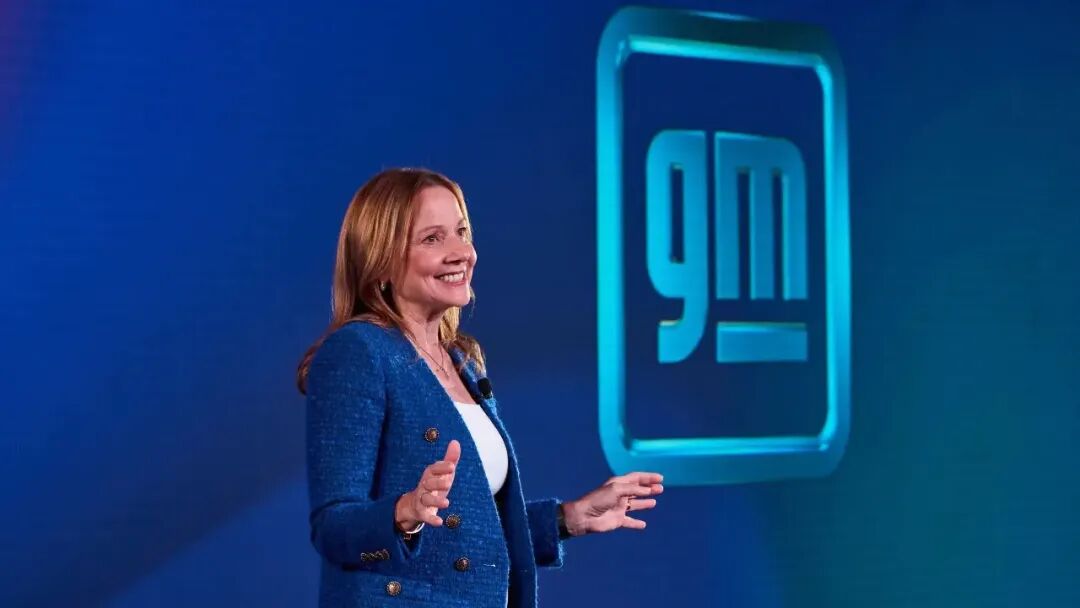
Barra adopted a stringent financial criterion: if a business couldn’t deliver sufficient returns, it wouldn’t be retained for scale, history, or global status.
From 2015 to 2020, GM exited Europe, Russia, India, Southeast Asia, and Australia, selling Opel, Vauxhall, and its Thai plant.
Profit discipline paid off. Capital flowed to North America’s expertise in large vehicles; the cost was dismantling a product system that catered to global demand.
Opel provided front-wheel-drive sedans and European engineering; Holden mastered rear-wheel-drive platforms; Korea handled low-cost small cars. After exiting these markets, GM lost most of its global product capabilities.
By 2020, GM’s global contraction was nearly complete. North America retained pickups, large SUVs, and high-margin ICE vehicles; China maintained a vast joint venture system; markets like South America, Korea, and the Middle East were compressed into regional businesses sustaining profitability.
They became isolated entities on the world map—able to survive on inertia amid stable competition, contributing limited but steady profits.
Now, competition is intensifying.
In 2025, Brazil’s auto market grew, but GM’s share fell from 12.0% to 10.3%; Volkswagen rose to 17.1%, and BYD to 4.4%. In Mexico, GM’s sales dropped 3.4%, while Nissan, Toyota, Kia, and Mazda grew.
The results are evident in GM’s International Markets (GMI) report, excluding China. In 2025, GMI wholesale volume fell 8.1%, revenue dropped 3.3%, and adjusted EBIT excluding Chinese JVs plunged 32.8% to $426 million.
These regional businesses lack not brands or channels but a steady influx of new products for dealerships.
GM was aware of the downsides of contraction. With it largely complete, Barra needed a new technical foundation to reconnect North America, China, and remaining international markets without rebuilding regional R&D centers.
EVs seemed to offer that chance.
By 2019, Tesla had ramped up Model 3 production, delivering 367,500 units that year; its Shanghai plant went from groundbreaking to production in under a year, proving a centralized model for vehicles, batteries, and software could replicate quickly between the U.S. and China.
Capital markets signaled even more directly. In January 2020, Tesla’s market cap surpassed GM and Ford combined; six months later, it topped Toyota’s. For GM, fresh from global contraction, electrification represented both the industry’s future and a shortcut to global reach without rebuilding old systems.
From 2018, GM redirected savings from divestitures to electrification and autonomous driving; by March 2020, it unveiled Ultium, pledging over $20 billion in investment through 2025. China followed with a corresponding tech launch.
Ultium’s engineering ambitions were vast. GM hoped it would cover compact crossovers, SUVs, Hummers, and large pickups, sharing scale, supply chains, and R&D costs between North America and China.
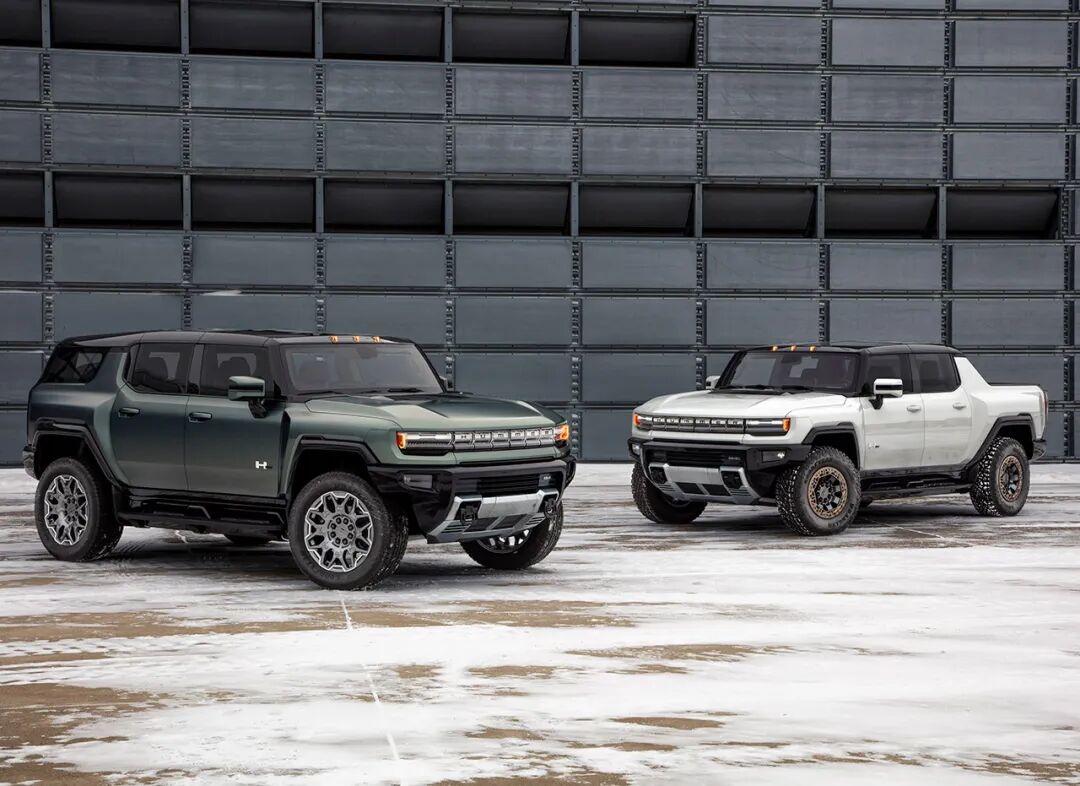
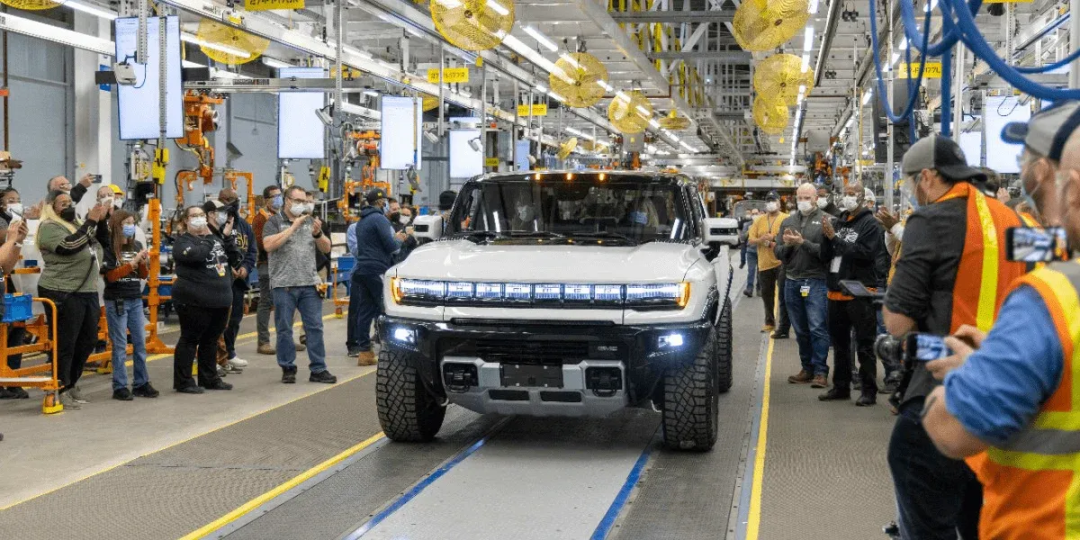
However, the first Ultium-powered model was the Hummer EV, boasting a ~205 kWh battery—more than double China’s mainstream large BEVs. From the outset, Ultium skewed toward U.S.-style large vehicles with ultra-long range, 1,000+ hp, and large pickups. It could scale up with additional modules but struggled to adapt downward for affordable models.
More critically, GM misjudged where market barriers would form. Ultium bet on high modularity of cells, modules, and drives to spawn diverse models; the market instead prioritized software, EE architectures, and iterative capability, with model diversity narrowing.
In April 2026, GM notified suppliers of an indefinite delay for next-gen Silverado EV and Sierra EV development, with major platform updates expected after 2030.
Meanwhile, China shifted rapidly toward lower-cost LFP batteries, faster charging, PHEVs/EREVs, and smart cockpits/ADAS driven by local suppliers.
The base meant to unify China and North America failed at both ends.
Ultium didn’t reintegrate GM. It left battery, drive, manufacturing, and safety validation capabilities but made one thing clear: North America, China, and the rest of the world could no longer be defined by a single platform.
03 SAIC-GM’s Second Act
By late 2024, SAIC-GM faced not just how to go overseas but whether it deserved to exist.
That year, its sales plummeted to 435,000 units, down 56.54% YoY—the steepest decline among SAIC’s automakers. In December, GM took $2.6–2.9 billion in impairments on its Chinese JV and confirmed ~$2.7 billion in restructuring costs, totaling over $5 billion.
This money settled past accounts and drew SAIC-GM’s survival line.
Ultium hadn’t delivered the expected Chinese transformation, and Detroit had no mature global plan to offer. SAIC-GM had to downsize, restore profitability, and let its Chinese team answer the most fundamental question: how to build the next generation of products.
In April 2025, SAIC-GM unveiled the Xiaoyao architecture and Buick’s premium NEV series, ZHIJING.
Xiaoyao retained Ultium’s drive, manufacturing, and safety expertise but shifted to a Chinese tech route: 6C LFP batteries, powertrains covering BEV, PHEV, and EREV, and a centralized EE architecture.
More crucial than spec changes: product definition stayed in China.
Previously, PATAC adapted Detroit platforms for China. With Xiaoyao and ZHIJING, tech routes, product forms, pricing, and supply chains were defined by the Chinese team.
Results came faster than expected.
The ZHIJING L7 stabilized in the mid-to-large NEV sedan market; on April 22, 2026, the ZHIJING E7 launched at a subsidized price of RMB 154,900, securing 10,000 orders in 90 minutes and delivering 10,000 units in its first month—the first joint venture NEV to achieve this milestone.
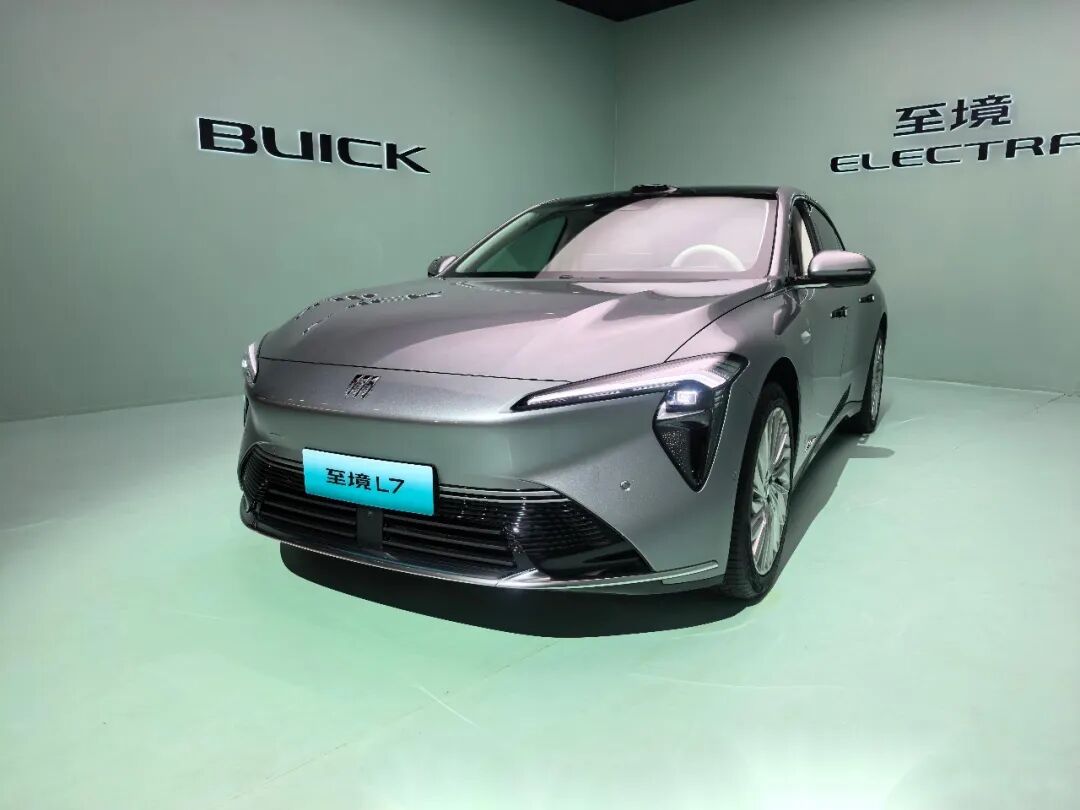
The operational turnaround began earlier. In 2025, SAIC-GM’s sales rebounded to 535,000 units, up 22.99% YoY; GM’s China business turned profitable for multiple quarters.
It first proved it no longer needed constant headquarters support, then that Chinese-defined NEVs could win markets.
Thus, the renewal discussion shifted: from whether SAIC-GM should exist to how to maximize its value.
This capability didn’t emerge suddenly. Founded alongside SAIC-GM in 1997, PATAC evolved from localization and redesigns to full vehicle development. In 2010, its fully developed Sail sedan launched and went overseas; over two decades, it developed over 30 series and 150 models for Buick, Chevrolet, and Cadillac.
Previously, this capability adapted GM’s global products for China. Now, in the ZHIJING era, Chinese-defined products fill gaps in GM’s global lineup.
Chinese JVs exporting products is no longer rare. Volkswagen, Nissan, Mazda, and Kia are sending China-developed and -produced models overseas.
What differs is the scale of openness: the more vital overseas profits and capacity are, the clearer the boundaries foreign partners set; the more overseas systems need support, the more space Chinese teams get.
GM’s uniqueness lies in its minimal conflict between protecting North American profits (
-
![]()
Royalties Outstrip Licensing Fees for the First Time: Arm’s Leasing Business Thrives
-
![]()
What changes will happen to the fate of Musk and Tesla?
-
![]()
Google’s Farewell: The Era of Large Models Steps into the ‘Garage Phase’
-
![]()
Blue Light Fades: The Dawn of a New Era for Intelligent Driving Lighting
-
![]()
Over 140,000 Charging Stations Undergo Spot Checks for Charging Accuracy; Non-Compliant Units Face Operational Ban
-
![]()
Tesla is Just the Start: China’s ‘Super Catfish’ is Set to Revolutionize Europe
-
![]()
Europe's 'Lagging' Struggle: The Legacy of a Decade-Old Misstep
-
![]()
BAT's Rematch in AI Office: What's Baidu's Strategy?