Tencent Breaks Through: WorkBuddy Tops the Charts in 60 Days
 08/07 2026
 354
354

On March 9, 2026, WorkBuddy was launched. No one expected that within 90 days, the product would grow into China's largest desktop AI agent, with 20.97 million monthly visits, surpassing the combined total of the second and third-ranked competitors.
This is an atypical Tencent-style victory.
Tencent's past strategy was to "strike after others have blazed the trail," waiting for others to explore the path before leveraging its social network and traffic to take shortcuts. However, WorkBuddy's playbook is the complete opposite: Tencent was the first to establish the desktop AI agent category. While ByteDance and Alibaba's similar products were struggling to reach a million monthly active users, WorkBuddy stood alone at the ten-million mark.
Dowson Tong said, "No commercialization targets were set for the Buddy team," but the implications behind this statement run much deeper than its literal meaning. Tencent is not betting on the profitability of a single product but on securing a strategic entry point.
WorkBuddy's growth trajectory appears "abnormal" in any SaaS market.
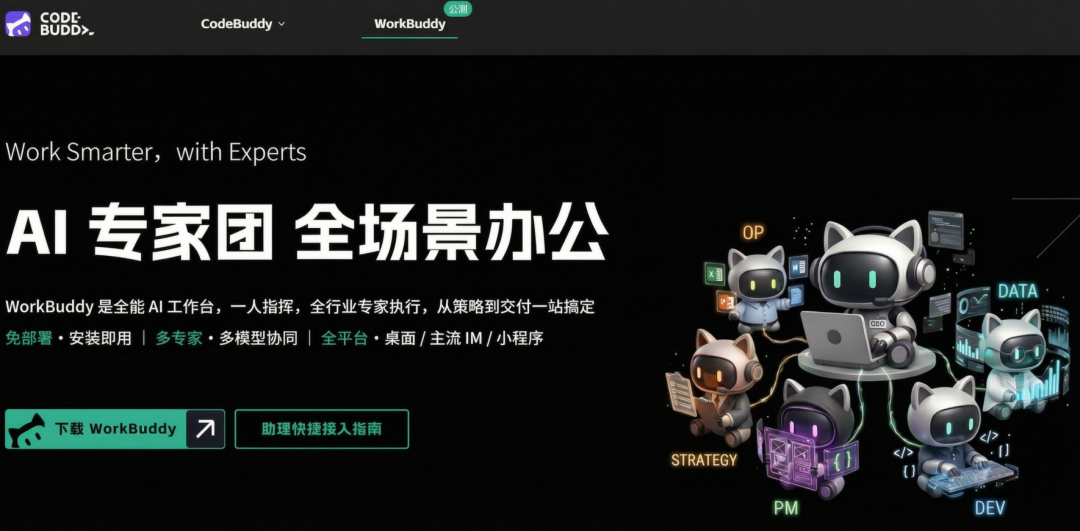
Image Source: Internet
In its first month, the PC version recorded 8.85 million monthly visits, immediately topping the charts among 15 mainstream competitors. Three months later, this figure soared to 20.97 million, a 2.4-fold increase. According to Analysys' survey, 15% of respondents said they "used WorkBuddy most frequently," leading all competitors.
Even more intriguing is the traffic structure. ByteDance's TRAE IDE and Kozi combined have approximately 14.41 million monthly visits, but this is the sum of two products. Alibaba's QoderWork has 7.88 million visits. WorkBuddy alone surpasses the second-ranked total by 6.56 million visits.
This is not "slightly ahead" but "a clear lead."
The traditional explanation is that "Tencent has traffic." However, this explanation falls short. If traffic could solve everything, Weishi would not have lost to Douyin, Tencent Weibo would not have shut down, and Tencent Docs would not have struggled for five years to catch up with Shimo.
WorkBuddy's growth secrets lie deeper.
Over the past two years, the spotlight in the AI sector has been almost entirely on consumer-facing chatbots like Doubao, Kimi, and Wenxin Yiyan, with massive investments in user acquisition and engagement. Meanwhile, WorkBuddy, a "desktop intelligent agent that gets work done," achieved the top spot in the domestic market within 60 days of launch without large-scale marketing.
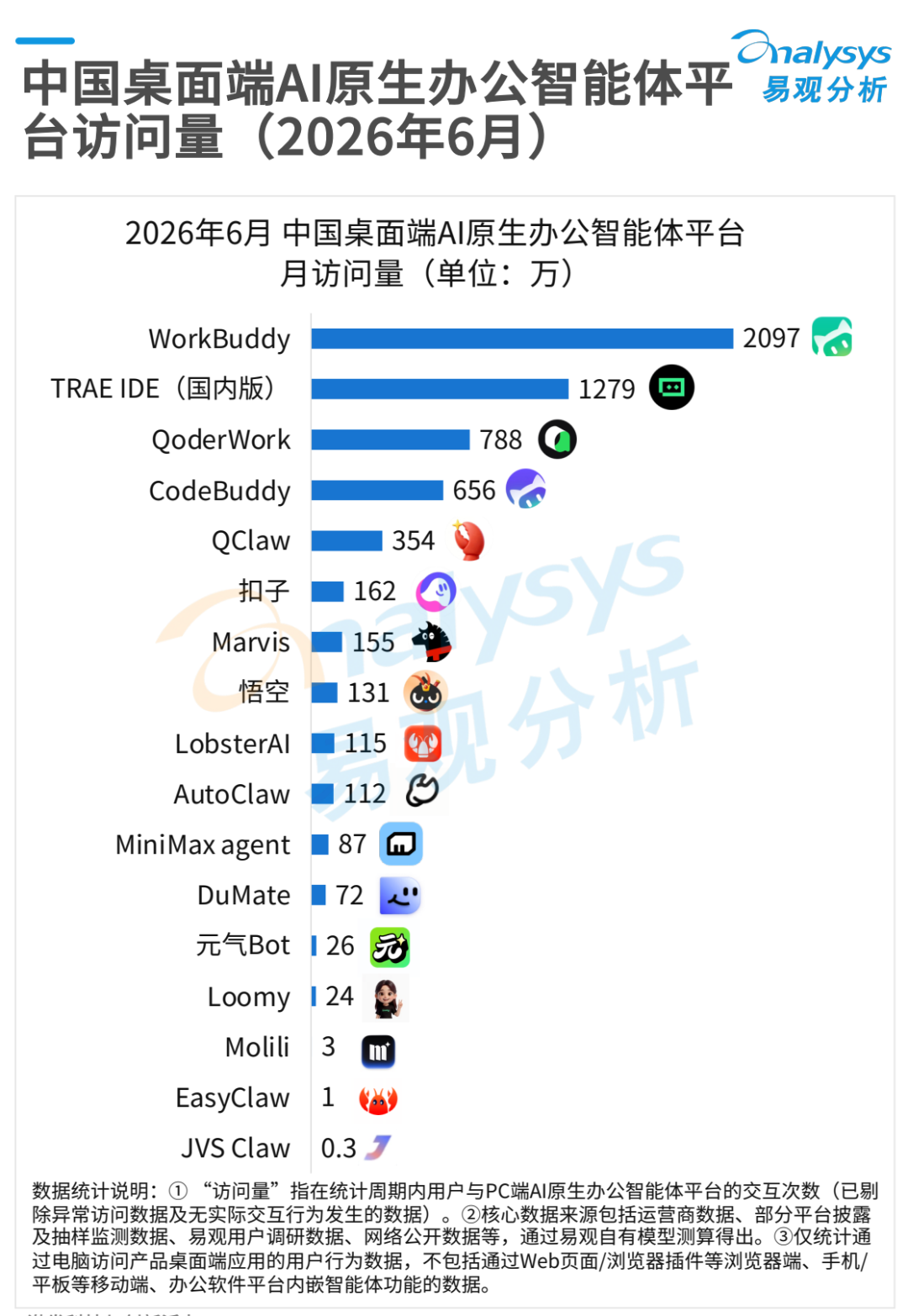
Image Source: Internet
The question arises: Why did Tencent bet on a "productive desktop intelligent agent" when the consumer AI market was fiercely competitive? How did it break through in just 60 days?
The answer lies in a positioning overlooked by most—it is not a chatbot but a productive assistant.
Three Things WorkBuddy Got Right
The first thing: Transforming AI from "chatting" to "getting work done."
AI products on the market generally fall into two categories: "dialog boxes" where you chat to get text responses, and "tools" where you click buttons to execute preset workflows. WorkBuddy took a third path—a native desktop intelligent agent. It is not a chat window embedded in a browser but a "digital employee" with file read/write permissions, capable of executing Shell commands and cross-application scheduling.
Users describe a task in natural language, such as "Help me organize all invoices from last month into a table, sort them by amount, and generate a cost analysis PPT." WorkBuddy will decompose the task, search for files, read content, manipulate Excel and PPT, and deliver the results—all without the user touching a mouse.
This is not "AI answering questions" but "AI completing work." The difference lies between information gain and labor substitution.
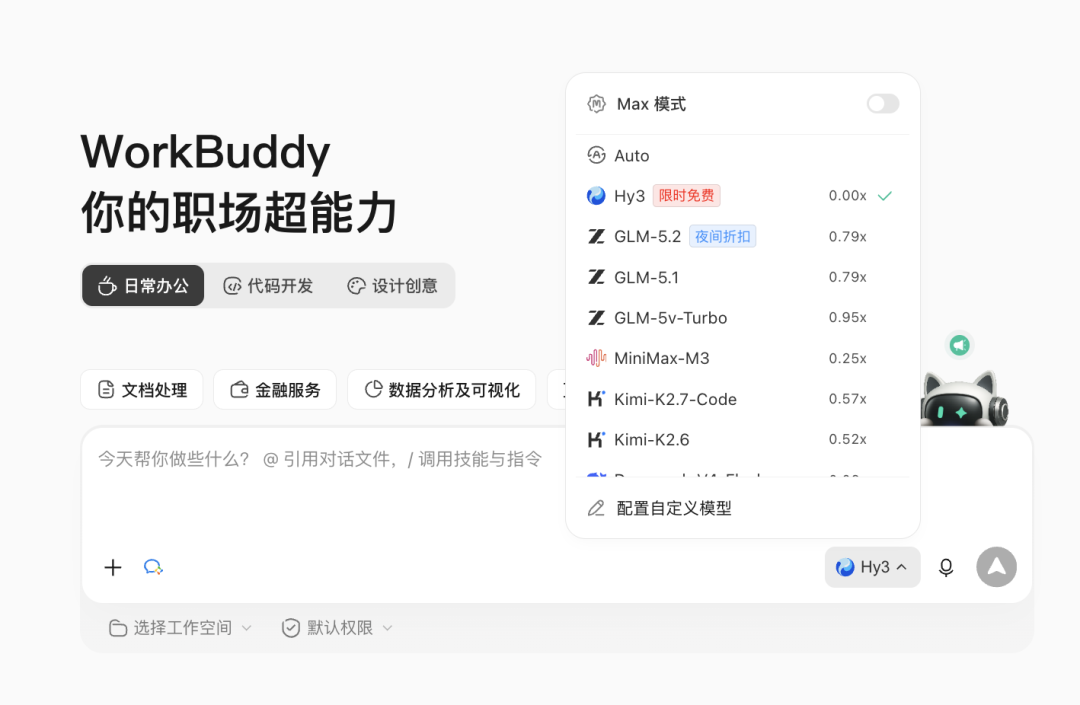
Image Source: Internet
The second thing: Turning WeChat into a remote control.
WorkBuddy's "multi-device Linkage " (multi-device interconnection) is not just simple cross-platform synchronization; the mobile app can remotely issue commands to the desktop version. A simple instruction in the WeChat Mini Program, such as "Help me translate the contract PDF on the desktop into English," sets WorkBuddy to work. Once the task is completed, the results can be shared back to WeChat with one click.
The brilliance of this design lies in transforming WeChat's "connectivity" with 1.3 billion monthly active users into WorkBuddy's "remote control capability." Users do not need to be at their computers to have AI assist them—the phone becomes the command center, and the computer the execution terminal. While ByteDance and Alibaba can create equally capable desktop agents, they cannot replicate a "remote control" reaching 1.3 billion people.
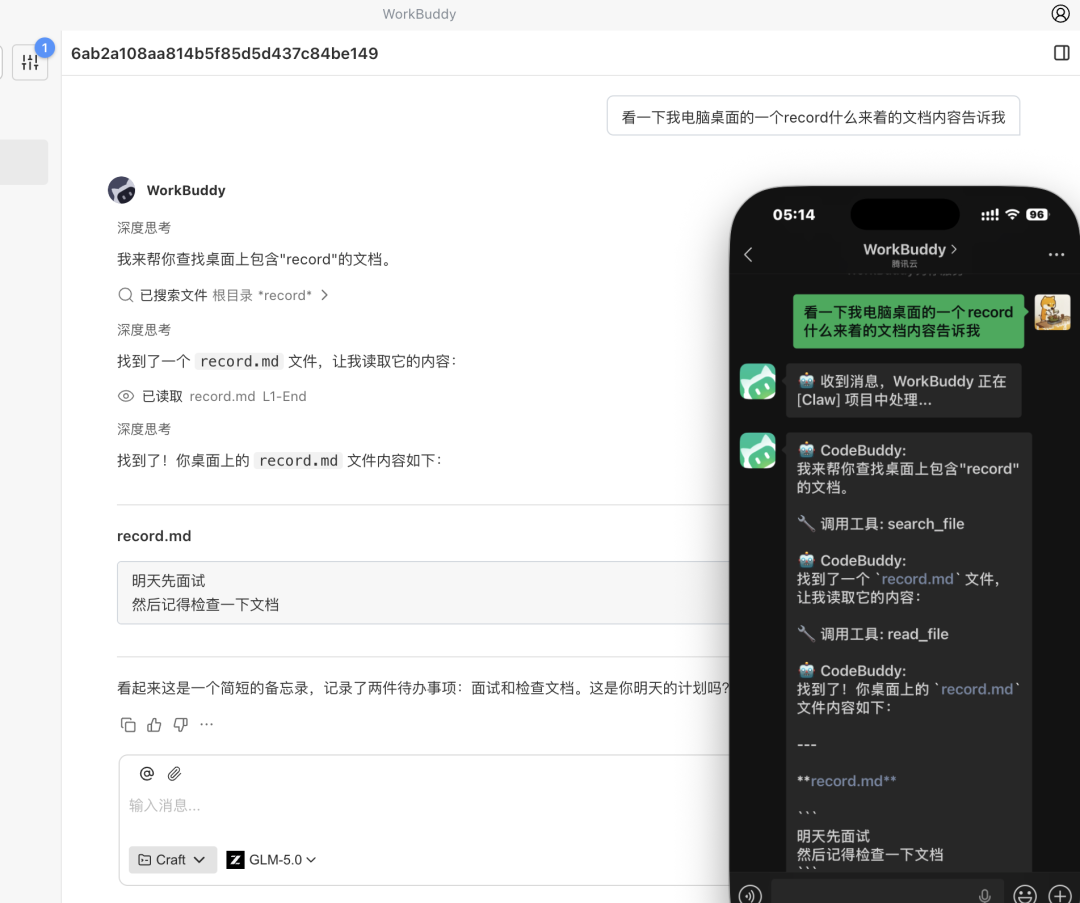
Image Source: Internet
The third thing: Alleviating corporate concerns with a triple-layer security mechanism.
The biggest fear for enterprises deploying AI is not "usability" but "security." WorkBuddy's security architecture is worth examining closely:
The first layer is a localized AI execution engine where raw file content does not leave the user's computer; only necessary contextual summaries are sent to the cloud-based large model. The second layer employs iOA zero-trust gateways and PC Manager sandboxes, with dual-layer permission isolation. High-risk operations (file deletion, system configuration changes) require secondary confirmation via pop-up windows. The third layer automatically generates traceable Trace IDs for every task executed by the enterprise version's agent, recording them on a compliance dashboard to meet Class III audit requirements under China's Cybersecurity Classification Protection 2.0.
The commercial implication of this architecture is that WorkBuddy is among the first products in China to pass the China Academy of Information and Communications Technology's "Claw Trusted Capability Assessment." When government agencies and financial institutions select AI office tools, "certified by CAICT" carries more weight than any technical white paper. Indeed, "Bay lift ," China's first provincial-level government AI hub, is already in trial operation in Guangzhou, with WorkBuddy as a core office component.
WorkBuddy's commercial operations are also noteworthy, following a typical funnel approach. The free trial version builds Word of mouth (reputation), personal subscriptions cater to tiered needs, and the enterprise version monetizes through per-seat fees. The personal version offers four tiers—free, standard, premium, and flagship—while the enterprise SaaS version charges 198 RMB per user per month, and the private cloud version costs 316 RMB per user per month. This system has delivered tangible results: over 3,000 enterprise clients, more than 140,000 paid seats, an approximate annual recurring revenue (ARR) of 300 million RMB, and a paid user retention rate of nearly 80%.
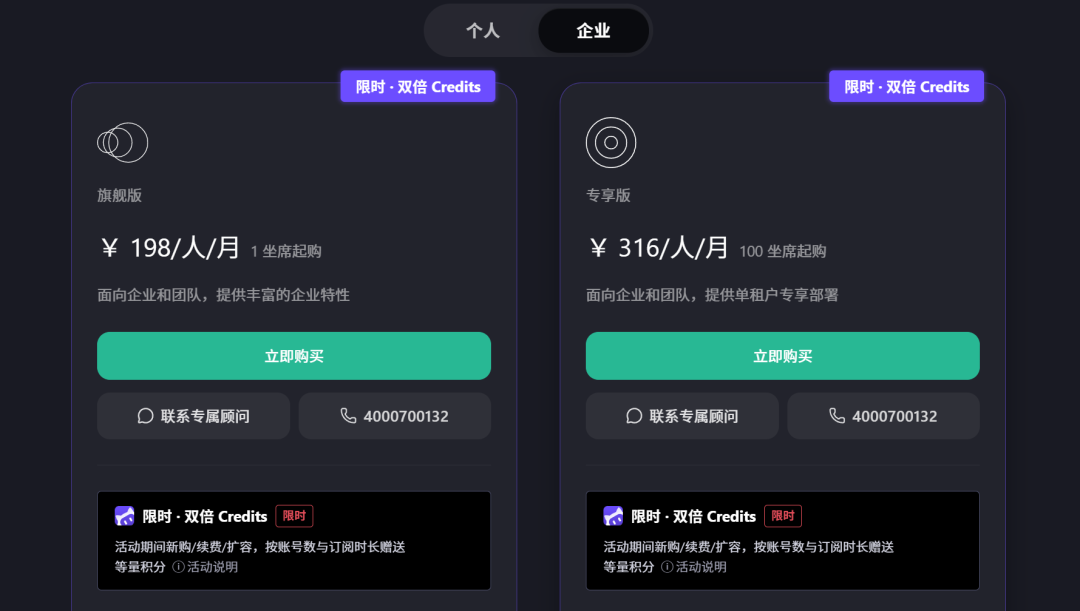
Image Source: WorkBuddy Official Website
The data supports the effectiveness of this approach. The iPhone version has accumulated approximately 874,000 downloads, with daily downloads surging to 84,500 in late July and a seven-day average of 52,800—2.4 times the 30-day daily average. Total usage reached 74.33 million times from April to June, a 167.2% increase, with a stable DAU/MAU ratio of 65%-75%, indicating high user retention rather than one-time experimentation.
Thus, WorkBuddy reached the top within 60 days. However, reaching the summit is just the beginning; the real test is whether it can maintain its footing in a battleground surrounded by giants.
The Frontline of Giant Confrontation
WorkBuddy's rivals are no pushovers.
In July 2026, Alibaba merged QoderWork, Wukong, and MuleRun into "QwenWork," positioning it as a one-stop AI agent platform led by DingTalk's new CEO, Chen Yusen. It emphasizes "not just conversation but delivery," deeply integrating with the DingTalk ecosystem (800 million cumulative users, 26 million+ enterprise organizations). DingTalk's AI assistants operate within IM and approval workflows, enhancing organizational collaboration.
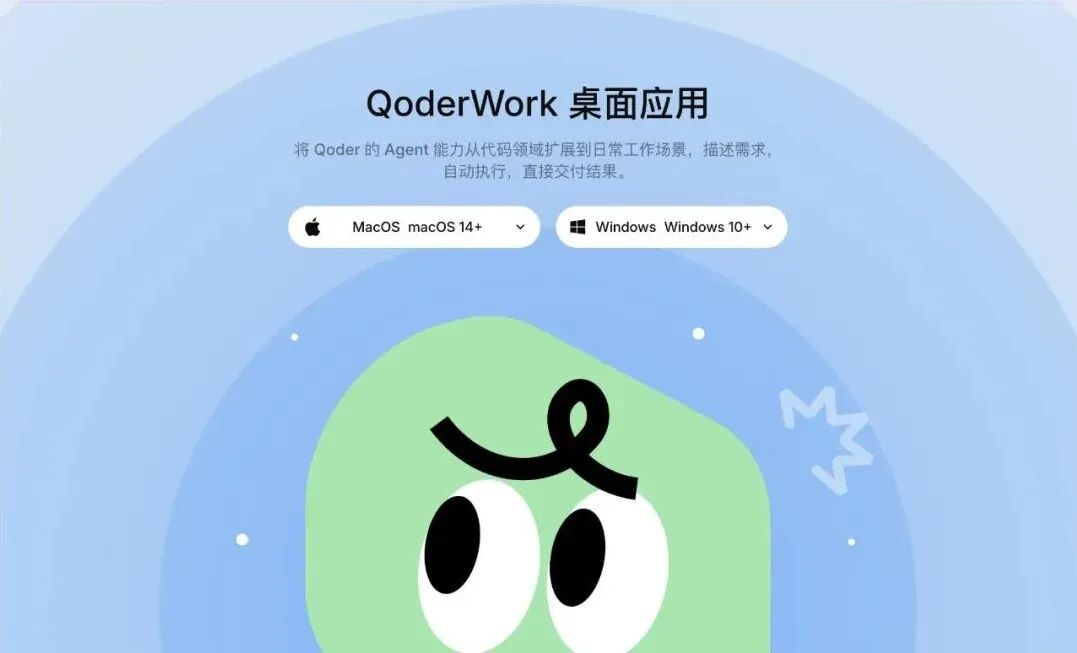
Image Source: Internet
Is user experience the most critical factor for intelligent agents? The answer is likely no. Current large models are far from reaching their full potential, as evidenced by frequent updates in model rankings, with leading models changing every one to two months. Users naturally gravitate toward better, more advanced models.
In the July 2026 SuperCLUE Chinese large model evaluation, Qwen 3.8 Max topped the charts with a score of 71.48, surpassing Kimi-K3. It excelled in hallucination control and agent task planning—dimensions crucial for office agents. Hallucinations refer to inaccuracies like mismatched "BYD wholesale data" or "inaccurate popular car model statistics" reported by WorkBuddy users. Task planning issues involve "multi-step nested tasks going off track, getting stuck, or crashing," common user complaints about WorkBuddy.
In other words, WorkBuddy's two most criticized shortcomings align precisely with Alibaba's model strengths. This is no coincidence but a competitive blind spot.
ByteDance's desktop AI strategy extends beyond Doubao. It employs a three-pronged approach with TRAE, Kozi, and Doubao, covering developers, general users, and knowledge workers—the broadest coverage among competitors.
TRAE, ByteDance's AI-native IDE, has over 6 million registered developers and 1.6 million monthly active users, leading in Chinese semantic understanding accuracy. However, TRAE's biggest change this year is not code completion but the launch of TraeWork, a new AI office platform available on desktop, web, and mobile. TraeWork is not an IDE accessory ( accessory -ancillary product) but an independent office agent entry point, targeting developers initially before expanding to all knowledge workers needing intelligent office solutions.
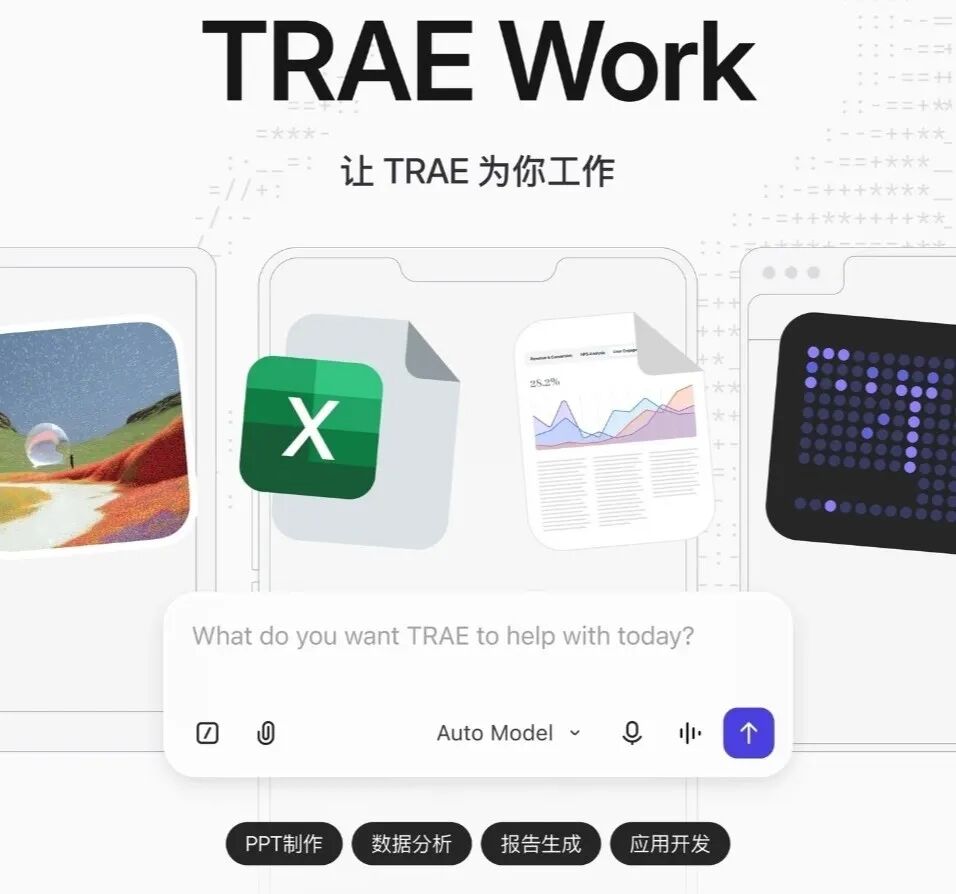
Image Source: Internet
Kozi is ByteDance's AI agent platform, whose 2.0 version introduced Agent Skills (toolkits encapsulating best practices), Agent Plan (complex goal decomposition and progress tracking), and Agent Office (direct handling of Word/PPT/Excel). The key innovation is the Skill Store, where developers package professional expertise into reusable skill modules for sale, allowing users to install them as needed. This means ByteDance does not need to develop all office agents itself but leverages the ecosystem for supply. Once the Skill Store gains traction, ByteDance will enjoy cost advantages in office agent variety.
TRAE extends from IDE to office platform, Kozi uses an agent factory + skill store for ecosystem supply, and Doubao + Feishu integrate enterprise context and office depth for productivity closed loop ( closed loop -closed loop). Once these three lines converge, ByteDance's desktop AI coverage will span developers, general users, and enterprise knowledge workers with virtually no gaps. WorkBuddy's competitive narrative must evolve from "facing Doubao alone" to "countering ByteDance's triple threat."
Image Source: Internet
In the desktop AI war, WorkBuddy has established a 12-month lead within three months. However, the real test lies ahead: when the industry shifts from "having an AI agent" to "whose agent is better," can Tencent find the sharpest balance between model capability and ecosystem depth?
Epilogue
Historically, Tencent has never lacked "good products"—what it lacks is "irreplaceable products." For WorkBuddy to break this curse, it needs more than additional features, lower prices, or greater WeChat integration. It needs users to instinctively open WorkBuddy one morning, just as they instinctively open WeChat.
- END -
-
![]()
Wang Huiwen, Former Meituan Executive, Achieves 20-Fold ROI, Supports 24 AI Startups
-
![]()
Another AI Computing Power Unicorn Launches IPO! Founded by a Changjiang Scholar
-
![]()
OFILM Holdings Secures Zhongke Daojing, Marking a Significant Leap in the Optical Communication Industry!
-
What Will Be the Next Key Battleground for Large Models After AI Coding?
-
![]()
Leapmotor's Sales Soar, Yet Hidden Concerns Loom
-
![]()
China’s Action Camera Market Soars: 3.12 Million Units Sold in Six Months, DJI Secures 74% Dominance
-
![]()
Zhang Yiming: Strategic Retreat as a Path Forward
-
![]()
Exploring Charging for Some Features of QianWen App: Can It Follow the Path of Doubao?