Changan Invests 225 Million Yuan to Dive into the “Humanoid Robot Race” and Accelerate Its Innovation
 12/01 2025
 545
545
On November 29, China's Changan Automobile announced its plan to invest 225 million yuan to co-establish Changan Tianshu Intelligent Robot Technology Co., Ltd., securing a 50% stake. With a registered capital of 450 million yuan, this new venture marks Changan Automobile's official entry into the rapidly expanding “humanoid robot creation” arena.
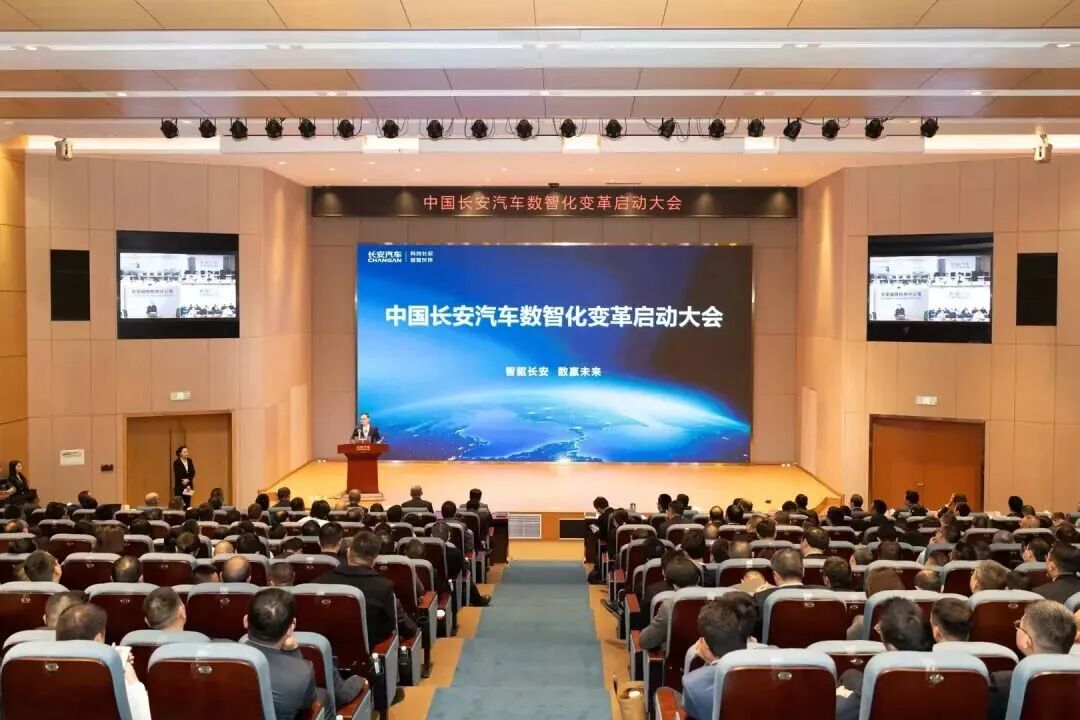
Meanwhile, China Changan Automobile Group recently hosted a Digital and Intelligent Transformation Launch Conference, unveiling the Tianshu Plan. This represents another significant upgrade in Changan's digital and intelligent transformation journey, following the 2018 “Beidou Tianshu” strategy.
Urgent Shift from “Beidou” to “Tianshu”
Changan Automobile's 225 million yuan investment in the robot sector underscores the urgent need for transformation amid escalating competition in the automotive industry. Despite selling over 2.37 million vehicles from January to October this year, with new energy vehicles accounting for more than 36%, Changan faces mounting competitive pressure in the new energy and intelligent sectors.
Companies like BYD and Tesla continue to lead in electrification, while XPENG Motors recently showcased a humanoid robot and announced plans for mass production by 2026, highlighting tech automakers' ability to break through cross-sector technologies.
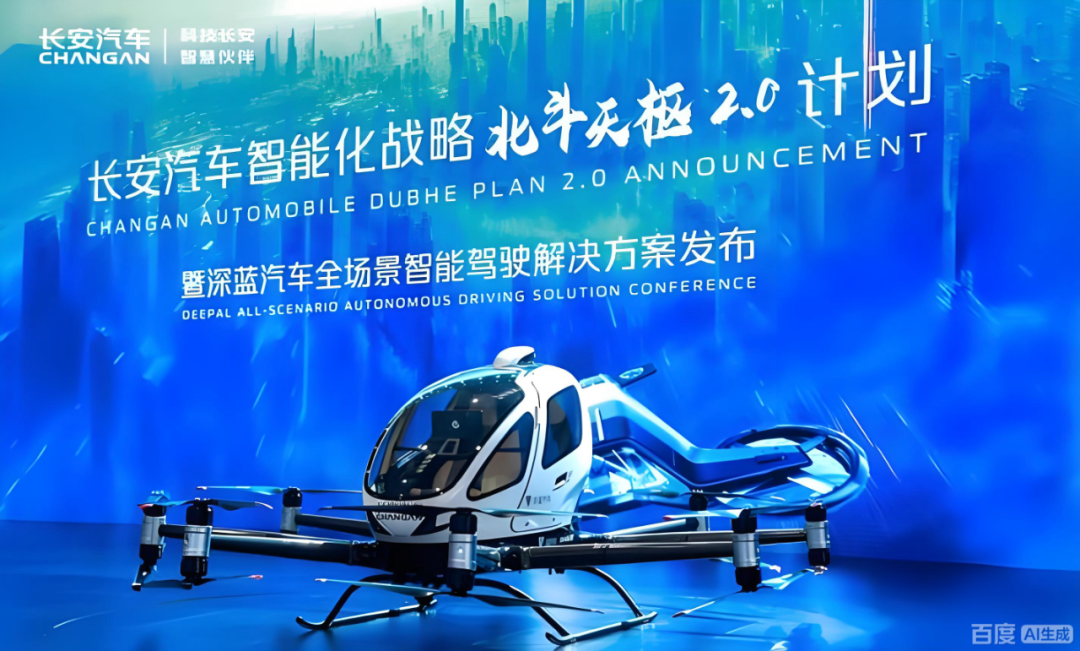
Faced with a fiercely competitive landscape, Zhu Huarong, Chairman of China Changan Automobile, expressed a strong sense of urgency at the Digital and Intelligent Transformation Launch Conference. He explicitly stated, “The essence of digital and intelligent transformation lies in systematically reconstructing business processes, operational models, and value creation methods with data as the core asset.”
The 2018 “Beidou Tianshu” plan initiated Changan's intelligent transformation. Six years later, the “Tianshu Plan” signifies a deeper and more systematic phase in Changan's digital and intelligent journey. Compared to its predecessor, the Tianshu Plan places greater emphasis on the digital reconstruction of the entire value chain.
Zhu Huarong stressed the need to build a data-driven, traffic-pulled, and ecologically collaborative digital system covering the entire lifecycle of “research, production, supply, marketing, and transportation” as well as “buying, selling, using, repairing, and servicing.” This approach transcends traditional technological upgrades, pointing towards a fundamental transformation of business operational models.
Regarding specific implementation paths, Zhao Fei, General Manager of Changan Automobile, proposed a more operational plan: “We need to break down work into the smallest business units, unify data standard systems, and build an efficient data platform.” This pragmatic approach, starting from the basics, reflects Changan's determination in this transformation.
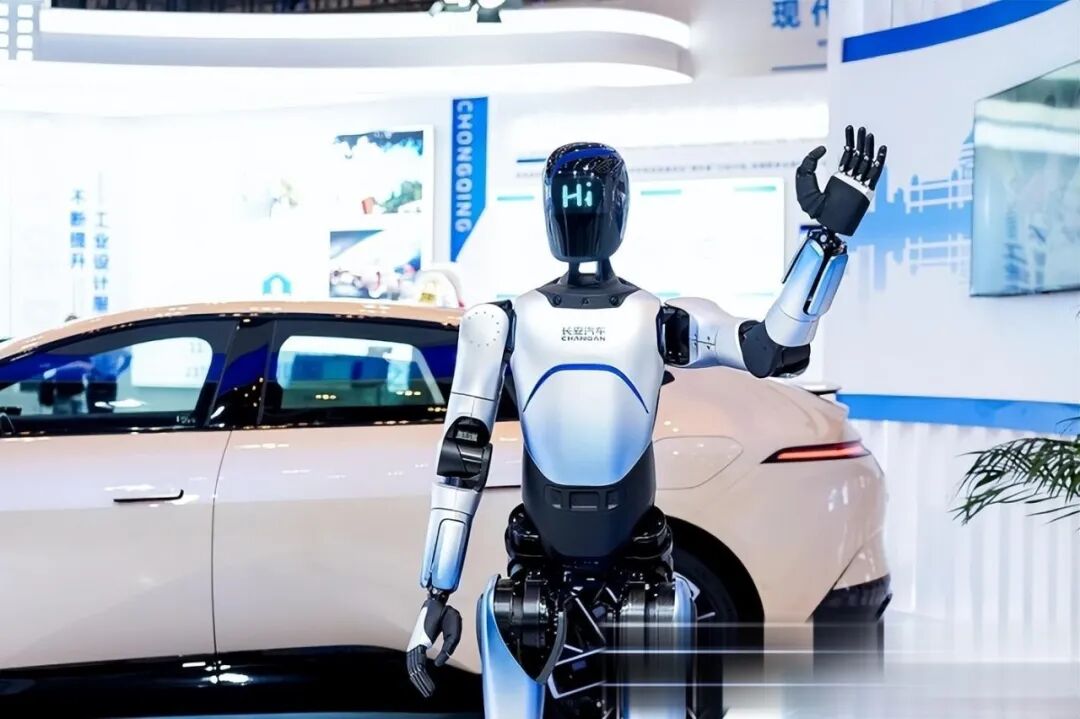
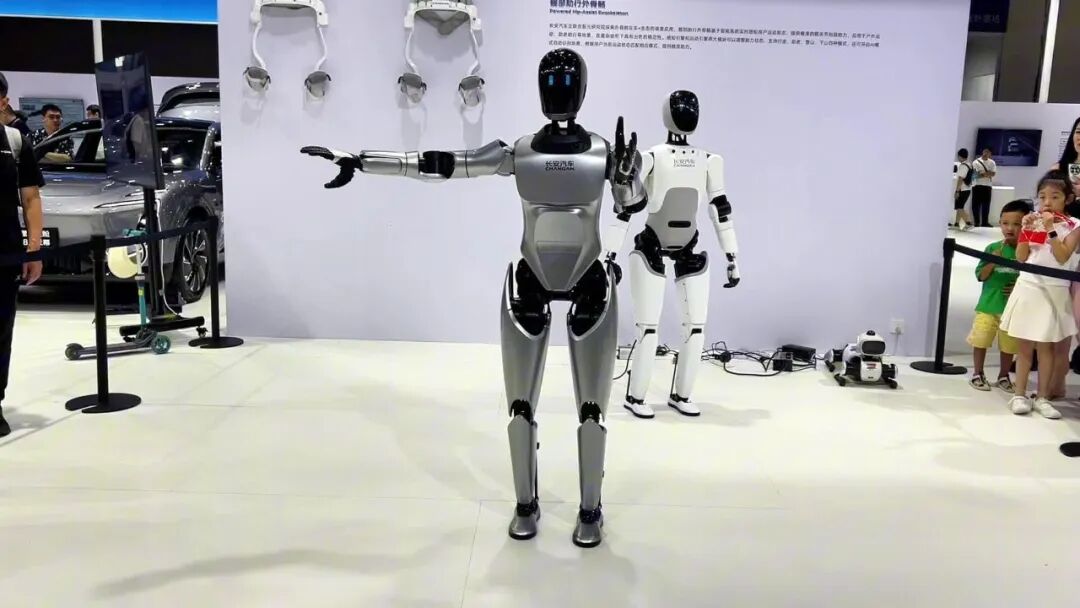
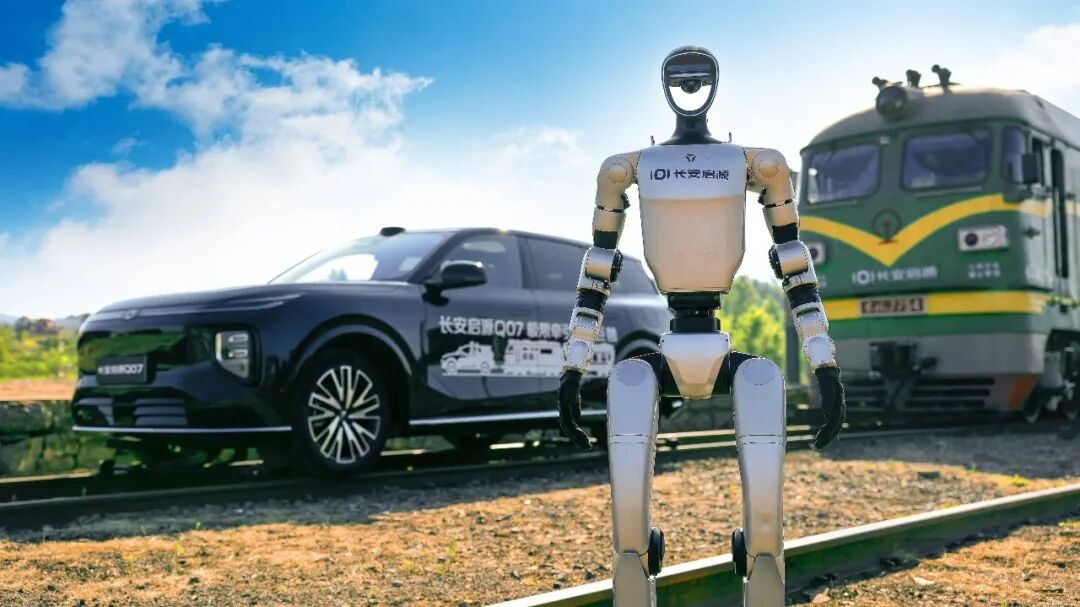
The robot sector has emerged as a key choice for Changan to seek breakthroughs. According to the plan, Changan will release humanoid robot products before 2027 and achieve mass production of humanoid automotive robots by 2028. This layout not only follows industry trends but also serves as a natural extension of its digital and intelligent strategy.
Intensifying Competition Among Automakers in “Humanoid Robot Creation”
The robot industry is becoming a new battleground where automakers are vying to establish a presence, and Changan's 225 million yuan investment is just a microcosm of this competition. Shortly before Changan unveiled the Tianshu Plan, XPENG Motors showcased its latest-generation humanoid robot, capable of walking, grasping, and human-machine interaction, and announced plans for mass production by the end of 2026.
This “humanoid robot creation movement” has swept across the entire automotive industry: Chery Automobile established a robot company, “Mojia Zhichuang,” in January this year and quickly launched the humanoid robot “Moyin”; Great Wall Motors reached a cooperation agreement with Unitree Robotics; while BYD and BAIC Group have indirectly entered the sector through investments in robot companies.
According to incomplete statistics, approximately 18 automakers worldwide have entered the humanoid robot sector. This number continues to grow, indicating widespread optimism about the robot industry's prospects. China Changan Automobile's 225 million yuan investment in establishing a robot company positions it as a strategic carrier for Changan's robot industry, focusing on intelligent humanoid robot technology and aiming to create “embodied intelligence” innovative products, driving mutual empowerment between automobiles and robots.
A securities firm's research report provides an in-depth analysis of automakers' unique advantages in the robot sector, pointing out that automakers possess three core competencies in the humanoid robot sector: the reusability of technological accumulations, a mature supply chain system, and ready-made application scenarios, all laying the foundation for rapid mass production. Meanwhile, industry experts believe that humanoid robots can undertake repetitive tasks such as welding, painting, and assembly in automotive manufacturing, and serve as reception consultants in after-sales service, achieving value reconstruction across the entire industrial chain.
A Key Move in the Digital and Intelligent Transformation Strategy
Changan Automobile's 225 million yuan investment in the robot sector is not merely a business expansion but a key move in its digital and intelligent transformation strategy. The mutual empowerment between automobiles and robots will serve as a new engine driving Changan's digital and intelligent transformation, carrying profound strategic significance.
From a technological perspective, Changan Automobile's years of accumulation in the autonomous driving sector have laid a solid foundation for its research and development of embodied intelligent robots. The core modules of autonomous driving technology, such as environmental perception, decision-making planning, and control execution, highly overlap with the core technologies of robots.
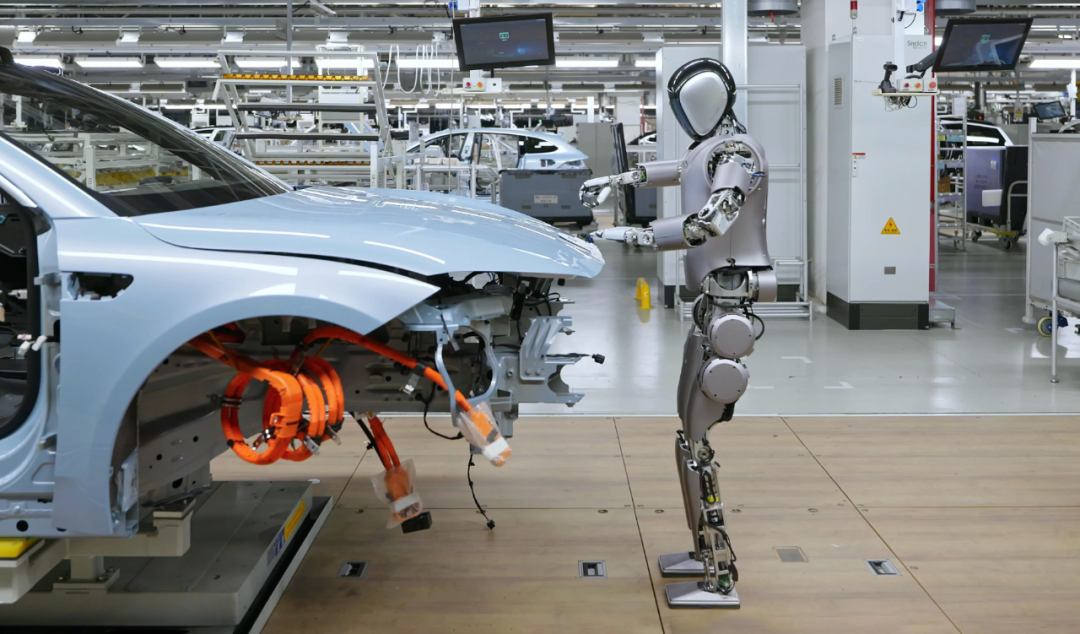
From a manufacturing perspective, automotive factories themselves provide real application scenarios for production lines, where humanoid robots can be deployed and accelerate technological iteration. Changan's Liangjiang Plant in Chongqing has already begun pilot applications of robots for component delivery and quality inspection, with preliminary data showing efficiency improvements of over 30%.
From a supply chain perspective, while new energy vehicles consist of tens of thousands of components, humanoid robots require only over a thousand, with significant overlaps in their supply chains. Changan Automobile's mature supply chain management system can be directly applied to robot production, achieving cost reductions through economies of scale.
China Changan Automobile has developed a robot prototype named “Xiao'an.” It is reported that this robot stands 169 centimeters tall, weighs 69 kilograms, has 40 degrees of freedom, and a battery life exceeding two hours. It can perform various functions such as human-machine interaction, martial arts demonstrations, and assisting in work.
However, the industry also faces numerous challenges. Dexterous hand technology is currently one of the main bottlenecks for humanoid robots. He Xiaopeng, Chairman of XPENG Motors, previously revealed that in factory environments, robot hands are prone to damage and may need replacement in less than a month.
Zhu Huarong's speech at the Digital and Intelligent Transformation Launch Conference reveals a deeper consideration behind Changan Automobile's robot layout: “The essence of digital and intelligent transformation lies in systematically reconstructing business processes, operational models, and value creation methods with data as the core asset.”
As a crucial entry point for data collection and application, robots will become a key node in Changan's construction of a digital and intelligent ecosystem. Through the deployment of robots in production, sales, service, and other sectors, Changan can acquire vast amounts of real-time data, thereby optimizing business processes, innovating operational models, and truly achieving data-driven digital and intelligent transformation.
Policy support also facilitates this transformation. Li Chao, Deputy Director of the Policy Research Office at the National Development and Reform Commission, stated that to promote the healthy and standardized development of the embodied intelligence industry, the commission will improve the access and exit mechanisms for embodied intelligence and accelerate the establishment of industry standards and evaluation systems.
Conclusion:
Behind the 225 million yuan investment lies a significant decision by China Changan Automobile regarding its future development path. From the Beidou Tianshu to the Tianshu Plan, and from automobile manufacturing to “humanoid robot creation,” Changan Automobile is opening up a second front in its digital and intelligent transformation.
As Zhu Huarong said, the goal is to “blaze a new trail and break new ground.” This new path points not only towards digital and intelligent transformation but also towards leapfrog development through the robot industry. As automakers begin to “create humanoids,” the boundaries of the automotive industry are being thoroughly broken.
In today's increasingly fierce competition in the new energy vehicle sector, Changan Automobile's 225 million yuan investment in “humanoid robot creation” not only redefines the future industrial landscape but also represents a key move in seeking breakthroughs amid the wave of intelligence. With the in-depth advancement of the Tianshu Plan and continuous layout in the robot industry, Changan Automobile is poised to achieve a splendid transformation from a traditional manufacturing enterprise to a technology-driven company.
-
![]()
ByteDance, DJI, and Xiaohongshu Secure Top Three Positions Among China’s Fastest-Growing Unicorns
-
Tesla's in-car voice system in China is finally learning to 'understand human language'
-
![]()
Foreigners Are Amazed: Chinese Electric Vehicle Drive Systems Unveil Innovative 'Poses'
-
![]()
700,000 Brothers and the Future of Robots: Behind JD.com's 'Nirvana Plan'
-
![]()
Zhipu's Trillion-Dollar Valuation: A New Chapter for China's AI
-
![]()
Is Laifen, a 'Dyson Alternative' on the Rise, Now Ensnared by the 'Alternative Curse'?
-
![]()
Beyond Patents: Insta360 and DJI Compete in Retail
-
![]()
Piercing Through Industry Chaos: The Curtain Rises on Compliance for Autonomous Driving