Have Car Bosses Given Up on Live Streaming?
 12/29 2025
 611
611
Traffic Gaming in the Automotive Sphere
The automotive industry once buzzed with the trend of 'bosses selling cars,' a phenomenon where almost everyone from the top echelons got involved. However, this fad suddenly faded, giving way to a surge of celebrity appearances and endorsement contests at product launches.
Consider the current landscape: Ideal has its ideal brand ambassador, Yi Yangqianxi; Zhijie R7 boasts Liu Yifei; Geely Xingyuan is endorsed by Cecilia Cheung; Hongqi has Sun Yingsha as its brand ambassador; Mercedes-Benz's new all-electric CLA is partnered with Wang Chuqin; Buick Zhijing L7 features Zhu Yilong; Mazda EZ-60 is represented by Cyndi Wang; Volvo XC70 has Hu Ge as its ambassador; Denza N9 is endorsed by Gao Yuanyuan; Cadillac boasts Ni Ni and Fan Zhendong as its ambassadors; Chery Exeed has Jane Zhang; Lotus Car brand ambassador is Jin Chen; NIO ES8's chief experience officer is Karen Mok; Beijing Off-Road BJ30 Traveler has Li Gengxi as its ambassador; and Deepal L06's brand ambassador is Liu Haocun...
In recent months, it has become almost standard practice for automotive companies to feature celebrities in various capacities at product launches. Some draw inspiration from witty car owner badge puns, some invite popular celebrities to exude youth and fashion, some engage sports stars to highlight the brand's enterprising spirit, some enlist veteran actors to reflect taste and style, and others bring in crossover celebrities to showcase boundless creativity. Third-party statistics reveal that in the first half of 2025, the automotive industry experienced the most rapid year-on-year growth in new endorsements.
Unlike fast-moving consumer goods, celebrity endorsements have minimal practical impact on car sales. The shift from 'car elders collectively live streaming' to bosses stepping down en masse, with celebrities once again taking center stage, raises questions: Is this driven by automotive companies' anxiety over current traffic or fear of being overwhelmed by traffic after excessive personal-enterprise binding?
Marketing Upheaval
Just a year ago, following Xiaomi founder Lei Jun's unprecedented success in drawing traffic for Xiaomi Cars using his personal IP, many automotive bigwigs jumped on the bandwagon, eager to partake in this traffic feast.
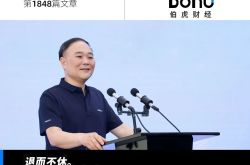
Li Bin, Chairman and CEO of NIO; Li Shufu, Chairman of Geely Holding Group; Wei Jianjun, Chairman of Great Wall Motors; and several other automotive leaders all personally engaged in live streaming. For automotive companies, live streaming seemed to have become a defensive business strategy, with the general consensus being, 'Not doing it means falling behind.' Whoever masters new internet marketing tactics may secure overwhelming traffic. Even Qi Ru Group Chairman Yin Tongyue quipped, 'This is forcing me, a sixty-something-year-old, to live stream. Everyone's doing it.'
However, the excitement was short-lived. After multiple live streaming attempts, automotive companies realized that traffic does not equate to sales, and not everyone can replicate Lei Jun's success. Disillusionment with live streaming temporarily brought an end to this feast.
Yet, the failure of this marketing tactic did not diminish automotive companies' anxiety over traffic. Wei Jianjun once mentioned in a live stream, 'The era demands we step out of our comfort zones and adapt to the new era. As corporate leaders, interacting with consumers and heeding their feedback and suggestions is a compulsory course and an inevitable task.'
At this juncture, automotive leaders' marketing operations have shifted to the next phase: automotive executives are flocking to social platforms, especially short video realms, which have become new communication fronts. They are interacting with users in a more normalized manner, attempting to shift from pursuing short-term traffic to valuing long-term brand building.
If automotive executives' foray into short video platforms represents a steady flow, then this year, 'celebrity appearances' have become a 'battlefield' for automotive companies to showcase their prowess.
In today's information-overloaded society, attention has become a scarce marketing resource. The intensifying competition in the new energy vehicle market and product homogenization have made automotive marketing increasingly challenging. In other words, when products cannot differentiate themselves, storytelling and emotional value become essential. What automotive leaders failed to achieve last year now falls to celebrities.
Traffic Gaming in the Automotive Industry
From the current 'frenzied' celebrity feast, new stories that automotive companies excel at telling are unfolding one after another.
For instance, when XPeng launched its new P7, it enlisted Zhong Chuxi, Ning Zetao, Zhu Zhengting, and Chen Yanxi, among others, to correspond to different colored models and cater to diverse audiences. For female ambassadors, celebrities like Wang Ziwen, Chen Yanxi, and Zhong Chuxi were chosen, even sparking talk of the P7 as a 'sober, strong female lead vehicle.'
Ideal Motors' partnership with Yi Yangqianxi is seen as a strategic breakthrough after 'growing pains,' also expected to attract more young Gen Z consumers to the brand, which is deeply rooted in the 'daddy car' image.
Rumors suggest Leapmotor's choice of Fei Xiang is closely tied to its high-end strategy. Leapmotor officials stated, 'At this stage, especially for the D-series model launch, the ambassador can resonate with users, better convey the car's philosophy, and enhance marketing efficiency.'
There's also Zhu Yilong and Gao Yuanyuan, who align with Buick and Denza's pursuit of middle-class, urban, quality lifestyle tones; Hu Ge, whose persona aligns with Volvo's safe and refined traits; and Sha Yi's family, which fits Leadao L90's brand tone of harmony and multi-child households...
Notably, possibly influenced by previous 'endorsement scandals,' automotive companies now opt for shorter-term, lower-risk collaborations and 'veteran celebrities' with stable reputations. Figures like Aaron Kwok, Richie Jen, Cecilia Cheung, and Cyndi Wang have become 'safe bets' for automotive companies.
Young popular celebrities, stable middle-aged 'veteran actors,' and happy 'family concepts'—how to precisely reach target demographics and achieve niche breakthroughs has become a strategy for automotive companies in selecting celebrity appearances.
Unlike fast-moving consumer goods, as a major consumer item second only to real estate, both celebrities and automotive companies clearly understand that no form of appearance or endorsement can significantly boost car sales in a short time. Yet, in today's fiercely competitive environment, attracting consumer attention is a major hurdle for automotive companies. 'Obscurity in both fame and infamy' is a nightmare not just for the entertainment industry but also for other markets and sectors.
Consumers don't buy cars because of celebrities; the final decision hinges on product strength, price, configuration, and other hard strengths. Li Bin admitted, 'Traffic is important, but users buy your car because of the product, not traffic. It's still about returning to the essence of products and services.'
But before consumers learn about these, traffic remains crucial. This might be the real reason automotive bosses collectively stepped back from live streaming to manage enterprises, yet flocked to partner with celebrities and compete in endorsements.
This article is original to China News Auto. Feel free to share it with friends. For media reprints, please credit the author and source at the beginning. Any media or self-media creating video or audio scripts from this article's content will face legal consequences.
-
![]()
Net Profit Drops Over 90%: Is the 'Big-Spending' Post-90s Billionaire Now Facing Hard Times?
-
![]()
Low Prices Alone Can't Sustain Liang Wenfeng's AGI Aspirations
-
![]()
Li Shufu Advances to the 'Next Battlefield'
-
![]()
Tearing Off the Female Label and Embracing Both Electric and Hybrid: How Far Can GWM's Ora Go in Its Self-Rescue Journey?
-
![]()
SAIC Motor Makes a Comeback: Net Profit Jumps 72% to 7.87 Billion in H1, Gross Margin Reaches Seven-Year Peak
-
![]()
FAW Achieves New Milestone in Solar Charging! Why Is It So Challenging for Cars to 'Harness the Sun'?
-
AI: The Catalyst for Industrial Transformation
-
Is Lixiang Innovation the Next Luxshare Precision? Backed by the Wang Laichun Family, It Relies on One Client for 70% of Its Earnings