Uber's $1 Billion 'Flash Marriage' with Waabi: Can Its Dream of Driverless Taxis, Powered by 'Simulation Cheats,' Be Realized?
 02/02 2026
 669
669
Introduction
Recently, a startup called Waabi has been making waves in the news. It secured a staggering $1 billion in funding and inked an exclusive deal with Uber. The secret to its success? AI drivers trained in a 'virtual world'.
This isn't just a nod of approval from the capital markets; it's a bold statement about the future of technology. The key to autonomous driving might not lie in the number of miles driven in the real world, but rather in how deeply and intelligently AI can 'think' within the digital realm.
Let's delve deeper into this topic with 'Driverless Car Coming' (WeChat Public Account: Driverless Car Coming)!
(For more details, please click: 'Uber Freight CEO Joins Autonomous Truck Company Waabi, Plans to Launch Driverless Commercial Services by Year-End')
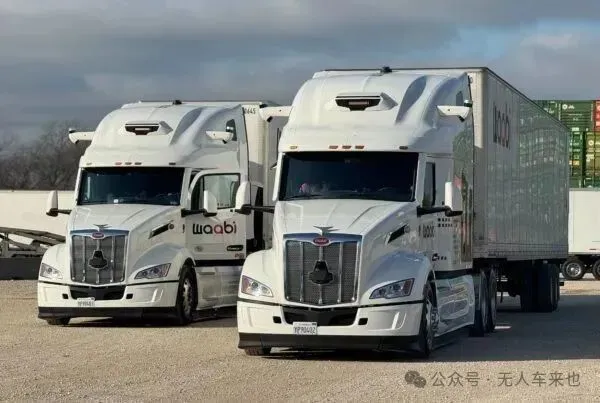
I: A 'Light-Asset' Technological Revolution: How Simulation Engines Are Challenging Data Dominance
Waabi's core innovation lies in its radical reimagining of the industry's traditional 'heavy-asset' model through its technical approach.
Traditional autonomous driving R&D is like a data-hungry monster. It relies on thousands of test vehicles tirelessly collecting real-world road conditions, supplemented by massive engineering teams for data cleaning, labeling, and model training.
This process is not only costly and slow but also struggles to cover extreme, rare 'long-tail scenarios'.
Waabi's answer to this challenge is a closed-loop simulation platform known as 'Waabi World'.
Similar to WeRide's GENESIS, it trains AI by creating digital twins of the real world.
However, Waabi takes it a step further. It claims its AI has stronger generalization capabilities, enabling it to learn from a small number of cases, much like humans, and autonomously improve through simulation-based mistakes.
For Waabi's founder, Raquel Urtasun, this collaboration is a 'career highlight'.
In 2016, she joined Uber and built its autonomous driving perception team from the ground up.
In 2020, after Uber sold its autonomous division to Aurora, she decided to embark on her own entrepreneurial journey.
Now, as a technical founder, she returns to Uber's ecosystem with a more advanced AI architecture—this time, as a rule-setter, not just a follower.
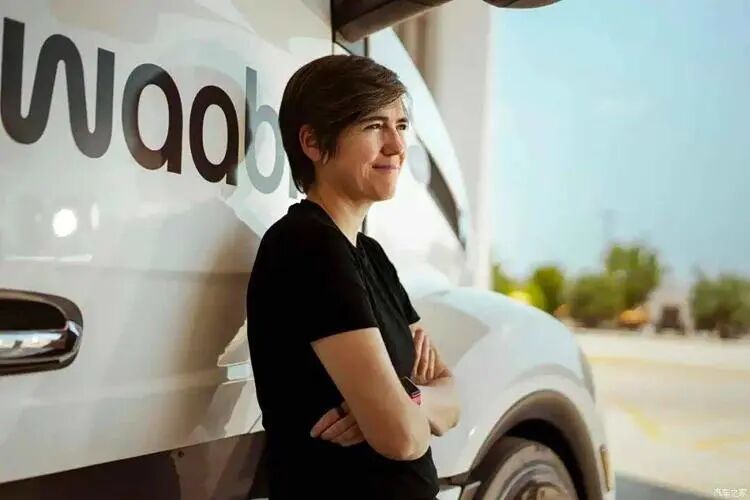
Urtasun expresses unwavering confidence in Waabi's autonomous driving simulation:
'Unlike first-gen autonomous tech, we don't need massive teams of technicians or fleets of test vehicles. There's no need for large data centers, excessive energy consumption, or mountains of the latest chips.'
This model significantly reduces marginal R&D costs, shifting the core competitiveness from capital and data accumulation to originality in algorithms and simulation technology.
The $750 million oversubscribed Series C funding round, led by Khosla Ventures, is a resounding endorsement from the capital markets for this capital-efficient technological pathway.
II: The Ultimate Test for the 'General AI Driver': From Autonomous Trucks to Driverless Taxis
With substantial funding in hand, Waabi has made a daring strategic move:
Transitioning from the relatively structured field of autonomous trucks to the vastly more complex realm of driverless taxis (Robotaxi).
Previously, even industry giants like Waymo faced challenges in managing both domains simultaneously, eventually retreating from freight operations.
Waabi's contrarian approach stems from its claimed 'single general AI architecture'.
This architecture aims to replicate human-like universal driving cognition and decision-making, enabling seamless adaptation across vehicle platforms (trucks, passenger cars) and operational scenarios (highway freight, urban mobility) with minimal adjustments.
If successful, this vision would represent a revolutionary breakthrough in standardizing and scaling autonomous driving technology, fundamentally resolving the current fragmented approach of 'one scenario, one system'.
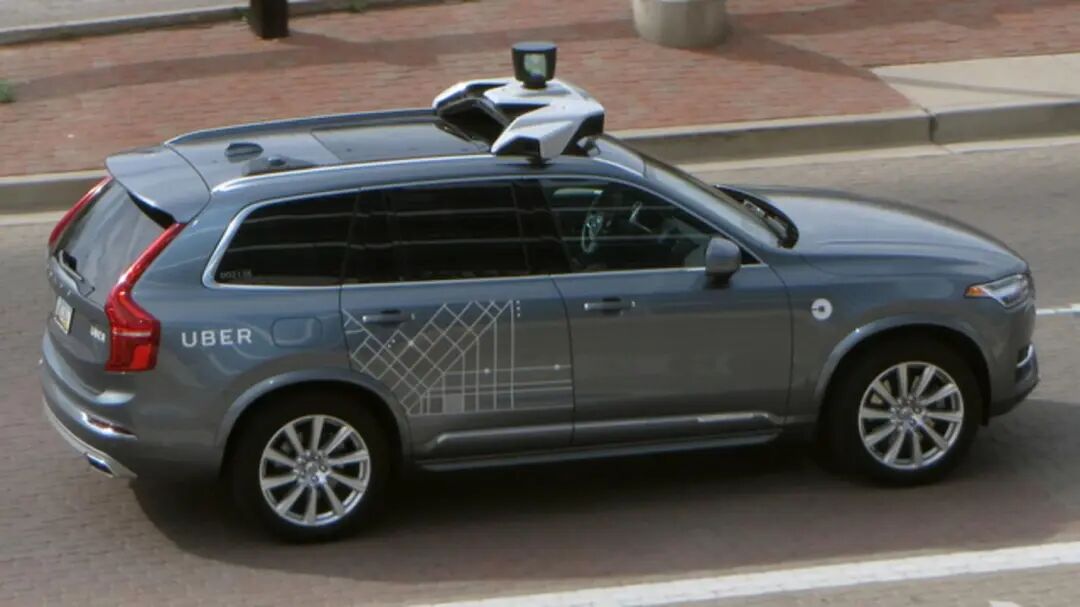
The deep collaboration with Uber serves as a rigorous stress test for this vision.
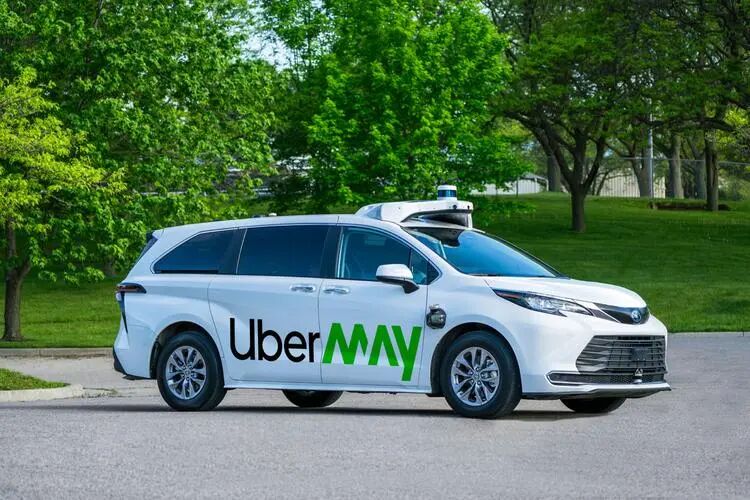
Uber not only provides approximately $250 million in milestone-based capital support but also commits to exclusively deploying over 25,000 Waabi-equipped Robotaxis on its global platform.
The value of this deal extends far beyond monetary terms; it offers Waabi unparalleled commercialization opportunities, real-world data feedback loops, and immense brand endorsement.
III: Reshaping Industry Dynamics: Supply Chains, Competitive Barriers, and Future Ecosystems
Waabi's meteoric rise is having a profound and far-reaching impact on the autonomous driving industry.
Firstly, it may reshape supply chain division and collaboration models.
Waabi insists on deep cooperation with original equipment manufacturers (OEMs), integrating its proprietary sensors and computing architectures from the vehicle design phase to create 'fully redundant, vertically integrated platforms'.
This 'turnkey' solution aligns perfectly with the needs of mobility platforms like Uber.
Uber's establishment of a new Autonomous Labs division to collect data for partners also hints at a future 'OEM builds vehicles, Waabi-like firms build 'drivers,' mobility platforms operate' industrial triangle.
Secondly, it's redefining the core competitive barriers in the industry.
The 'data moat' constructed by traditional players through millions or even billions of road-test miles may see its relative value diminished by advanced simulation technologies.
Future competition will hinge on simulation realism, AI learning efficiency, and generalization capabilities.
As Waabi has already partnered with Volvo in the truck sector, its 'general architecture,' if validated, could unlock amazing potential in robotics and other mobile scenarios, building a horizontal expansion 'technological moat'.
However, significant challenges and skepticism persist.
A persistent 'reality gap' exists between virtual simulations and the physical world.
Modeling and predicting human behavioral uncertainties, sudden mechanical failures, and ever-changing weather and lighting conditions in dynamic urban traffic remain unresolved challenges.
Uber's milestone-based capital payments also subtly reflect commercial partners' cautious attitude toward Waabi's technological timeline.
The outcome of this high-stakes gamble will ultimately answer the fundamental question: Can simulation largely replace real-world validation?
IV: Conclusion: An Industrial Adventure into the Essence of Intelligence
Waabi's story transcends a mere startup's funding and partnerships; it represents a profound technological-philosophical debate in autonomous driving:
Does intelligence emerge more from 'experiential accumulation' in the physical world or 'cognitive abstraction' in the digital realm?
As Waabi's virtual AI drivers, honed in the 'Waabi World,' prepare to take control of thousands of real vehicles on Uber's platform, they carry not just commercial aspirations but an exploration into next-gen AI development pathways.
In summary, 'Driverless Car Coming' (WeChat Public Account: Driverless Car Coming) believes that Waabi is transforming 'heavy assets' into 'light code' through simulation, offering the industry a new playbook. However, the final chapter of autonomous driving must still be written in the real-world mud—simulation can be a shortcut, but safety must always be the foundation. After all, passengers won't pay for 'digital twins'; they care only about arriving home safely. What do you think, dear reader?
#DriverlessCarComing #Driverless #AutonomousDriving #DriverlessVehicles
-
![]()
Enflame Tech's IPO Journey: Navigating Over 5.9 Billion Yuan in Losses and Soaring Debt in Q1 This Year
-
![]()
Trillion-Yuan Giant Li Shufu 'Streamlines': Could Levc Be the Casualty?
-
![]()
AI Competes for Electricity and Generates Power in the Gobi Desert
-
![]()
The First Batch of Victims of the AI Bubble: Programmers
-
![]()
ByteDance, DJI, and Xiaohongshu Secure Top Three Positions Among China’s Fastest-Growing Unicorns
-
Tesla's in-car voice system in China is finally learning to 'understand human language'
-
![]()
Foreigners Are Amazed: Chinese Electric Vehicle Drive Systems Unveil Innovative 'Poses'
-
![]()
700,000 Brothers and the Future of Robots: Behind JD.com's 'Nirvana Plan'