Appliance Titans Join the Trend, Transforming Cars into 'Mobile Living Rooms' for the Spring Festival
 02/24 2026
 598
598
Introduction | Lead
A surge of cross-industry collaboration is sweeping through the automotive and home appliance sectors. Changan's Avatr has teamed up with Haier Cartesys to forge a vehicle-home ecosystem, while BYD and Midea have dismantled the barriers between vehicles and homes. Other major players, such as GAC and Dongfeng, are also delving into ecological integration with appliance giants like Gree. As smart cars evolve into 'mobile living rooms', the significance of connectivity and scenario-based operations is eclipsing that of traditional hardware. This quest to shape the 'Human-Vehicle-Home' ecosystem, targeting a market worth trillions in the coming decade, prompts the question: Is this a fresh exploration by appliance brands venturing into the automotive realm, or merely another ambitious capital maneuver?
Produced by | Heyan Yueche Studio
Written by | Cai Yan
Edited by | He Zi
Full text: 2,090 characters
Reading time: 4 minutes
As the Spring Festival draws near, people are embarking on journeys, whether returning to their roots or seeking adventure in distant lands. Regardless of the destination, there's a universal yearning for a more comfortable ride, ideally integrating home appliances and other conveniences into the car, transforming it into a 'mobile living room'.
It's not just automakers eyeing the potential of cars as 'mobile living rooms'; numerous 'outsiders' are as well. Since the dawn of the domestic new energy era, giants from the appliance, 3C, AI, and even real estate sectors have sought to infiltrate the automotive circle. The rationale is straightforward: electrification has unlocked new possibilities and expansion avenues for cars, further solidifying and amplifying the market potential of the 'Human-Vehicle-Home' ecosystem.
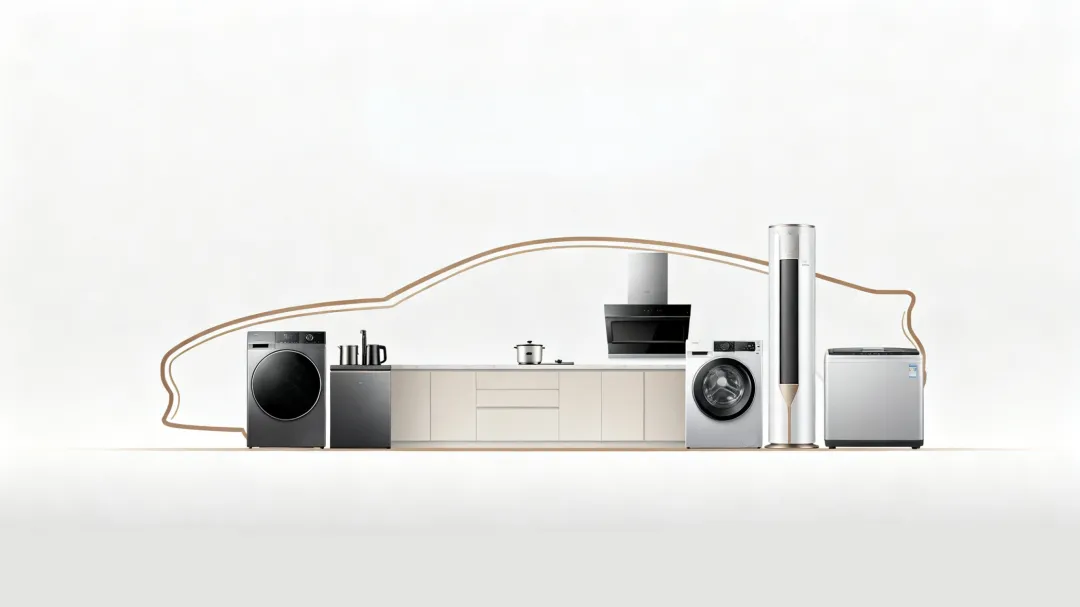
Due to the low entry barriers and boundless opportunities presented by electrification, over the past few years, we've witnessed appliance giants, 3C firms, and real estate companies venturing into car manufacturing. Among these cross-industry players, only Xiaomi remains highly active in the automotive market as an independent brand. The rest have either remained lukewarm or encountered setbacks, such as project collapses, team dispersals, or funding shortages.
Today, as the domestic new energy sector transitions from rapid growth to high-quality development, appliance and 3C giants appear to be finding their ecological niche in the automotive industry. Brands with comprehensive capabilities are naturally thriving, while appliance titans like Midea, Haier, and Gree are integrating as ecosystem partners and suppliers.
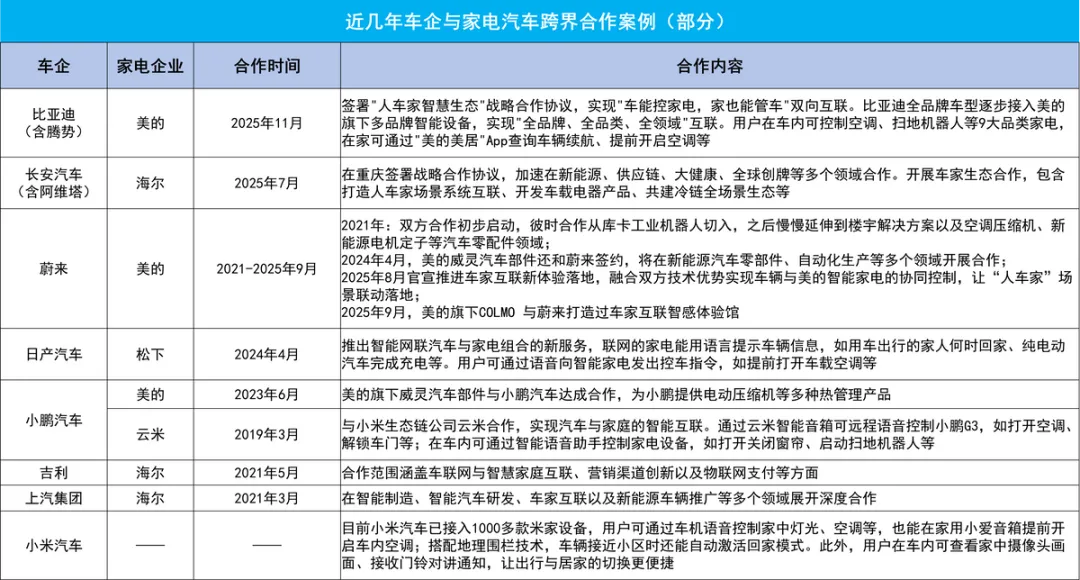
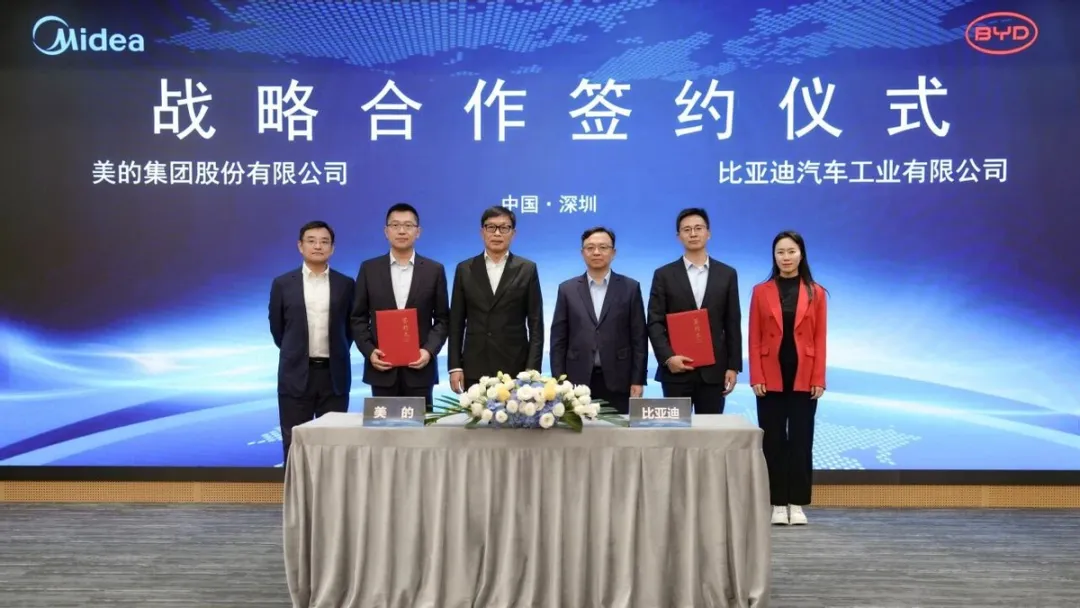
Appliance brands are igniting a new round of 'Human-Vehicle-Home' ecosystem expansion. BYD recently inked a strategic cooperation agreement with Midea Group for a 'Human-Vehicle-Home Smart Ecosystem'. All BYD brands will collaborate extensively with Midea's portfolio, including Midea, COLMO, and Little Swan, to gradually achieve interoperability between smart home appliances, home devices, and IoT-enabled in-car products, creating a seamless, all-encompassing interconnected ecosystem.
Similarly, Changan's Avatr and Haier Cartesys will embark on joint innovation around Avatr's flagship luxury models, focusing on product customization, vehicle-home scenario interoperability, and in-car functional design. Notably, Haier's Chairman Zhou Yunjie stated that Avatr and Haier will integrate vehicle-home interoperability scenarios, incorporating Casarte-branded products like air conditioners, refrigerators, and oxygen generators into vehicles.
Additionally, Midea's Welling Automotive Components, established by Midea, has forged deep collaborations with automotive brands like XPENG and NIO in new energy vehicle components, automated production, and digital construction. Multiple subsidiaries under Gree also produce automotive thermal management systems, components, and solutions, exploring a dual-end linkage development path combining 'B-end supply chain + C-end terminals'.
As the new energy market trend becomes clearer, brand giants are increasingly seeking avenues to connect with automakers. Taking 3C as an example, companies like Huawei, Meizu, Xiaomi, and OPPO have leveraged their software and hardware prowess to make early inroads into the new energy market, now forming strong associations in the automotive smart cockpit sector.
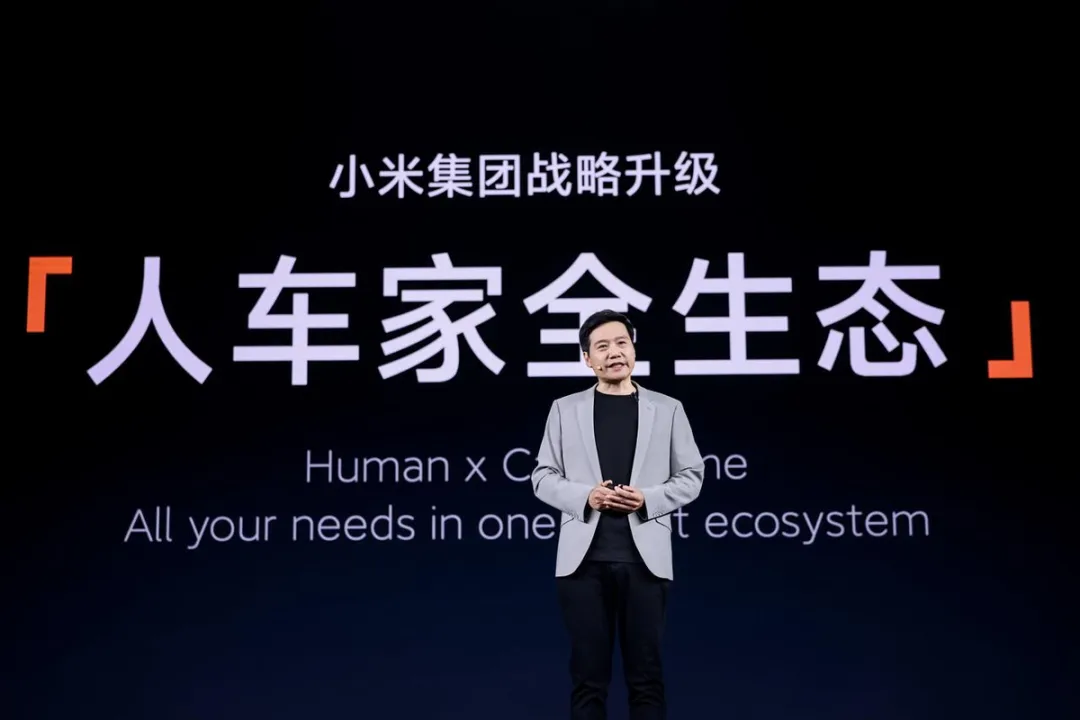
Convergence of Home Appliances and Automobiles
Delving deeper into why appliance and automotive brands are collaborating more closely in recent years, the core reason lies in the shared, broader scenario-based demands of new energy vehicles and smart home appliances.
On one hand, against the backdrop of the market or era, with smartphones already partially integrated with new energy vehicles in certain usage scenarios, consumers will inevitably seek broader smart experiences. Given the deep accumulation in the IoT fields of smartphones and home appliances, the future convergence of 'Human-Vehicle-Home' full-scenario experiences based on the same user ID and habits naturally becomes an industry trend.
On the other hand, for appliance and automotive brands, collaboration not only opens up new markets for appliance products in vehicle adaptation and scenario extension but also allows automakers and appliance companies to leverage each other's user bases to jointly explore new growth avenues.
Vehicle-home collaboration has emerged as the most promising new frontier in the smart industry, with user focus shifting from single-product intelligence and smart home scenarios to seamless smart experiences across multiple life scenarios, where vehicle-home interoperability has become a must-have. The maturity of AI and IoT technologies provides the underlying capabilities for perception, decision-making, and execution in vehicle-home collaboration, driving its transition from concept to large-scale implementation. Simply put, the rapid entry of appliance brands into the automotive ecosystem in recent years is a multifaceted inevitable choice driven by sound internet and IoT infrastructure, consumer demand, and the needs of automakers and appliance companies.
Where is the Home Appliance-Automobile MIX Headed?
The vision of the 'Human-Vehicle-Home' ecosystem achieving interoperability among smartphones, cars, and home appliances is undoubtedly appealing, but where is the next development direction for the integration of home appliances and automobiles? What are the core challenges?
On one hand, it's undeniable that the 'Human-Home-Vehicle' ecosystem is easy to implement and cost-effective, but it currently relies heavily on automakers to drive. Cooperation between automakers and automotive service providers, data integration, and scenario closure often prioritize stability. Therefore, it's foreseeable that most vehicle-home interoperability functions will likely remain at basic levels like 'remote on/off' for some time to come.

Another major challenge is the standardization of new products adapted to in-vehicle scenarios. Before automakers and appliance giants officially partner, the domestic third-party in-vehicle home appliance market is not lacking in expansion products, such as in-vehicle coffee machines, in-vehicle tea tables, and even in-vehicle bathrooms. However, these products often lack intelligent, automotive-grade design and scenario adaptability matching the vehicle. Therefore, if appliance giants can adapt their in-vehicle derivative products to both smart homes and smart cars, they may well find new growth points.
Commentary
Overall, superficial scenario-based experiences do not favor the enhancement of user stickiness. In the era of intelligence, the true 'killer' scenario experiences of the 'Human-Vehicle-Home' ecosystem remain to be unearthed. For any company looking to 'jump on the bandwagon', surviving in another fiercely competitive market often depends not on how thick their brand accumulation is in their original field but on the need to deeply consider the economic and experiential value they can bring to automakers, themselves, and consumers after 'getting on board'.
(This article is original to Heyan Yueche and may not be reproduced without authorization.)
-
![]()
Luna Ultra Entangled in 'National Subsidy Fraud' Controversy, Insta360 Pushed to the Brink by DJI
-
![]()
People have long suffered from splash ads. Will the 'temporarily disappeared' traffic behemoth make a comeback?
-
![]()
GPT 5.6 Reclaims the Throne, Only to Face Strict Controls Again! Has AI Truly Reached a Turning Point?
-
![]()
When the Traffic Bubble Fades, AI Giants Start to Compete on 'Real Skills'
-
![]()
Wenxin Once Integrated Multiple Web Portals, but Its Impact Has Diminished
-
![]()
A 1.388 Million Yuan Answer Sheet: Insights into Huawei's Ultra-Luxury Car Strategy and Potential Concerns from the Debut of Zunjie S800 Grand Design and V800
-
![]()
Luna Ultra Mired in 'National Subsidy Fraud' Controversy, Insta360 Cornered by DJI
-
![]()
Legal Disputes, Share Unlock, and Pricing Controversies Converge: Insta360 Reaches a Pivotal Juncture