Toyota and Nissan Successively Announce Production Cuts: Is the Core of Japanese Auto Industry in Iran at Risk?
 03/26 2026
 583
583
Introduction
With the Strait of Hormuz closed to navigation, geopolitical conflicts are disrupting the global automotive market, prompting Japanese automakers to collectively slow down production.
Recently, as geopolitical tensions in the Middle East continue to escalate, the Strait of Hormuz, a crucial global energy and shipping route, has become a logistical bottleneck for multinational automakers. Japanese automakers, with a strong foothold in the Middle East market, are among the first to be severely impacted, announcing successive production cuts and triggering an industry-wide shakeup that will affect annual sales.
Within a month, Toyota Motor Corporation has announced production cuts for the Middle East market twice, with Nissan Motor Corporation following suit by announcing targeted production cuts at its domestic factories in Japan. In just a few days, two Japanese automotive giants have successively reduced their production capacities, directly attributing the move to export difficulties caused by logistical disruptions in the Strait of Hormuz.
Currently, these automakers are not facing a shortage of component supplies but rather an inability to smoothly transport finished vehicles to the Middle East market. A significant number of vehicles awaiting export are accumulating at domestic factories and ports in Japan, straining storage space and necessitating production cuts as a last resort.
It is well known that the Middle East has always been a vital overseas market for Japanese automobiles and a significant source of sales and profits. It is not only Nissan's second-largest export destination after North America but also a key sales region for Toyota's popular models such as the Land Cruiser and Hilux. In 2025, Japanese car sales in the Middle East exceeded 870,000 units, accounting for nearly 30% of the local market share, with an annual export value reaching as high as 2.45 trillion yen, making it a crucial part of Japan's automotive export landscape.
Currently, the production cuts by the two aforementioned automakers are limited to Japan's dedicated production lines for the Middle East, seemingly having a limited impact. However, geopolitical conflicts show no signs of easing. If the logistical stalemate persists, their production cuts are likely to expand further, severely impacting Japanese car market share in the Middle East and directly reducing Japanese automakers' global annual sales, export revenue, and even disrupting their annual production plans and global布局 (global layout), subjecting the recovering Japanese automotive industry to another sudden external shock.
01 Toyota and Nissan Successively Announce Production Cuts, Middle East Exports in Peril
As the sales leader of Japanese cars in the Middle East, Toyota has been the most aggressive in cutting production.
On March 24, Toyota Motor Corporation announced plans to reduce production by approximately 24,000 units in April for models produced in Japan and exclusively supplied to the Middle East market. Combined with the previously announced production cut of 20,000 units in March, the cumulative production cut from March to the end of April will reach 40,000 units, accounting for 60%-70% of Toyota's monthly exports to the Middle East.
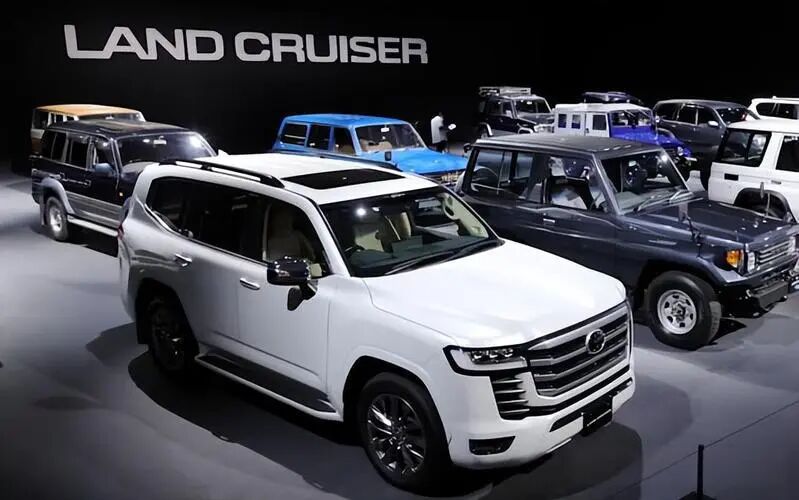
Currently, Toyota has officially notified upstream component suppliers of the adjusted production plan, with the supply chain synchronously following suit to reduce production and avoid component overstocking. The production cuts cover several popular models in the Middle East, including the Land Cruiser series SUVs, Hilux pickups, various family sedans, and commercial vans. These models are key contributors to Toyota's sales and profits in core Middle Eastern markets such as Saudi Arabia and the United Arab Emirates.
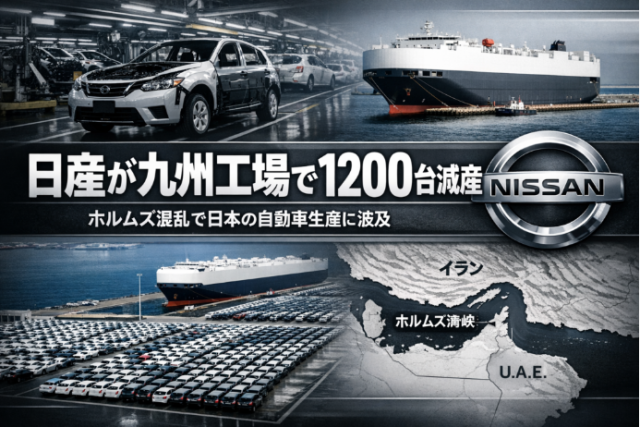
Nissan's production cuts, although smaller in scale, are equally targeted. Affected by the disruption of export transportation to the Middle East, Nissan's Kyushu plant reduced production by approximately 1,200 units in March, focusing on models such as the Rogue (X-Trail) SUV and Serena minivan. The purpose of the production cut is to free up storage space for finished vehicles that cannot be shipped.
It is noteworthy that Nissan Shatai Kyushu Co., Ltd., which produces large SUVs under the Nissan umbrella, was not included in the production cuts. These large SUVs are Nissan's profit powerhouse in the Middle East, with strong market demand and high per-unit profits. Clearly, the automaker is willing to bear storage pressure rather than interrupt production of this core model.
Besides Toyota and Nissan, other Japanese automakers such as Honda and Suzuki have also made varying degrees of capacity adjustments for the Middle East market, although they have not yet announced large-scale production cut plans.
Data shows that the Middle East is one of the most important export markets for Japanese automobiles, with 800,000 Japanese cars shipped from Japan to Middle Eastern countries annually, totaling $15.7 billion in export value. In 2025, Nissan exported 78,000 vehicles from Japan to the Middle East, a year-on-year increase of 24%, making it the only region among Nissan's global exports to achieve positive growth. This hard-won growth momentum has now been completely disrupted by geopolitical conflicts.
For Japanese automakers, the significance of the Middle East market goes far beyond sales figures. From a user perspective, the region's preference for large-displacement fuel-powered vehicles aligns with the traditional strengths of Japanese automakers in fuel-powered vehicles, with per-unit profits far higher than those in mainstream markets in Europe and America. It is also a core battleground for solidifying brand influence and competing with European and American rivals.
Therefore, the current large-scale production cuts will not only create short-term sales gaps and order losses but also gradually weaken the market advantages that Japanese cars have accumulated in the Middle East over the years. If the logistical stalemate persists, the annual export target will be difficult to achieve, and revenue and profits will suffer a tangible impact.
02 Not Just Japanese Cars: Geopolitical Conflicts Sweep Across the Global Auto Market
Of course, from a broader perspective, the shipping crisis in the Strait of Hormuz is not just a dilemma for Japanese cars but a shockwave sweeping across the global automotive industry. This conflict has not only disrupted the export rhythms of major multinational automakers but also driven up international oil prices and disturbed the global automotive supply chain, significantly impacting various brands and links.
For other automakers, the sales impact in the Middle East market is equally not to be ignored.
German, American, and Korean brands have also been established in the Middle East for many years, especially high-end luxury brands and rugged SUV models, which rely on the local market for sales and profits. With shipping disruptions and declining consumer confidence, the delivery of finished vehicles from these brands has also been delayed. Some models that rely on Japanese and Korean production lines to supply the Middle East market are also facing order backlogs and delivery delays.
Meanwhile, with shipping routes blocked, global automotive sea freight costs have surged, disrupting the previously stable cross-border logistics system. Even automakers that do not directly have a strong presence in the Middle East market are facing difficulties such as rising logistics costs and prolonged delivery cycles.
Additionally, the Middle East is a core region for the global petrochemical industry, with a large amount of synthetic rubber, plastics, chemical fibers, and other raw materials needed for automobile manufacturing produced in Middle Eastern countries and relying on the Strait of Hormuz for export. With navigation in the strait restricted, the supply of these chemical raw materials has tightened, and prices have risen, thereby driving up manufacturing costs for global automakers.
The cross-border transportation of some rare metals and automotive electronic components has also been affected. Although the risk of component supply disruptions for automobile assembly plants is currently low, the cost pressure from rising raw material prices will ultimately be passed on to vehicle pricing and corporate profits.
Furthermore, after the outbreak of the conflict, Brent crude oil prices once surged to around $120 per barrel, reaching a recent high. Although they have subsequently declined, they remain high. The rise in oil prices has directly increased the operating costs of fuel-powered vehicles, slightly dampening global consumer willingness to purchase fuel-powered vehicles while boosting market demand for electric and hybrid vehicles.
At the same time, the rising energy costs for domestic manufacturing in countries such as Japan and South Korea, which are highly dependent on Middle Eastern oil imports, have further compressed automakers' profit margins.
It is worth mentioning that the production cuts and supply disruptions of Japanese cars in the Middle East have also left a significant market vacuum. Electric and fuel-powered models from Chinese and European brands have seized the opportunity to gain market share. Previously, the Middle East market favored traditional large-displacement fuel-powered vehicles, but now, with high oil prices and supply chain changes, the local market is also accelerating its transition to new energy vehicle models, presenting new opportunities for Chinese automakers.
Therefore, on the whole, the automotive market shakeup triggered by this geopolitical conflict will result in short-term losses in sales and profits, while in the long term, it will alter the market layouts and supply chain plans of global automakers, ushering in a new round of reshuffling in the previously stable regional market landscape.
Editor-in-Chief: Li Sijia Editor: He Zengrong
THE END
-
![]()
The Unstoppable Rise of 'Optical Progress and Copper Decline': Sunny Optical’s Strategic Vision for the Next Decade
-
![]()
AI + Going Global in the Second Half: No Intermission for Robot Vacuum Cleaners
-
![]()
The Suffering Endured in E-commerce, Walmart Doesn't Want to Repeat in AI
-
![]()
What Does the Doubling of New Energy Vehicle Exports Mean?
-
![]()
Ghosn: 'Only I Can Save Nissan'
-
![]()
Volkswagen Lays Off 100,000 Employees, The Elephant Sits Down
-
![]()
Expanding Production Capacity! Yutong Optics Acquires Approximately 1.5 Hectares of Industrial Land in Chang'an, Dongguan
-
![]()
Why Is Nokia Making a Comeback in the AI Era?