In-depth Analysis: Horizon Robotics Rides Industry Tailwinds but Struggles with Revenue Growth Without Profitability?
 03/26 2026
 649
649

Let’s talk about Horizon Robotics today.
On March 19, Horizon Robotics released its 2025 annual financial report.
This report comes at a critical inflection point for the intelligent driving industry’s explosive growth.
On one hand, there’s rapid scale expansion riding the industry tailwinds, showcasing the leading growth momentum.
On the other, there’s the pressing challenge of revenue growth without improved profitability, leaving the market concerned about its earnings outlook.
So, how will Horizon break through under these circumstances?
Without further ado, let’s dive in.
Hit like first, then read—make it a habit.
Now, let’s enjoy this.
01 Industry Explosion: Horizon Rises on the Tide
By 2025, China’s penetration rate for intelligent driver-assistance systems (ADAS) in passenger vehicles reached 68%. Mid-to-high-tier models featuring highway NOA (Navigate on Autopilot) + urban NOA accounted for 43% of intelligent vehicles, doubling year-on-year.
For every three passenger vehicles sold, two are equipped with intelligent driving capabilities and one with NOA—marking intelligent driving’s transition from a “premium option” to a “standard feature.”
Among Chinese domestic brands’ intelligent vehicles, mid-to-high-tier intelligent driving accounted for 62%, far surpassing the 13% among joint-venture brands.
In the mainstream market for vehicles under RMB 200,000—accounting for 65% of auto sales—NOA-equipped models surged from 5% at the start of the year to over 50% by year-end.
Horizon secured a 44% share of this niche market with its Journey 6 series chips for mid-to-high-tier intelligent driving solutions, claiming the top market share in its first year of mass production.
In the domestic brand ADAS chip market, Horizon led with a 47.7% market share, ranking first among ADAS solution providers for domestic brands.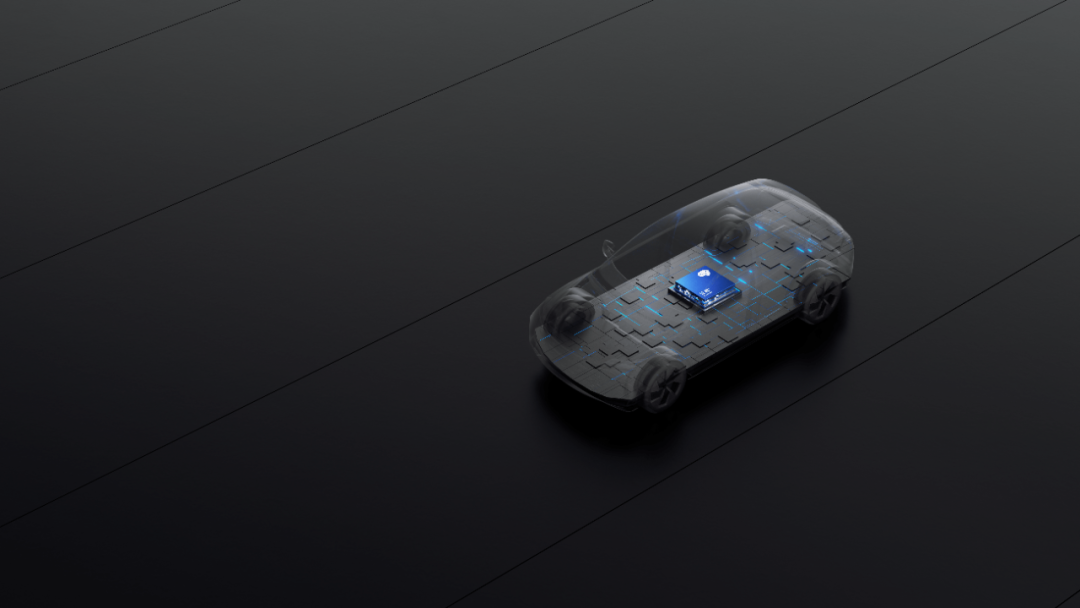
In China’s 2025 NOA chip market for domestic brands, Horizon (14.4%) and Huawei (15.2%) led the pack, forming the industry’s top tier alongside NVIDIA.
Together, these three captured 89% of the market, creating a “one superpower, two strong players” landscape.
In 2025, Horizon’s automotive-grade chip solutions shipped over 4 million units, up 39% year-on-year, achieving both volume and price growth:
Structural optimization: Of the 4 million units, 1.8 million supported NOA functions, accounting for 45%—nearly five times the 2024 figure—and contributing over 80% of revenue.
Price surge: The average selling price (ASP) rose over 75% year-on-year, upgrading from low-end ADAS chips priced at $20–30 to high-value solutions worth hundreds of dollars.
Ecosystem synergy: Over 95% of NOA-enabled chip shipments were delivered through ecosystem partners.
Horizon’s highly anticipated HSD (Horizon Smart Driving) full-scenario urban assisted driving solution entered mass production in November 2025, debuting in 150,000-yuan-class models. Over 22,000 units shipped within a month of launch, indicating strong market potential.
02 The Bright Side: Revenue Surge
The widespread adoption of chips and intelligent driving solutions directly drove robust revenue growth.
In 2025, Horizon’s total revenue reached RMB 3.76 billion, up 57.7% year-on-year.
Revenue from automotive solutions hit RMB 3.557 billion, a 53.9% increase, accounting for 94.6% of total revenue.
This comprises two main segments:
Product solutions: Revenue reached RMB 1.622 billion, rising from 27.9% to 43.2% of total revenue. NOA-enabled chip solutions accounted for 45% of shipments and over 80% of revenue.
Licensing and services: Revenue hit RMB 1.935 billion, declining from 69.1% to 51.4% of total revenue. Beyond its joint venture with Volkswagen’s CARIAD, Japan’s largest auto parts group, Denso, began collaborating on algorithm software licensing, becoming one of Horizon’s top five clients in 2025.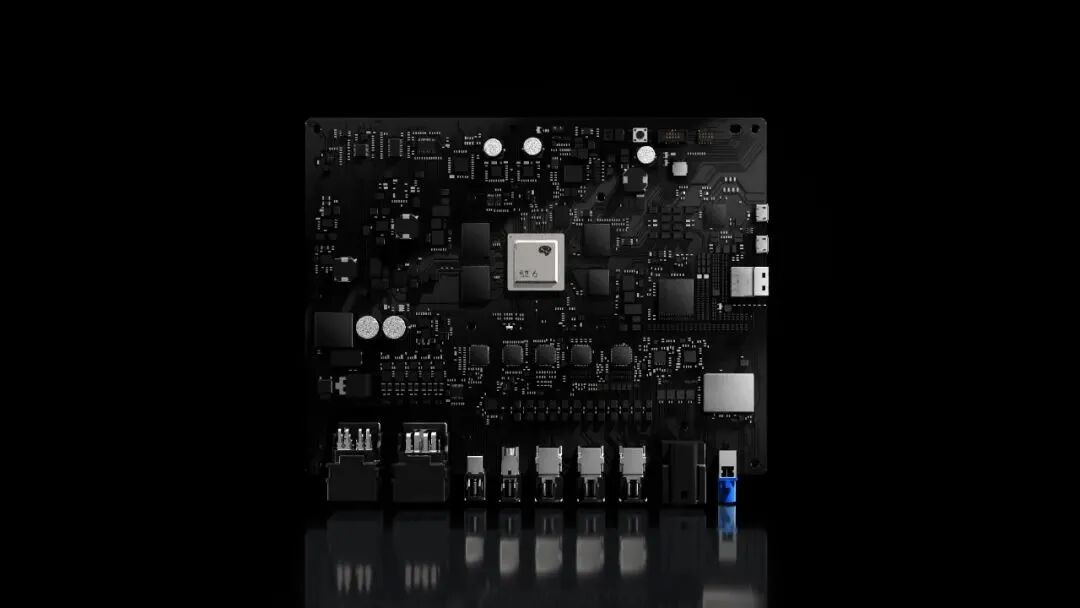
Finally, let’s discuss overseas markets—a core growth opportunity for both the automotive and intelligent driving industries.
Horizon’s global strategy can be summed up in three points: helping domestic brands go global, keeping joint-venture brands competitive, and smartening up international brands.
Empowering domestic brands’ global expansion: By end-2025, Horizon secured design wins for 11 automakers and over 40 export models, with a lifecycle volume of 2 million units, covering China’s top five exporting automakers.
Supporting joint-venture brands: It won design wins for nine joint-venture brands and over 35 domestic models, with non-Volkswagen brands accounting for over 60%. The first model from its joint venture with Volkswagen’s CARIAD entered mass production.
Smartening international brands: Through two global Tier 1 suppliers, Horizon secured three overseas design wins from international automakers, with a lifecycle volume of 10 million units, earning strong recognition for its technical prowess.
In short, Horizon delivered a stellar growth performance in 2025.
03 The Flip Side: Revenue Growth Without Profitability, Widening Losses
Despite significant automotive revenue growth, Horizon faced two core challenges in 2025: widening losses and declining gross margins.
In 2025, Horizon’s adjusted operating loss reached RMB 2.372 billion, up 58.7% from 2024.
Meanwhile, its overall gross margin dropped sharply from 78.9% to 67.2%.
Breaking it down by business segment reveals stark differences:
Licensing and services: Gross margins remained stable or slightly improved, rising from 92% in 2024 to 94.5% in 2025. Revenue and margins grew together, driven by Horizon’s new technical collaboration model.
Product solutions: Revenue surged 144.2% year-on-year, but gross margins plummeted from 46.4% in 2024 to 34.5% in 2025.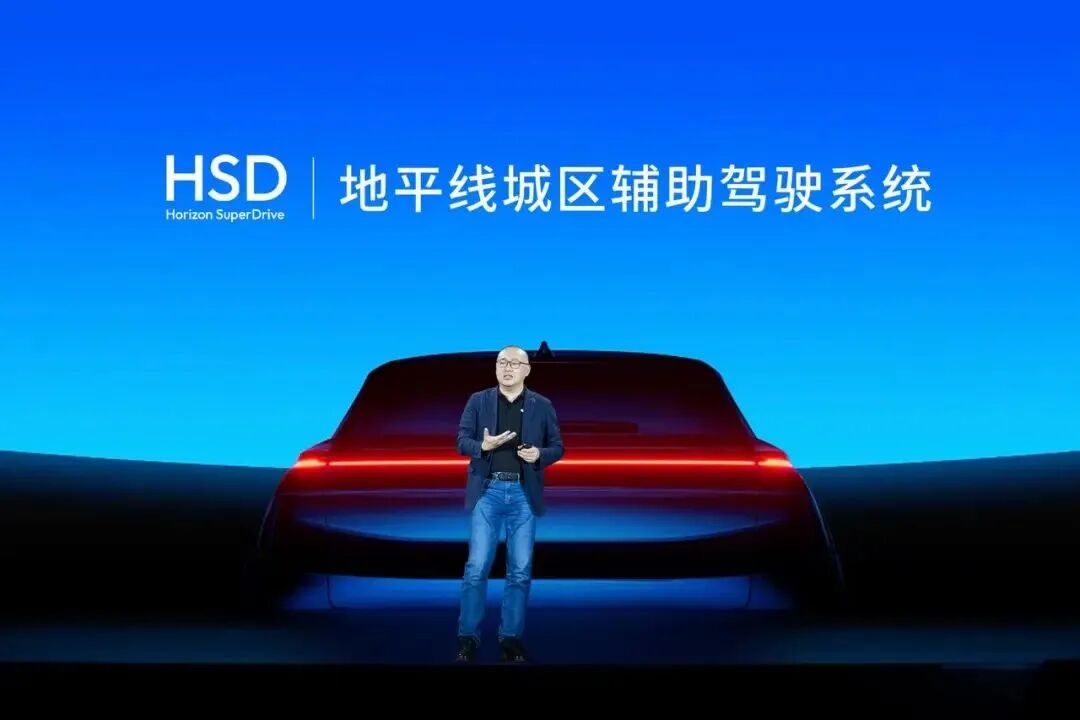
Why the margin collapse? Horizon’s official explanation (paraphrased for brevity):
“In 2025, to help clients rapidly deploy intelligent driving solutions, we offered non-core hardware like domain controllers at low prices. Excluding this impact, adjusted gross margins stood at 42.5%. The remaining margin fluctuations resulted from proactive price cuts to boost competitiveness.”
In essence, Horizon made significant margin concessions to accelerate technology adoption and market share gains.
Even as the undisputed leader in intelligent driving, it still relies on price cuts to scale—highlighting the survival challenges across the intelligent driving supply chain.
While industry leaders can leverage economies of scale to reduce costs, second- and third-tier players face even tougher conditions.
So, how will Horizon break through amid this industry cycle and operational dilemma?
04 Technological Breakthrough: Strengthening Barriers to Support Growth and Margins
For Horizon to maintain its leadership, it must keep pushing technological and market boundaries to further boost market share.
Its core strategy? Sustained heavy R&D investment to deepen its technological moat.
In 2025, Horizon’s R&D spending reached RMB 5.154 billion, up 63.3% from RMB 3.156 billion in 2024.
To put this in perspective:
Leapmotor, a new energy vehicle startup, spent RMB 4.29 billion on R&D in 2025.
As an intelligent driving chip supplier, Horizon’s R&D investment now surpasses that of vehicle manufacturers.
R&D spending accounted for 137.1% of total annual revenue—a key reason for its industry leadership.
Based on Horizon’s plans, *Tech Jungle* estimates its 2026 R&D spending will likely exceed RMB 7 billion.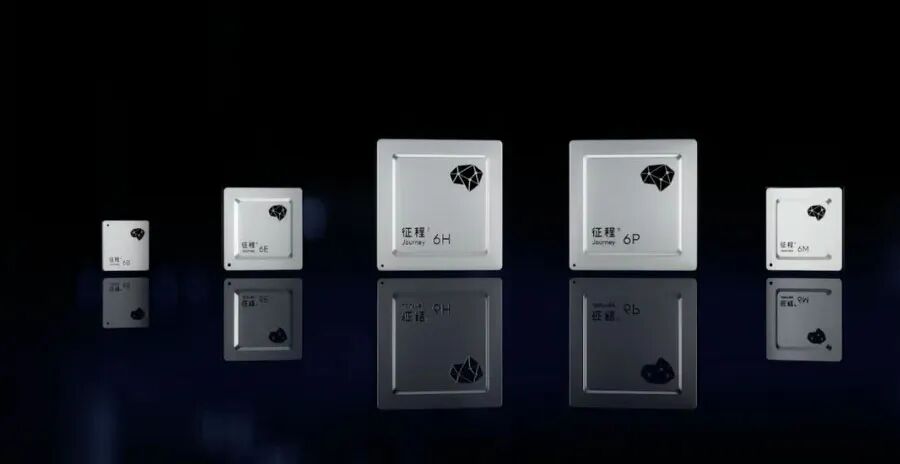
Over the next two years, Horizon will roll out several key technologies and products:
Cockpit-Driving Fusion Full-Vehicle Intelligence
To escape industry commoditization, breakthroughs in foundational technologies are essential to create generational product advantages.
In 2026, Horizon will launch China’s first Agent IC SOC cockpit-driving fusion chip + Agent IC OS.
This will enable an “all-in-one” full-stack solution running both Open Agent and HSD urban NOA.
Functionally, it will deliver “one-sentence full-scenario services,” handling tasks from navigation and ticket booking to autonomous parking—similar to SAIC’s IM AI Agent.
Its biggest advantage? Breaking down barriers between intelligent driving and cockpit chip architectures, significantly reducing automakers’ software and hardware development costs (memory, cooling, PCBs, casings, etc.).
For example, memory costs alone could save automakers over RMB 1,000 per vehicle.
More technical details will be revealed at Horizon’s April 2026 product launch.
HSD 2.0 End-to-End Intelligent Driving Iteration
In 2026, Horizon will release the HSD 2.0 solution, improving MPI (Miles Per Intervention) tenfold—from tens of kilometers to hundreds.
By 2027, its MPI target reaches thousands of kilometers, with select regions exceeding 10,000 kilometers, achieving L4 autonomous driving operational capabilities.
L4 Commercialization Progress
Extending this timeline:
From the second half of 2026 onward, Horizon will partner with ecosystem players to launch RoboTaxi pilot operations in select Chinese cities.
While currently pilot-focused, this lays the groundwork for future model technology integration and commercialization.
Over the next two to three years, Horizon will assist ecosystem partners in achieving RoboTaxi commercial operations in localized Chinese regions as a technology provider—a strategy reminiscent of NVIDIA’s approach.
Next-Gen Chip: Journey 7 to Rival Tesla
In 2027, Horizon will launch the Journey 7 series chips based on its Riemann architecture, directly benchmarking Tesla’s next-gen hardware to support larger-scale AI model deployment in vehicles.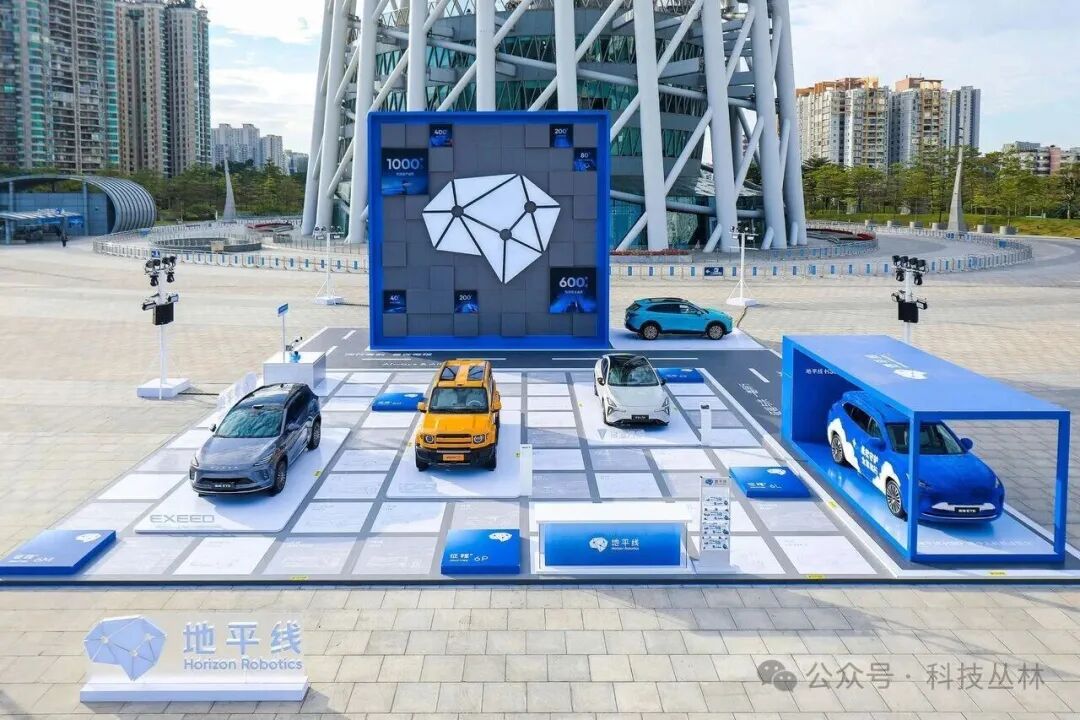
From high-tier intelligent driving solutions to cockpit-driving fusion, L4 pilots, and next-gen chip layouts, Horizon’s technological investments follow a clear commercialization path:
Short-term: Low-price adoption to secure design wins and build user-automaker loyalty.
Medium-term: High-margin software business contributions.
Long-term: Software subscription + value-added services for sustained lifecycle monetization.
Yu Kai stated: “Once intelligent driving accounts for over 50% of mileage, user dependency becomes irreversible. This high product stickiness creates conditions for future subscription models. Currently, our revenue is driven by new vehicle sales equipped with our products. In the future, we aim to monetize subscriptions across the lifecycle of vehicles equipped with HSD.”
05 Achieving Volume and Price Growth to Escape the Loss Cycle
“With average revenue growth of 60% over the next few years, we’re confident in maintaining gross margins above 60%,” Yu Kai declared at the earnings call.
This addresses a key capital market concern: Will Horizon sacrifice profits for growth, trapped in a “bigger scale, bigger losses” cycle?
It also signals confidence: Profitability declines will reverse, not worsen.
How to achieve this “dual-60” goal?
First, shipments: In 2025, Horizon shipped over 4 million chip solutions. In 2026, total chip shipments will grow ~35%, with NOA-enabled AD chip shipments rising from 45% to over 55% of the mix. By end-2025, Horizon had secured over 110 new design wins, fully covering major domestic and joint-venture automakers, with over 20 HSD-related models.
“These are just year-end 2025 figures. HSD design wins will explode in 2026,”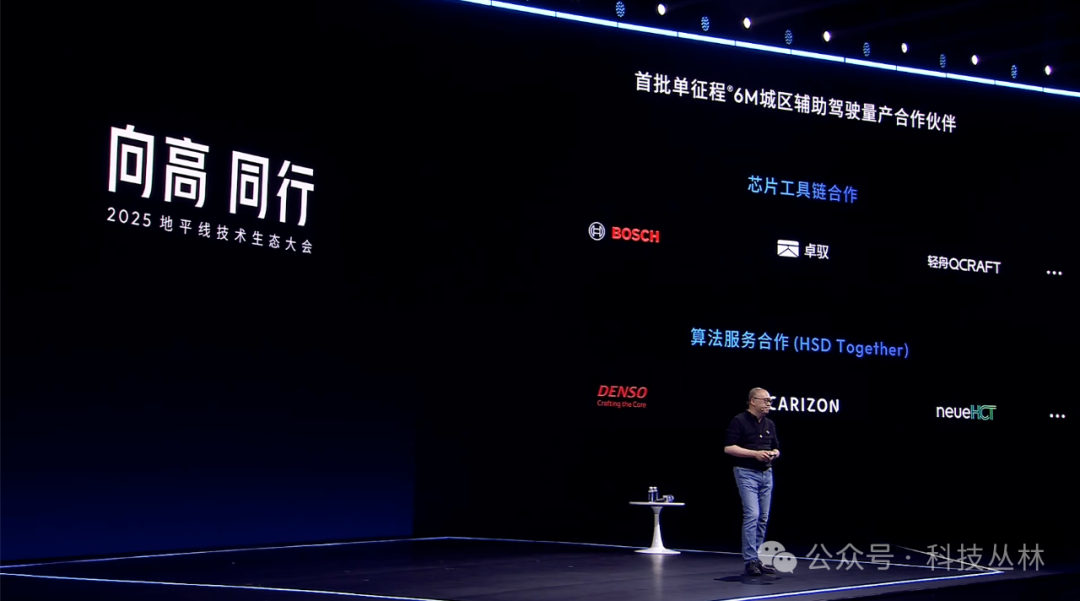
Additionally, in 2026, Horizon will partner with ecosystem players to expand urban NOA functions from 150,000-yuan mainstream models down to 100,000-yuan mass-market vehicles, driving incremental demand for its J6M chips.
Now, margins: From late 2025 to Q1 2026, HSD’s initial mass production used system-level deliveries (including self-developed domain controller hardware).
The goal? To accelerate automakers’ time-to-market and shorten development cycles—the primary reason for the product solutions segment’s 34.5% gross margin.
Horizon will now fully divest low-margin hardware businesses, leaving domain controller hardware delivery to ecosystem partners while focusing on its core chip + software algorithms. The business adjustment goals are clear:
Product solutions: Achieve 40–50% gross margins in 2026 (up from 34.5% in 2025).
Licensing and services: Approach 100% gross margins in 2026 (up from 94.5% in 2025).
In short, Horizon will shed low-margin hardware to return to its high-margin “chips + software” core model—a critical move to restore profitability. As of end-2025, Horizon held RMB 20.188 billion in cash reserves, remaining well-funded.
06 Conclusion
Overall, Horizon leveraged industry tailwinds in 2025 to achieve explosive growth in scale and market share.
It also provided a clear solution to the dilemma of increasing revenue without increasing profits: continuous technological breakthroughs, returning the business to high-gross-margin core operations, while setting the dual 60 goals to anchor future growth.
However, the industry has never been a one-sided race; Horizon's competitors are also making full-speed breakthroughs: NVIDIA controls the high-end market with absolute computing power.
Huawei has created an ecological dominance and squeezing effect in the high-end market of 200,000+ units with its full-stack solutions. Momenta, Black Sesame, and others are also closing in on the mid-range and cost-effective segments.
The all-encompassing competitive pressure makes Horizon's path to breakthrough fraught with challenges.
So, under such circumstances, whether Horizon can achieve new breakthroughs despite the pressure is its most critical proposition for breaking through.
The end.
-
![]()
The Unstoppable Rise of 'Optical Progress and Copper Decline': Sunny Optical’s Strategic Vision for the Next Decade
-
![]()
AI + Going Global in the Second Half: No Intermission for Robot Vacuum Cleaners
-
![]()
The Suffering Endured in E-commerce, Walmart Doesn't Want to Repeat in AI
-
![]()
What Does the Doubling of New Energy Vehicle Exports Mean?
-
![]()
Ghosn: 'Only I Can Save Nissan'
-
![]()
Volkswagen Lays Off 100,000 Employees, The Elephant Sits Down
-
![]()
Expanding Production Capacity! Yutong Optics Acquires Approximately 1.5 Hectares of Industrial Land in Chang'an, Dongguan
-
![]()
Why Is Nokia Making a Comeback in the AI Era?