Golden Volkswagen’s Strategic Shift: Identity, Products, and the Logic of Breakthrough
 03/30 2026
 531
531
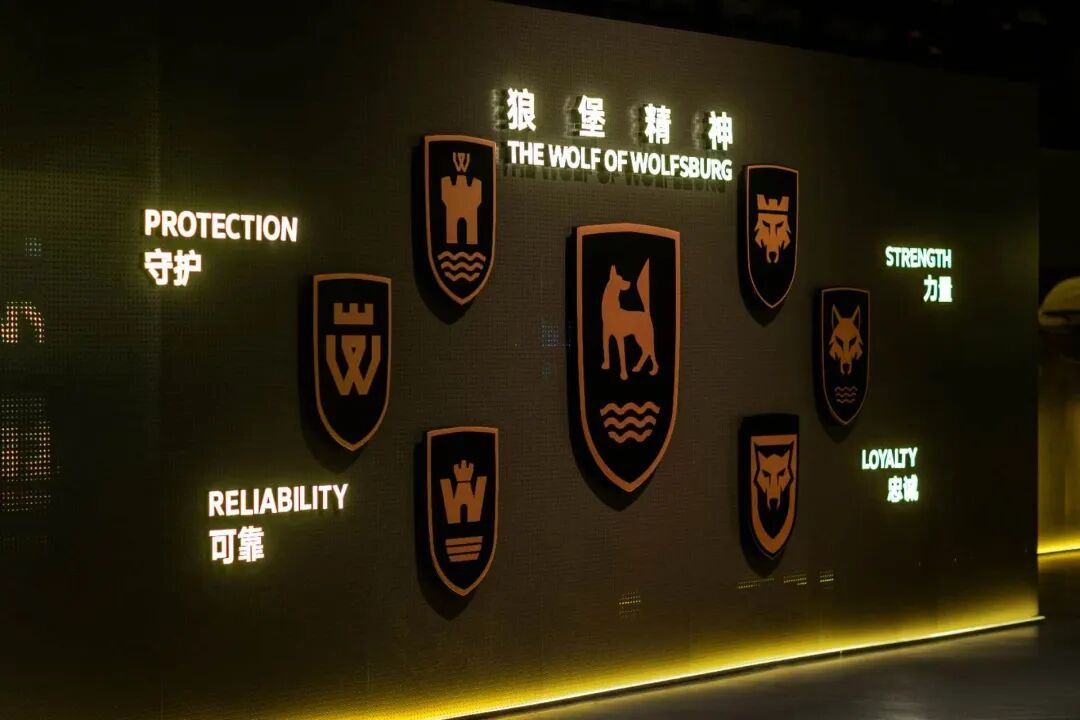
Finally, Golden Volkswagen Finds Its Identity—What’s Next?
Original content from AutoPix (ID: autopix)
For the past four years, Golden Volkswagen has focused on a single model. This year, it plans to launch four.
This shift isn’t merely a change in product strategy; it represents Volkswagen’s third major bet in the Chinese market. The first was FAW-Volkswagen, the second SAIC Volkswagen, and now, this joint venture—a venture that few can neatly define.
On the evening of March 26th, the ID. Unique 08 opened for pre-sale. Golden Volkswagen positions this model as combining "Volkswagen standards with XPENG intelligence," under the slogan "Pioneering the New Volkswagen."
A few hours earlier, CEO Tang Tingwan and COO Liu Zhanshu sat in a conference room flanked by two clocks for an exclusive interview.
These clocks display Beijing time and Berlin time, respectively. In a company that relies on close collaboration between Chinese and German teams, they symbolize both a practical necessity and a question that demands an answer.
01
The Long Journey to Define 'Who We Are'
Liu Zhanshu revealed that, for months, Golden Volkswagen has grappled with a fundamental question internally: How should they respond when customers ask, "Which brand are you?" in the showroom?
The Chinese market already hosts two joint venture brands—FAW-Volkswagen and SAIC Volkswagen. Within Volkswagen China’s ecosystem, brands like Porsche, Audi, and Volkswagen dominate consumer perceptions of the "Volkswagen family."
Caught in this crowded landscape, Golden Volkswagen cannot abandon Volkswagen’s brand endorsement, yet it must differentiate itself from its northern and southern counterparts. Otherwise, customers have no incentive to switch to an unfamiliar entry point.
Their final answer: "Golden Volkswagen is the new force in Volkswagen’s pure electric intelligence."
This statement emerged from prolonged internal debate and, to some extent, represents one of the most critical foundational consensuses in the company’s positioning.
With consensus formed, the next step is to communicate it externally.
The real obstacle Golden Volkswagen faces is its low market presence over the past few years. First, no one understands what it is; second, even if they do, they have nowhere to engage with it.
The former is a branding and communication issue. Liu Zhanshu’s self-diagnosis is "too little communication"—insufficient interaction with the media or users.
A brand’s long-term absence in public perception often stems from a combination of product, channel, pricing, and organizational factors, not something that can be fixed with a few press conferences.
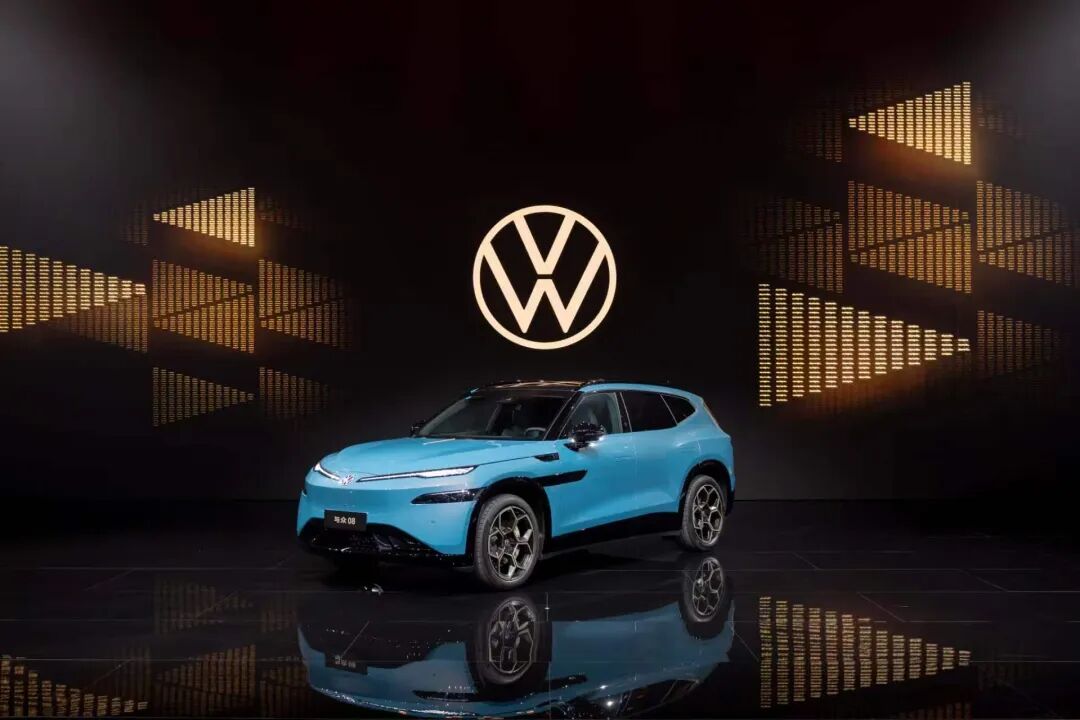 ▍ID. Unique 08
The turning point comes from products. Starting with the Unique 08, Golden Volkswagen’s new products have multiplied and evolved.
The interior and exterior design language of the Unique 07 and 08 shares little in common with the rational, industrial German aesthetics represented by the Passat and Magotan. Based solely on appearance, these two models resemble new forces bearing the Volkswagen VW logo.
The visual impact is effective. In mall showrooms, the audience for the Unique 08 is entirely different from that of "old Volkswagen."
Liu Zhanshu told us that since the Unique 08 arrived at dealerships on March 9th—without formal promotion—it has already accumulated a large number of blind-order users. Female customers account for over 30%, with users aged 25 to 35 making up the majority.
These two metrics are rare in Volkswagen’s previous products.
"Young, trendy, fashionable, and progressive"—Liu Zhanshu uses these four words to dissect Golden Volkswagen’s brand ethos. They serve as essential levers for Golden Volkswagen to inherit or counter the inertia of "old Volkswagen" at the product and organizational cultural levels.
Products, positioning, and channels are all still works in progress. But at least one thing is certain: Golden Volkswagen finally has a clear story to tell. The next question is whether more people will hear it—and, after hearing it, whether they’re willing to pay for it.
02
Building a Car in 24 Months—and the Problems It Brings
The development cycle for the Unique 08 is 24 months. This figure is repeatedly mentioned because it represents Golden Volkswagen’s break from Volkswagen’s traditional development rhythm in terms of systems and institutions.
Volkswagen’s long-standing development cycle in China is 36 to 48 months. This process, refined over decades of engineering accumulation, ensures Volkswagen’s consistent standards in safety, quality, and durability but also left it a step behind in the electrification era.
The core of this accelerated pace is integration into China’s new energy industrial chain.
Volkswagen’s technical cooperation agreement with XPENG was signed in 2023, covering the sharing of electronic electrical architecture and intelligent driving systems. For Golden Volkswagen, this means they don’t need to build their intelligent driving R&D system from scratch.
XPENG has already validated a mature solution over several years and significant investment, allowing Volkswagen to fine-tune and integrate it rather than reinvent the wheel.
"XPENG is just one of my many ecological collaborations," Liu Zhanshu told us, noting that Volkswagen has a long history of such vehicle-level partnerships.
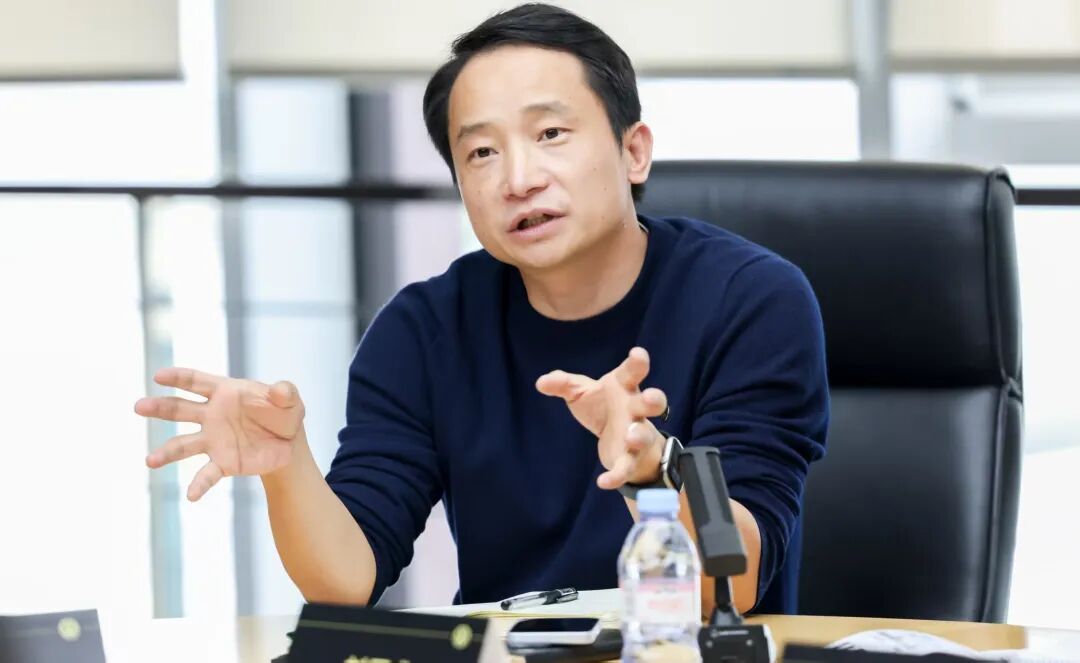 ▍Golden Volkswagen COO Liu Zhanshu
This statement conveys two layers of information. First, Volkswagen is not a passive recipient in these collaborations but the leader. Second, while intelligent capabilities can be acquired through open cooperation, the final product’s "Volkswagen style" cannot be outsourced.
Tang Tingwan told us that regardless of the underlying technology or design choices, Volkswagen engineers always add their "secret sauce" to ensure the product embodies Volkswagen’s style.
This has always been the case, including with the Unique 08. For example, chassis tuning remains the most typical feature and one of Volkswagen’s most critical competitive moats.
Liu Zhanshu cited several details: the tuning logic of the anti-motion sickness mode, the design where the driver’s line of sight obstruction blocks the passenger screen, and the handling of glare on the nighttime display.
Maintaining this boundary is also commercially necessary. If Golden Volkswagen became "XPENG in a Volkswagen shell," Volkswagen’s brand value would lose its foundation.
Conversely, overemphasizing differentiation would weaken the perception of intelligence brought by XPENG’s technology. Finding balance between the two is a challenge for every new model from Golden Volkswagen.
However, the accelerated product rhythm has also brought pressure to build systemic capabilities. Expanding from one model to four, Golden Volkswagen still has significant gaps to fill in channel capacity and team building.
By the time the Unique 08 launched pre-sales, Golden Volkswagen had only 140 dealerships—about one-third of what new forces like NIO, XPENG, and Li Auto have. If channel issues aren’t handled well, the momentum Golden Volkswagen has just built could fizzle out before reaching customers.
Liu Zhanshu acknowledged the significant gap in absolute dealership numbers in first- and second-tier cities compared to competitors but argued this was a result of past strategy. Without sufficient product and sales volume to support it, expanding channels too quickly would create problems for dealers.
Leveraging the momentum of new products, Golden Volkswagen will take the initiative.
Liu Zhanshu told us that in third- and fourth-tier cities, the Volkswagen brand has inherent advantages, allowing Golden Volkswagen to draw strength from within the Volkswagen system. However, in first- and second-tier cities, where new forces have already captured user mindshare for new energy vehicles, they must actively reclaim it. Therefore, they will offer more support to attract agents.
Some results are already visible. In Nanjing, a prime showroom location was contested by three competing brands but ultimately secured by an investor for Golden Volkswagen.
After the Unique 08 arrived at dealerships, Liu Zhanshu said he noticed a signal: the quality of short videos and livestreams produced spontaneously by agents suddenly improved by more than a tier.
His interpretation is that this indicates channel investors are beginning to allocate their best sales and marketing personnel to Golden Volkswagen because they now believe the vehicle is worth investing in.
This process of product confidence translating into organizational and channel confidence is something Golden Volkswagen has never experienced in the past four years.
03
Defining 'Who We Are'—What’s Next?
Despite positive signals, Golden Volkswagen remains a challenger in China’s new energy market—a far cry from Volkswagen’s position when it entered China’s fuel-powered vehicle market over 40 years ago.
Liu Zhanshu told us he frequently visits the American Automotive Industry Museum in Detroit and the British Motor Museum. In the 1930s, Detroit had over 300 auto companies; by the 1960s, fewer than 30 remained, eventually forming the Big Three: General Motors, Ford, and Chrysler. The British automotive industry consolidated from over 100 companies to the "Big Six" before being acquired by major groups.
His conclusion is that every automotive industrial nation undergoes this process, and China is now experiencing its second round. In 2016, China had over 400 new energy brands; today, only about 30 remain active in the market.
The logic of automotive industrial history leads Liu Zhanshu to believe that "Volkswagen will still be here in thirty or fifty years" because automaking is a competition of systemic strength.
This judgment provides a framework for understanding Golden Volkswagen’s strategy.
In 2024, China’s new energy penetration rate exceeded 50%, with pure electric vehicles accounting for about 35%. However, in terms of vehicle parc, fuel vehicles still number 350 million, while pure electric vehicles total only 30 million.
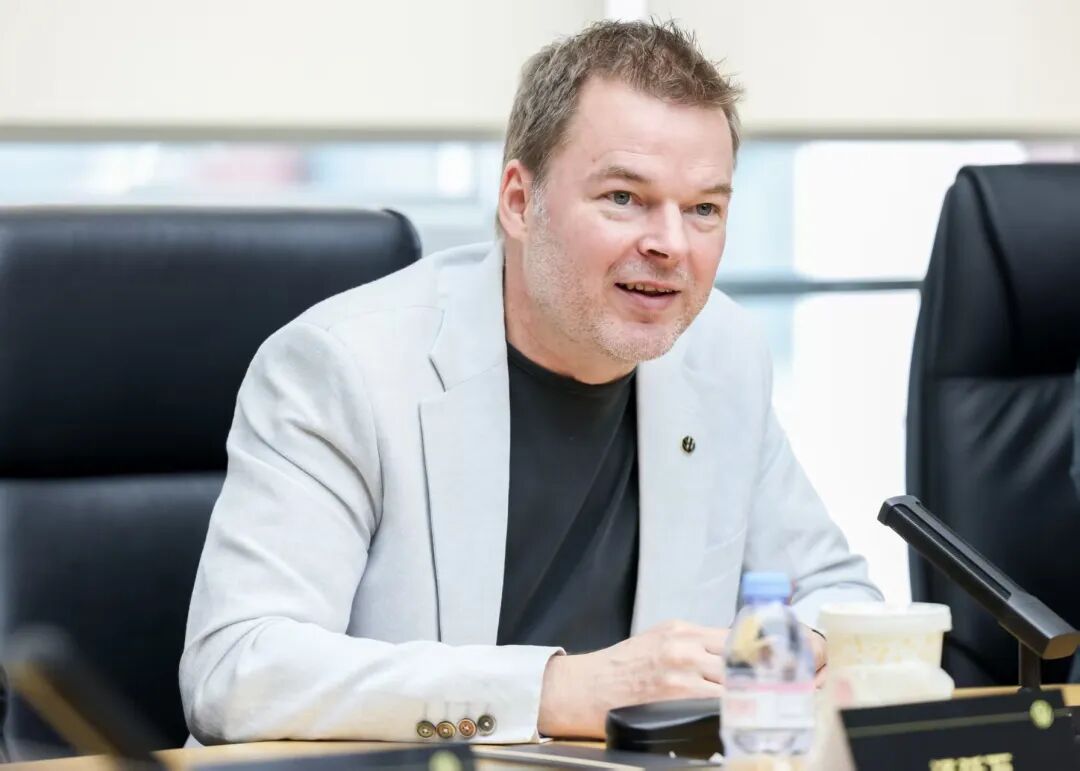 ▍Golden Volkswagen CEO Tang Tingwan
In other words, the vast majority of ordinary Chinese households have yet to purchase an electric vehicle. Their reluctance stems not from a lack of desire but from concerns: range and charging anxiety, quality concerns, and a lack of brand trust.
Volkswagen has a natural foundation of trust with this group, but that trust has long been tied to fuel vehicles, not electric ones.
Liu Zhanshu’s judgment is that the essence of electrification is intelligence, and the mass adoption of intelligence will lead to standardization. Standardization, in turn, will shift consumer attention from flashy features back to a vehicle’s fundamental values: safety, quality, durability, and handling.
"Once users return to rational values, Volkswagen’s strengths emerge," he believes. "This is already happening. Three years ago, everyone talked about intelligent scenarios; today, nearly every press conference highlights safety and quality."
Tang Tingwan told us Volkswagen always needs a little more time because it strives to excel in more dimensions.
This new strategy is worth trying to change Volkswagen’s position in China’s new energy market. However, in this deeply competitive new energy war, "a little more time" is a luxury.
For now, all Golden Volkswagen can do is excel with every new product to convince the 350 million Chinese users still driving fuel vehicles that the Volkswagen they once trusted can finally be an electric vehicle.
This article is original content from AutoPix (autopix) and may not be reproduced without authorization.
-
![]()
The Unstoppable Rise of 'Optical Progress and Copper Decline': Sunny Optical’s Strategic Vision for the Next Decade
-
![]()
AI + Going Global in the Second Half: No Intermission for Robot Vacuum Cleaners
-
![]()
The Suffering Endured in E-commerce, Walmart Doesn't Want to Repeat in AI
-
![]()
What Does the Doubling of New Energy Vehicle Exports Mean?
-
![]()
Ghosn: 'Only I Can Save Nissan'
-
![]()
Volkswagen Lays Off 100,000 Employees, The Elephant Sits Down
-
![]()
Expanding Production Capacity! Yutong Optics Acquires Approximately 1.5 Hectares of Industrial Land in Chang'an, Dongguan
-
![]()
Why Is Nokia Making a Comeback in the AI Era?