BAIC Group’s Leadership Overhaul: Navigating Independent Innovation and Brand Realignment Amid Wang Hao’s Role Shift
 03/31 2026
 709
709

Author / Chen Jia
Produced by / Insight Auto
On March 28, 2026, BAIC Group unveiled a major leadership reshuffle. Wang Hao, previously the Chairman of BAIC Motor, announced via a short video his new role as Director of the Group’s Brand Management Department. Zhang Guofu and Liu Guanqiao have been appointed as the new Chairmen of BAIC Motor and BAIC BluePark, respectively.
As BAIC’s first leader born after the 1980s to helm a listed entity, Wang Hao’s “internet-savvy” leadership style during his one-year tenure broke away from the conventional image of automotive executives.
Embracing the titles of “Chief Product Experience Officer” and “Top Salesperson,” he embraced short videos and live streaming, personally testing the range of the BJ40 extended-range model and leading Beijing Off-Road’s “Five Major Renewals” initiative. His approachable and responsive demeanor captured industry attention, propelling Beijing Off-Road to a remarkable 72% year-on-year sales surge and validating the success of its brand rejuvenation strategy.
However, Wang Hao’s tenure also exposed a critical weakness: the failure to convert online traffic into sustainable corporate competitiveness. Data indicates that BAIC Motor’s net profit attributable to shareholders for 2025 is estimated at a mere RMB 110 million to RMB 130 million, marking a staggering 86.4% to 88.5% year-on-year decline—the third consecutive year of profit contraction. In February 2026, Beijing Automotive was removed from the Stock Connect, reflecting capital market concerns over the company’s growth prospects.
The root cause lies in Wang Hao’s strategic emphasis on Beijing Off-Road, a wholly-owned subsidiary, while neglecting adequate resource allocation to core listed assets such as Beijing Benz and Beijing Hyundai.
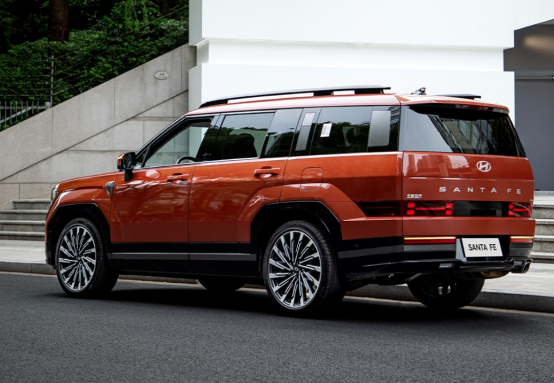
Fundamentally, BAIC’s leadership reshuffle represents a strategic recalibration away from a “traffic-driven” growth model and a renewed focus on balancing independent innovation with joint venture stability. As a pillar of Beijing’s automotive sector, BAIC once thrived on premium joint venture partnerships like Beijing Benz and Beijing Hyundai, with Beijing Benz contributing over 80% of the group’s profits at its peak, fostering a “comfortable” profit structure.
Yet, with the electric vehicle revolution reshaping the industry, Mercedes-Benz itself is grappling with transformation challenges, while Beijing Hyundai’s sales remain stagnant. Over-reliance on joint ventures is no longer viable, making the breakthrough of BAIC’s independent segment an urgent priority.
The new leadership team faces the daunting task of breaking this impasse. Zhang Guofu, with deep institutional knowledge and expertise in listed company operations, will prioritize resource coordination across the listed entity, balancing independent and joint venture businesses to reverse the profit decline. Liu Guanqiao, meanwhile, must sustain BAIC BluePark’s upward momentum and drive scale expansions for new energy brands like ARCFOX.
Wang Hao’s transition to Director of the Brand Management Department underscores recognition of his brand-building prowess and signals BAIC’s commitment to enhancing brand synergy at the group level. By integrating resources from independent and joint venture brands, the move aims to address previous fragmentation in brand development.
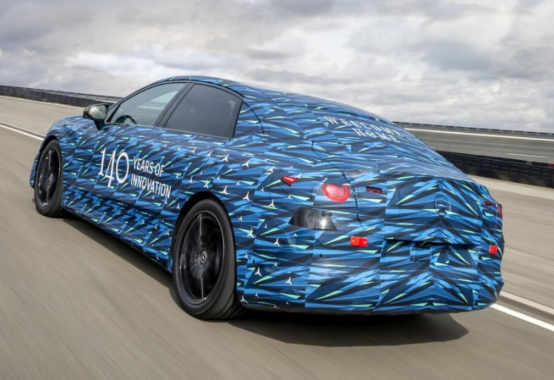
BAIC has long invested in technological innovation, amassing approximately 39,000 patent applications. Technologies such as 800V ultra-fast charging and semi-solid batteries are now entering commercialization, with Robotaxi scale testing leading the industry. These technological assets will provide critical support for the new leadership’s breakout strategies.
Post-reshuffle, BAIC’s ability to overcome its “Benz-dependent” reputation hinges on three key breakthroughs: first, optimizing resource allocation to unlock the joint venture potential of Beijing Benz and Beijing Hyundai while boosting R&D and market investment in the independent segment; second, translating technological advantages into product competitiveness to drive quality and volume growth for new energy brands like ARCFOX and XiangJie; and third, constructing a cohesive brand matrix through group-level brand synergy to convert online traffic into tangible sales and profits.
As a high-profile case of state-owned automotive enterprise reform, BAIC’s transformation journey undoubtedly carries significant industry expectations.
END
-
![]()
Five Emerging Golden Entrepreneurial Pathways in the Agent Ecosystem: A Deep Dive into the Report (Part 2)
-
![]()
GEM-TIPS Makes Its Debut at Shenzhen International AI Expo: “Octopus AI Brain” + Intelligent Agent Cluster Pave New Ways for Industrial Intelligence
-
![]()
'China's Pioneer Domestic GPU Stock' Moore Threads Posts Profit in Q1, Yet True Profitability Unverified
-
![]()
Hynix Employees Await 3 Million Won in Bonuses, Samsung Employees Go on Strike: A Dramatic Clash Between Korea's Memory Giants
-
![]()
Twelve Years On, Can Cheng Yixiao Steer Kling to Another Victory?
-
![]()
From Data Scarcity to Open Source Boom: How China's Embodied AI Data Industry Can Break Through
-
Trend丨Indium Phosphide (InP) Prices Soar Amid AI Boom, with Cycles and Disruptions Set to Continue
-
![]()
One Article to Decode 'Computing Power Inflation': Why AI Costs Less for You While Computing Power Firms Rake in Profits