Complaints Soar Threefold: What’s the Future Direction of Intelligent Driving?
 04/02 2026
 640
640
In early 2026, a set of data released by the China Consumers Association sparked significant discussion within the automotive sector. The figures indicated that in the third quarter of 2025, complaints related to intelligent driving functions surged by 237% year-on-year. For the entire year, complaints about intelligent driving assistance systems soared by 300% compared to the previous year.
What does a threefold increase in complaints signify?
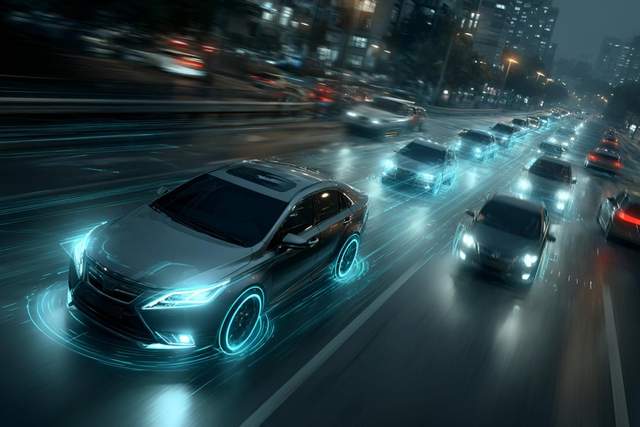
Behind each complaint statistic lies a real consumer. These individuals eagerly paid a premium for "intelligent" features, only to face unexpected issues during actual use. When promotional claims about intelligent driving fail to match real-world performance, and when new technologies do not fully deliver on their promises, consumer complaints become the most direct evidence of this disconnect.
So, what controversies underlie this threefold surge in complaints? Why has intelligent driving shifted from a selling point to a source of frustration for many vehicle owners?
The Disconnect Between Promotional Hype and Real-World Experience
Visit the official websites of major automakers or step into any new energy vehicle showroom, and you’ll find intelligent driving consistently positioned as a top selling point.
Before April 2025, terms like "urban navigation" and "autonomous driving" were repeatedly emphasized, accompanied by meticulously produced promotional videos that depicted near-fully automated travel. However, when consumers actually take the vehicles home and activate these features during daily commutes, the experience often proves vastly different.
Let’s examine several common scenarios frequently cited in owner complaints.
The first is "phantom braking." Many intelligent driving users have experienced this: while cruising steadily on a highway with clear roads ahead, the system suddenly sounds an alarm and slams on the brakes, causing the vehicle to jerk to a halt. Occupants are startled, and rearview mirrors reveal following vehicles swerving to avoid a collision—despite no actual obstacles requiring braking.

The second issue is "lane weaving." On highways with clear lane markings and simple road conditions, many intelligent driving systems perform adequately. However, when encountering faded lane markings, road repair patches, or dramatic changes in lighting conditions (such as entering or exiting tunnels), vehicles begin to sway side to side within the lane, unable to maintain stable progress.
Beyond these specific functional problems, consumers are even more confused by the vastly different ways automakers describe intelligent driving features at the same level. For Level 2 assisted driving, some companies promote it as an "autonomous driving assistance system," while others modestly call it a "driving assistance function." Such naming discrepancies easily lead ordinary consumers to believe they are purchasing "autonomous driving" capabilities when they are actually getting "assisted driving."
Why does this disconnect between promotion and reality exist?
From a technical standpoint, testing and validation of intelligent driving functions typically occur in relatively ideal environments. Whether in closed test sites or specific urban routes, testing conditions are carefully selected to avoid numerous "edge cases." In real-world daily use, however, those infrequent but genuinely complex road scenarios become the norm. Faded road markings, construction detours, adverse weather, and erratically moving vehicles—these situations rarely appear in promotional videos but confront users daily.
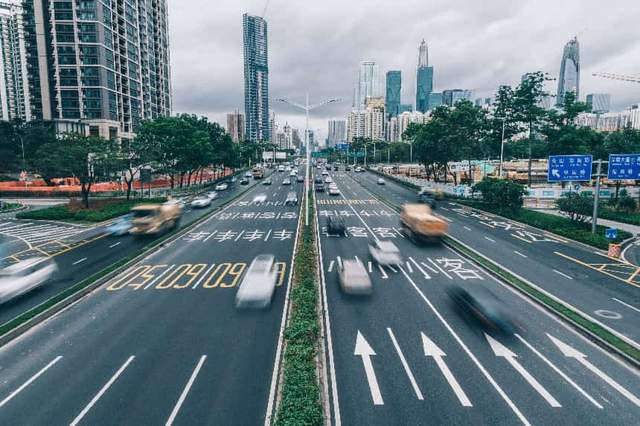
Moreover, intelligent driving technology remains in a transitional phase "from assistance toward high automation." In terms of perception capabilities, although vehicles now carry more sensors like cameras, millimeter-wave radars, and LiDAR, the system's recognition and judgment still cannot achieve flawless performance against the infinite complexity of the real world. Regarding decision-making, algorithms must balance multiple objectives such as safety, efficiency, and comfort to make optimal choices across different scenarios—a challenging trade-off in itself.
Commercially, intelligent driving has become a core differentiator in automaker competition. In this fierce market battle, no company wants to lag behind. When one company uses "advanced intelligent driving" as an attention-grabber, others must follow suit or risk appearing inferior in consumer comparisons. This competitive dynamic has objectively raised the promotional "ceiling."
Consumer expectations have been continuously inflated within this promotional environment. Having spent tens of thousands on intelligent driving options, they naturally expect an experience matching the promotional claims. When reality falls short, disappointment and complaints become inevitable.
However, consumer complaints extend beyond the disconnect between promotion and technology.
The Survival and Demise of Companies Amid Intelligent Driving’s Rapid Expansion
If the first two issues belong to technical or commercial domains, the third controversy is more pragmatic and harsh: some consumers who purchased intelligent driving features find that while their vehicles remain, the companies that promised to provide intelligent driving services have vanished.
In 2025, the intelligent driving industry underwent a significant shakeout. Suppliers like Haomo.AI gradually exited the market due to capital chain ruptures and business restructuring.
For ordinary consumers, however, intelligent driving is not a one-time hardware delivery but a service requiring continuous maintenance and updates. Once the company providing intelligent driving solutions goes bankrupt or halts operations, consumers face multiple dilemmas.
The most direct impact is the interruption of OTA (Over-the-Air) updates. The system remains stuck on an old version, with existing problems unfixed and promised new features never delivered. Moreover, if the system's cloud services rely on the supplier's servers, some online functions may cease working entirely once those servers shut down.
Next comes maintenance challenges. Intelligent driving systems involve specialized hardware such as cameras, radars, and domain controllers, typically sourced from specific supplier models. When suppliers discontinue production, spare parts become scarce. Some owners report that when their vehicle's intelligent driving module malfunctions, 4S dealers cannot obtain original supplier parts, leaving repairs indefinitely delayed.
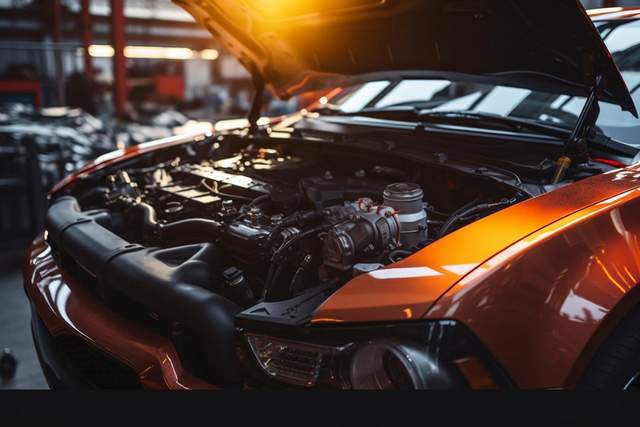
Third is functional depreciation. Consumers initially paid extra for intelligent driving features, which included the value of multi-year future services. When those services terminate, this investment effectively evaporates. In the used car market, vehicles with disabled intelligent driving functions also suffer significant residual value losses.
So, who should be held responsible for this?
From a legal standpoint, automakers—as the sellers of complete vehicles—bear ultimate responsibility to consumers. Even if the intelligent driving solution comes from a third-party supplier, consumers have entered into purchase agreements with automakers. In practice, however, when suppliers collapse, automakers face immense cost and supply chain pressures, making it difficult to independently shoulder all remedial responsibilities.
From an industry perspective, rapid development and fierce competition in intelligent driving inevitably involve survival of the fittest. This is market law, but consumer rights should not become casualties of market fluctuations. How can we establish mechanisms to ensure that even if suppliers exit, basic intelligent driving functionality in sold vehicles remains guaranteed? No mature solutions currently exist for this issue.
This means that when selecting vehicles equipped with intelligent driving features, consumers should pay attention not only to the technology itself but also to the stability and sustainability of suppliers.
Intelligent Driving: A Marathon, Not a Sprint
When analyzing the surge in intelligent driving complaints, one objective factor cannot be overlooked: changes in the user base.
In 2025, China's new energy vehicle (NEV) penetration rate continued to climb. Reports indicate that the L2 installation rate in NEVs exceeded 77%, with highway NOA (Navigate on Autopilot) approaching 50%. This means the user group for intelligent driving functions is expanding rapidly.
As more people use a particular feature, even if the problem incidence rate remains constant, the absolute number of complaints will increase. If the problem rate itself also rises, complaint growth accelerates further.
Data shows that in 2025, the growth rate of intelligent driving-related complaints significantly outpaced that of NEV sales during the same period. This indicates that beyond base expansion, the actual probability of problems occurring has indeed risen.
Alongside user base growth, user demographics are also changing. Early intelligent driving adopters were mostly tech enthusiasts with high tolerance for new technologies and relatively clear understanding of functional limitations. Now, more ordinary consumers are beginning to use intelligent driving features.
Their technological literacy varies widely, and their psychological expectations for functionality differ accordingly. When a technology transitions from niche to mainstream, increased complaints become almost inevitable.
This leads to a broader perspective: the development of intelligent driving is essentially a marathon from laboratory to real-world application, from limited use by a few to mass consumption.

On this marathon course, we see fierce market competition as automakers vie for intelligence leadership, constantly raising promotional stakes. We witness the arduous nature of technological iteration, as intelligent driving must overcome countless edge cases to progress from "usable" to "user-friendly." We observe the ruthlessness of industry consolidation, where not all participants reach the finish line. And we see consumer expectations evolving, shifting from initial novelty and enthusiasm toward scrutiny and questioning during actual use.
From this viewpoint, increased complaints actually represent a normal market response as technology moves from geek circles to the general public. It neither indicates that the industry is heading in the wrong direction nor should be simply interpreted as technological regression.
It merely suggests that in this marathon, intelligent driving still has a long journey ahead before reaching the "autonomous driving" finish line. Along this path, technological refinement requires time, standards and regulations need gradual establishment, and consumer cognition and expectations must continuously recalibrate through practical experience.
-
![]()
Revenue and Net Profit of 20 Listed Domestic Automakers in Q1 2026
-
![]()
The Fading Frenzy for 'Lobster': OpenClaw Traffic Plummets, QClaw Nearly Vanishes
-
![]()
Three Paths for Computing Power Energy Storage: The Divergent Strategies of Kstar, Shoto, and Sungrow | Xinliu AIDC Column
-
![]()
Tencent Music Embraces Authenticity Amidst AI Surge
-
Hot Topic | The Advent of Computing Power Futures: A Redistribution of Pricing Influence in the AI Sector
-
![]()
China's New 'Rare Earth Moment' Emerges—This Time, It's Fiber Optics
-
![]()
Equal Strength at the Dinner Table: Understanding the New Industrial Landscape Between China and the U.S. Through a Banquet
-
![]()
The Attack of 618: Apple iPhone 17 Sees Price Drop, Why Did Huawei Enjoy 90 Sell Like Hotcakes Before?