Final Verdict: Evaluating Auto Companies' Performance via Financial Reports - Profitability Reigns Supreme
 04/03 2026
 553
553
Recently, major domestic automakers have unveiled their financial annual reports for 2025. Overall, several leading automakers have witnessed notable revenue growth. However, except for a select few, most have not seen their net profits grow in tandem (kept pace); some have even experienced declines. Profit margins have also remained relatively sluggish. Among the NEV startups in 2025, Li Auto saw a sharp drop in both revenue and net profit. In contrast, NIO and XPeng attained profitability for the first time in the fourth quarter of the previous year, accompanied by a substantial reduction in annual losses. Leapmotor achieved full-year profitability for the first time, albeit with a modest profit margin.
The direct repercussions of price wars and fierce competition have precipitated a significant decline in profits for automobile companies. Profit margins for automakers have been severely compressed, with some even incurring losses. While the financial situation of NEV startups has shown improvement, there is still a considerable journey ahead to achieve sustained profitability.
BYD Takes the Lead in Total Revenue
As the best-selling domestic automaker in 2025, BYD reported total revenue of RMB 803.965 billion, a 3.46% year-on-year increase. However, its profitability came under pressure, with net profit attributable to shareholders of the listed company at RMB 32.619 billion, an 18.97% year-on-year decrease. Net profit excluding non-recurring items was RMB 29.446 billion, down 20.38% year-on-year. 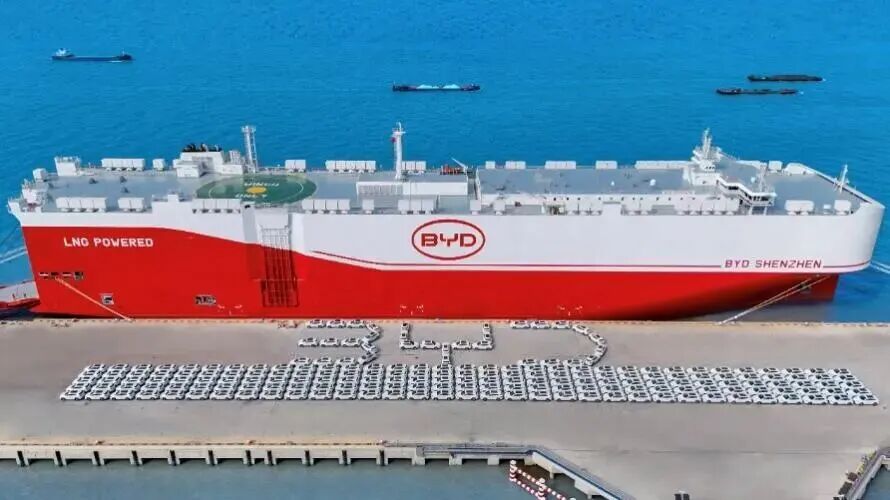
BYD's financial report reveals that in 2025, revenue from its automobile, automobile-related products, and other product businesses was approximately RMB 648.646 billion, a 5.06% year-on-year rise, accounting for 80.68% of total revenue. Revenue from mobile phone components, assembly, and other product businesses was approximately RMB 155.237 billion, a 2.74% year-on-year decline, representing 19.31% of total revenue.
BYD sold over 4.6 million NEVs in 2025, a roughly 7.7-% yearon-year increase. NEV sales ranked first globally for the fourth consecutive year and positioned it among the top five global automaker groups in terms of sales volume. 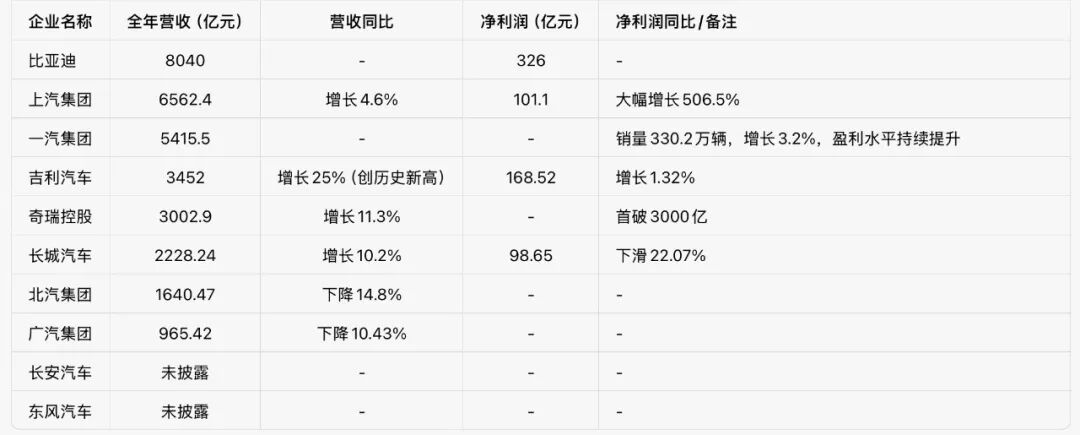
Performance of Domestic Mainstream Automakers in 2025 (Sorted by Revenue from Highest to Lowest as of April 2)
Nevertheless, it is also noteworthy that the 2025 financial report underscores the company's financial strain of 'increasing revenue without a corresponding increase in profits.' Total revenue reached RMB 803.96 billion, a 3.46% year-on-year increase, marking the lowest growth rate in the past six years. Net profit attributable to shareholders of the listed company was RMB 32.62 billion, an 18.97% year-on-year decrease. The profit margin for all of BYD's businesses in 2025 was merely 4%, lower than the domestic automotive industry's average profit level of 4.1%.
Chery Automobile Leads in Profit Margins
On March 18, Chery released its inaugural financial report for 2025 following its IPO, delivering results that far surpassed market expectations.
In 2025, Chery's total revenue was RMB 300.29 billion, an 11.3% year-on-year increase, surpassing RMB 300 billion for the first time. Net profit was RMB 19.51 billion, a 36.1% year-on-year surge, significantly outpacing the 8% growth in sales volume.
Net profit attributable to the parent company was RMB 19.019 billion, a 34.6% year-on-year rise. Profitability continued to strengthen, with the profit margin climbing from 5.3% in 2024 to 6.5%, leading other domestic automakers. 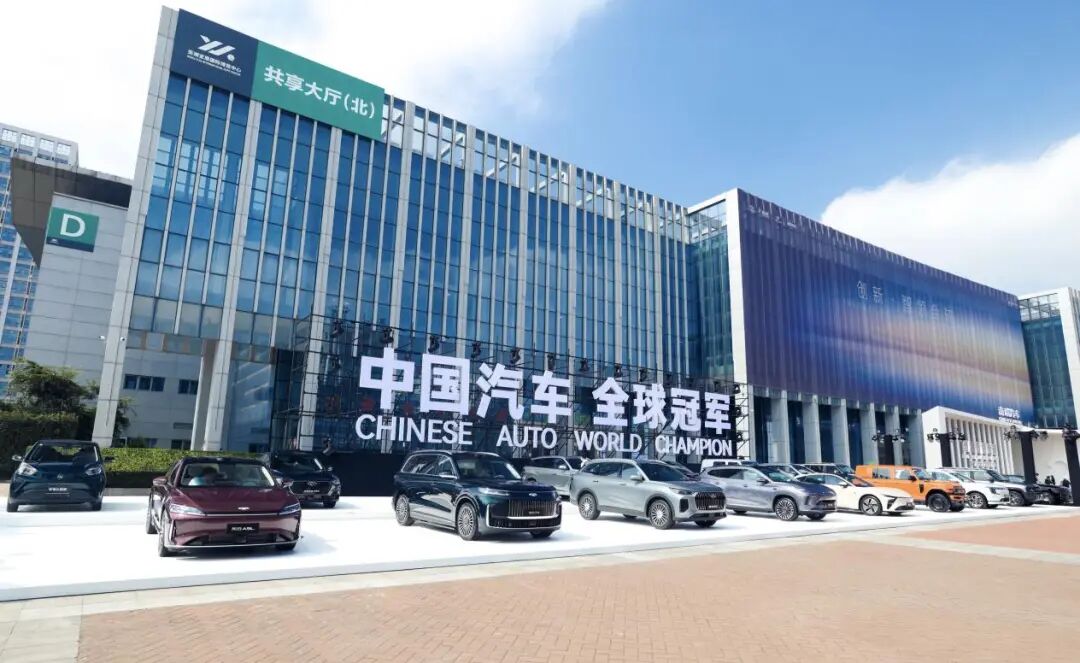
Chery's profitability in 2025 was also impacted by domestic price wars and intense competition. However, losses in the domestic market were offset by profits from overseas markets.
In 2025, Chery's overseas revenue was RMB 157.419 billion, accounting for 52.4% of total revenue, surpassing domestic revenue (RMB 142.868 billion) for the first time, with a significant 56% year-on-year increase. Overseas sales volume was 1.344 million units, accounting for 49.2% of total sales, a 17.4% year-on-year rise.
Chery's average selling price per vehicle in the domestic market was RMB 106,900, while in overseas markets it was RMB 121,600, earning RMB 14,700 more per vehicle overseas than domestically. Overseas revenue became the core pillar of total profits.
SAIC Motor Begins to Recover
As the former leader among domestic automakers, amid escalating 'cutthroat' competition and persistent price wars, SAIC Motor achieved rapid growth in 2025, reversing the trend of declining performance over the years, surpassing targets, achieving stability, and emerging from the slump. In 2025, SAIC Motor's operating performance rebounded significantly, with both vehicle sales volume and profit levels increasing substantially year-on-year. 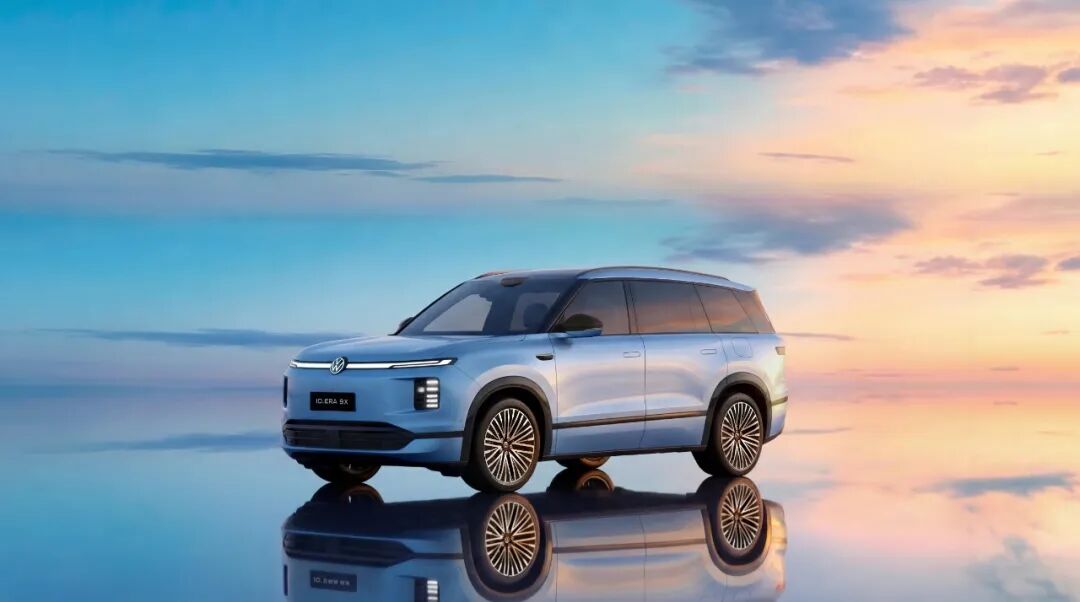
On April 1, SAIC Motor released its annual report for the 2025 fiscal year. The report showed that in 2025, SAIC Motor sold 4.507 million vehicles, a 12.3% year-on-year increase, with a market share of 13.1%, a 0.3 percentage point year-on-year rise. Total operating revenue reached RMB 656.24 billion, a 4.6% year-on-year increase. Net profit attributable to shareholders of the listed company was RMB 10.11 billion, a 506.5% year-on-year surge. Net profit excluding non-recurring items was RMB 7.42 billion, a 237.2% year-on-year increase.
Having emerged from the slump and achieved stability, SAIC Motor is fully aware of the opportunities and challenges it faces.
Wang Xiaoqiu, Secretary of the Party Committee and Chairman of SAIC Motor, pointed out in his 2026 New Year's message that currently, reform tasks remain arduous, and we still face severe internal and external challenges: both international and domestic markets urgently need to be fully developed, capabilities in user insight and creating hit products still need to be continuously enhanced, and the iteration and upgrading of intelligent electric vehicle (IEV) technologies need to be accelerated. We must always maintain a sense of crisis and mission, seize the day, keep pace with the times, and walk alongside users. 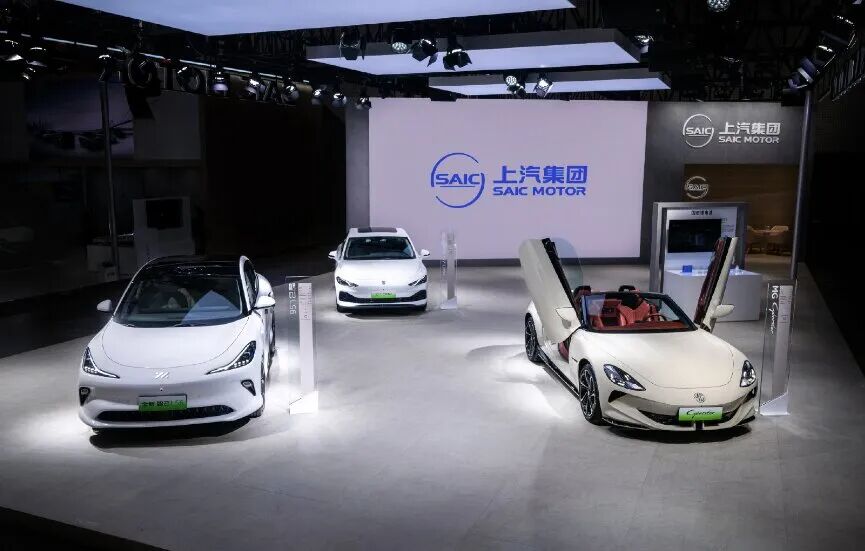
Wang Xiaoqiu stated that 2026 marks the beginning of the 15th Five-Year Plan period. SAIC Motor will further deepen reforms, adhere to steady progress, focus on the main tracks of intelligence and electrification, solidly promote reform efforts, consolidate the trend of recovery and improvement, and comprehensively build a new pattern of high-quality development.
Geely Auto Hits Record-High Total Revenue
In 2025, Geely Auto achieved high-quality development, with total revenue hitting a record high.
On March 18, Geely Automobile Holdings Limited (a Hong Kong-listed company, hereinafter referred to as Geely Auto) announced its annual results for 2025. In 2025, Geely Auto's total revenue was RMB 345.2 billion, a 25% year-on-year increase, hitting a record high. Excluding non-core net profit attributable to shareholders, such as foreign exchange gains and losses, core net profit attributable to shareholders was RMB 14.41 billion, a 36% year-on-year increase. The growth rate of core profit was higher than that of revenue, achieving high-quality growth. The net profit margin was 4.17%, higher than the domestic industry average.
Benefiting from the continuous release of scale effects and the optimization of high-value product mix, total gross profit increased to RMB 57.3 billion, a 25% year-on-year rise. As of the end of 2025, total cash levels rose by 46% to RMB 68.2 billion, with ample and stable cash reserves. To share development achievements with shareholders, the proposed dividend per share was increased by 51.5% to HKD 0.5, with a total dividend payout of HKD 5.39 billion. 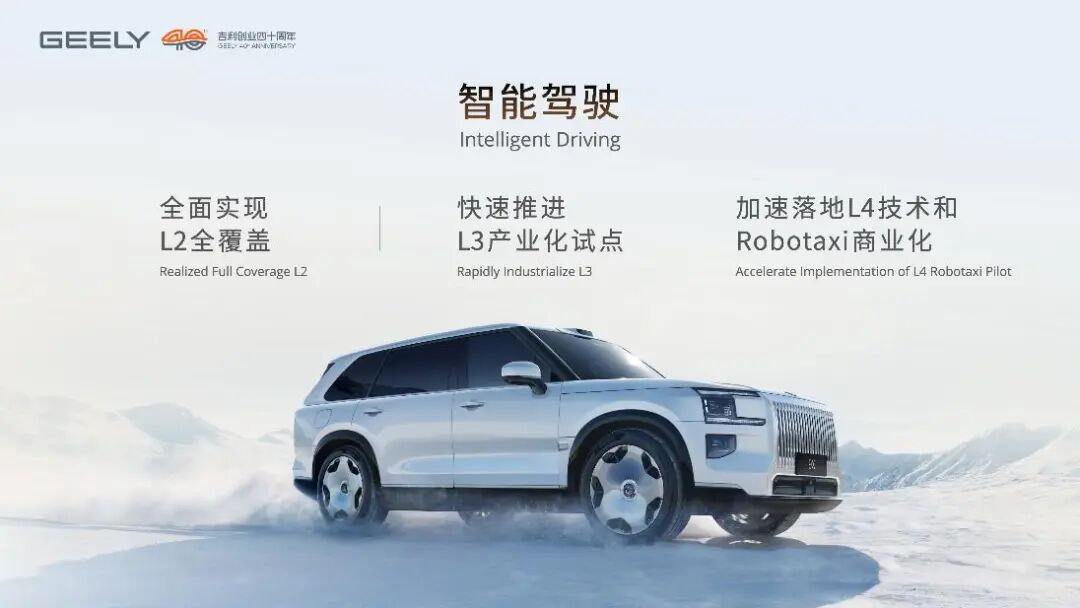
In 2025, Geely Auto's overall sales volume and NEV sales both hit record highs, leading the industry in growth rate. In 2025, Geely Auto's cumulative sales volume was 3.025 million units, a 39% year-on-year increase, exceeding the revised annual target of 3 million units set in mid-year. Among them, NEV sales exceeded 1.68 million units, a 90% year-on-year increase.
Geely Automobile Holdings Limited, listed in Hong Kong, does not include Volvo, which is wholly owned by Geely Holding Group, as well as automotive brands such as Polestar, Lotus, and Farizon. Geely Holding has a broader business scope and is larger in size. Geely Holding's financial report will not be released until late April. Geely Holding Group's total revenue and net profit should be higher than those of Geely Auto.
NEV Startups Strive for Sustained Profitability
In 2025, amid an extremely challenging external environment, NEV startups overcame numerous difficulties and achieved remarkable results.
Leapmotor achieved revenue of RMB 64.73 billion in 2025, a 101.3% year-on-year increase. Net profit was RMB 540 million, achieving profitability for the full year for the first time, becoming the second NEV startup to achieve annual profitability. It also set record highs in sales volume, gross profit margin, cash flow, and other metrics.
Building on two consecutive years of doubled sales volume growth, Leapmotor's total deliveries reached 596,600 units in 2025, becoming the sales champion among NEV startups for the year. 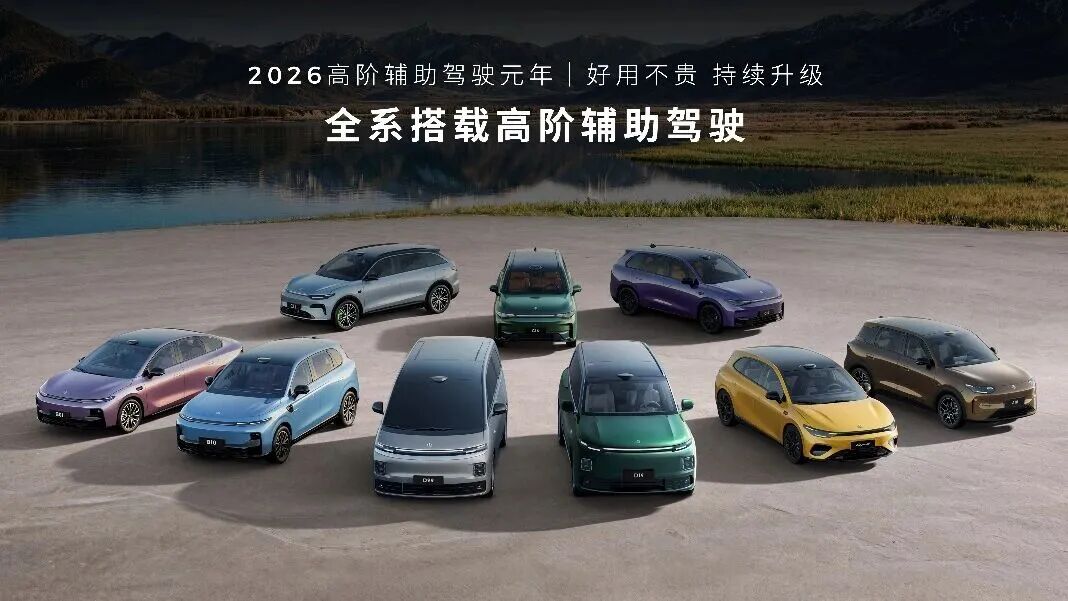
Li Auto, the first NEV startup to achieve profitability, encountered setbacks in 2025. It delivered 406,343 vehicles for the full year, an 18.8% year-on-year decrease. Total revenue was RMB 112.3 billion, a 22.3% year-on-year decrease. Although it remained profitable for the full year, net profit was only RMB 1.139 billion, an 85.8% year-on-year decrease. The profit margin was merely 1%. NIO and XPeng achieved profitability in the fourth quarter of the previous year, marking their first quarterly profits, but still incurred losses for the full year.
NIO's sales volume in 2025 was 326,000 units, a 47% year-on-year increase. Total revenue was RMB 84.79 billion, a 33.1% year-on-year increase. Net loss for the full year was RMB 14.943 billion, a 33.3% year-on-year decrease, with a continuous decline in loss magnitude. XPeng's sales volume in 2025 reached 429,000 units, a 125.9% year-on-year increase. Total revenue was RMB 76.72 billion, an 87.7% year-on-year increase. Net loss was RMB 1.14 billion, a significant reduction of RMB 4.65 billion from the previous year's RMB 5.79 billion, with the prospect of turning a profit on the horizon.
At the 2024 Chongqing Forum, Zeng Qinghong, then Chairman of GAC Group, said that the purpose of a company is to make profits, contribute to the country, contribute to society, pay taxes, and provide employment. If automobile companies are not profitable, what will happen to society and the country in the long run? The automotive industry should have a broader perspective and a long-term strategic vision, rather than engaging in 'cutthroat' competition. 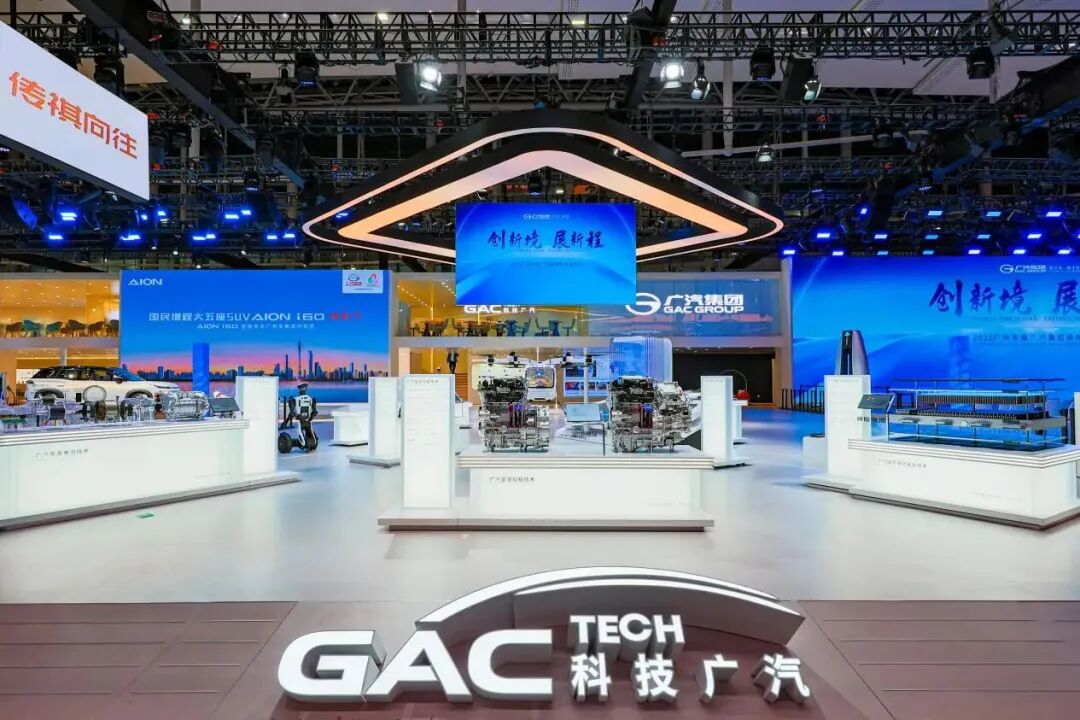
After several years of intense competition, profit margins in the entire automotive industry have been declining, not only lower than those in the domestic manufacturing industry but also significantly lower than those of foreign counterparts. Regardless of technological iterations or conceptual innovations, the sustainable development of automobile companies ultimately relies on economic benefits. Making profits is the ultimate truth. (End)
-
![]()
Revenue and Net Profit of 20 Listed Domestic Automakers in Q1 2026
-
![]()
The Fading Frenzy for 'Lobster': OpenClaw Traffic Plummets, QClaw Nearly Vanishes
-
![]()
Three Paths for Computing Power Energy Storage: The Divergent Strategies of Kstar, Shoto, and Sungrow | Xinliu AIDC Column
-
![]()
Tencent Music Embraces Authenticity Amidst AI Surge
-
Hot Topic | The Advent of Computing Power Futures: A Redistribution of Pricing Influence in the AI Sector
-
![]()
China's New 'Rare Earth Moment' Emerges—This Time, It's Fiber Optics
-
![]()
Equal Strength at the Dinner Table: Understanding the New Industrial Landscape Between China and the U.S. Through a Banquet
-
![]()
The Attack of 618: Apple iPhone 17 Sees Price Drop, Why Did Huawei Enjoy 90 Sell Like Hotcakes Before?