Two Tesla Powerhouses Have Joined Xiaomi
 04/03 2026
 525
525
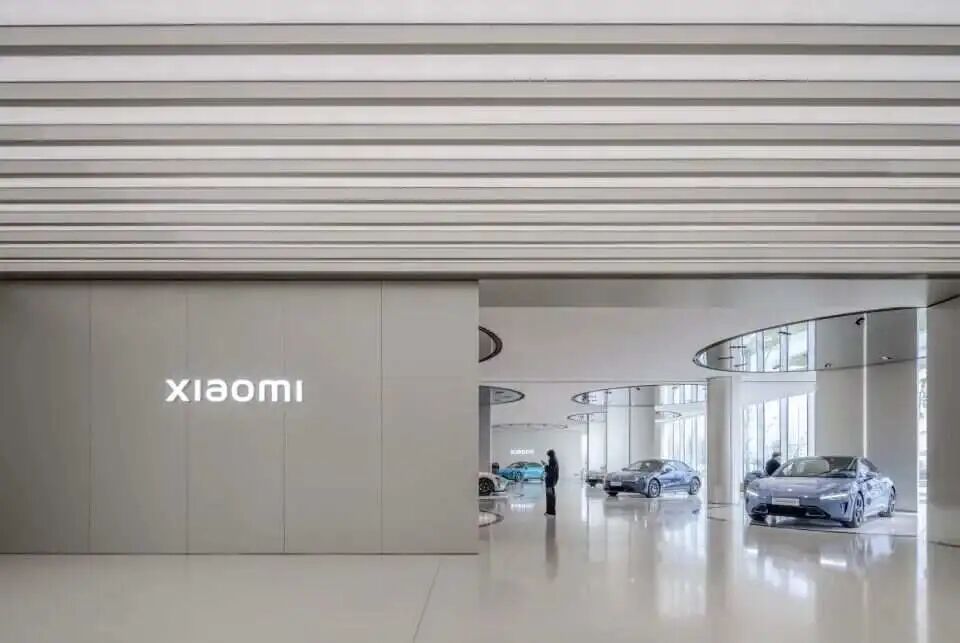
Recruiting Key Talent at a Critical Juncture
Author | Wang Lei
Editor | Qin Zhangyong
Two key figures from Tesla China have been recruited by Xiaomi.
According to a report by Lan Jing News, Song Gang, former Vice President of Manufacturing at Tesla's Shanghai Gigafactory, is set to assume the role of factory director at Xiaomi Auto, forming a dual-core management structure with the current factory director, Ji Guowei.
In fact, before this, Song Gang, the core figure who led the construction and production ramp-up of Tesla's Shanghai Gigafactory, was rumored to be joining Xiaomi Auto.
Song Gang is not the only key Tesla China executive to join Xiaomi. Reports indicate that Kong Yanshuang, former General Manager of Tesla China, joined Xiaomi Auto in early March and will take over from Li Xiaorui, the former director of Xiaomi Auto, to oversee automotive sales.
However, as of now, Xiaomi has not provided any response.
From the current information, one is a "gold-medal factory director" on the production side, and the other is a "top sales expert" on the sales side. With these two powerhouses on board, Xiaomi Auto is likely to see increasingly robust distribution channels and faster deliveries.
01
The "Gold-Medal Factory Director"
Song Gang, the former Vice President of Manufacturing at Tesla's Shanghai Gigafactory, is not only known as the "gold-medal factory director" but also an absolute senior expert in the automotive manufacturing field.
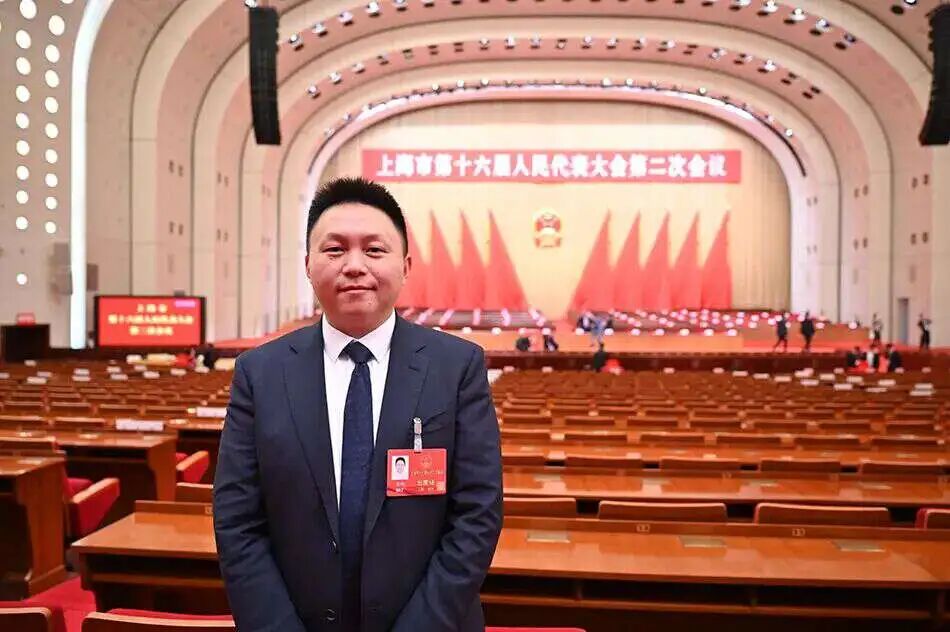
Before joining Tesla in 2018, he had accumulated 15 years of experience in the automotive industry supply chain. He successively worked at SAIC-GM, Dürr AG, Ford Motor Company, and Zhidou Electric Vehicle. Notably, he spent six years at General Motors, where he reached the position of National Manufacturing Engineering Leader, and later served as Senior Manager of Capacity Planning for Ford's Asia-Pacific region.
At Tesla, he was not only the head of the Shanghai factory but also Tesla Shanghai's first employee (Employee ID 001). He single-handedly led the construction and production ramp-up of Tesla's Shanghai Gigafactory.
At that time, Tesla had just announced its establishment as China's first wholly foreign-owned vehicle manufacturing project in Shanghai. Construction began on January 7, 2019; production qualification was obtained in October, and Model 3 production commenced. It took only 11 months to complete the industry miracle from groundbreaking to the first Model 3 rolling off the assembly line.
Subsequently, he pushed the factory's monthly production capacity to a global record of 80,000 units, becoming a key contributor to Tesla's localized manufacturing in China.
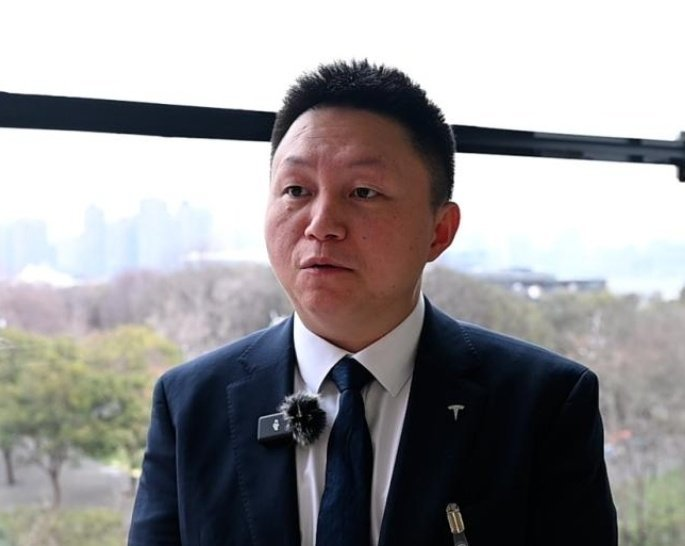
In 2020, Tesla began constructing Phase II of the Shanghai factory for the domestic production of the Model Y. This team was also led by Song Gang. Before his departure, the Shanghai Gigafactory had become the most efficient and highest-quality factory globally, with a local component sourcing rate exceeding 95%.
In addition to vehicle manufacturing, Song Gang also participated in the establishment of Tesla's battery and motor teams and the launch of their factories.
It should be noted that the factory director of the Shanghai Gigafactory is one of the most critical positions in Tesla China, second only to the President of Greater China, Zhu Xiaotong. The factory director oversees Phase I, Phase II, battery, and motor factories.
In other words, except for the supply chain managed by Tesla's U.S. headquarters, all other manufacturing-related departments in Tesla China are managed by the factory director.
Furthermore, Song Gang also worked at Tesla's U.S. operations, participating in factory construction and business planning for potential facilities. He later returned to Shanghai to establish Tesla's Megapack Gigafactory, Tesla's first energy storage superfactory outside the United States.
Song Gang's strong business acumen is evident. In fact, by the end of last year, rumors circulated in the market that Song Gang would join Xiaomi. At the time, it was said that after leaving Tesla, he planned to join a local emerging automotive brand currently facing production capacity bottlenecks.
Many believed this brand to be Xiaomi Auto, especially since Xiaomi Auto's production capacity issues were severely affecting the delivery rhythm of the SU7. However, Wang Hua, General Manager of Xiaomi's PR department, publicly responded, "The rumored Factory Director Song is indeed excellent, but our Factory Director Ji at Xiaomi Auto is also outstanding. That's enough!"
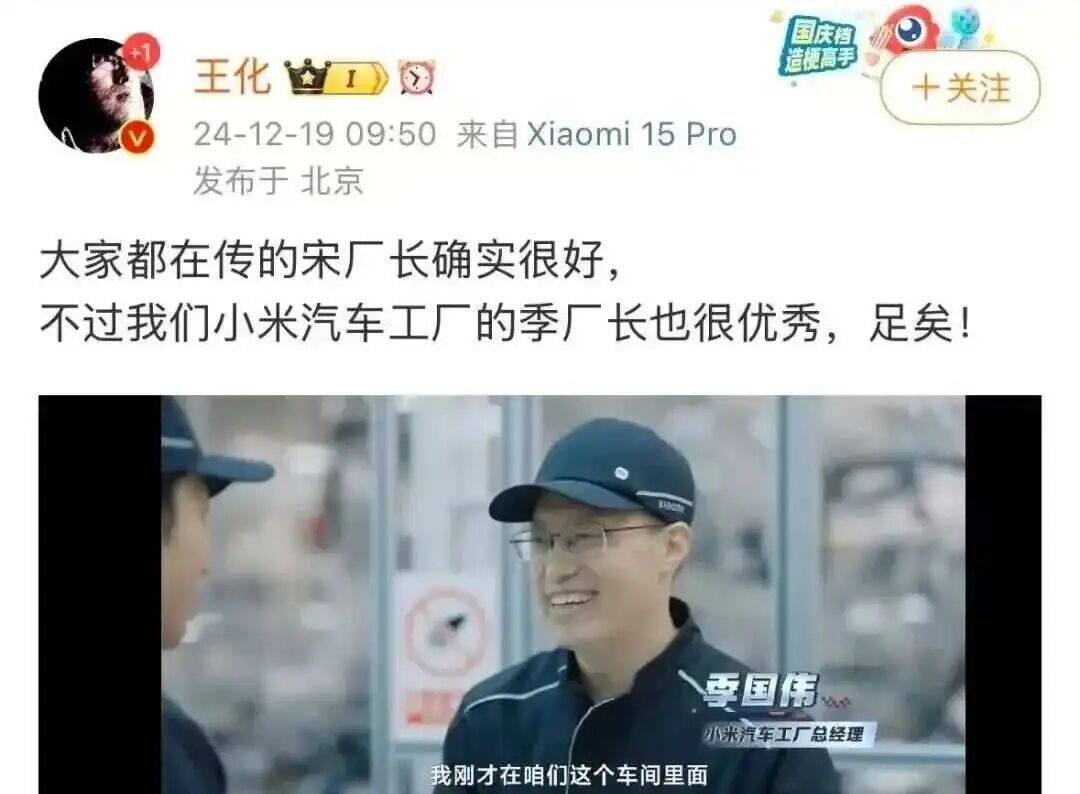
This statement was widely interpreted as an indirect denial. However, shortly after, reports emerged that Song Gang's next destination had been confirmed: he would serve as Senior Vice President of Integrated Supply Chain at Envision Group, putting an end to the speculation.
Now, discussions about Song Gang joining Xiaomi Auto have resurfaced, with more specific details. A informed sources (insider) revealed, "He may serve as factory director, forming a partnership with Factory Director Ji Guowei. The factory director role is a highly critical and experienced position. Xiaomi Auto's factory has a large workforce, and the management responsibility is heavy."
02
The "Top Sales Expert"
Another Tesla executive who has shifted to Xiaomi is no less impressive.
She is Kong Yanshuang, former General Manager of Tesla China. Her title alone reflects her core position within Tesla China's hierarchy.
Currently, there is limited public information about Kong Yanshuang, but her career trajectory is deeply intertwined with Tesla's development in the Chinese market. Tesla adopts a direct sales model in China, meaning every aspect of the sales system—from store location selection and staff training to test drive processes, delivery experiences, and standardized after-sales service—must be directly output and strictly enforced by the headquarters.
Kong Yanshuang can be considered the "chief architect" of this system.
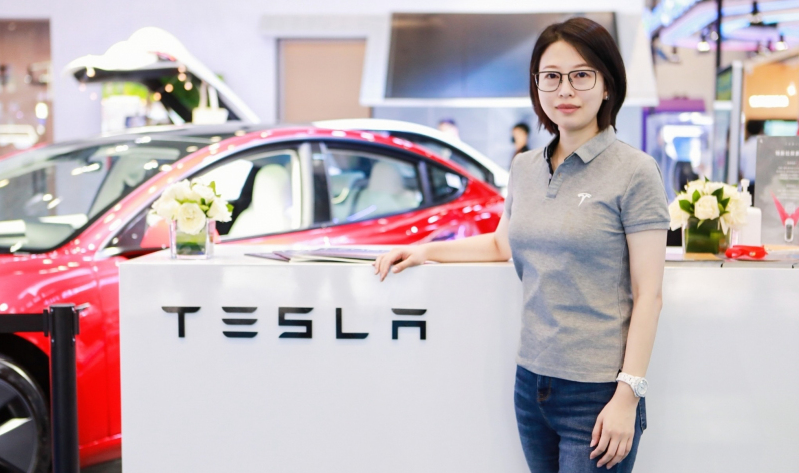
She has held key positions such as General Manager of Tesla China's South China Region and General Manager of China Region, playing a long-term leading role in the layout of Tesla's sales system in the Chinese market. She oversaw the complete expansion cycle of Tesla in China, from "0 to 1" and "1 to N."
If three keywords could summarize her core capabilities, they would be systematization, refinement, and localization.
During her tenure as General Manager of the South China Region, she single-handedly established the direct sales network in first-tier cities like Guangzhou and Shenzhen while extending the layout to third- and fourth-tier cities, completing Tesla's earliest service network structure in China.
Between 2022 and 2023, she frequently gave media interviews in her capacity as General Manager of China Region, introducing Tesla China's performance and strategies. In May 2024, following a management reshuffle at Tesla, she was transferred to the Shanghai Region to continue overseeing sales management.
Notably, according to a report by Jiemian News, another Tesla mid-level employee joined Xiaomi at the same time as Kong Yanshuang. This employee, named "Eason," serves as the "political commissar" of Xiaomi Auto's department and is a member of Xiaomi's Strategy Department. The Xiaomi Group Strategy Department is a core unit that assists the CEO in formulating and supervising the implementation of the group's development strategies, directly reporting to CEO Lei Jun.
03
Standing on Tesla's Shoulders
The consecutive recruitment of two Tesla powerhouses is closely related to Xiaomi Auto's current situation.
Yesterday, Xiaomi Auto released its delivery data for March, reporting over 20,000 units delivered across its entire lineup. The new-generation SU7 accumulated over 7,000 deliveries in nine days, averaging nearly 800 units per day.
While this figure remains impressive among new energy vehicle startups, it pales in comparison to the historical peak of 50,000 units delivered in a single month in December 2025 and falls far short of Xiaomi Auto's target of 550,000 units for the entire year of 2026.
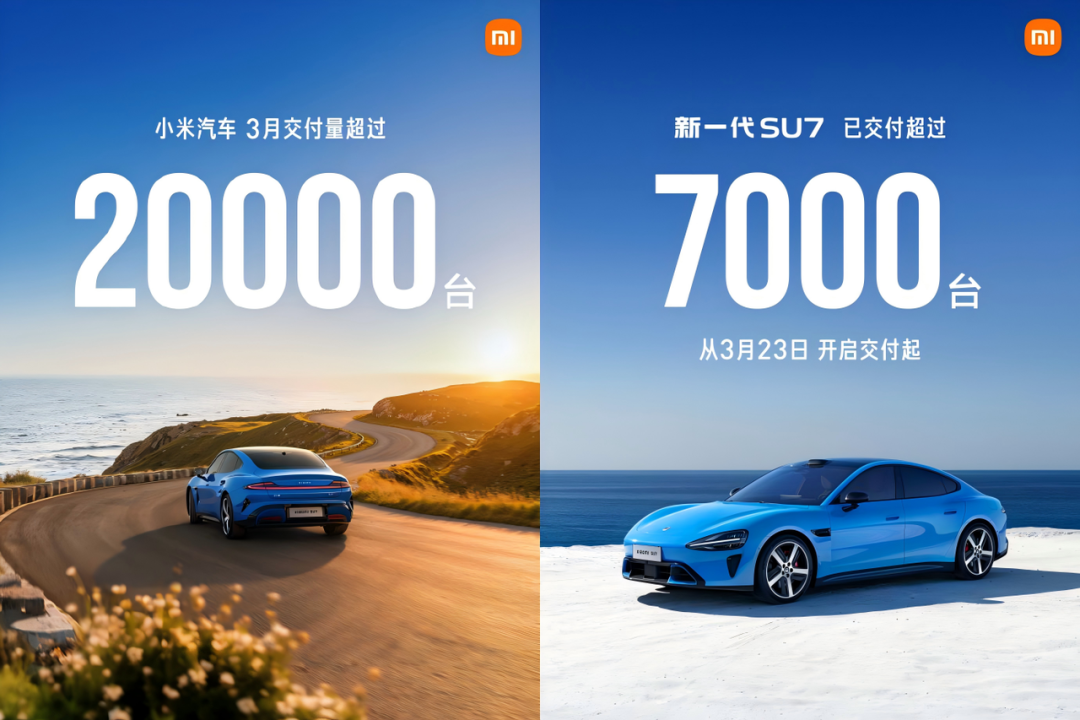
In the first quarter just passed, Xiaomi Auto delivered a cumulative total of over 79,000 units. To achieve the annual target, an average of approximately 52,000 units must be delivered in the remaining nine months.
This figure is more than double the current monthly delivery level and exceeds the historical peak of 50,000 units delivered in a single month in December 2025. Achieving the annual target presents immense pressure.
Production capacity constraints have long been an issue for Xiaomi. Currently, Xiaomi Auto's Phase I and Phase II factories in Beijing are operating at full capacity, with an annual production capacity of approximately 300,000 to 330,000 units, which is still insufficient to meet the annual delivery target.
The Phase III factory in Beijing commenced operations after the Spring Festival, with a designed annual capacity of 150,000 units. The Wuhan factory is also planned to start production in May 2026, with a designed annual capacity of 150,000 units. Combined, these just exceed the annual target of 550,000 units.
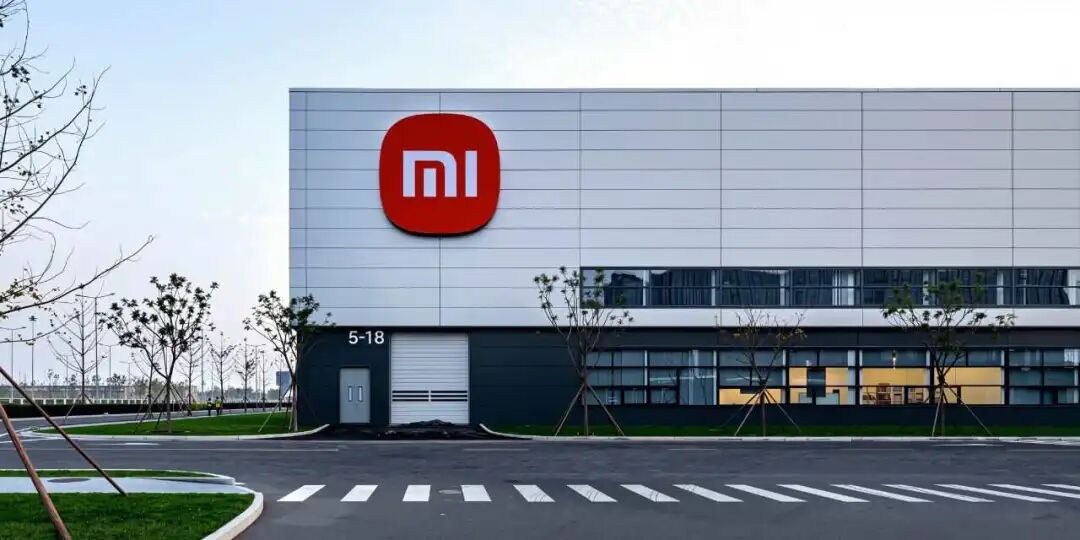
With maximum production capacity and the target so closely aligned, this places extremely high demands on production efficiency and supply chain management. Song Gang's joining comes at an opportune time.
As is well known, one reason Tesla's Gigafactory is highly regarded is its production efficiency. A car factory's production capacity is influenced by multiple factors, including the degree of production line automation, factory size, industrial workforce reserves, and material preparation progress.
How to build an efficient production and manufacturing system is precisely Song Gang's area of expertise. At Tesla's Shanghai Gigafactory, he accumulated not only experience in production ramp-up but also an efficient manufacturing methodology that encompasses supply chain management, production line optimization, and quality control. This is the primary reason why the market speculates that Xiaomi would recruit Factory Director Song.
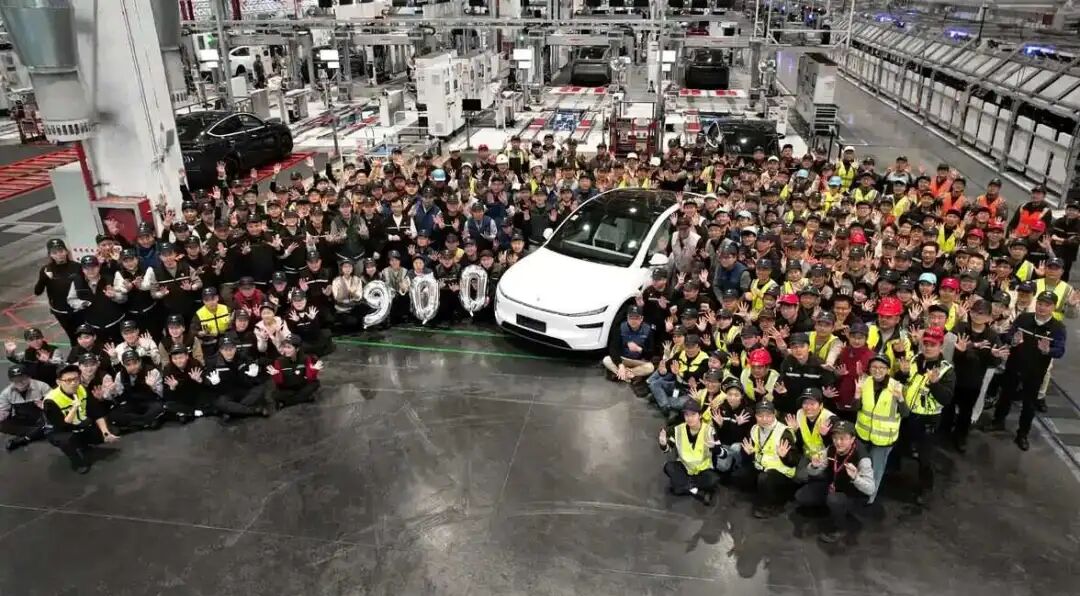
On the other hand, converting production capacity into actual deliveries is another challenge. Visibly, compared to the initial popularity of the first-generation Xiaomi SU7, the heat (hype) for the new-generation Xiaomi SU7 has subsided significantly, as reflected in order volumes.
As Xiaomi Auto transitions from an "explosive rhythm" to "normalized steady sales," there is an urgent need to systematically enhance its retail capabilities. Kong Yanshuang's arrival seems purposeful: based on her expertise in channel systems, she can establish a sales system capable of handling the "steady sales period."
Tesla has experienced prolonged periods of blockbuster success in China, as well as complete cycles of order declines during normal periods. Kong Yanshuang has already navigated how to maintain the combat effectiveness of the sales team after the hype subsides during her time at Tesla.
Kong Yanshuang's joining allows Xiaomi to directly introduce systematic and structured sales management methods based on her Tesla experience, stabilizing and enhancing long-term sales combat effectiveness.
Now that the industry has entered a phase of stock game ( stock competition , or competition for existing market share), the arrival of the two powerhouses, Song Gang and Kong Yanshuang, represents the fastest path for Xiaomi to address its weaknesses. Xiaomi Auto is likely to embark on a period of stable and rapid growth.
-
![]()
Chip Market Booms as AI Hardware Goes Mainstream
-
![]()
【Jialichuang】Participates in the 'OFweek 2026 China Intelligent Manufacturing Industry Annual Awards'
-
![]()
Car Companies Unite in 'Humanoid Creation': The Embodied AI Revolution Transforming the Automotive Industry
-
![]()
XREAL, a Realist in the Smart Glasses Space
-
![]()
68% Surge in Market Enthusiasm: The Game Behind Cerebras' Rise to Fame and the AI Chip Race
-
![]()
The Boom of Short Drama Going Global: In the 3.6 Billion Market, Only a Few Are Truly Making Money
-
![]()
Alibaba AI: Flourishing Amidst Challenges
-
![]()
Surge of Short Drama Exports: Only a Few Truly Profit in the $3.6 Billion Market