China’s NEVs Seize Global Opportunity Amid Energy Crisis
 04/14 2026
 418
418
Lead
Introduction
"History does not repeat itself, but it often rhymes."
According to the latest data released by the China Passenger Car Association (CPCA) on Thursday, April 9, China exported 695,000 vehicles (including complete vehicles and CKD kits) in March, marking a 74.3% year-on-year increase. Notably, new energy vehicle (NEV) exports surged—
A total of 349,000 complete vehicles and CKD kits were exported, accounting for 50.2% of total vehicle exports.
Among automakers with over 10,000 units exported, the top eight by volume were BYD, Geely, Chery, Tesla China, SAIC, Leapmotor, Changan, and Dongfeng. The top three—BYD (116,900 units), Geely (52,200 units), and Chery (40,800 units)—accounted for over 60% of total NEV exports.
For context, domestic brands exported 145,500 NEVs in March of the previous year, with BYD, Chery, and Geely ranking top three at 67,300, 16,400, and 8,800 units, respectively. This year’s March exports represented a 139.9% year-on-year growth, with BYD, Geely, and Chery seeing growth rates of 116.2%, 493.2%, and 148.8%, respectively.
Initially, 2026 NEV export prospects appeared cautious. Early in the year, authoritative institutions projected global NEV demand growth to slow from 20% in 2025 to 13–15.7% this year, citing weakening momentum in major markets since Q3 2025. However, geopolitical shocks upended these forecasts.
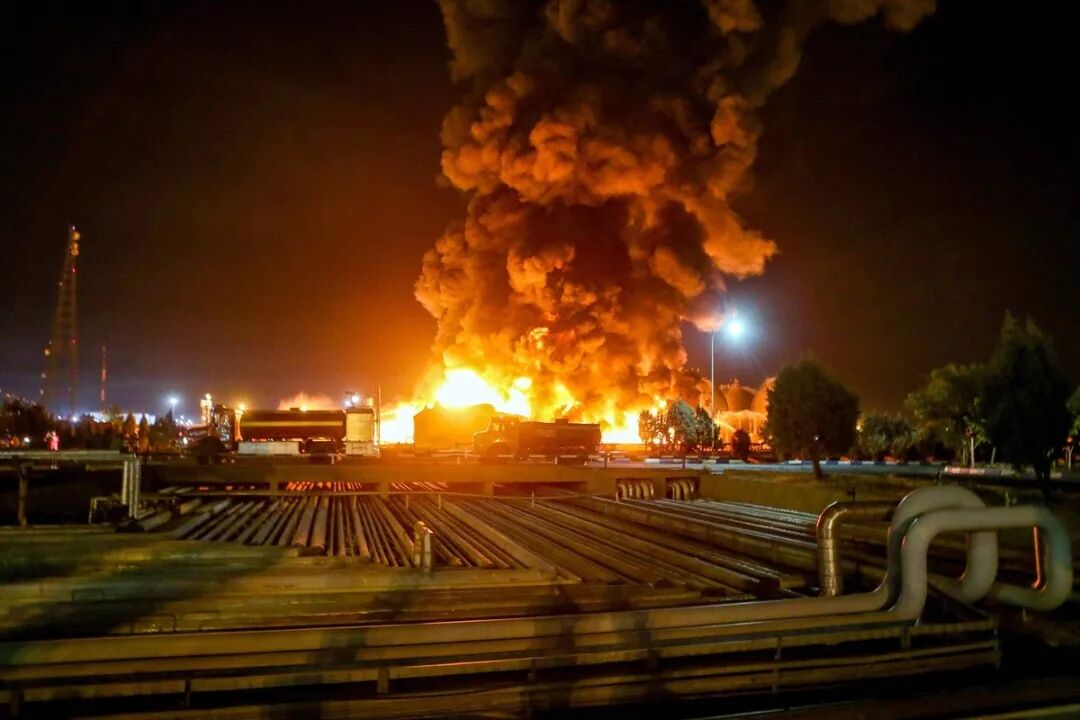
At the end of February, U.S. and Israeli military strikes against Iran triggered the substantive shutdown of the Strait of Hormuz—a chokepoint handling over 20% of global crude oil and a larger share of LPG/LNG supplies. International oil and gas prices spiked, with Brent crude briefly surpassing $100/barrel.
The Asia-Pacific region, heavily reliant on Persian Gulf energy, faced acute supply anxieties. Fuel shortages drove consumers toward NEVs as a viable alternative to abandoning driving altogether.
01 From Prime Ministerial Rides to Public Scramble: The Asia-Pacific Market Begins to Shift En Masse
On March 25, Thai Prime Minister Anutin Charnvirakul drove a Haishi 07EV—a Chinese-made electric vehicle—to an emergency parliamentary session in Bangkok, eschewing his usual Rolls-Royce Phantom (license plate: ‘3333 Bangkok’) and escort vehicles. Accompanied only by his driver and two attendants, he traveled lightly in a single vehicle.
When questioned by media, Anutin stated, “This switch to an electric vehicle reflects my solidarity with Thai citizens during the fuel crisis.” The Thai government had urged the public to adopt NEVs to conserve increasingly expensive fuel. Days later, at the 47th Bangkok International Motor Show, Anutin toured Chinese NEV booths, engaging with staff—a clear signal of support.
This endorsement yielded immediate results—
By the motor show’s conclusion on April 5, over 130,000 vehicle reservations were made. Chinese brands achieved a historic breakthrough, surpassing Japanese brands in reservations for the first time. BYD, the prime minister’s chosen brand, led with 17,000 reservations, exceeding Toyota’s 15,800. Among the top 10 brands, seven were Chinese, primarily NEV models.
In Oceania, Chinese NEVs are also in high demand, even without political endorsements.
New Zealand’s Motor Industry Association (MIA) reported 14,908 new vehicle registrations in March, with EVs driving passenger car sales growth: 2,275 pure EVs and 1,107 plug-in hybrids were sold, collectively capturing over 33% market share. Traditional fuel-powered vehicles fell below 50% for the first time, to 36.6%.
MIA’s sales rankings showed Tesla (from Lingang Gigafactory), BYD, and Dongfeng as top brands. Leapmotor, Zeekr, GAC Group, and MG also achieved growth. Some dealers sold up to 80 vehicles daily, depleting inventories and prompting a principal dealer to fly to China to request additional supply, even proposing a “90-day guaranteed delivery” pledge.
Across the Tasman Sea, Australia also saw EV sales peak.
The Federal Chamber of Automotive Industries (FCAI) reported ~105,100 total vehicle sales in March, a 3.3% year-on-year decline. However, NEV sales rose to 15,839 units, accounting for 14.6% of total sales (up from 7.5% in March 2025).
BYD broke into Australia’s top three automakers for the first time, ranking behind Toyota and Kia. A Melbourne-based Chinese NEV dealer’s two outlets sold nearly 740 vehicles in March, “setting an Australian industry record for single-month sales.”
FCAI’s CEO noted that strong March EV demand has spurred local industry investments, with over 100 EV models expected to launch in Australia this year.
Throughout March, similar trends emerged across the Asia-Pacific. Singaporean dealers of Chinese NEVs faced stockouts in the final week, while multiple Chinese brands in Manila sold two weeks’ worth of inventory in half the time.
02 The Ultimate Answer to Energy Security and Diversification
While the Asia-Pacific leads this shift, European markets are also adapting.
The European Federation for Transport and Environment reported that when crude oil exceeds $100/barrel, refueling costs are estimated to be five times higher than charging an EV. Fuel-powered vehicles now cost €14.2 per 100 km (up €3.8 since January), while EVs cost €6.5 (up €0.7). Economic pressures are driving European car owners toward NEVs, mirroring Asia-Pacific trends.
Even if U.S.-Iran negotiations ease tensions, the crisis will reshape global consumer choices.
Why are NEVs the optimal solution during oil/gas disruptions? While electricity-fuel price gaps vary by country, the key lies in energy structure diversity. EVs can draw power from coal, gas, hydropower, wind, solar, or nuclear sources. During crises, price hikes are minor compared to the risk of total supply loss.
By 2026, a decade of global low-carbon transitions has integrated renewables like solar, wind, and tidal power into national grids. This diversification buffers energy security and expands NEV viability.
In extreme scenarios, if external energy supplies are cut off, vehicle owners with solar or wind systems and inverters can still “feed” their EVs, which in turn can power homes. Past disasters have seen EVs and hybrids provide emergency electricity to outage-stricken households, sustaining patients until utilities are restored.
Beyond avoiding oil, NEVs’ large batteries act as “mobile power banks” via V2L (Vehicle-to-Load) technology, supplying appliances during outages. Even in total blackouts, EVs connected to solar/wind systems can function as energy storage units.
Plug-in hybrids and extended-range models offer dual fuel-electric guarantees and can serve as small-scale generators. Combined with bidirectional charging piles, they enhance regional disaster resilience.
Consider the Wenchuan earthquake scenario: If NEVs were widespread in Yingxiu Town, pure EVs could link to solar systems, while hybrids could power remaining public facilities. Early mobile network restoration would aid coordination, and timely medical equipment activation could save lives.
In extreme cases, like recent U.S.-Israel attacks on Iran, bidirectional charging and NEVs could decentralize energy networks, enabling rapid production/supply recovery and boosting national resilience.
Industry experts noted as early as 2020 that a 10% oil price hike could lift NEV penetration by 1.5–2%. Rising energy costs are accelerating electrification. Bloomberg highlights that the Iran war’s global energy shock has revived EV market interest, with Chinese automakers expanding their global footprint amid this crisis.
This is no coincidence but the culmination of years of Chinese automotive competitiveness, now unleashed amid shifting global energy dynamics.
03 The Echoes of History and the Inevitable Rise
The 1970s oil crises offer parallels. Soaring oil prices drove demand for fuel-efficient vehicles.
The 1973 crisis popularized Japanese compact cars globally. The 1979 crisis sent oil prices from $13 to over $34/barrel, plunging Europe and America into recession while cementing Japanese cars’ global dominance through fuel efficiency.
History rhymes again—but the protagonists have changed.
Six years ago, the outbreak of the COVID-19 pandemic not only demonstrated the remarkable resilience of China's economy and industrial system but also presented a golden opportunity for China's automotive manufacturing industry to shine on the global stage. Amidst the battle against the virus, Chinese automakers spared no effort in maintaining production and advancing R&D, seizing a crucial window of opportunity to narrow the gap. This relentless pursuit ultimately culminated in the confident theme of "Embracing Change" at the 19th Shanghai International Automobile Industry Exhibition in 2021, signaling China's readiness to lead the automotive industry's transformation.
The ongoing crisis in the Strait of Hormuz has undoubtedly acted as a catalyst, accelerating the global expansion of China's new energy vehicles (NEVs).
However, viewed from another angle, even in the absence of the pandemic or this geopolitical turmoil, the rise of China's NEVs would still be an inevitable trend driven by industrial development. This success is the culmination of over a decade of unwavering commitment to a clear technological roadmap, sustained R&D investment, and the establishment of a comprehensive industrial chain. Chinese automakers have forged systemic advantages, ranging from core technologies in batteries, electric motors, and electronics to intelligent cockpits, and from cost control to large-scale manufacturing capabilities.
Crises merely serve as accelerants, rather than the root cause. They magnify the economic benefits of NEVs, prompting more consumers to make informed choices through comparison. Ultimately, it is the product competitiveness that secures market dominance.
What China's NEVs have grasped is not merely a "tremendous opportunity" but also the inevitable mission of industrial transformation entrusted by the times.
Editor-in-Charge: Du Yuxin Editor: He Zengrong
THE END
-
![]()
Jitian Xingzhou: A Pioneer in Optical Payloads Secures Hundreds of Millions in Series B Funding!
-
![]()
Orders Secured Through to the Second Half of the Year! The Rationale Behind the 'Surge' in Demand for This Company’s Optical-Grade Base Films
-
![]()
Beyond Patents: The Retail Rivalry of Insta360 and DJI Unfolds
-
![]()
180 Billion Market Cap Vanished! How Did Seres Fall So Far?
-
![]()
Blockbuster! Domestic storage takes the global double crown for the first time, from an AI company
-
![]()
China Spearheads Formulation! World's Pioneering Global Technical Regulation for Automated Driving Systems Greenlit and Unveiled
-
![]()
Farewell to Pulsed Support Policies: Three Major Auto Policy Directions from Multiple Departments Take Effect on the Same Day
-
![]()
Embercore AI’s Accelerated Funding: The Robot Industry’s Shift Toward ‘Learning Systems’