GAC Group: Facing Reality, It Must Rely on Itself to Reverse the Situation
 04/14 2026
 577
577
Lead
Introduction
History may not repeat itself, but it often echoes. Ultimately, one must depend on their own strength.
In 2025, China's automotive industry finds itself amidst a backdrop of "profound transformation" and "accelerated restructuring." As the wave of electric intelligence sweeps into its tenth year, the smoke of price wars is gradually giving way to multi-dimensional value competition in technology, systems, and ecosystems. The industry has officially entered a new phase marked by a sluggish recovery, intense differentiation, rapid iteration, and stringent regulations.
This is no longer a 100-meter sprint but a marathon that tests endurance, systemic capabilities, and strategic resolve. For automakers, regardless of their heritage, the road ahead will undoubtedly be more challenging than before.
For GAC Group, this year marks a historic crossroads fraught with tension and contradictions. It signifies both the culmination of the "14th Five-Year Plan" strategy and the fresh start of the three-year Panyu Initiative.
At this critical juncture, GAC understands the severity of the external environment more acutely than any other automaker. Who could have foreseen that with the dawn of a new era, the technological advantages achieved during Zeng Qinghong's tenure would be swiftly challenged by latecomers, and the impact of differentiation between joint ventures and independent brands would penetrate so deeply?
Facing this daunting reality, Feng Xingya, the newly appointed leader, has issued a stern mandate for comprehensive reform throughout the group, from the inside out. This is a necessity imposed by the times and, of course, a prerequisite for GAC to extricate itself from its current predicament.
As we step into 2026, a deluge of information suggests that GAC, whose performance has been severely impacted, will encounter obstacles at every turn in this fiercely competitive new environment. When the profit-generating capacity of the joint venture segment is significantly weakened and can no longer fully support the group's overall profitability, GAC urgently needs new business pillars to dispel external doubts about its future development.
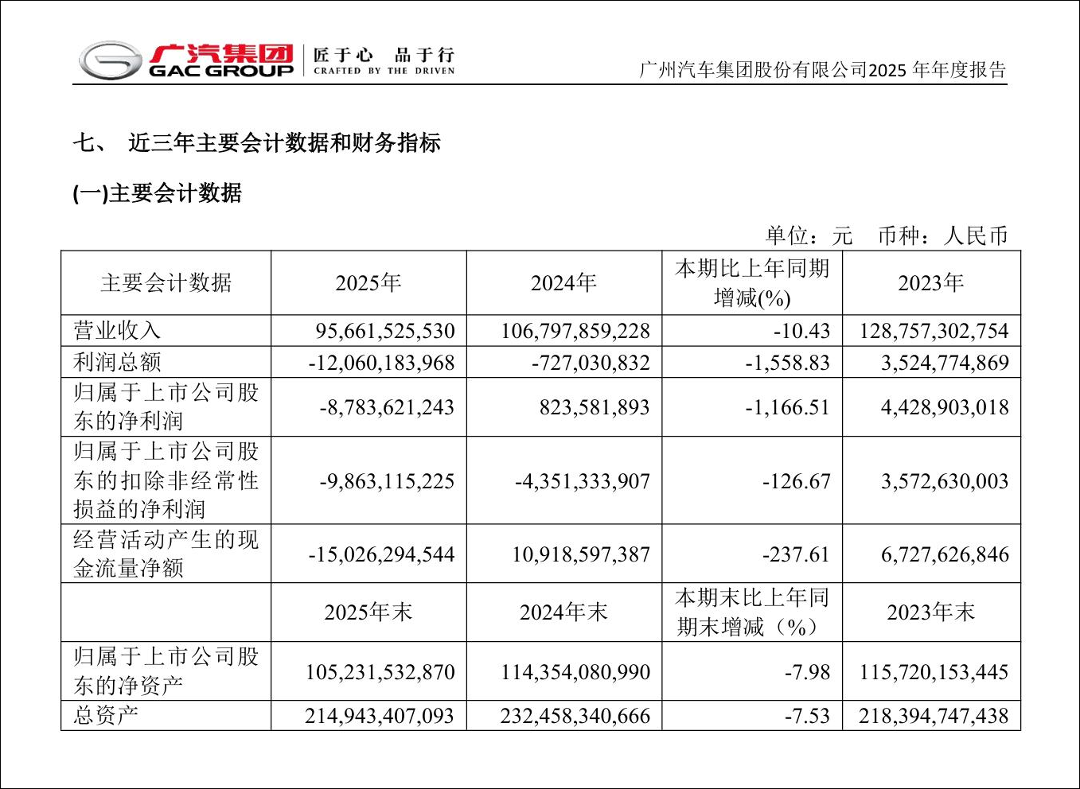
We are acutely aware of the implications of data from the previous reporting period, such as GAC Group's total operating revenue of approximately RMB 96.542 billion, a year-on-year decrease of about 10.43%; a net loss attributable to shareholders of the parent company of approximately RMB 8.784 billion; and annual automobile production and sales of 1.7444 million and 1.7215 million units, respectively, down 8.98% and 14.06% year-on-year.
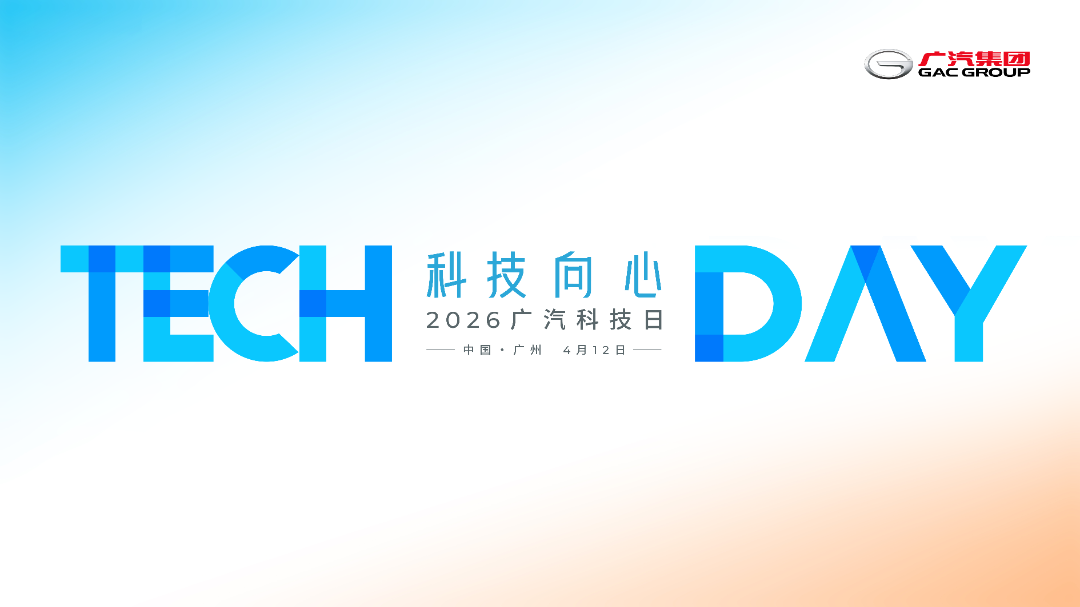
This month, GAC Group plans to hold its 2025 annual performance briefing. Meanwhile, the 2026 GAC Technology Day will also be inaugurated on the 12th. Regardless of whether this year's market turmoil is more intense than in previous years, given the current development status, GAC has no time to pause and rest. As everything moves toward market restructuring, the urgent task is to come up with convincing measures.
01 Hoping the Pain Is Only Temporary
After a year of adjustment, when we look beyond the surface of losses and examine GAC's strategic footprint and operational trajectory throughout the year, we indeed find a vastly different picture compared to other companies mired in losses.
Since last year, amid the industry's coldest winter, GAC has been undertaking a systemic and deep-seated transformation with a determination akin to a "wartime state." Losses are the tuition fees that must be paid for transformation, while the momentum accumulated during the reform serves as chips for the future.
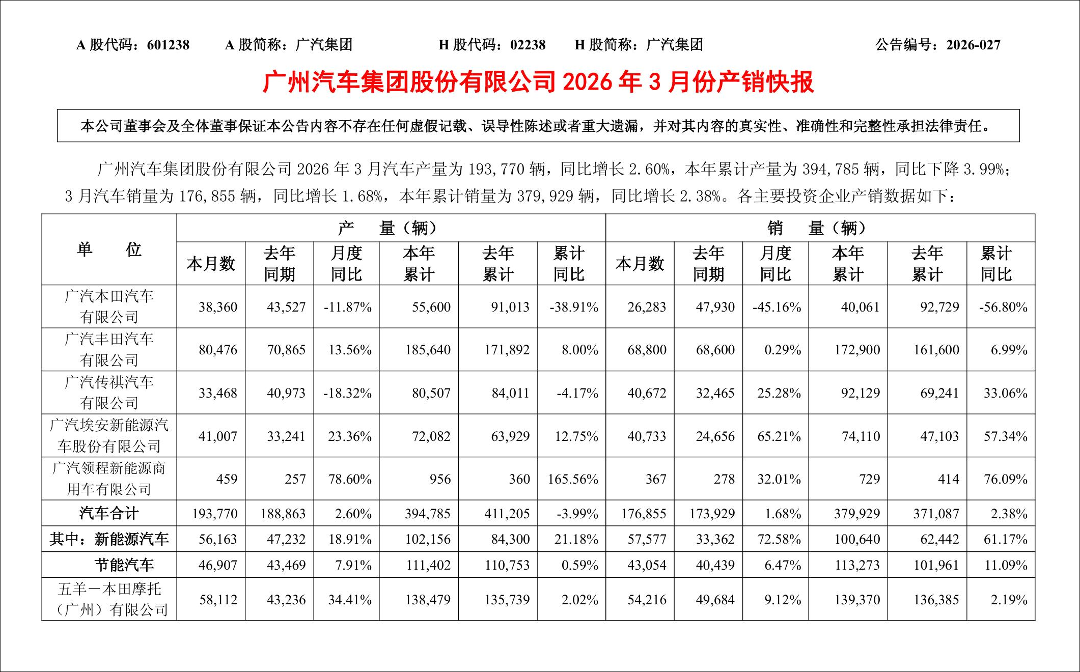
In other words, the main narrative of GAC in 2025 may not be a "lost year" but rather a crucial chapter in the grand narrative of "recreating a new GAC," characterized by withstanding pressure, accumulating strength, and resolutely turning around. However, beyond these, we know that the fierce competition of the new era cannot be masked by slogans alone.
The changes that have occurred in the Chinese auto market in recent years, from consumer attitudes to technological iterations and even marketing strategies, have strongly tested the nerves of every automaker. Competition in the automotive industry has intensified, and the ecosystem is rapidly restructuring. This pattern of "strong differentiation and rapid iteration" implies that the dividends of market growth have receded, and the competition for existing market share is fierce.
This also explains why GAC's total annual operating revenue of RMB 96.54 billion, a year-on-year decrease of 10.3%, is rooted in "annual sales falling short of expectations," especially the sales of independent brands, which directly led to impaired capacity utilization and scale effects. This is one of the core reasons for the losses.
Even in the joint venture business, no matter how hard GAC Toyota tries or how much it surpasses its peers in profit control, it cannot withstand the revenue impact brought about by the collective transformation of the entire independent brand segment.
When it comes to transformation, the industry has long been saying, "It's hard for a large ship to turn around." Even today, this remains a problem for every traditional automaker.
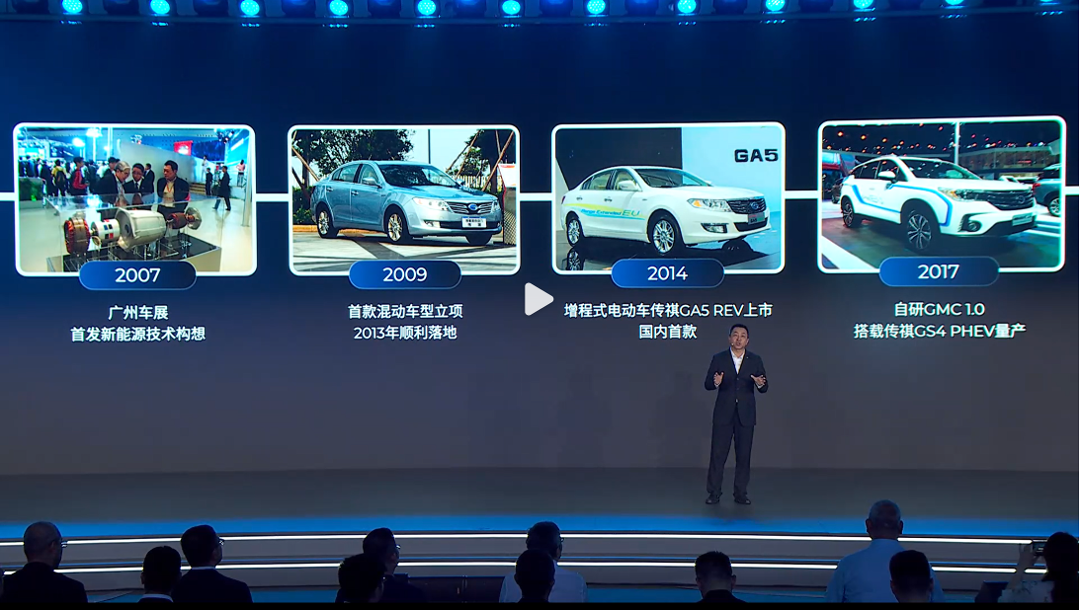
Regarding new energy development, as Qi Hongzhong, President of the Powertrain BU at GAC Group, shared at the GAC Technology Day, GAC takes pride in having explored this new industry through its first business venture. Since the establishment of GAC New Energy, multiple iterations at the technological level have consistently been at the forefront of the entire industry. The later-incubated Aion and Hyper brands are also clearly labeled among the new forces in traditional car manufacturing.
However, regardless of the circumstances, as the industry shifts from a "price war" to a "value war," GAC has chosen an aggressive strategy of increasing investment and optimizing its structure. Although this aligns with the backdrop of the times, when compared to industry leaders, its input-output ratio is still relatively weak.
Last year, guided by the Panyu Initiative, the entire GAC Group underwent in-depth adjustments, especially for its independent business. When the joint venture market changed overnight, GAC clearly understood that the idea of hiding behind GAC Toyota and GAC Honda for development was no longer viable.
Over the past year, following Trumchi New Energy, Trumchi, under the name of Yearning, aspires to achieve another transformation at the brand level. At a time when the growth rate of the pure electric market has slowed down, Aion has finally introduced new extended-range hybrid vehicles to respond to industry upheavals. After years of extravagance, Hyper, with the arrival of new leadership, intends to return to the group for coordinated development.
All of this condenses into a determination to delineate the old and new eras at GAC, a thought process of dissecting and analyzing industry trends, and a mindset of promptly providing new solutions in response to the latest user demands, all of which are fully disclosed.
The ultimate goal, as perceived by the outside world, is to fully reverse the passive business situation, strive to achieve a rebound in performance, promote the group's solid progress toward becoming a high-quality technology enterprise, realize the development vision of "recreating a new GAC," fully unleash the group's growth potential, and clearly convey the enterprise's long-term value to the capital market.
02 Results Are the Standard for Testing Success or Failure
2026 is passing quickly. In a flash, the entire Chinese auto market has undergone multiple reassessments due to objective factors such as international situations, trade games, industrial development needs, and sudden changes in consumer trends. Within this context, we know that beneath the surface of price wars lies the result of frequent clashes among companies in dimensions such as three-electric technology routes and charging network layouts.
For GAC's performance losses, then, any amount of embellishment is meaningless.
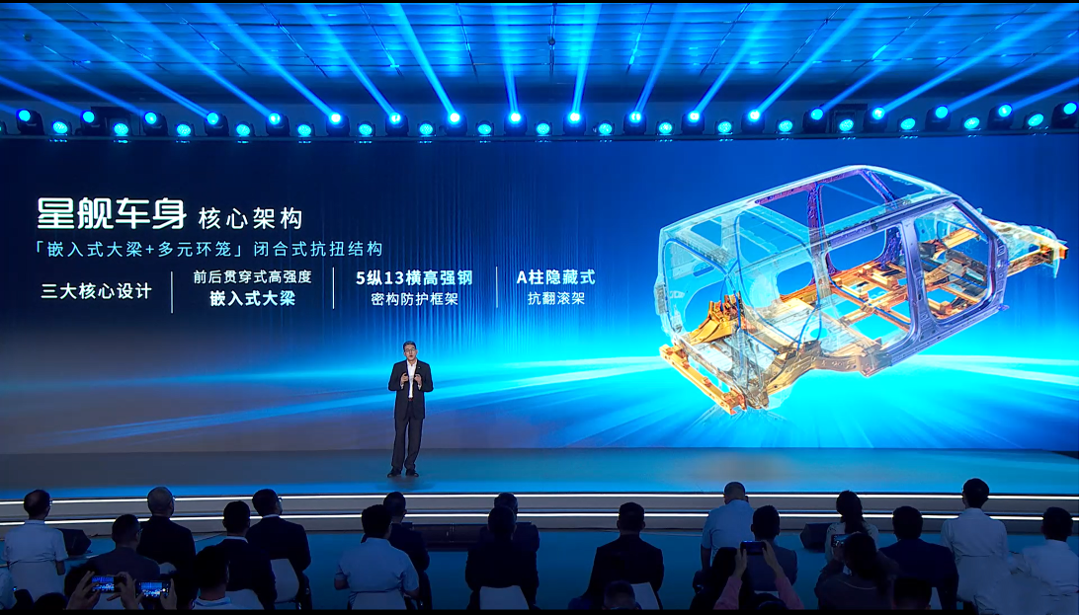
Perhaps this year's GAC Technology Day, like in previous years, will be a centralized technology showcase given by the group concerning its future development. From new energy powertrains to vehicle bodies, and then to intelligent cockpits, electronic electrical architectures, and chip-related technologies, the heads of each segment will use the most detailed rhetoric to present a new image of "Tech GAC" to everyone.
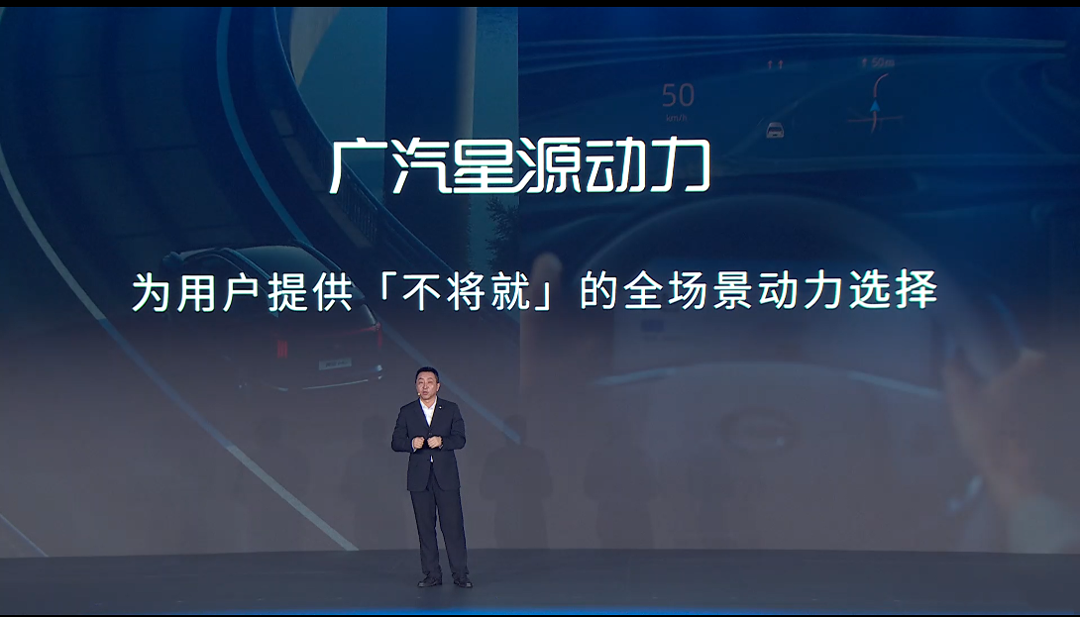
The emergence of numerous new technological terms such as "Xingyuan Super Twin Engine" and "Starship Vehicle Body" ultimately represents the best cards that GAC can play at this stage.
In the past two months, Chinese automakers' insistence on technological promotion has not diminished in the slightest. Before the GAC Technology Day, BYD kicked off the year by unveiling its second-generation blade battery and flash charging technology. Changan Automobile also high-profiled announced its "Blue Whale Super Engine Hybrid" declaration. On the 13th, Geely is also set to introduce its i-HEV intelligent twin-engine hybrid technology. It is evident that every company is eager to showcase all its offerings.
Therefore, based on this reality, for GAC, if any amount of technological declarations are not unique, it means that to seek development and survival, the only thing that can support its ambitions is its actual performance in the market.
We believe that since the second quarter of last year, the group's sales have achieved positive month-on-month growth for three consecutive quarters, with the proportion of energy-saving and new energy vehicle sales increasing to 51.6%. This series of positive signals confirms the correctness of the group's strategic direction and the effectiveness of its reform measures, laying a solid foundation for the enterprise's long-term development.
At the same time, after accelerating its global layout, GAC's independent brands achieved nearly 130,000 overseas sales last year, a year-on-year increase of 47%, initially constructing a global production, sales, and service network. Entering 2026, export business has increasingly become a key factor for GAC's upward and positive development.
However, regardless of the circumstances, when GAC sets its three core business objectives for this year: to regain production and sales of 2 million units, an increase of nearly 300,000 units compared to 2025; to regain revenue of RMB 400 billion; and to achieve significant loss reduction or even turn a profit, can the past really serve as a bargaining chip for GAC to ensure the achievement of these goals?
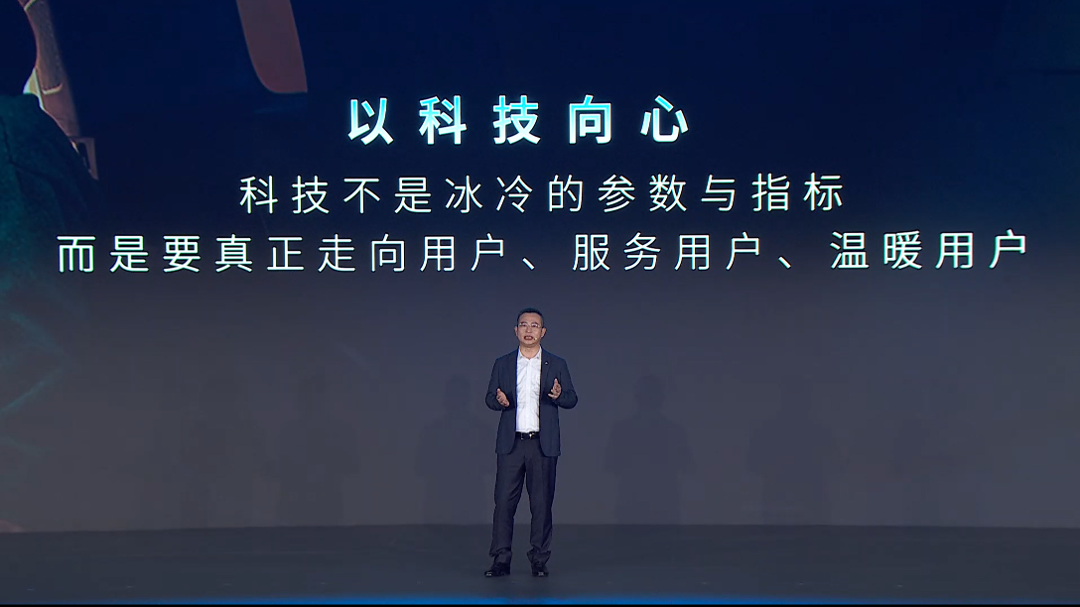
Of course, in this era of fierce competition, technology is undoubtedly an indicator of strength. When competitors are constrained by reality, any forward-looking technological accumulation can provide GAC with a glimmer of hope. However, the same can be said for any Chinese automaker.
The rise and fall of a company may seem cyclical. When it can ride the winds and when it will be wounded by the times, it all seems like fate. However, the Chinese auto market has never believed in predestination. In recent years, GAC's journey from standing at the peak and overlooking the market to now busily seeking solutions, no matter how diverse the reasons may be, is inseparable from the group's own judgment of the situation.
Whether it's the solemn pledges at the GAC Technology Day or the significant progress made across the entire industrial chain, in this ruthless era, performance is the only thing that can convince people.
Shifting from "scale-driven" to "new quality productivity-driven," from relying on joint venture profits to forging independent core competitiveness, from domestic competition to global布局 (layout), no matter how clear the direction may be, it remains to be seen how GAC will prove itself. From the very beginning, the Panyu Initiative was time-bound. Three years may not be long, but it will certainly allow the outside world to re-recognize GAC. As for the final evaluation, it depends on how GAC proceeds from here.
Editor-in-Chief: Du Yuxin Editor: He Zengrong
THE END
-
![]()
Jitian Xingzhou: A Pioneer in Optical Payloads Secures Hundreds of Millions in Series B Funding!
-
![]()
Orders Secured Through to the Second Half of the Year! The Rationale Behind the 'Surge' in Demand for This Company’s Optical-Grade Base Films
-
![]()
Beyond Patents: The Retail Rivalry of Insta360 and DJI Unfolds
-
![]()
180 Billion Market Cap Vanished! How Did Seres Fall So Far?
-
![]()
Blockbuster! Domestic storage takes the global double crown for the first time, from an AI company
-
![]()
China Spearheads Formulation! World's Pioneering Global Technical Regulation for Automated Driving Systems Greenlit and Unveiled
-
![]()
Farewell to Pulsed Support Policies: Three Major Auto Policy Directions from Multiple Departments Take Effect on the Same Day
-
![]()
Embercore AI’s Accelerated Funding: The Robot Industry’s Shift Toward ‘Learning Systems’