The Moment Li Xiang Swears, the 'Covert Battle' Among Chinese Automakers Goes Public
 04/14 2026
 467
467
Baker Street Detective
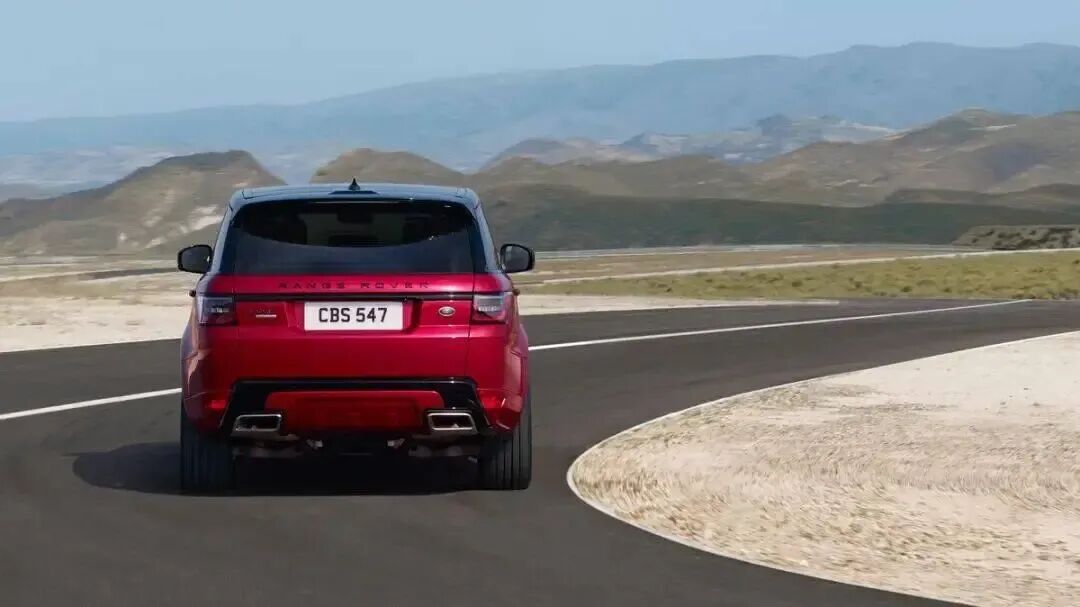
While collectively producing larger vehicles, automakers are also 'sabotaging' each other. What's going on in the auto circle?
When looking at two recent events in the auto circle together, most people will sense something 'abnormal.'
On one hand, nearly all automakers are choosing to manufacture 'larger-sized models' at the same time—six-seater SUVs, flagship MPVs, with interiors packed with fridges, TVs, and large sofas, each more luxurious than the last. It seems overnight, Chinese cars have collectively entered the 'first-class cabin on land era.'
On the other hand, the public opinion arena is becoming increasingly out of control, with black PR teams, trolling, comment section battles, and even automaker founders personally engaging in 'verbal brawls.'
On April 11, Li Xiang's clearly emotional WeChat Moments post tore through the veil: he directly accused a brand of organizing black PR teams, fabricating information, and systematically attacking comment sections. This was not just an ordinary complaint but a symbolic moment—Chinese automotive competition has escalated from production capacity (production capacity) and product strength at the manufacturing level to an all-out, boundaryless war.
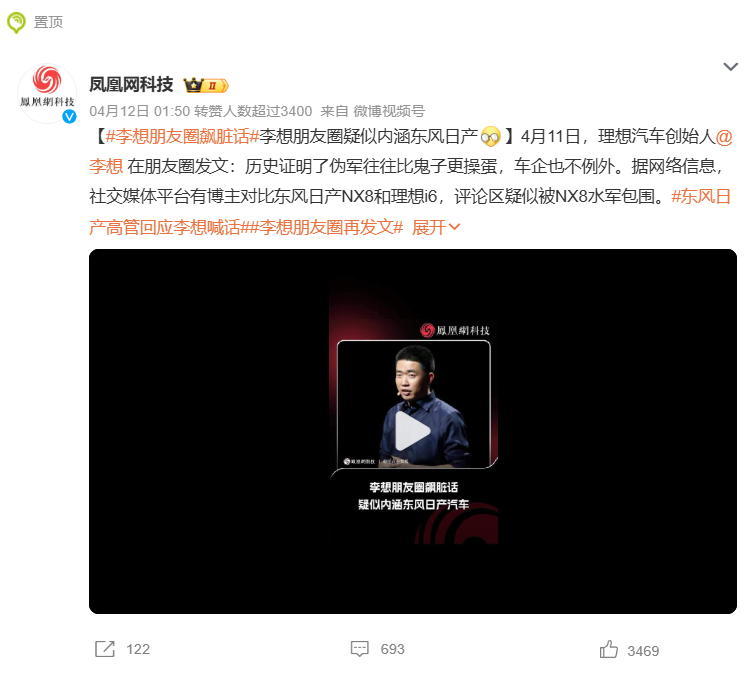
Image Source: Weibo
Many may wonder: Why is the industry producing increasingly high-end, rational products while using increasingly 'irrational' competitive tactics? From users' perspectives, automakers' products are becoming more advanced, yet competition between them is getting 'lower.'
These two phenomena seem contradictory, but the answer is almost obvious—homogenized competition in product offerings has reached a fever pitch. Automakers seem unable to find better marketing breakthroughs or more compelling product highlights, leading them to resort to mutual undermining, making potential users think the other side is worse.
01
Bigger Is Better
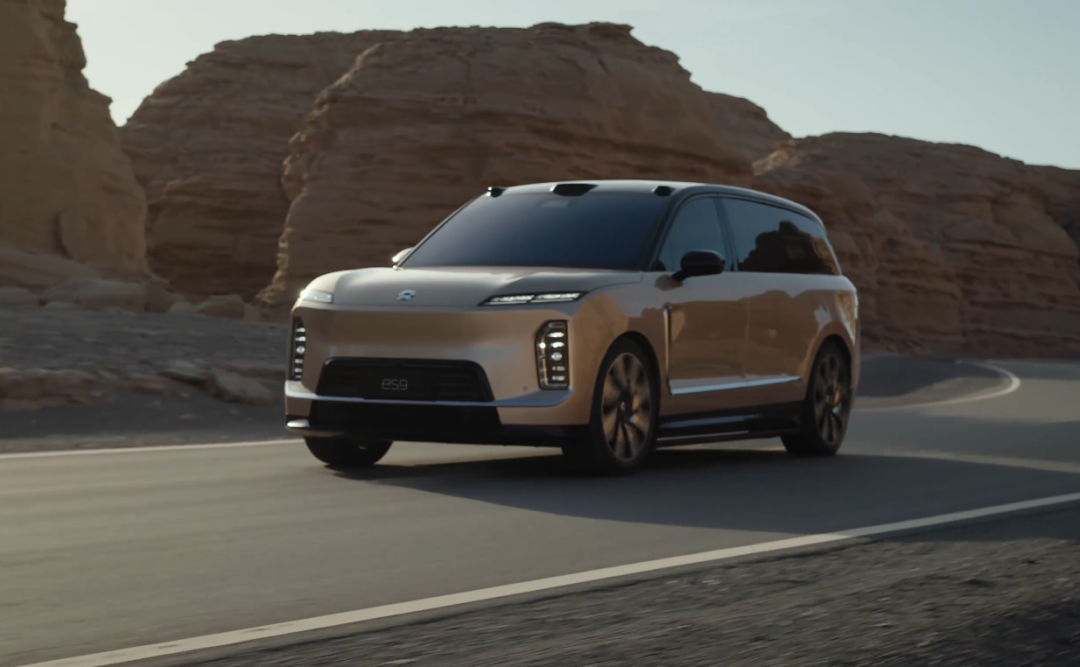
When models like the AITO M9, Li Auto L9, and the upcoming NIO ES9, as well as Xiaomi's potential large SUV, emerge in quick succession, most consumers interpret this as consumption upgrading. However, when considering technology, business, and user demand together, it becomes clear that producing larger smart vehicles is almost the ultimate solution for all electric vehicle (EV) makers.
In the era of electric intelligence, small-sized models struggle to form a stable profit model, while larger models mean higher gross margins. This is because battery costs, intelligent driving systems, LiDAR, and high-computing-power chips cannot be significantly reduced with current technology.
Small-sized models cannot accommodate more 'non-essential' items like 'fridges, TVs, and large sofas' that enhance added value. As a result, no matter which manufacturer produces them or how they are modified, small electric smart vehicles cannot command the high prices seen with models like the smart × Brabus Ultimate E, which sells for nearly 400,000 RMB.
More importantly, if someone were willing to spend 400,000 RMB on a micro EV that accelerates to 100 km/h in 10.9 seconds and has a range of 125 km, it would be as absurd as spending 40,000 RMB on a feature phone that can only make calls and send texts, claiming it represents the pinnacle of technological progress.
Even the base model of the Wuling Hongguang MINIEV offers a range of 120 km. While no official 0-100 km/h acceleration data is available, public estimates suggest it takes around 15 seconds. Crucially, its starting price is under 40,000 RMB. Meanwhile, Vertu, which once sold feature phones for hundreds of thousands of RMB, now offers smartphones. Who in the world would accept technological regression?
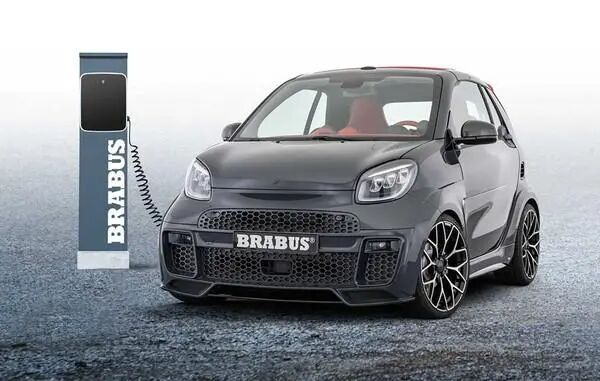
Image Source: Internet
Thus, the inability to raise per-unit prices for small-sized models is a critical flaw. Developing such models is destined to fail in boosting corporate gross margins. Moreover, thanks to automakers' relentless efforts in recent years, EV skateboard chassis have freed up space, while more powerful and stable motors have resolved the issue of insufficient power in slightly larger traditional fuel vehicles.
In the motor era, large vehicles are no longer a burden but a symbol of efficiency and the foundation for higher gross margins. Even smart, known for its preference for small-sized models, has released CG images of larger vehicles, sparking widespread sharing among bloggers.
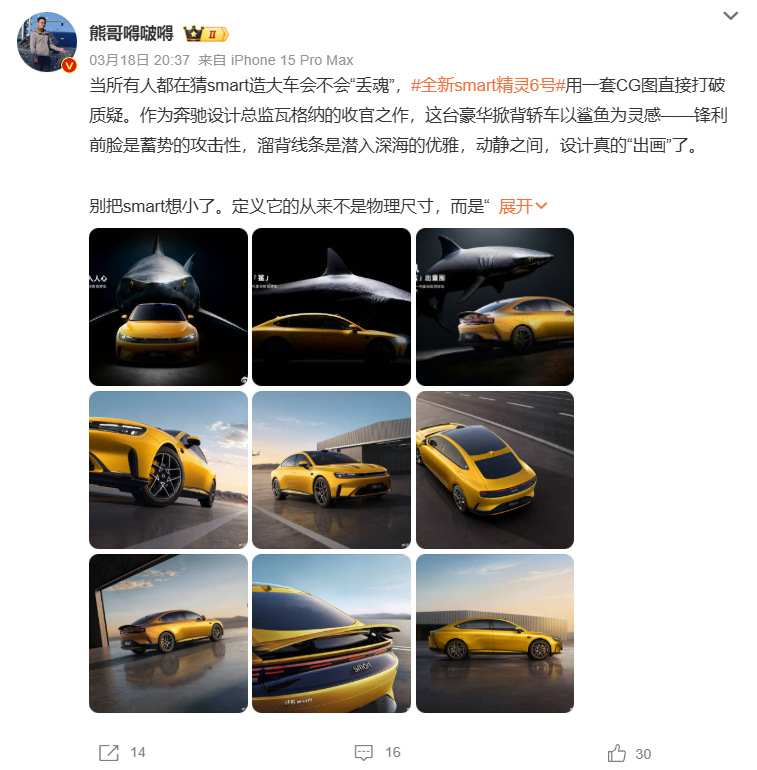
Image Source: Weibo
Finally, from a user demand perspective, the trend toward larger models is irreversible. Chinese family structures are rapidly changing, with two-child, three-child families, and trips with parents becoming common. Long-distance travel needs have significantly increased, making five-seater vehicles feel cramped, while six-seater SUVs or MPVs can solve space, comfort, and functionality issues in one go.
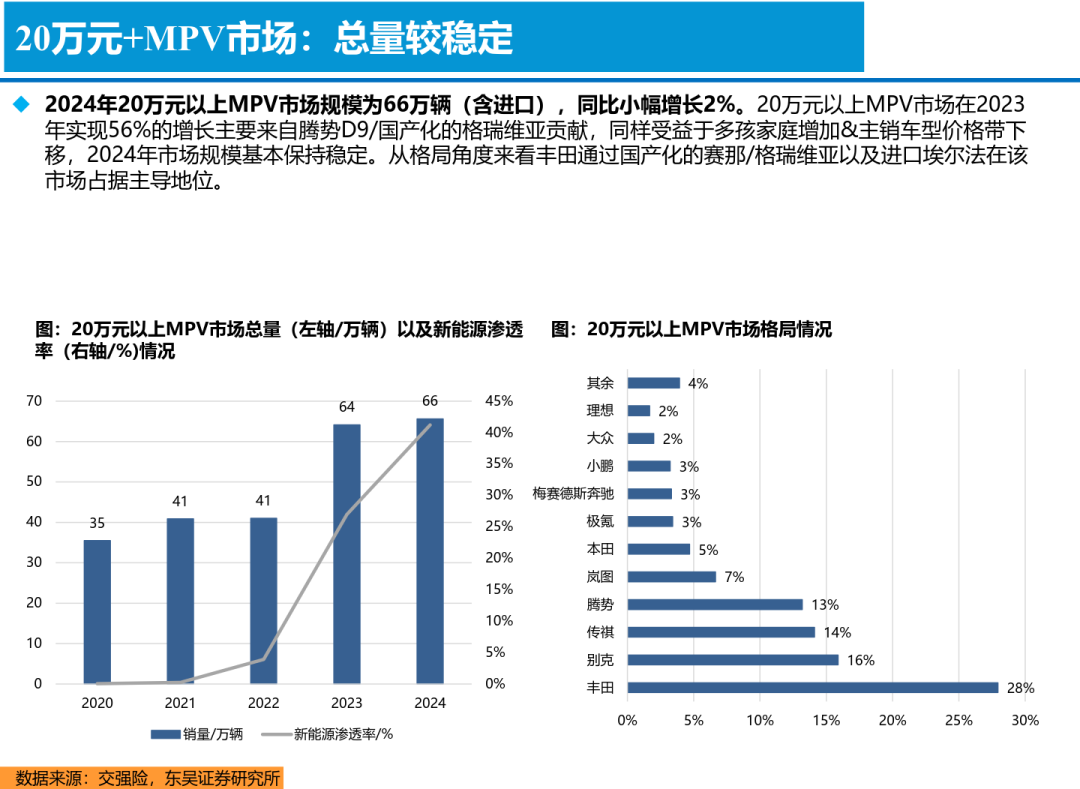
More importantly, users place extreme importance on the rear-seat experience—seats that recline, preferably with screens, fridges, sound systems, and privacy. These demands can essentially only be met by larger vehicles. Thus, 'three-row space' has evolved from a marketing concept into a genuine necessity.
However, when all automakers launch larger models from a user-centric perspective, a new problem arises—the differentiation rate among all 'large vehicles' approaches zero.
02
Converging Configurations Make Differentiation Difficult; Perception Dominates Outcomes
A closer look at several large-sized models reveals that most have nearly identical interiors despite 'obvious' external differences.
They all feature six- or seven-seat layouts, rear-seat big screens, zero-gravity seats, advanced driver-assistance systems, and marketing narratives centered around 'mobile living rooms.' Configurations among large models are converging, experiences are leveling up, and differentiation is becoming increasingly difficult for ordinary users to perceive.
When product differentiation cannot be objectively measured through data, users must rely on subjective judgment, causing their decision-making criteria to shift from 'feature comparison' to 'cognitive judgment.'
Cognition, a purely subjective standard, is the easiest variable to manipulate. This is why public opinion wars have become critically important and why Li Auto's founder felt compelled to vent his frustrations, even swearing on WeChat Moments.
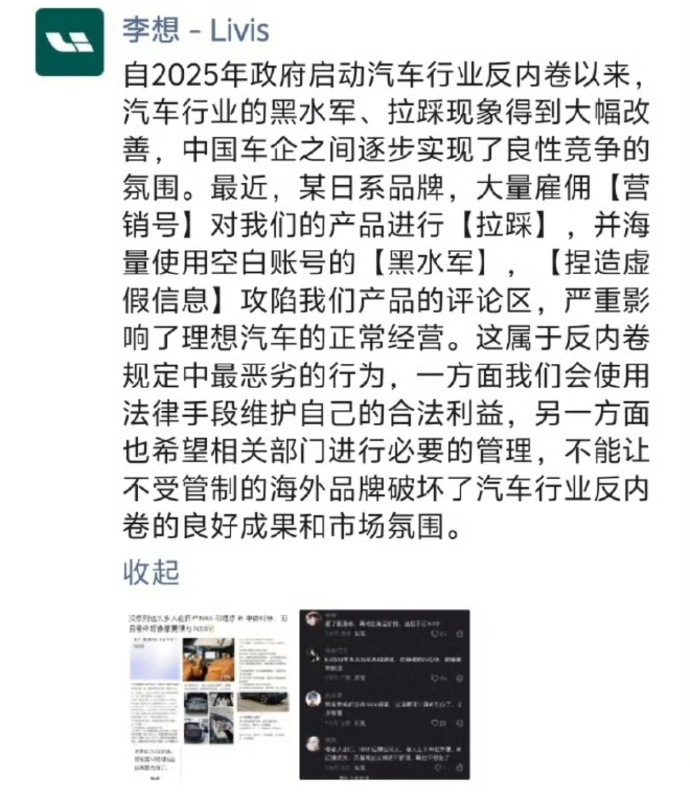
Image Source: Internet
When product differences are insufficient to create distance, influencing user perception directly impacts sales. A wave of organized negative information can quickly alter potential users' judgment paths; a 'malicious campaign' in comment sections can significantly reduce marketing conversion rates; a label (e.g., 'unsafe,' 'false advertising,' 'unreliable intelligent driving'), once planted, will take root in consumers' minds, affecting the brand's sales.
From this perspective, Li Xiang's anger is actually an 'industry signal'—competition has expanded from the product level to public opinion and perception, becoming increasingly fierce and systematic.
Shifting to the capital market perspective, this pressure becomes even more apparent. Since NIO's ES9 leak in September 2025, Xiaomi's stock price has fallen by 41.99%, Li Auto by 17.41%, XPeng by 20.49%, and NIO has remained nearly flat.
This is not simple market volatility but a clear revaluation process where capital no longer pays for 'storytelling' but instead scrutinizes automakers' 'delivery capabilities' with harsher standards.
The cruel reality is that all four companies have steadfastly done what they believed was right.
03
No Company Is Taking the Wrong Path, But Some Will Exit First
Looking back at these companies, Xiaomi has quickly leveraged its brand strength and online presence to make cars a viral topic, something many traditional automakers cannot achieve. However, the issue lies in overly high expectations for each new model. If product timing, delivery performance, or subsequent models underperform, stock prices will quickly correct. Essentially, Xiaomi is still undergoing a difficult transition from 'internet logic' to 'manufacturing logic.'
More importantly, while NIO's ES9 leak in September coincided with Xiaomi's recall incident, Xiaomi's product launches have not focused on addressing the negative impact of the recall, a topic worth exploring further later.
Li Auto precisely defined the Chinese family car with the L9, taking 'large-sized models = optimal family solution' to the extreme, showcasing strong product insight and branding. However, its overconcentration in a single segment makes it the most visible 'target' when all competitors flood the large vehicle market, making it the easiest to attack and replace.
XPeng continues to heavily invest in intelligent driving, with a clear technological roadmap, making it one of the few players treating software capabilities as a core competitive barrier. However, its technological advantages have not fully translated into user perception, leading to discounted market valuation.
NIO has established long-term advantages in branding, services, and system capabilities, particularly its battery-swapping infrastructure, forming a differentiated moat. However, its challenge is clear—heavy cost structures and persistent profitability pressures, which will be continually amplified in a capital market trending toward rationality.
Viewing these four companies together, it is evident they are all doing what they consider 'the right thing' within their respective narratives. However, in a highly homogenized segment, 'doing the right thing' no longer guarantees survival or success. What truly determines outcomes is who has fewer weaknesses and who can withstand prolonged high-pressure competition.
This is precisely the breeding ground for 'sabotage' tactics.
When product differences are insufficient, user growth slows, and capital expectations tighten, competitive boundaries are continuously pushed. From price wars to feature wars to public opinion wars and even more covert gray tactics, all become part of the 'toolbox.' This is not an issue with a single company but a necessary growing pain as the entire industry enters 'inventory competition.'
In other words, the Chinese automotive industry is undergoing a transition from 'incremental dividends' to 'scrambling for inventory (inventory).' In the incremental era, success depended on speed; in the inventory era, it depends on endurance.
Automakers' simultaneous shift toward 'large vehicle strategies' is the core carrier (vehicle) of this transition because it simultaneously addresses profitability, branding, and technology, offering one of the few optimal solutions to multiple challenges. However, because everyone has chosen this path, competition is compressed into the same space, amplifying minor differences and turning any mistake into an opportunity for rivals.
This explains why consumers see two extreme phenomena simultaneously: increasingly luxurious, comfortable, and 'rational' products on one hand, and increasingly fierce, even emotionally charged competitive tactics on the other. These are not contradictory but two outcomes of the same logic.
Going forward, this trend will only intensify. Consumers will see more oversized SUVs, higher-end MPVs, and more exaggerated configurations, along with fiercer price competition, more complex public opinion battles, and frequent market fluctuations.
For users, this is a golden era of 'overabundant configurations and upgraded experiences'; for automakers, it is a life-or-death phase with extremely low tolerance for error.
So, the question 'What's going on in the auto circle?' can be rephrased: When everyone is doing the same right thing, where does competition occur? The answer is clear—everywhere outside the product.
Li Xiang's WeChat Moments post is merely a concentrated expression of this change. The real transformation is that the Chinese automotive industry is no longer purely a manufacturing sector but a complex battlefield integrating technology, capital, public opinion, and branding. In this arena, building cars is just the entry ticket; the real competition has only just begun.
Conclusion
The moment all automakers started producing 'large vehicles,' the nature of this competition changed.
On the surface, sizes are growing, configurations are piling up, and prices are climbing; but deeper down, a harsher reality is emerging—products are becoming increasingly similar, yet victory depends more on factors beyond the product itself. On one hand, 'mobile living rooms' like the AITO M9 and Li Auto L9 continue to evolve; on the other, Li Xiang has no choice but to personally engage in the invisible war of public opinion and perception.
This is not the industry 'going bad' but the rules of the game changing.
When differentiation disappears, perception becomes a weapon; when growth slows, smear campaigns emerge; when everyone races down the same 'large + premium + intelligent' path, what truly creates distance is no longer who is bigger or more luxurious but who better controls user mindshare and withstands prolonged attrition.
This is why Xiaomi, Li Auto, XPeng, and NIO, despite betting on the same direction, have followed completely different trajectories in the capital markets. It is also why players like Leapmotor, even after proving they can 'survive,' must still consider whether they can 'win.'
Because in today's Chinese auto market, building cars is merely the entry threshold. Only those who can control the narrative and define what makes a good car can truly establish themselves in the industry.
And once competition reaches this stage, the true dividing line is no longer technology, configurations, or even price, but who can survive this increasingly complex and covert war.
© THE END
All materials are sourced from official public information.
This article does not constitute any investment advice.
Original content by Baker Street Detective. Unauthorized reproduction prohibited.
The picture is from public information. Please contact us for deletion if there is any infringement.
-
![]()
Jitian Xingzhou: A Pioneer in Optical Payloads Secures Hundreds of Millions in Series B Funding!
-
![]()
Orders Secured Through to the Second Half of the Year! The Rationale Behind the 'Surge' in Demand for This Company’s Optical-Grade Base Films
-
![]()
Beyond Patents: The Retail Rivalry of Insta360 and DJI Unfolds
-
![]()
180 Billion Market Cap Vanished! How Did Seres Fall So Far?
-
![]()
Blockbuster! Domestic storage takes the global double crown for the first time, from an AI company
-
![]()
China Spearheads Formulation! World's Pioneering Global Technical Regulation for Automated Driving Systems Greenlit and Unveiled
-
![]()
Farewell to Pulsed Support Policies: Three Major Auto Policy Directions from Multiple Departments Take Effect on the Same Day
-
![]()
Embercore AI’s Accelerated Funding: The Robot Industry’s Shift Toward ‘Learning Systems’